
NEW
Font size
 Worksheets
CSHS Munson Adv Biology - Body System Interactions
Total questions: 55
Worksheet time: 3615secs
How do the circulatory system and immune system work together to respond to an injury?
Increased blood flow kills healthy cells which prevents infection at the site of the injury.
Increased blood flow removes infected cells from the body at the site of the injury.
Increased blood flow carries white blood cells to the site of the injury.
Increased blood flow allows for an increase in the exchange of O2 and CO2 at the site of the injury.
Which two body systems must directly interact for vertebrate organisms to exchange gases?
Skeletal system and muscular system
Excretory system and reproductive system
Circulatory system and respiratory system
Digestive system and immune system
Kidneys are part of the excretory system in a human body. They purify the impure blood and send it back to the rest of the body. Which system is mainly responsible for the transport of plasma to the kidneys?
Respiratory system
Circulatory system
Muscular system
Nervous system

In humans, the gases oxygen and carbon dioxide must be exchanged between the environment and cells. During this exchange, oxygen is delivered to the red blood cells so that they can function properly in the blood stream. Which two body systems are working together to achieve this goal?
Endocrine and Reproductive
Skeletal and Muscular
Respiratory and Circulatory
Digestive and Excretory

When your body comes in contact with a sharp object, an impulse sent you your brain triggers a reflex that causes you to move away from the object. What body systems are interacting to cause this response?
Nervous, Respiratory,
Nervous, Muscular
Nervous, Skeletal
Nervous, Digestive
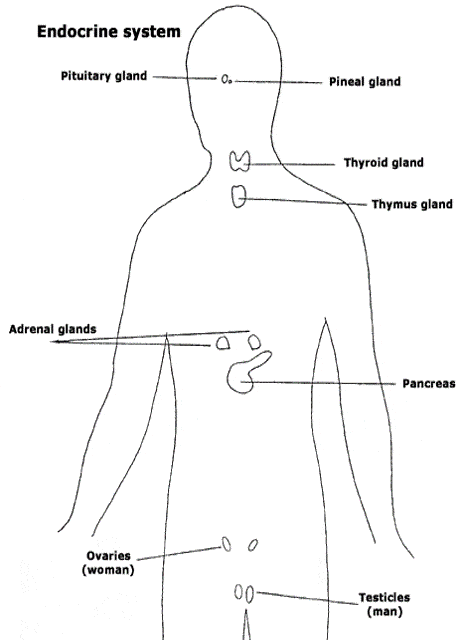
Why is the maintenance of homeostasis important to multicellular organisms?
They must keep their internal environment within a narrow range of conditions.
They require the ability to adjust their internal environment to match their external environment
Their cells need to be able to respond rapidly to drastic changes in their external enviornment
Their internal environment must provide their cells with a wide range of conditions

Acts as a barrier, regulates temperature, and includes sensory receptors; skin is the major organ.
Integumentary System
Skeletal System
Endocrine System
Digestive System
Supports the body, is the site for muscle attachment, and forms blood cells; bones, joints, and cartilage make up this system.
Integumentary System
Skeletal System
Muscular System
Nervous System
Why is blood considered a tissue?
cells working together for a specific purpose
tissues are always red
blood moves through the entire body
blood makes up an organ system
Why is the bodies core temperature 37oC?
Optimum temperature for enzymes
No specific reason
To limit the enzymes rate of reaction
Its not 37oC
Which system includes the following:
Chemical messages
Blood
Target tissue
Hormones
Testosterone
Endocrine
Excretory
Integumentary
Immune
Which system includes the following:
Waste removal
Skin
Feces
Urine
Sweat
Integumentary
Excretory
Endocrine
Skeletal
Which system includes the following:
First line of defense
Skin
Sweat
Pores
Oil
Muscular
Skeletal
Integumentary
Immune
Blood enters the right atrium through
pulmonary veins
inferior and superior vena cava
pulmonary arteries
aorta
Your skin, WBC's, mucous membranes, phagocytes, inflammatory response, temperature, and pH are all part of this defense system
Specific-defense system
Non-specific defense
Active immunity
Passive Immunity
Antibodies, t and b cells, and memory cells are all part of this defense system.
Active immunity
Passive immunity
Specific immune response
Nonspecific defense

This image is a protein that help memorize pathogens.
antigen
antibody
cytokine
neutrophil

Antibodies remember what part of "invaders?"
lymphocytes
antibodies
antigens
histamines
What are macrophages?
lymph nodes
attack foreign substances
large ducts
"eat" pathogens
Hormones help your body do what?
Regulate processes
Maintain homeostasis
Stimulate glands
All over the above
These two hormones produced by the pancreas control blood sugar levels.
epinephrine and nor-epinephrine
T3 and T4
estrogen and progesterone
insulin and glucagon
Neural impulses, also called _____________ _____________, carry electrical signals through the axon.
neuro transmitters
action potential
nore epinephrine
Muscles are connected to bone by
tendons
ligaments
joints
cartilage
Muscle tissue in the walls of body organs such as the stomach and intestines. It controls involuntary movement and makes the organs expand and contract.
cardiac muscle
skeletal muscle
smooth muscle
muscle
Muscle tissue that is attached to the bones. This muscle is striated and under voluntary control.
cardiac muscle
skeletal muscle
smooth muscle
muscle

What is the function of the stomach?
Absorbs the nutrients from food
Mechanically mixes the food we eat with digestive juices
Stores the food that we eat until we need the energy
All of these
What is the path of the digestive system
mouth, esophagus, stomach, small intestine, large intestine
mouth, stomach, small intestine, large intestine, esophagus
esophagus, large intestine, stomach, small intestine, mouth
The digestion of starch begins in the
mouth
stomach
gall bladder
small intestine
The process of peristalsis is best described as the
loss of water from vascular plants
release of acid into the stomach
chemical breakdown of food in the small intestine
muscular contractions of the gastrointestinal tract
Extensive damage to the large intestine would have the greatest effect on
glucose metabolism
protein synthesis
enzyme secretion
water reabsorption
What occurs during the digestion of proteins?
Specific enzymes break down proteins into amino acids.
Specific hormones break down proteins into simple sugars.
Specific hormones break down proteins into complex starches.
Specific enzymes break down proteins into simple sugars.

