wayground logo

Free Printable Worksheets

Font size

S
M
L
XL
Worksheets

Renaissance and Reformation

Total questions: 101

Worksheet time: 23mins
Name
Class
Date
1.
What does the word "Renaissance" mean?
a)
Rebirth
b)
Stagnation
c)
Traditional
d)
A Latin term for art
2.
What is the artistic technique that is used to show depth and distance on a flat surface?
a)
realism
b)
perspective
c)
idealism
d)
distancism
3.
Where did the Renaissance begin?
a)
Italy
b)
France
c)
England
d)
Germany
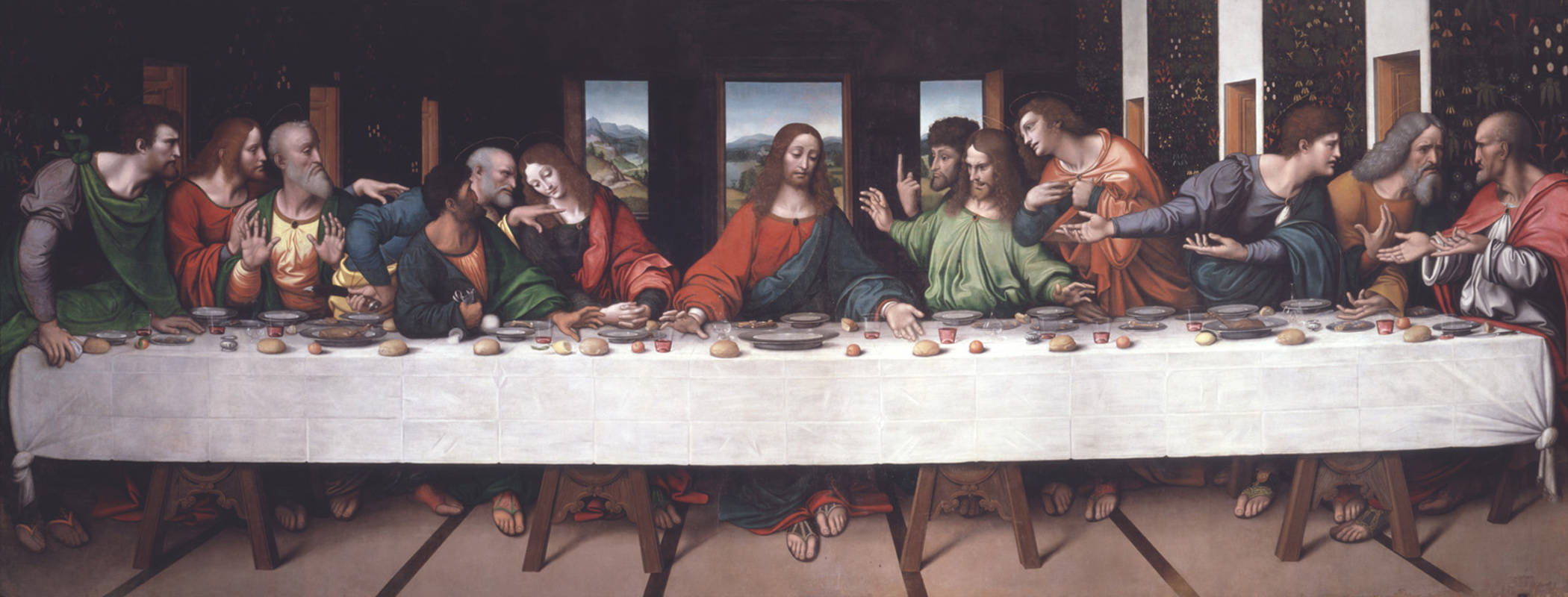
4.
Who painted "The Last Supper"?
a)
Machiavelli
b)
Botticelli
c)
Kepler
d)
Leonardo da Vinci
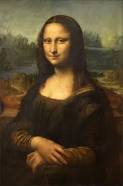
5.
Who painted the Mona Lisa?
a)
Michelangelo
b)
Boticceli
c)
Leonardo da Vinci
d)
Donatello
6.
Which of the following is NOT a reason why the Renaissance began in Italy?
a)
Wealthy Italian patrons supported the arts
b)
Cultural diffusion encouraged curiosity and spread Arab and African ideas
c)
The Black Plague did not hit Italy as a result of the Alps 
d)
Renewed interest in the cultures of Ancient Greece and Rome
7.
During the Renaissance, why was Florence significant?
a)
Birthplace and symbol of the Renaissance
b)
Birthplace of Michelangelo
c)
The last place the Black Plague hit
d)
Home of all of the significant artists and sculptors 
8.
The Medici Family...
a)
Were the first mafia family to live in Italy
b)
Were the most famous painters in Florence
c)
Were the family of Mona Lisa
d)
Were patrons of the arts in Florence
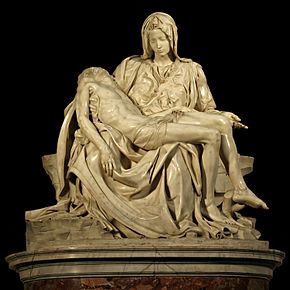
9.
Who is the creator of this sculpture? 
a)
Michelango
b)
Raphael
c)
Leonardo da Vinci
d)
Donatello
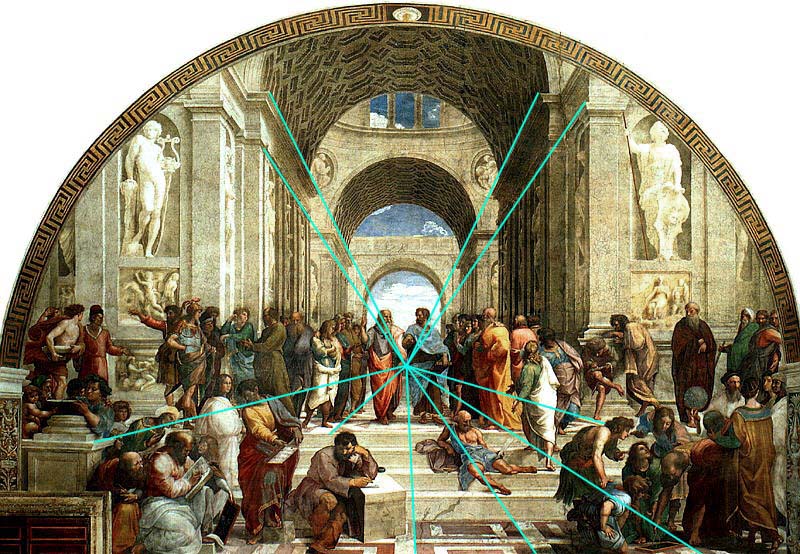
10.
Raphael is best known for his creation of which of the following?
a)
Mona Lisa
b)
Last Supper
c)
Murals of the Sistine Chapel
d)
School of Athens
11.
Which of the following is NOT a characteristic of Renaissance art?
a)
Perspective
b)
Incorporation of nature
c)
Flat/2-D
d)
Realistic/3-D
12.
Which of the following is a synonym best used to describe the word "secular"
a)
Worldly
b)
Religious
c)
Chivalry
d)
Rebirth
13.
Advantages of Johannes Gutenberg's printing press include all of the following EXCEPT:
a)
Cheaper book prices
b)
Increase in education/literacy
c)
Increase in church power
d)
Rapid spread of ideas
14.
While Gutenberg introduced the printing press in Europe, this country was the first to develop moveable type, which influenced his invention.
a)
Japan
b)
Korea
c)
England
d)
China
15.
What were the arts of the Middle Ages based on?
a)
the church
b)
Gods
c)
merchants
16.

The Renaissance began in Italy because

a)

it is located on Mediterranean trade routes

b)

explorers brought gold back to the city-states

c)

there was a surplus of food

d)

many scholars moved to Venice

17.

Which statement most accurately reflects the idea of Humanism?

a)

People should only study the teachings of Islam

b)

A scholar should only master a single subject

c)

All people are born sinners and are beyond salvation

d)

People are worthwhile and should develop their potential

18.

An idea that was shared by the Ancient Greeks and the Renaissance Humanists was

a)

that people should question authority

b)

that people should only study religion

c)

the best way to learn was through manor schools

d)

that thinkers should study Genghis Khan's teachings

19.

An English poet and playwright of numerous comedies, tragedies, and histories was

a)

John Locke

b)

Shakespeare

c)

Machiavelli

d)

Montesquieu

20.

The Renaissance sculptor, engineer, architect, poet, and painter of the Sistine Chapel was

a)

Raphael

b)

Michelangelo

c)

Leonardo daVinci

d)

Vivaldi

21.

The Polish Astronomer who proposed the sun-centered model of the solar system was

a)

Copernicus

b)

Louis Pasteur

c)

Lech Walesa

d)

Galileo

22.

The Italian Political Philosopher that wrote The Prince was

a)

Hobbes

b)

Locke

c)

Rousseau

d)

Machiavelli

23.

Machiavelli believed that rulers

a)

should have absolute power over their citizens

b)

should promote democracy whenever possible

c)

believed people were good and always did the right thing

d)

should be elected through the Electoral College

24.

The Italian astronomer that supported the heliocentric theory was

a)

Galileo

b)

Francisco Franco

c)

Benito Mussolini

d)

Nicolaus Copernicus

25.

This intellectual movement led to a focus on individuals and secular subjects

a)

Nationalism

b)

Imperialism

c)

Humanism

d)

Mercantilism

26.

What is meant by Machiavelli’s belief that "the end justifies the means"?

a)

Leaders may use any method to achieve what is best for the state

b)

The general public always acts in its own best interest

c)

Pleasing all of the people at any given time is possible

d)

Leaders must always act for the common good

27.
What is one way that Medieval and Renaissance artists differ?
a)
Renaissance art focuses more on religion
b)
Medieval artists were more realistic
c)
Renaissance artist turned to Roman and Greek works for inspiration
d)
They are the same
28.
______________ art was flat with rigid, emotionless figures, while ______________ art had full backgrounds with figures that showed emotion and detail.
a)
Renaissance, Medieval
b)
Renaissance, Classical
c)
Classical, Medieval
d)
Medieval, Renaissance
29.
Which of these would be valued most by a Renaissance thinker who emphasized individualism?
a)
a nation's strength 
b)
a family's ancestors
c)
a person's achievements
d)
an army's success in battle
30.
Title...
a)
School of Athens
b)
Last Judgment
c)
Last Supper
d)
Sistine Chapel
31.
Title...
a)
Madonna
b)
Mona Lisa
c)
Margaret
d)
da Vinci
32.
Which of the following most accurately characterizes the Renaissance?
a)
the spread of democracy
b)
the outburst of creativity 
c)
a growth of religious belief
d)
a decline in learning 
33.
Daughter of Henry VIII restored Catholic Church. She had many Protestants executed
a)
patrons
b)
mary 1
c)
edward v|
d)
henry 8
34.

How did the invention of the printing press help the Reformation?

a)

Bibles printed allowed more people to read them.

b)

People could read translations of the Bible in their language.

c)

It allowed reformers to spread their ideas.

d)

All of the Above

35.

Why did the Reformation begin?

a)

Luther wanted to start a new religion.

b)

The Church was poor and needed a new leader.

c)

Calvin wanted to head the Church.

d)

There were abuses in the Church that needed changing.

36.

Before the Reformation, Christian churches were ___________

a)

Jewish

b)

Roman Catholic

c)

Muslim

d)

None of the Above

37.

What was the Spanish Inquistion?

a)

Attempt to spread protestant beliefs

b)

Attempt to rid Spain of non-Catholic people

c)

Attempt to spread Judaism

d)

Attempt to rid Spain of Catholics

38.

What was the list of complaints against the Church called?

a)

95 Theses

b)

Peace of Augsburg

c)

Magna Carta

d)

New Testament

39.

What was the Counter Reformation?

a)

Pope's decision to go to war

b)

Protestants moving to new lands

c)

Printing Bible in other languages

d)

Catholic Church making changes

40.

Which of the following was the Council of Trent NOT responsible for?

a)

Protestant Reformation

b)

missions

c)

changes to Catholic Church

d)

seminaries

41.

Why did Luther disagree with the selling of indulgences?

a)

He believed they should cost more.

b)

He believed people had to work to earn salvation.

c)

He believed salvation was a gift of grace.

d)

He believed his 95 Theses could get people to Heaven.

42.

I was the Holy Roman Emperor who declared war on the protestants of Germany. Who am I?

a)

King Henry VIII

b)

Charles V

c)

John Calvin

d)

Pope Paul III

43.

I am a queen that tried to restore the people of England to the Catholic Church. Who am I?

a)

Elizabeth

b)

Isabella

c)

Mary

d)

None of Above

44.

If a person was accused of heresy, he/she could be kicked out of the church or ______________________.

a)

ordained

b)

crowned

c)

excommunicated

d)

reformed

45.

What was the treaty called that allowed kingdoms to choose whether they were protestant or Catholic?

a)

Council of Trent

b)

Peace of Augsburg

c)

Jesuits

d)

95 Theses

46.

Which was NOT an effect of the Protestant Reformation?

a)

Counter Reformation

b)

Peace of Augsburg

c)

Lutheranism and other protestant forms of Christianity

d)

Luther being troubled by the sell of indulgences

47.

Which of the following was NOT a teaching of Martin Luther?

a)

Anyone could have a direct relationship with God.

b)

Indulgences are legal.

c)

People should base their beliefs on the Bible.

d)

People do not need priests to talk to God.

48.

Martin Luther believed that

a)

the Bible should not be translated.

b)

there was no need for change in the Catholic Church.

c)

people in the clergy should be involved in politics.

d)

anyone could have a direct relationship with God.

49.

Which Protestant reformer supported the idea of predestination?

a)

Ignatius of Loyola

b)

John Calvin

c)

Martin Luther

d)

Henry VIII

50.

Martin Luther challenged the traditional structure of the Catholic Church by arguing that...

a)

people did not need to do charity work.

b)

the poor should be treated differently than the rich.

c)

the clergy should become more involved in politics.

d)

people did not need priests to interpret the Bible for them.

51.

a document that a person could buy from the Catholic Church that excused a person from penalties for sins he or she had committed

a)

Reformation

b)

Indulgence

c)

Purgatory

d)

Protestant

52.

a Christian who protested against the Catholic church

a)

Reformation

b)

Indulgence

c)

Purgatory

d)

Protestant

53.

German priest credited with starting the Reformation by nailing a list of complaints about the Catholic Church to a church door in Wittenberg, Germany

a)

Martin Luther

b)

John Calvin

c)

King Henry VIII

54.

King of England who split with the Catholic Church and declared himself head of the Church of England, or Anglican Church

a)

Martin Luther

b)

John Calvin

c)

King Henry VIII

d)

King Richard the Lion-hearted

55.

Why did England break with the Church?

a)

Martin Luther's influence spread throughout country

b)

John Calvin set up his theocracy in one the towns

c)

The king wanted a divorce and Church said no

d)

The England did not break from the Catholic Church

56.

A release from sin given by the Catholic church

a)

fundamental

b)

indulgence

c)

predestination

d)

Transubstantiation

57.
What was the Catholic Church's response to Martin Luther's 95 Theses?
a)
Excommunication
b)
The Peace of Westphalia
c)
The Counsel of Trent
d)
They ignored it
58.

A reform movement within the Catholic Church was known as...

a)

Protestant Reformation

b)

Catholic Reformation

c)

Reformation proclamation

d)

The Emancipation Proclamation

59.

The belief that God has determined in advance who will be saved.

a)

salvation

b)

predestination

c)

justification

d)

Transmutation

60.
What were Luther’s Ninety-Five Theses?
a)
Luther’s doctrine to bring Hiduism to Europe.
b)
Luther’s criticisms of the Catholic church
c)
Luther’s central belief in Buddhism.
d)
Luther’s criticism of the Eastern Orthodox Church.
61.
What invention helped to spread the information of the Reformation?
a)
The Globe
b)
The Mona Lisa
c)
The Paint Brush
d)
The Printing Press
62.
Luther's followers called themselves what?
a)
Protestants
b)
Protestors
c)
Reformers
d)
Transformers
63.

What is the name of the religious revolution that split the Church in Europe?

a)

Lutheran Reformation

b)

Protestant Reformation

c)

Calvin Revolution

d)

Jesuit Revolution

64.
Fill in the blank. Luther believed that ________________ was how people would end up in heaven.
a)
faith
b)
indulgences
c)
good deeds
d)
going to church
65.
During the Renaissance, whose ideas caused a renewed interest in art and learning?
a)
Greek and Egyptian
b)
Greek and Roman
c)
Roman and Egyptian
d)
Greek and Japanese
66.
Authors living during the Renaissance started writing in the everyday language of the people known as the
a)
perspective
b)
chiaroscuro
c)
contrapposto
d)
vernacular
67.
What did architects use from the classical ideas  of the Greeks and the Romans to develop, as seen in St. Peter's Basilica in Rome?
a)
Arch and dome
b)
Arch and bridge
c)
Arch and road
d)
Bridge and Road
68.
How did the city-state of Florence grow wealthy?
a)
Selling Books
b)
Travel Industry
c)
Farming
d)
Banking
69.
Although it was not his intent, who started the Protestant Reformation by writing Ninety-five Theses (or arguments against the wrongs in the Church)?
a)
Kepler
b)
Martin Luther
c)
John Calvin
d)
Newton
70.
Who agreed with Martin Luther and became a powerful tool in society by getting people to work hard at their business and watch their behavior?
a)
Michelangelo
b)
Leonardo da Vinci
c)
John Calvin
d)
John the Baptist
71.
Luther's ideas led to the creation of the first Protestant Church known as Lutheranism, which believes
a)
Faith in Jesus, brings someone a place in heaven, the Bible is the source of truth about God, Church was made up of all believers
b)
The Catholic Church has all of the answers
c)
Art work should not be allowed in the Church
d)
Icons should not be allowed in Church
72.
Which of the following was a factor leading to the Reformation?
a)
The belief that the Pope should support the Renaissance. 
b)
Anger at the worldliness of the Church.
c)
A desire to set up a theocracy in Wittenberg.
d)
The hope that the Church would sell more indulgences. 
73.
What is excommunication?
a)
You are kicked out of the church for life and won't go to heaven.
b)
You are put on trial, tortured, and given a choice to convert or die.
c)
You can pay money to have your sins forgiven: ticket to heaven.
d)
You are brought up on criminal charges, accusing you of going against approved teachings/beliefs.
74.

How did Renaissance humanists contribute to the weakening of the Roman Catholic Church?

a)

They studied ancient texts.

b)

They wrote poetry and plays.

c)

They tried to elect a new pope.

d)

They questioned accepted beliefs.

75.

What did John Wycliffe and several other reformers believe was the source of religious authority?

a)

the Bible

b)

the Church

c)

the individual

d)

Nature

76.

What did the first Protestants protest against?

a)

the humanist philosophy

b)

decrees by King Henry VIII

c)

the reformation of government

d)

corruption in the Catholic Church

77.
What was King Henry VIII's motivation for breaking away from the Roman Catholic Church and starting his own church?
a)
His favorite wife told him to start his own church.
b)
His people were unhappy with the church and he did it for them.
c)
He wanted to gain money and power by taking over Roman Catholic churches.
d)
He was a very religious man and thought it was a better way to worship God.
78.
Who were the Jesuits and what did they do?
a)
Traders who traveld the Silk Road.
b)
Soldiers who fought in the Holy Land.
c)
Christian missionaries who sailed over seas.
d)
Explorers who found the New World.
79.
What is heresy?
a)
You are kicked out of the church for life and won't go to heaven.
b)
You are put on trial, tortured, and given a choice to convert or die.
c)
You can pay money to have your sins forgiven: ticket to heaven.
d)
You are brought up on criminal charged, accusing you of going against approved teachings/beliefs.
80.
Why did the Pope Paul III call church leaders from all over Europe to attend the Council of Trent?
a)
To admit that sciences new ideas were correct.
b)
To select a new Pope to lead the church.
c)
To prepare for a war with the Protestants.
d)
To self reflect and launch a counter-reformation.
81.
What is so significant about Martin Luther hanging up the 95 Theses?
a)
It ended feudalism throughout Europe.
b)
It limited the power of the monarch in England.
c)
It was the event that started the Protestant Reformation.
d)
It was the event that started the Catholic Counter-Reformation.
82.
-decided to stop selling indulgences
-created seminaries (schools) for training priests
-started a new order of monks to help spread Christianity  

What do the bullets above represent?
a)
Reforms the Catholic Church made for their counter-reformation.
b)
Reasons Martin Luther gave for leaving the Catholic Church.
c)
Things Henry VIII started when he made his own church.
d)
Ways the Medici's helped improve and make Florence beautiful.
83.
What region of Europe stayed loyal to the Catholic Church and the Pope?
a)
Northern Europe
b)
Eastern Europe
c)
Southern Europe
d)
Western Europe
84.
What region of Europe broke from the Catholic Church and became Protestant?
a)
Northern Europe
b)
Eastern Europe
c)
Southern Europe
d)
Western Europe
85.
What do Martin Luther, John Calvin, King Henry VIII, and John Knox have in common?
a)
All were strong supporters of the Catholic Church.
b)
All became Protestant and broke with the Catholic Church.
c)
All were considered great artists, sculptors, and inventors of the Renaissance.
d)
All contributed to the reconquista in Spain.
86.

4.What was the purpose of the Counter Reformation?

a)

to spread the world of martin luther

b)

To keep members of the Catholic Church

from leaving

c)

to spread islam

d)

to kick all of the jews and muslims out of spain

87.

7. How did Elizabeth I contribute to establishing Protestantism in England?

a)

she established an official anglican church

b)

she created a new prayer book for the church

c)

she encourages religious violence against non anglican christians

88.

6. How did Mary Tudor attempt to re-establish Catholicism in England?

a)

she forbid islam in her kingdom

b)

she used the spanish armada to ensure everyone remained catholic

c)

she created laws of religious toleration which made her really popular

d)

She brought the Inquisition to England—burned Protestants.

89.

8.What were the three responsibilities of the Jesuits? CHOOSE 3 ANSWERS

a)

Spread Catholicism

b)

print copies of the 95 theses

c)

block Protestantism

d)

open schools

90.

9. What changes allowed the rise of Northern Italian city-states during the early Renaissance? CHOOSE TWO ANSWERS

a)

Increased trade brought on by the Crusades

b)

Islamic control of the Mediterranean

c)

decreased population brought on by the plague increased economic opportunities

d)

increased population due to more food

91.

17. How did the bubonic plague pave the way for the Renaissance?

a)

it gave artists gruesome death scenes to paint

b)

it caused people to believe in greek and roman gods again

c)

it increased economic opportunity for survivors.

d)

it killed the riffraff

92.

19. What conditions are necessary for a society to be able to focus on art and entertainment?

a)

terrible events to inspire artists

b)

there must be lots of prosperity ($$$) for leisure (free) time.

c)

lots of religious fervor

d)

people must have a fervent desire to work

93.
What is Sir Isaac Newton’s Third Law of Motion?    
a)
Objects at rest and objects in motion will remain at rest or in motion, unless they are acted upon by an unbalanced force
b)
For every action, there is an equal and opposite reaction
c)
When a force acts on a mass, acceleration is produced.
d)
When a force acts on a mass, the mass increases
94.
Read the following sentences from the passage:
“When LeBron James jumps, he pushes down on the surface of the court. This is the ‘action’ that Newton mentions in his Third Law.”
Based on this information, LeBron James jumping is an example of which part of Newton’s Third Law?   
a)
both the action and the equal and opposite reaction
b)
the equal and opposite reaction of an action
c)
the action which causes an equal and opposite reaction
d)
neither the action nor the equal and opposite reaction 
95.

How many laws of motions are there?

a)

6

b)

7

c)

3

d)

5

96.

What does the 1st law of motion say?

a)

F=ma

b)

An object at motion stays at rest until an unbalanced force acts upon it. An object at rest stays at rest until an unbalanced force acts upon it.

c)

I don't know so please don't ask me (This one is wrong so don't choose it)

d)

Every action has an opposite reaction

97.

What is potential energy?

a)

Stored energy

b)

Energy an object as due to motion.

c)

electrical energy

d)

chemical energy

98.

What was the meeting called where Luther was asked to recant what he was saying about the Catholic Church?

a)

Peace of Augsburg

b)

Diet of Worms

c)

Council of Trent

d)

Catholic Reformation

99.

2.What is perspective in painting?

a)

making the background look smokey

b)

use of geometry in art

c)

making people look scary and skinny

d)

Objects on the background are larger than objects in the

foreground—depth.

100.

Ghiberti won a contest to make the gates of which building?

a)

Santa Maria delli Fiori, Florence

b)

The Baptistery, Florence

c)

Hospital of the Innocents, Florence

d)

San Pietro, Rome

101.

Who built the dome of San Pietro?

a)

Leonardo Davinci

b)

Raphael Sanzio

c)

Michelangelo Buonarotti

d)

Pietro Brunelleschi