
 Worksheets
Space Physics
Total questions: 34
Worksheet time: 23mins
Name
Class
Date
1.
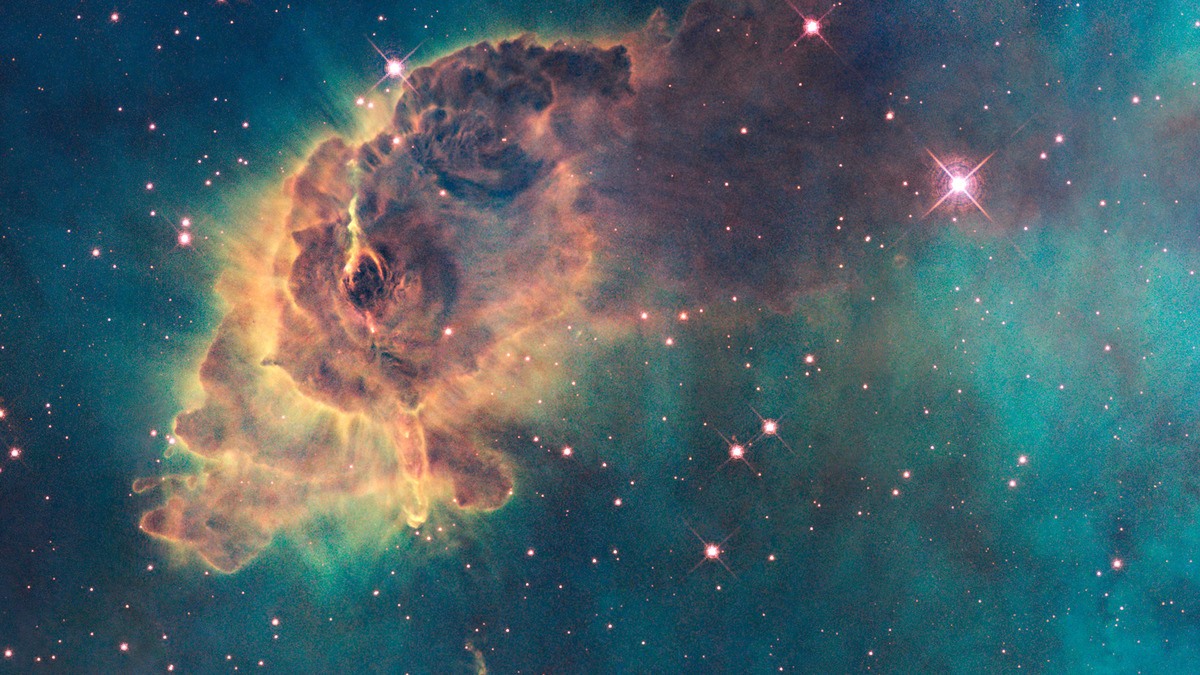
What is the name of the gas/dust clouds that form stars?
a)
Nebulas
b)
Protostars
c)
Supernova
d)
Neutron Star
2.
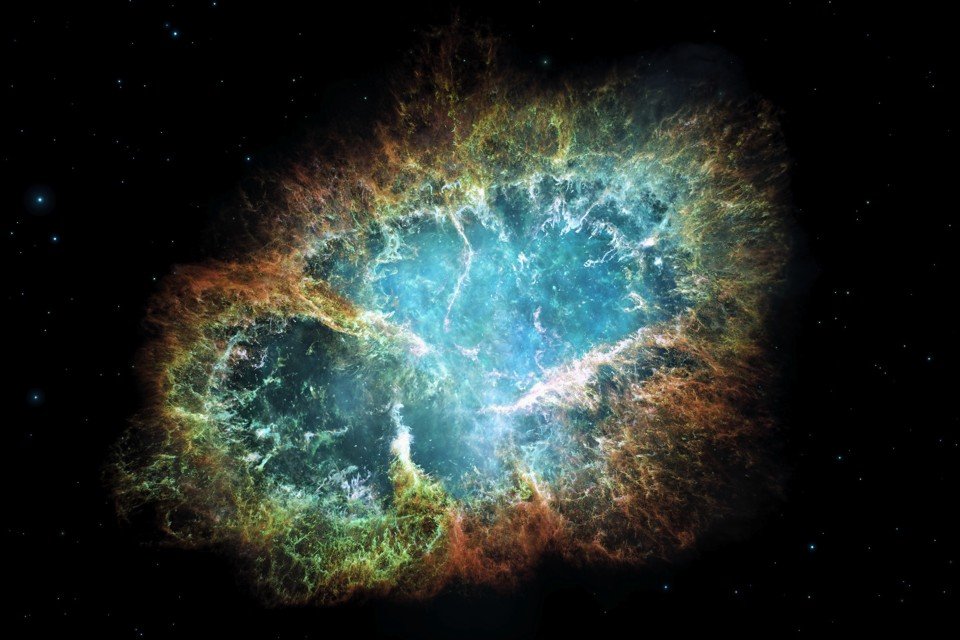
What is the name of the explosion at the death of a massive star?
a)
Supergiant
b)
Supernova
c)
Black Hole
d)
Nebula
3.
What determines the color of a star?
a)
It's size
b)
It's temperature
c)
It's composition
d)
They are all the same color
4.
What fuel do stars use?
a)
Oxygen
b)
Hydrogen
c)
Carbon
d)
Iron
5.
Larger stars (stars with more mass) have a longer life cycle.
a)
True
b)
False
6.
A relatively small, dense star at the end of its life cycle, which generates little or no energy and has contracted to its densest state.
What stage in the life cycle does this describe?
What stage in the life cycle does this describe?
a)
Black Hole
b)
Nebula
c)
White Dwarf
d)
Red Giant
7.
In this stage, a star spends most of its life. Hydrogen is fused into helium at a temperature of millions of degrees.
a)
nebula
b)
protostar
c)
main-sequence
d)
supergiant
8.
At 10,000 degrees Celsius, hydrogen begins to change into helium and energy is released in a process called
a)
supernova
b)
pulsar
c)
nuclear fusion
d)
nuclear fission
9.
a gigantic explosion that causes the death of a large star
a)
pulsar
b)
red giant
c)
supernova
d)
black hole
10.
a star that expands and cools once it runs out of hydrogen
a)
pulsar
b)
black hole
c)
red giant
d)
supernova
11.
What can a scientist learn about a star from its spectrum
a)
its color
b)
its size
c)
its composition and temperature
d)
its age
12.
the distance light travels in a year
a)
parallax
b)
absolute magnitude
c)
apparent magnitude
d)
light year
13.
Planets that are closer to the sun
a)
take more time to orbit
b)
take less time to orbit
14.
Complete the sentence: The force of gravity depends on...
a)
Distance and mass
b)
Distance and inertia
c)
Distance and speed
15.
How does distance affect gravity?
a)
Gravity decreases as distance increases.
b)
Gravity increases as distance increases
c)
Gravity stays the same no matter the distance
16.
When mass increases, what happens to the gravity?
a)
Decreases
b)
Increases
c)
Stays the same; mass does not affect gravity
17.
A car going around a roundabout at constant speed is accelerating.
a)
False
b)
True
18.
If the centripetal force is removed, an object in circular motion would...
a)
Continue in circular motion
b)
Move in a straight line
19.
Which is the largest object in our solar system?
a)
Sun
b)
Jupiter
c)
Earth
d)
Pluto
20.
Which is the sixth planet from the sun?
a)
Earth
b)
Uranus
c)
Saturn
d)
Neptune
21.
A natural satellite of a planet.
a)
Asteroid
b)
Comet
c)
Moon
d)
Meteor
22.
If a star is being observed from Earth and it's light has shifted towards the blue side of the electromagnetic spectrum it would be...
a)
Moving towards the Earth
b)
Moving away from the Earth
c)
This is a trick question that cannot be answered
d)
It isn't a star, it is a very large blueberry.
23.
If a star is being observed from Earth and it's light has shifted towards the red side of the electromagnetic spectrum it would be...
a)
Moving towards the Earth
b)
Moving away from the Earth
c)
This is a trick question that cannot be answered
d)
It isn't a star, it is a very large blueberry.
24.
The vast majority of galaxies in our universe are moving away from us. We know this because we observe __________ in the galaxies absorption spectra.
a)
Redshift
b)
Blueshift
c)
Turbulance
d)
Superposition
25.
An object that is moving VERY fast away from Earth would have ________ than an object that is moving very slow away from Earth.
a)
More Redshift
b)
More Blueshift
c)
Less Redshift
d)
Less Blueshift
26.

All electromagnetic waves travel at
a)
Speed of Sound
b)
the Speed of Light
c)
the speed of gravity
d)
no idea
27.
In the 1920s Edwin Hubble made observations of of many distant galaxies and formulated Hubble’s law which states that galaxies that are
a)
more distant are moving away faster with a greater apparent redshift in their spectra
b)
more distant are moving away slower with a greater apparent redshift in their spectra
c)
more distant are moving away faster with a greater apparent blueshift in their spectra
d)
more distant are moving away slower with a greater apparent blueshift in their spectra
28.
The majority of matter in the universe is made of which two elements that formed shortly after the Big Bang?
a)
Oxygen and Helium
b)
Nitrogen and Carbon
c)
Hydrogen and Helium
d)
Lithium and Oxygen
29.
According to the Big Bang theory, all of the matter and energy in the universe was once contained in
a)
a galaxy
b)
a star
c)
an element
d)
a singularity
30.
According to the Big Bang theory, immediately after the big bang, the universe began to
a)
cool down
b)
shrink
c)
heat up
d)
Condense
31.
In our expanding universe
a)
Galaxies are moving away from each other due to gravity.
b)
More distant galaxies experience less redshift.
c)
The Milky Way is at the center of the expansion.
d)
Galaxies appear to move away due to the expansion of space itself.
32.
A red shift in the observed light from very distant galaxies suggests that the universe is
a)
fixed and stationary
b)
contracting continuously
c)
moving randomly
d)
constantly expanding
33.
These have the longest wavelength and the lowest frequency
a)
Radio Waves
b)
Visible Light
c)
Gamma Waves
d)
Purple
34.
Waves that have the shortest wavelength and the highest frequency are called
a)
Gamma
b)
Mechanical
c)
Infrared
d)
ultraviolet
100 %

