Wayground logo

Free Printable Worksheets

Font size

S
M
L
XL
Worksheets

Evolution Test

Total questions: 18

Worksheet time: 12mins
Name
Class
Date
1.

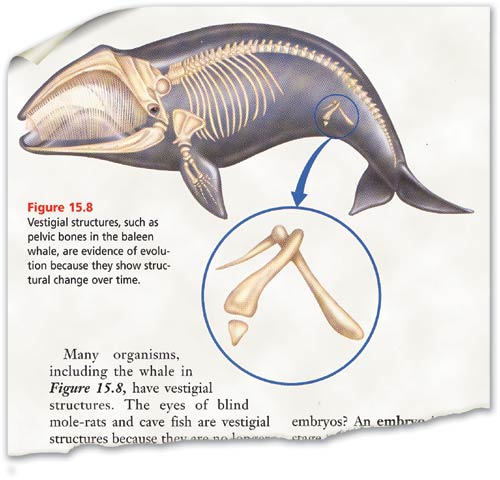
The hip bones in a whale are examples of

a)

homologous structures

b)

analogous structures

c)

fossils

d)

vestigial structures

2.
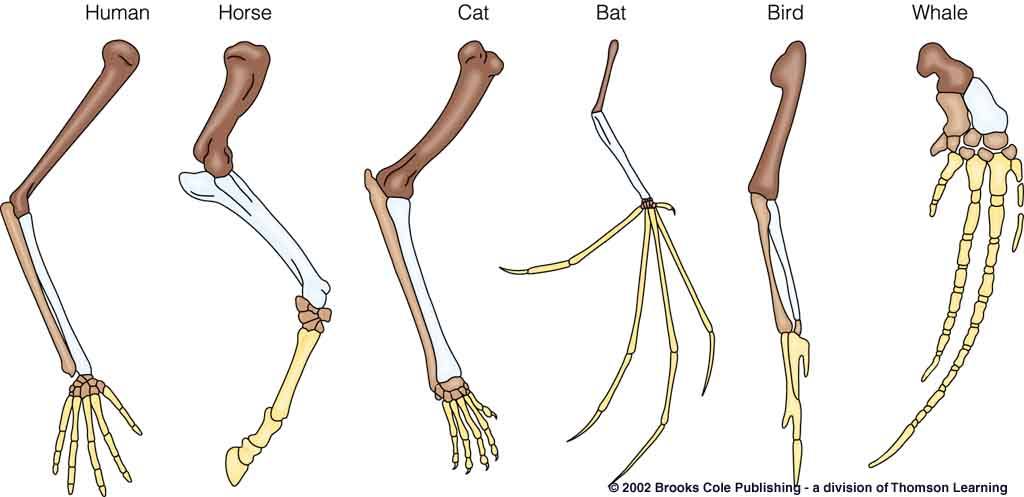
The structures shown are_________
a)
homologous
b)
heterologous
c)
analogous
d)
vestigial
3.
a)
Homologous
b)
Vestigial
c)
Analogous
4.
Who was the naturalist that traveled the world to study plants and animals?
a)
Albert Einstein
b)
Charles Darwin
c)
Charles Barkley
d)
Isaac Newton
5.
The gradual change in species over time is...
a)
Evolution
b)
Nucleotide 
c)
Adaptation
d)
Natural Selection
6.
What characteristic did Darwin observe about the finches on the Galapagos Islands?
a)
Their feathers 
b)
Genotypes 
c)
Their beaks
d)
Their body sizes
7.
Which term refers to the process by which individuals that are better suited to the environment survive and reproduce therefore passing down their genes to their offspring? 
a)
Evolution 
b)
Variation 
c)
Adaptation
d)
Natural Selection 
8.
When an organism completely dies out, it is called.....
a)
Adaption
b)
Extinction
c)
Fossilization
d)
Mutation
9.
The white feathers of a snowy owl allow it to blend in with its environment during the winter months (snow). This is an example of ________________
a)
Species
b)
Environmental Change
c)
Adaptation
d)
Variation
10.
Darwin referred to this as survival of the fittest. Over time, it results in changes in the inherited characteristics of a population because organisms with adaptations that make them fit for their environment will survive and reproduce better than those without favorable traits.
a)
Natural Selection
b)
Genetic Variation
c)
Survival of the Fittest
11.
Darwin's expedition was called the Voyage of the _________.
a)
Titanic
b)
Beagle
12.
In stage one (top row) of these embryos, most of the embryos________
a)
look very similar.
b)
have very different features.
c)
show different stages of development.
d)
have only a tail if they are non-human.
13.

The hypothesis that evolution occurs at an irregular rate through geologic time is known as

a)

directional equilibrium

b)

punctuated evolution

c)

directional evolution

d)

punctuated equilibrium

14.

Lobsters, insects, and spiders are all examples of

a)

vertebrates

b)

monerans

c)

arthropods

d)

amphibians

15.

Which of the following is a vestigial structure

a)

fossil cast

b)

the bill of a finch

c)

flower color

d)

human tailbone

16.

Vertebrates that are adapted to life both on land and in the water are

a)

amphibians

b)

bony fish

c)

arthropods

d)

reptiles

17.

Cyanobacteria changed the young Earth's atmosphere by producing

a)

oxygen

b)

carbon dioxide

c)

ammonia

d)

methane

18.

Whales evolved from

a)

four legged wolf like animals

b)

reptiles moving into the water

c)

amphibians spending all their time in water

d)

fish