wayground logo

Free Printable Worksheets

Font size

S
M
L
XL
Worksheets

YR10 Recap Quiz

Total questions: 39

Worksheet time: 21mins

Name
Class
Date
1.
Clock speed is measures in
a)
bytes
b)
bits
c)
time
d)
hertz
2.
A computer measured in 1 hertz can do how many things a second
a)
100
b)
1
c)
2
d)
1000
3.
You can overclock a computer to make the processor run faster which increases the processing power.
a)
true
b)
FALSE
4.
The rate of the fetch execute cycle depends on the clock speed.
a)
true
b)
FALSE
5.
Some processors cannot be overclocked
a)
true
b)
FALSE
6.

A 2GHz Processor can process:

a)

2,000,000 instructions per second

b)

2,000,000,000 instructions per second

c)

20,000,000 instructions per second

d)

200,000 instructions per second

7.

Which of these clock speeds is the fastest:

a)

10 Mhz

b)

1 Mhz

c)

1 Ghz

d)

100 Mhz

8.

A PC uses cache memory to help improve performance. Which of the following statements about cache memory is true?

a)

Level 3 cache is closest to the CPU

b)

Cache is part of main memory

c)

Level 1 cache is closest to the CPU

d)

Cache memory is cheaper than "normal" memory

9.

Which of the factors below can significantly impact the performance of a CPU? (choose as many as are appropriate)

a)

Clock Speed

b)

Cache Size

c)

Number of cores

d)

SSD (Solid State Drive)

10.
So long as you buy an expensive computer there is not really very much else you can do to improve its performance
a)
True
b)
False
11.
The faster a clock runs the more power it consumes and the more heat it generates
a)
True
b)
False
12.
A core is a complete processing unit containing an ALU, a control unit and registers
a)
True
b)
False
13.
It is possible to have more than one core inside a CPU
a)
True
b)
False
14.
Parallel processing always results in faster performance
a)
True
b)
False
15.
If you keep adding more RAM your computer’s performance will just get faster and faster
a)
True
b)
False
16.
Optical device, fairly fragile, easy to snap or scratch.
a)
Flash memory
b)
Magnetic Tape
c)
CD
d)
Hard disk
17.
Not intended to be a portable storage device.
a)
CD
b)
Flash memory
c)
DVD
d)
Internal hard disk
18.
Large organisations use this type of storage device to  back up their systems daily.
a)
CD
b)
DVD
c)
Blu-ray
d)
Magnetic tape
19.
The most durable storage device as it has not moving parts
a)
Solid State Storage
b)
Magnetic Storage
c)
Optical Storage
20.
Typically has the largest storage capacity and is the cheapest per gb.
a)
Magnetic storage
b)
Solid state storage
c)
Optical storage
21.

Solid state storage has no moving parts?

a)

True

b)

False

22.
What is cloud storage?
a)
Storage of data online in the cloud
b)
Storage of data offline in a window
c)
A cloud in the sky which stores rain
d)
Making of data
23.
Which device would you use:
If you needed storage that could be easily carried around
a)
Optical Disk
b)
Hard Drive
c)
Flash Memory
d)
Magnetic Tape
24.
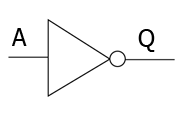
What logic gate is this?
a)
AND
b)
OR 
c)
NOT
d)
TO
25.
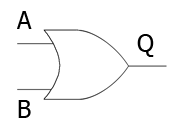
What logic gate is this?
a)
AND 
b)
OR 
c)
NOT 
d)
THE
26.
What logic gate is this?
a)
OR
b)
NOT
c)
AND 
d)
THE
27.
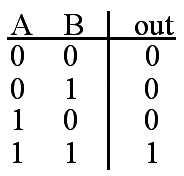
What gate is this truth table for?
a)
AND
b)
OR
c)
NOT
d)
THE 
28.
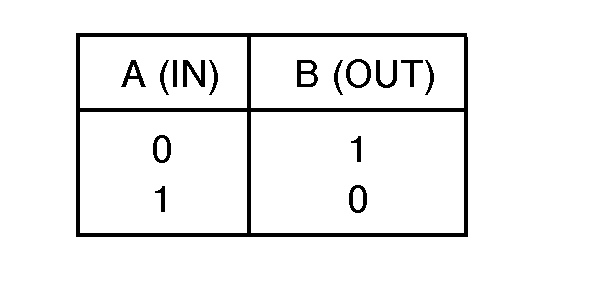
What gate is this table for?
a)
AND
b)
OR
c)
NOT
d)
NOR
29.
What gate is this table for?
a)
AND
b)
XOR
c)
OR 
d)
NOT
30.
Is this an embedded system?
a)
YES
b)
NO
31.
Is this an embedded system?
a)
YES
b)
NO
32.
Is this an embedded system?
a)
YES
b)
NO
33.
Is this an embedded system?
a)
YES
b)
NO
34.
Is this an embedded system?
a)
YES
b)
NO
35.
Is this an embedded system?
a)
YES
b)
NO
36.
Is this an embedded system?
a)
YES
b)
NO
37.

Which of these is NOT a task of Operating Systems

a)

communicating with the user

b)

communicating with the hardware

c)

managing memory

d)

browsing the Internet

38.

Every type of computer needs an operating system

a)

True

b)

False

39.

What is the operating system responsible for?

a)

managing the hardware, processor time and memory

b)

managing only the hardware and software

c)

managing hardware, and application software and allocating processor time and memory

d)

controlling processor time only