wayground logo

Free Printable Worksheets

NEW

Font size

S
M
L
XL
Worksheets

Waves Test Review

Total questions: 56

Worksheet time: 2hrs 46mins

Name
Class
Date
1.

Identify the wave part

a)

crest

b)

trough

c)

compression

d)

refraction

2.

Identify the wave part

a)

crest

b)

trough

c)

compression

d)

refraction

3.

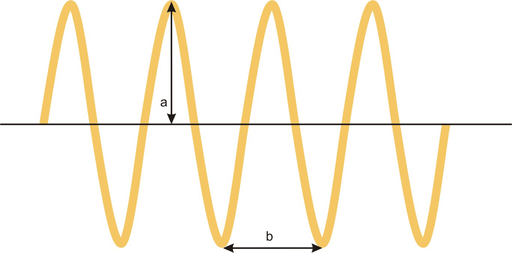
Identify the wave measurement.

a)

frequency

b)

amplitude

c)

interference

d)

wavelength

4.

Identify the wave measurement.

a)

frequency

b)

amplitude

c)

interference

d)

wavelength

5.

Identify the wave type.

a)

compressional

b)

electromagnetic

c)

transverse

6.

Identify the wave type.

a)

compressional

b)

electromagnetic

c)

transverse

7.

Which of these waves has the greatest amplitude?

a)

wave A

b)

wave B

8.

Which of these waves has the highest frequency?

a)

1

b)

2

c)

3

9.

These waves differ in their ___.

a)

amplitude

b)

wavelength

c)

wave type

10.

If more energy is added to a wave, what characteristic changes?

a)

wavelength

b)

wave speed

c)

amplitude

d)

wave type

11.
What kind of wave moves at right angles to the direction of the wave?
a)
compressional waves
b)
mechanical waves
c)
transverse waves
d)
ultraviolet rays
12.

What do we call the part of a compressional wave that is when the waves are squeezed together?

a)

compression

b)

rarefaction

c)

crest

d)

trough

13.

What do we call the part of a compressional wave that is spread apart?

a)

compression

b)

rarefaction

c)

crest

d)

trough

14.
Waves are a transfer of what?
a)
Heat
b)
Light
c)
Energy
d)
Food
15.
What kind of wave is this?
a)
Transverse
b)
Longitudinal
16.
The number of wavelengths that pass a point each per second is:
a)
frequency
b)
period
c)
longitudinal 
d)
transverse wave 
17.
When the frequency of a wave increases, what happens to the wavelength?
a)
The wavelength is not directly affected by the frequency of a wave.
b)
The wavelength increases.
c)
The wavelength decreases.
d)
More specific information is needed to form a conclusion about the wavelength.
18.
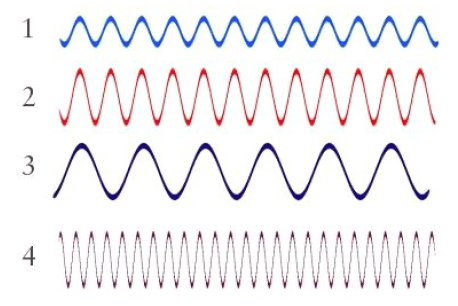
Which wave in the diagram has the greatest wavelength?
a)
1
b)
2
c)
3
d)
4
19.

One end of the rope is vibrated to produce a wave with a wavelength of .25 m. The Frequency of the wave is 3.0 Hz. What is the speed of the wave?

a)

3.00 m/s

b)

2.50 m/s

c)

.75 m/s

d)

1.25 m/s

20.

A wave has frequency of 50 Hz and a wavelength of 10 m. What is the speed of the wave?

a)

500 m/s

b)

50 m/s

c)

5 m/s

d)

0.5 m/s

21.
If a sound was has a big amplitude, it will be a ____ sound. 
a)
soft
b)
loud
c)
high frequency
d)
low frequency
22.
A wave with a large wavelength will have a ______ frequency and _____ energy
a)
high, low
b)
high, high
c)
low, high
d)
low, low
23.
Which color has the highest frequency?
a)
red
b)
orange
c)
green
d)
blue
24.
The SI unit for frequency is ________.
a)
m
b)
m/s
c)
hertz
d)
s
25.
disturbance that transfers energy from one place to another
a)
wave
b)
energy
c)
vacuums 
26.
A wave in which energy put into the wave moves in the same direction as the wave.
a)
Longitudinal Wave
b)
Transverse Wave
27.
What are the parts of a longitudinal wave?
a)
Compressions and rarefactions
b)
Crests and troughs
c)
Compressions and crests
d)
Rarefactions and troughs
28.

What is a waves period if it has a frequency of 5.1 Hz?

a)

5.1 seconds

b)

.20 seconds

c)

cannot be determined

29.

Which type of interference will occur when the pulses in the figure meet?

a)

no interference

b)

constructive interference

c)

total interference

d)

destructive interference

30.

Which type of wave interaction is best demonstrated in the picture ?

a)

reflection

b)

interference

c)

refraction

d)

diffraction

31.

Which of the following best describes diffraction?

a)

the bending of a wave as it crosses the boundary between two materials

b)

the bending of a wave as it reflects from a rough surface

c)

the bending of a wave as it goes around, or passes through, openings in a barrier

d)

the bending of a wave as it reflects from a smooth surface

32.

Which term refers to the bending of light rays when they encounter the edge of a barrier?

a)

interference

b)

reflection

c)

refraction

d)

diffraction

33.
a)

absorption

b)

diffraction

c)

reflection

d)

refraction

e)

transmission

34.

When a wave strikes an object and bounces off of it

a)

Absorption

b)

Diffraction

c)

Refraction

d)

Reflection

35.
a)

absorption

b)

diffraction

c)

reflection

d)

refraction

e)

transmission

36.
a)

absorption

b)

diffraction

c)

reflection

d)

refraction

e)

transmission

37.
When a wave passes from one medium to another, the ________ may change.
a)
speed
b)
frequency
c)
wavelength
d)
speed, frequency, and wavelength
38.
The Law of Reflection:
The angle of incidence is _________ the angle of reflection
a)
bigger than
b)
the same as
c)
smaller than
39.
The combination of two or more waves that result in a single wave
a)
A. diffraction
b)
B. resonance
c)
C. reflection
d)
D. interference
40.
When the crests of one wave overlap the crests of another wave or waves, this occurs.
a)
A. diffraction
b)
B. destructive interference
c)
C. constructive interference
d)
D. resonant frequencies
41.
a)
Constructive Interference
b)
Destructive Interference
c)
Refraction
d)
Diffraction
42.
Which wave behavior do noise cancelling headphones use?
a)
diffraction
b)
refraction
c)
constructive interference
d)
destructive interference
43.
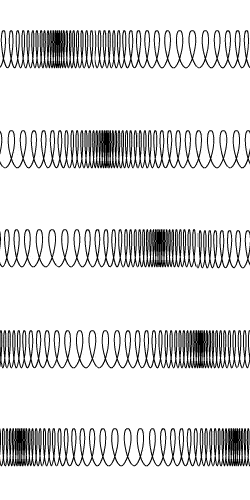
How many waves are in this wave chain?
a)
6
b)
3
c)
4
d)
5
44.
What occurs when vibrations traveling through an object match the object's natural frequency?
a)
reflection
b)
diffraction
c)
resonance
d)
refraction
45.
A tuning fork starts to vibrate when a certain note is played on the piano, This is an example of _______.
a)
resonance
b)
refraction
c)
diffraction
d)
reflection
46.
The Doppler effect is seen when a wave-making source moves toward an observer. 
a)
True
b)
False
47.

What is the Doppler Effect

a)

Where the wavelength of a wave is shifted due to the source moving

b)

When a wave is shifted when a body pushes the wave

c)

Where the apparent frequency of a wave is shifted due to the source moving

48.

What is the formula of a wave length

a)

Wavelength= speed*science

b)

Wavelength= an equation

c)

Wavelength= velocity/frequency

d)

wavelength= base*height/.5

49.

What is a wavelength

a)

The distance between two similar points

b)

A wave

c)

A type of wave

d)

The distance between waves occur

50.

Is the frequency of a sound wave is correlated with our perception of that sound’s pitch.

a)

Yes

b)

No

c)

Maybe

d)

...

51.
A wave has wavelength of 10 m and a speed of 340 m/s. What is the frequency of the wave?
a)
34 m/s
b)
3400 Hz
c)
3400 m/s
d)
34 Hz
52.
Which has the LONGEST wavelength and, therefore, the lowest frequency/energy
a)
Gamma Rays
b)
Radio Waves
c)
Visible Light
d)
Infrared rays
53.
How are electromagnetic waves different from other waves? 
a)
They have very short wavelengths 
b)
They transmit energy instead of matter 
c)
They can travel through a vacuum 
d)
They can change direction by reflection 
54.
Which of the following electromagnetic waves has the lowest energy?
a)
gamma ray
b)
infrared wave
c)
visible light wave
d)
microwave
55.
EM waves are always____________
a)
Transverse
b)
Compression
c)
Longitudinal
d)
Seismic
56.
These are the only wavelengths the human eye can see:
a)
X-rays
b)
Radio Waves
c)
Visible Light
d)
Gamma Waves