
 Worksheets
7th Grade Heredity TEST
Total questions: 18
Worksheet time: 16mins
Name
Class
Date
1.
How many alleles (letters) do each person carry for a trait?
a)
1
b)
2
c)
3
d)
4
2.
How many alleles (letters) does a child get from each parent for each trait?
a)
1
b)
2
c)
3
d)
4
3.
Dominant alleles are represented by a:
a)
Male gene
b)
lowercase letter
c)
recessive trait
d)
capital letter
4.
Aa, DD, bB, yy are all examples of
a)
genotypes
b)
phenotypes
5.
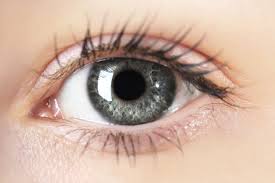
What you see, or the physical appearance.
a)
Genotype
b)
Phenotype
c)
Homozygous
d)
Heterozygous
6.
In a heterozygous genotype, the ___________ allele takes over in the phenotype.
a)
recessive
b)
dominant
c)
lower case letter
d)
both
7.
AA and Aa always show up as
a)
dominant
b)
recessive
8.
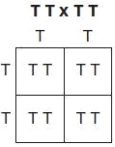
What ratio of the offspring from the cross shown will be homozygous recessive for the trait of tallness?
a)
0 in 4
b)
1 in 4
c)
2 in 4
d)
4 in 4
9.
In a flowering plant species, red flower color (R) is dominant over white flower color (r). What is the genotype of any red-flowering plant resulting from this species?
a)
rr
b)
R
c)
RR
d)
RR or Rr
10.
What gender has an X and a Y chromosome?
a)
male
b)
female
c)
transgender
d)
all of the above
11.

Which of the following best describes a DNA molecule?
a)
double helix
b)
contains ribose
c)
made of amino acids
d)
contains Uracil
12.

In a molecule of double-stranded DNA, the amount of Adenine present is always equal to the amount of
a)
cytosine
b)
guanine
c)
thymine
d)
uracil
13.
Guanine bonds with ______________.
a)
Adenine
b)
Guanine
c)
Cytosine
d)
Thymine
14.

What determines the code, or information, of a DNA molecule?
a)
the shape (structure) of the nitrogen bases
b)
the order (sequence) of the nitrogen bases
c)
the color of the nitrogen bases
d)
the frequency (number) of nitrogen bases
15.
Which organelle is DNA usually found in?
a)
cell membrane
b)
vacuole
c)
chloroplast
d)
nucleus
16.
Which 2 molecules forms the sides (backbone) of the DNA ladder?
a)
deoxyribose and adenine
b)
deoxyribose and a hydrogen bond
c)
sugar and the nucleus
d)
deoxyribose (sugar) and phosphate
17.
What type of biomolecule is DNA?
a)
Carbohydrate
b)
Lipid
c)
Protein
d)
Nucleic Acid
18.
What are the four nitrogenous bases?
a)
Adenine, Thymine, Amine, Guanine
b)
Adenine, Thymine, Cytosine, Guanine
c)
Amine, Thymine, Phosphine, Guanine
d)
Amine, Thytosine, Cytosine, Phosphine
100 %

