Wayground logo

Free Printable Worksheets

Font size

S
M
L
XL
Worksheets

GMAS Review: Atoms & Molecules

Total questions: 40

Worksheet time: 25mins

Name
Class
Date
1.
Which of the following is NOT a part of the atom?
a)
proton
b)
neutron
c)
alpha particle
d)
electron
2.
What charge does a proton have?
a)
positive
b)
negative
c)
no charge
d)
neutral
3.
What charge does an electron have?
a)
positive
b)
negative
c)
neutral
d)
no charge
4.
What charge does a neutron have?
a)
positive
b)
negative
c)
no charge
d)
neutral
5.
Where are protons located in the atom?
a)
orbitals
b)
nucleus
c)
rings
d)
positive
6.
Where are electrons located in the atom?
a)
Nucleus
b)
Shells/orbitals
c)
rings
d)
center
7.
How does the size of an electron compare to the size of a proton?
a)
larger
b)
smaller
c)
equal
8.
What part of the atom did Rutherford discover?
a)
orbitals
b)
protons
c)
electrons
d)
nucleus
9.
Who was the first scientist to name atoms?
a)
Aristotle
b)
Democritus
c)
JJ Thomson
d)
Rutherford
10.
True or False: There is nothing smaller than an atom.
a)
True
b)
False
11.

All matter is made of what

a)

energy

b)

atoms

c)

electrons

d)

compounds

12.
What is the number of protons that the element in this image contain?
a)
14
b)
7
c)
15
d)
18
13.

If an atom has 12 protons, which of the following must it also have to be considered a neutral atom?

a)

12 neutrons

b)

12 electrons

c)

12 protons

d)

24 protons and neutrons

14.
If an atom has 10 protons, 10 neutrons, and 10 electrons, what is the mass of the atom?
a)
10
b)
20
c)
30
15.

What charge does an atom have when it GAINS electrons?

a)

Positive

b)

Negative

c)

Neutral

16.

What two particles determine the mass number?

a)

Protons and electrons

b)

Electrons and neutrons

c)

Protons and neutrons

17.

When an atom loses an electron, it becomes a(n) _____________ ion.

a)

positive

b)

negative

c)

neutral

d)

polyatomic

18.

What is the atomic number of this atom shown in the Bohr model?

a)

11

b)

12

c)

13

d)

can't be determined

19.
Two atoms of the same element but with different mass numbers are called________
a)
electrons
b)
isotopes
c)
variables
d)
electron cloud
20.
The subatomic particle with a negative charge is the
a)
electron
b)
proton
c)
neutron
d)
nucleus 
21.
What is the atomic number?
a)
the number of protons
b)
the number of protons and neutrons
c)
the number of neutrons
d)
the number of protons and electrons
22.
What is the mass number?
a)
the number of protons
b)
the number of protons and neutrons
c)
the number of neutrons
d)
the number of protons and electrons
23.

What parts of an atom are found in the nucleus?

a)

protons and electrons

b)

electrons and neutrons

c)

protons and neutrons

d)

nucleus and electrons

24.

The number of protons is equal to the ....

a)

atomic number

b)

atomic mass

c)

atomic mass - atomic number

d)

number of neutrons

25.

The number of protons added to the number of neutrons equals the ...

a)

atomic number

b)

number of electrons

c)

number of neutrons

d)

atomic mass/weight

26.

If an atom has 9 protons and 10 neutrons, what is its ATOMIC NUMBER?

a)

9

b)

10

c)

19

d)

1

27.

What is the atomic number for the atom shown in the picture?

a)

11

b)

12

c)

1

d)

23

28.

What is the atomic mass number of Magnesium?

a)

24

b)

12

c)

Magnesium

d)

Mg

29.
What are the 3 particles that make-up the atom?
a)
protons, neutrons, and isotopes
b)
neutrons, isotopes, and electrons
c)
positives, negatives, and electrons
d)
protons, neutrons, and electrons
30.
What is the number of protons that the element in this image contain?
a)
14
b)
7
c)
15
d)
18
31.

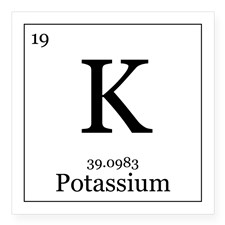
What is the element symbol for Potassium?

a)

Potassium

b)

K

c)

39

d)

19

32.
What does the 1.00794 stand for?
a)
Hydrogen
b)
atomic number
c)
atomic mass
d)
atomic explosion
33.
What are the horizontal rows on the periodic table called?
a)
Groups
b)
Periods
c)
Rows
d)
Classifications
34.
What are the vertical columns on the periodic table called?
a)
Groups
b)
Periods
c)
Rows
d)
Classifications
35.
Who was the first scientist to name atoms?
a)
Aristotle
b)
Democritus
c)
JJ Thomson
d)
Rutherford
36.

What scientist developed the Gold Foil Experiment?

a)

Aristotle

b)

Democritus

c)

JJ Thomson

d)

Rutherford

37.
If an atom gains a new electrons, does the atom become more positive or more negative?
a)
more positive
b)
more negative
c)
both
d)
neither
38.
If an atom loses an electron, does the atom become more positive or more negative?
a)
more positive
b)
more negative
c)
both
d)
neither
39.

If the mass number of this chlorine atom is 36, how many neutrons does it have?

a)

17

b)

18

c)

19

d)

can't be determined

40.

Most of the mass of an atom is found in the ______.

a)

nucleus

b)

proton

c)

electron cloud

d)

isotope