
 Worksheets
Ecosystems Review
Total questions: 15
Worksheet time: 9mins
What are the living and nonliving things in an environment or area?
predator
producer
ecosystem
abiotic factor
An organism that can make its own food
decomposer
producer
consumer
Breaks down and feeds on the remains of other organisms
decomposer
consumer
producer
Interacting food chains found in an ecosystem
food web
food chain
predator
An animal that hunts and eats other animals for energy
prey
predator
decomposer
These organisms cannot make their own food; they must eat something for energy
decomposer
consumer
producer
NON-living things found in an ecosystem
biotic
abiotc
habitat
Where does the food chain START?
with consumers that eat grass
with the sun giving energy to producers
with the sun giving energy to consumers
with consumers eating other consumers
Which of the following are factors that could cause extinction?
Destruction of animals' habitat
Climate change
Pollution
Increased human population (more people)
ALL of the above could cause extinction
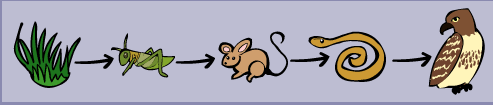
Explain the flow of energy in this food chain (who passes energy to who).
The hawk gives energy to the snake. The snake gives energy to the mouse. The mouse gives energy to the grasshopper who gives energy to the grass.
The mouse gives energy to the hawk. The snake gives energy to the grasshopper. The grass gives energy to the snake.
The grass gives energy to the grasshopper. The grasshopper gives energy to the mouse. The mouse gives energy to the snake who gives energy to the hawk.
The role of an organism in an ecosystem
niche
carnivore
habitat
ecosystem
A dead animal would be considered
a biotic factor
a limiting factor
a population
a producer
What is the condition that occurs when two organisms both need a limited resource to live?
competition
ecological succession
predator-prey
natural selection
The presence of lichens and mosses indicates the start of....
ecological succession
natural disaster
extinction
limiting factors
The process of secondary succession begins....
with bare rock.
after primary succession.
with an ecologically diverse climax community.
after a natural disaster

