wayground logo

Free Printable Worksheets

NEW

Font size

S
M
L
XL
Worksheets

Energy Flow

Total questions: 56

Worksheet time: 43mins

Name
Class
Date
1.

What is the energy molecule for all living cells?

a)

ADP

b)

ATP

c)

Protein

d)

Sugars

2.

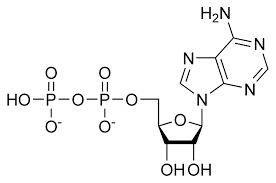
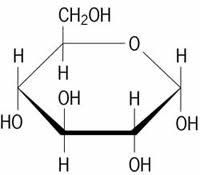
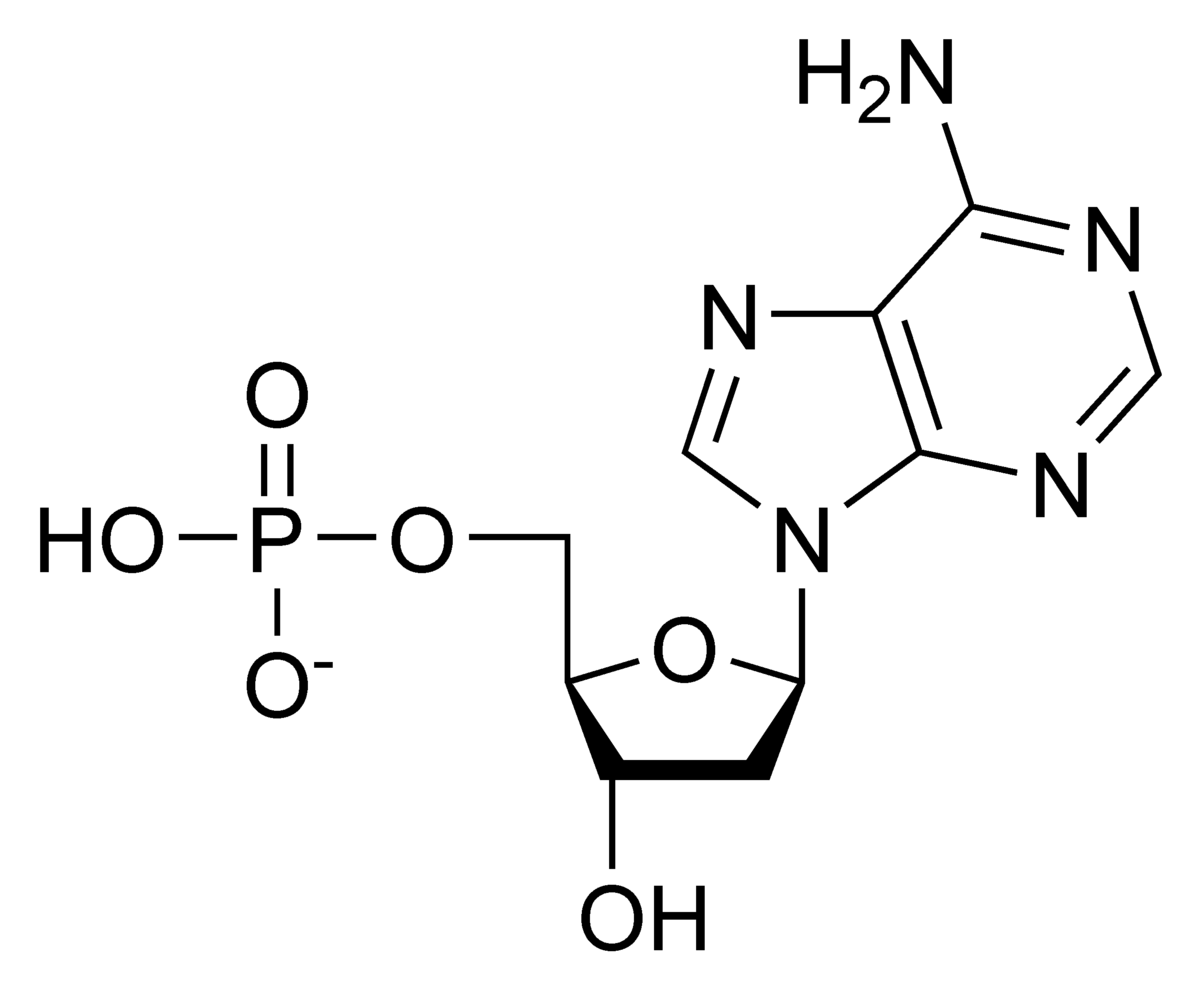
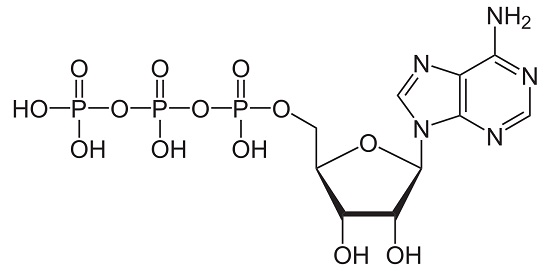
Which of the following is the correct structure of ATP?
a)
b)
c)
d)
3.

How does ATP provide energy for the cell?

a)

The bond between the first and second phosphate is broken to release energy.

b)

The bond between the adenine and the sugar is broken to release energy.

c)

The bond between the sugar and phosphates are broken and release energy.

d)

The bond between the second and third phosphate are broken to release energy.

4.
Using the figure, which parts of the molecule must the bonds be broken to form an ADP molecule?
a)
A and B
b)
B and C
c)
C and D
d)
all of the above
5.
Which of the following can be compared to a battery in need of recharging?  (empty wallet)
a)
ADP
b)
ATP
c)
Ribose
d)
Adenosine
6.
ADP is an abbreviation for:
a)
aniline diphosphate.
b)
adenine diphosphate.
c)
adenosine diphosphate.
d)
adenosine triphosphate.
7.
What do plants give off after photosynthesis?
a)
Oxygen
b)
carbon
c)
nitrogen
d)
hydrogen
8.
Plants need ________from the air for photosynthesis
a)
oxygen
b)
soil
c)
carbon dioxide
d)
sugar
9.
The products of photosynthesis are
a)
water and carbon dioxide
b)
oxygen and water
c)
sugar and cabon dioxide
d)
oxygen and sugar (glucose)
10.
The main source of energy for all life comes from ____.
a)
the Earth
b)
the moon
c)
the sun
d)
the food we eat/make
11.
After photosynthesis, plants store their energy as _________ .
a)
chlorophyll
b)
pigment
c)
glucose (sugar)
d)
Oxygen
12.
In what part of the cell does photosynthesis occur?
a)
Nucleus
b)
Chloroplast
c)
Epidermis
d)
Vacuole
13.
Why are plants important to life on Earth?
a)
They make our world more beautiful
b)
They make the planet look green
c)
They use carbon dioxide and give us oxygen
d)
They provide shade for insects
14.
Because plants carry out photosynthesis, they are considered _____.
a)
heterotrophs
b)
autotrophs
c)
consumers
d)
unicellular
15.
What is the chemical formula for glucose?
a)
C6H12O6
b)
C6H6O12
c)
C12H6O12
d)
C6O2H6
16.
Which is the correct formula for photosynthesis?
a)
CO2 + H2O --> (in sunlight) C6H12O6 + O2
b)
sunlight + CO2 + H2O --> C6H12O6 + O2
c)
C6H12O6 + O2 --> (in sunlight) CO2 + H2O
d)
CO2 + H2O --> C6H12O6 + O2 + sunlight
17.

Why are plants usually green?

a)

Because the chlorophyll reflects green light

b)

Because the chlorophyll absorbs green light

c)

Because the accessory pigments combine to make green

d)

Because the accessory pigments only absorb green light

18.
Plants need carbon dioxide from their environment to produce glucose during which stage of photosynthesis? 
a)
The light-dependent stage
b)
The light-independent stage (The Calvin Cycle)
c)
The electron transport chain
d)
ATP formation
19.
Which of the following would have affect the rate of photosynthesis?
a)
amount of water
b)
carbon dioxide concentration
c)
temperature
d)
all of these
20.
Use the diagram to answer the question. Which molecule is an electron carrier?
a)
H2O
b)
carbon dioxide
c)
NADP+
d)
oxygen
21.
Where do the light-dependent reactions occur? 
a)
thylakoid membrane
b)
stroma
c)
mesophyll
d)
mitochondria
22.
What is the function of NADPH and ATP?
a)
They absorb light
b)
They power the light-dependent reactions
c)
They are light-reflecting pigments
d)
They are short term energy carriers
23.
 #3 is pointing to the space outside the stacks in this chloroplast.  What is this area called?
a)
Thylakoid space
b)
Thylakoid
c)
Stroma
d)
Stomata
24.
What is photosynthesis?
a)
The process in which humans eat their food
b)
When a photographer takes a photo.
c)
To get your pictures from the photo lab.
d)
The process in which plants make their food.
25.
What is one of the reactants of cellular respiration?
a)
energy
b)
glucose
c)
carbon dioxide
d)
water
26.
What is the correct equation for cellular respiration?
a)
6O2 + C6H12O6 -> 6CO2 + 6H2O + Energy
b)
6O2 + C6H12O6 + Energy -> 6CO2 + 6H2O
c)
6CO2 + 6H2O -> 6O2 + C6H12O6 + Energy
d)
6CO2 + 6H2O + Energy -> 6O2 + C6H12O6
27.
In which way are photosynthesis and cellular respiration different?
a)
Cellular respiration stores ATP, while photosynthesis releases ATP.
b)
Cellular respiration produces oxygen, while photosynthesis uses oxygen.
c)
Photosynthesis releases energy, while cellular respiration stores energy.
d)
Photosynthesis used carbon dioxide, while cellular respiration produces carbon dioxide.
28.
Cellular Respiration's goal is to
a)
make water
b)
make ATP
c)
make glucose
d)
make  oxygen
29.
What is the name of the structure on a leaf that lets gasses flow in and out?
a)
Stomata
b)
Cell membrane
c)
chlorophyll
d)
chloroplast
30.
What are the reactants in cellular respiration?
a)
glucose and oxygen
b)
glucose and carbon dioxide
c)
water and carbon dioxide
d)
oxygen and glucose
31.

Which of the following organelles is responsible for cellular respiration?

a)

Mitochondria

b)

Nucleus

c)

Endoplasmic Reticulum

d)

Ribosome

32.
Which statement best compares aerobic and anaerobic respiration? 
a)
Less ATP is generated during anaerobic respiration than during aerobic respiration. 
b)
More water is generated during anaerobic respiration than during aerobic respiration. 
c)
More oxygen is generated during anaerobic respiration than during aerobic respiration. 
d)
Less lactic acid is generated during anaerobic respiration than during aerobic respiration. 
33.
How does the amount of energy resulting from fermentation compare with that of aerobic respiration? 
a)
Aerobic respiration results in less energy.
b)
Aerobic respiration results in more energy.
c)
Each process results in equal amounts of energy. 
d)
Each process results in variable amounts of energy. 
34.
What will most likely be the result if all of the mitochondria are removed from a plant cell? 
a)
It will be unable to carry out respiration. 
b)
It will lose water through osmosis. 
c)
It will break down the ribosomes in the cell. 
d)
It will be unable to photosynthesize
35.
What is the function of the organelle identified by #3?
a)
produce sugars
b)
direct protein synthesis
c)
produce energy
d)
trap sunlight
36.
This organelle could likely be found in 
a)
plant cells only.
b)
animal cells only.
c)
prokaryotes only.
d)
plant and animal cells.
37.
Muscle cells that are used during heavy exercise often do not receive enough oxygen for energy production.  What waste product builds up in muscle cells resulting in soreness?
a)
water
b)
alcohol
c)
carbon dioxide
d)
lactic acid
38.
How much TOTAL ATP does cellular respiration ideally make?
a)
2 ATP
b)
0 ATP
c)
10 ATP
d)
36 ATP
39.
Where does the Krebs Cycle take place?
a)
mitochondria
b)
chloroplast
c)
cytoplasm
d)
nucleus
40.
Cellular Respiration's goal is to
a)
make water
b)
make ATP
c)
make glucose
d)
make  oxygen
41.
What process occurs in the cytoplasm?
a)
photosynthesis
b)
electron transport chain
c)
glycolysis
d)
krebs cycle
42.
Glycolysis results in a net gain of how many ATP?
a)
0
b)
2
c)
4
d)
1
43.
ATP becomes ADP when it
a)
loses a phosphate
b)
is exposed to sunlight
c)
gains a phosphate
d)
gains energy
44.
Which is a product of glycolysis?
a)
pyruvate
b)
carbon dioxide
c)
water
d)
glucose
45.
Which is a product of the electron transport chain?
a)
glucose
b)
carbon dioxide
c)
water
d)
oxygen
46.
When a bond is broken
a)
energy is stored
b)
energy is released
47.
When a bond is made
a)
energy is stored
b)
energy is released
48.
______________ produces the most ATP.
a)
photosnthesis
b)
aerobic respiration
c)
anaerobic respiration
d)
glycolysis
49.
Anaerobic respiration.....
a)
doesn't require CO2
b)
requires CO2
c)
doesn't require oxygen
d)
requires oxygen
50.
Which molecule isn't an energy carrier?
a)
FADH2
b)
NADH
c)
oxygen
d)
ATP
51.

What comes next after glycolysis if oxygen is present

a)

Krebs cycle

b)

Electron transport chain

c)

Alcoholic Fermentation

d)

Lactic Acid Fermentation

52.
Fermentation involves
a)
aerobic respiration
b)
anaerobic respiration 
53.
What is a disadvantage of fermentation as a process? 
a)
It produces too much ATP
b)
It only produces 2 ATP
c)
It occurs in the absence of oxygen
d)
It is only for quick bursts of energy
54.
What cells in the body may undergo lactic acid fermentation during exercise? 
a)
Muscle cells
b)
Fat cells
c)
Liver cells
d)
Skin cells
55.
The process carried out by yeast that causes bread to rise is
a)
alcoholic fermentation
b)
lactic acid fermentation
c)
cellular respiration
d)
yeast mitosis
56.
How are lactic acid and alcoholic fermentation similar?
a)
They have the same products
b)
They have the same reactants
c)
They both require oxygen
d)
They occur in the same organisms