
 Worksheets
Chapter 10 (Meiosis and Mendelian Genetics) Review
Total questions: 54
Worksheet time: 39mins

Reduction division that produces gametes
mitosis
meiosis
replication
translation

Specific characteristic of an organism, such as body color, is called a
genes
homozygous
trait
gametes

What is the end result of meiosis?
2 genetically identical diploid somatic cells
2 genetically different haploid somatic cells
4 genetically identical diploid gametes
4 genetically different haploid gametes

What is the process that occurs in Prophase I where two chromosomes exchange genetic material?
sharing
crossing over
splitting
none of the above
A body cell is also called a ___________cell. These cells make up most of your body tissues and organs
prokaryotic
zygote
mutated
somatic
This is used to predict the traits of an offspring
Punnett Square
Telepathy
Nondisjunction
Magic 8 Ball
A genotype in which the two alleles of a gene are different
Heterozygous
Homozygous
Dominant trait
Recessive trait

What is a phenotype?
The genetic make up (code)
The physical trait
What is it called when a sperm and egg meet?
meiosis
fertilization
cell division
mitosis
Unlike mitosis, meiosis results in
one haploid gamete
two diploid gametes
four diploid gametes
four haploid gametes

This picture shows which process?
mitosis
meiosis
the cell cycle
fertilization
How are your chromosomes inherited?
most of your chromosomes from your mother
most of your chromosomes from your father
a random number of chromosomes from each parent
half your chromosomes from your mother and half from your father.

What predicted percentage of the offspring will be heterozygous?
100%
75%
50%
25%
An organism with the genotype Dd for a trait is
heterozygous dominant
heterozygous recessive
homozygous dominant
homozygous recessive
Potential evolutionary changes can occur more frequently in
Meiosis
Mitosis
Crossing over helps promote
male genotype
genetic variation
DNA replication
mitosis
In a heterozygous genotype, the ___________ allele takes over in the phenotype.
recessive
dominant
lower case letter
both
G = green, g = yellow
The genotype for a yellow plant is...
GG
Gg
gg
all of the choices result in yellow
Which of the following alleles is homozygous (purebred) recessive?
Tt
tt
TT
t

Aa, DD, Bb, yy are all examples of
genotypes
phenotypes

Which term refers to an organism's physical appearance
recessive allele
dominant
genotype
phenotype

Which term refers to an organism's genetic make up?
offspring
genotype
phenotype
behavior

Which genotype represents a heterozygous individual?
AA
Aa
aa
Ab
Which genotype represents a homozygous dominant individual?
AA
Aa
aa
AB
An allele whose trait always shows up in the organism when the allele is present.
recessive allele
dominant allele
hidden allele
present allele

Who is considered the "father" of genetics?
Mr. Einstein
Mrs. Deitche
Mr. Mendel
Mr. Newton
Red is dominant and purple is recessive-what color would the flower be if its genotype is Rr
red
purple
Another way to state (write) homozygous is
true breed/pure breed
hybrid
The study of heredity is known as
Hereditology
Genetics
Biology
Law of Heredity
Which of Mendel's laws states that alleles are separated during meiosis?
Law of Dominance
Law of Segregation
Law of Independent Assortment
Which of Mendel's laws states that alleles are distributed to gametes independent of one another?
Law of Dominance
Law of Segregation
Law of Independent Assortment

When an area of a chromatid is exchanged with the matching area on a chromatid of its homologous chromosome, _________________ occurs
crossing over
synapsis
hybridization
fertilization

Brown hair is a _______
Genotype
Phenotype
This allele will mask (cover up) the other allele
Recessive
Dominant
Gene
Independent
A genotype in which the two alleles of a gene are different
Heterozygous
Homozygous
Dominant trait
Recessive trait
What predicted percentage of the offspring will be heterozygous?
100%
75%
50%
25%

What process is seen in the diagram?
Mitosis
Meiosis
Fertilization
asexual reproduction
If alleles look like AA in a genotype it is said to be
homozygous
heterozygous
incomplete dominant
codominant
What shows the possible combinations of alleles that can result from a genetic cross?
bar graph
pie chart
punnett square
co-dominant graph
How many times in meiosis does the cell divide?
2
4
3
1

The color purple (P) is dominant over the color white (p). According to the Punnett Square, what is the probability of an offspring being WHITE?
0%
25%
50%
75%
The color purple (P) is dominant over the color white (p). According to the Punnett Square, what is the probability of an offspring being PURPLE?
0%
25%
50%
75%
Which sex chromosome combination is for a female?
XY
XX
YY
XXY
Are gametes (sex cells) haploid or diploid?
Haploid
Diploid

Meiosis makes sperm and egg cells. In humans, sperm and egg cells each have _____ chromosomes. Therefore a fertilized human egg cell (sperm and egg cell combined) would create a cell with a TOTAL of _____ chromosomes.
23, 46
46, 23
2, 4
50, 100
Type of cell division that reduces the number of chromosomes; therefore it is referred to as reduction division.
Genetics
Meiosis
Gametes
Crossing Over
Genes

Complete the Dihybrid Cross, Box 1.
Let's say that the letter "A" is dominant for Allergies to pollen. This would mean that "a" is recessive. And the letter "B" is dominant for Brown eyes. This would mean that "b" is recessive.
Please complete the Genotype for Box 1.
AABb
AABB
aabb
AaBb
Complete the Dihybrid Cross, Box 10.
Let's say that the letter "A" is dominant for Allergies to pollen. This would mean that "a" is recessive. And the letter "B" is dominant for Brown eyes. This would mean that "b" is recessive.
Please complete the Phenotype for Box 10.
allergies, brown eyes
no allergies, brown eyes
allergies, blue eyes
no allergies, blue eyes
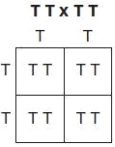
What ratio of the offspring from the cross shown will be homozygous recessive for the trait of tallness?
0 in 4
1 in 4
2 in 4
4 in 4
Which of the following genotypes is homozygous dominant?
A
Aa
AA
aa
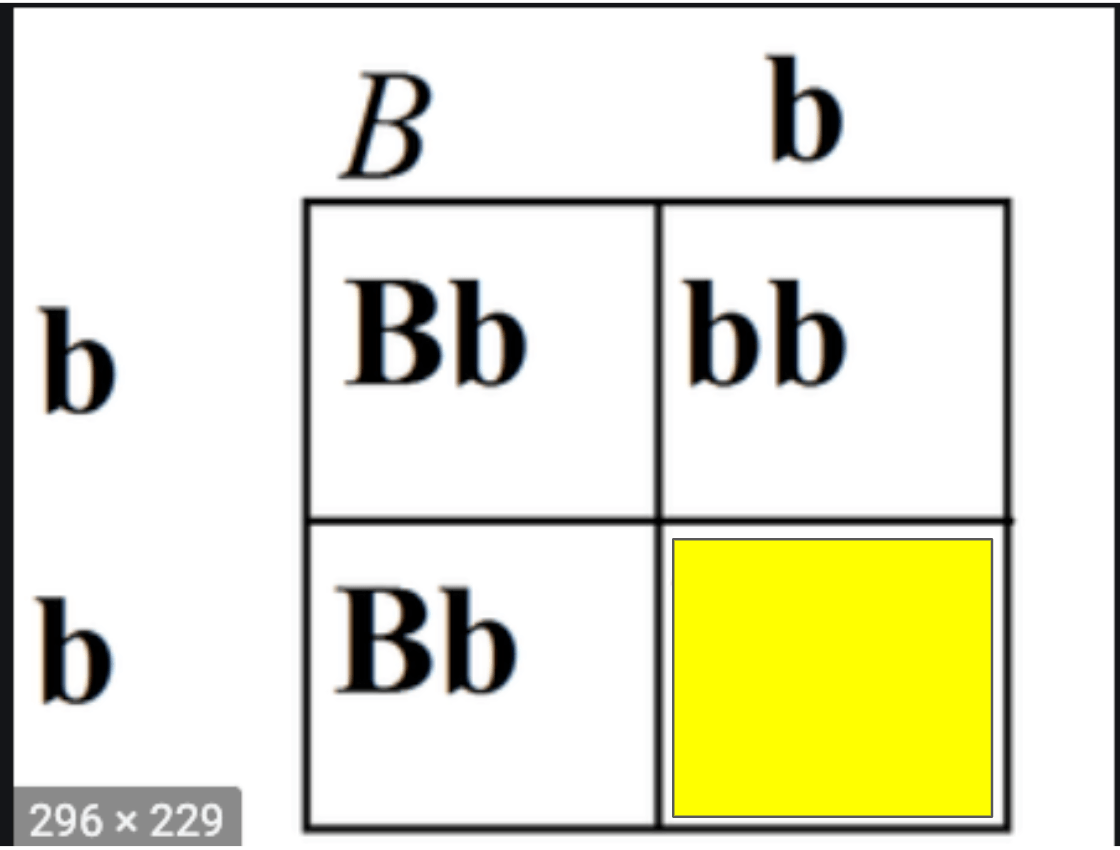
Fill in the Yellow Box
Bb
BB
bb
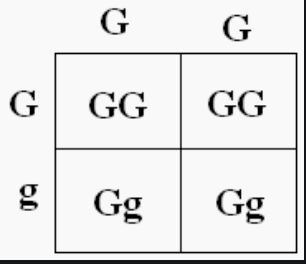
The punnett square is used to tell the color of a frogs skin. "G" means green skin and "g" means brown skin. What is the chance the baby frogs will have brown skin?
0%
25%
50%
100%


