wayground logo

Free Printable Worksheets

Font size

S
M
L
XL
Worksheets

TNReady Social Studies

Total questions: 128

Worksheet time: 2hrs 7mins

Name
Class
Date
1.
For entertainment, MOST of the people of Constantinople:
a)
Went to the Hippodrome
b)
Bought expensive things
c)
Went swimming
d)
Watched movies
2.
What was a key feature of Constantinople?
a)
Orphanages
b)
Running Water/Sewer Systems
c)
Hospitals 
d)
All of these featuers
3.
Who moved the capital of Rome to Byzantium and renamed it "New Rome" (later Constantinople)?
a)
Justinian
b)
Constantine 
c)
Charlemagne
d)
Leo III
4.
After the riots of 532, what emperor was responsible for the rebuilding of Constantinople?
a)
Leo III
b)
Charlemagne
c)
Constantine
d)
Justinian
5.
Who was the leader of the church in the Byzantine empire?
a)
The pope
b)
The patriarch
c)
The emperor
d)
The people
6.
In 1054, the Eastern Orthodox Church and the Roman Catholic Church formally split. This is a:
a)
Liturgy
b)
Patriarch
c)
Icon
d)
Schism
7.
The Byzantine Empire was the eastern half of what remained of what ancient empire? 
a)
The Ottoman Empire
b)
The Roman Empire
c)
The Holy Roman Empire
d)
The Mongolian Empire
8.
Why was Constantinople a great site for a capital?
a)
The site was easy to defend as a peninsula. 
b)
It was a crossroads of east and west trade routes. 
c)
It was a walled city. 
d)
All of the above. 
9.
What emperor had the law code re-written and organized?
a)
Charlemagne
b)
Justinian
c)
Theodora
d)
Constantine
10.
Who was the famous lady that influenced her husband to increase some legal rights of women?
a)
Irene
b)
Theodora
c)
Joan of Arc 
d)
Eleanor of Aquitaine 
11.
Why is Justinian's Code of laws so important today?
a)
It established all rules regarding. taxation.
b)
It established codes regarding the Eastern Orthodox Church.
c)
It established the basis for legal codes in Western World.
d)
It established what entertainment acts were at Hippodrome.
12.
What is another name for the Church of Holy Wisdom?
a)
Hagia Sophia
b)
Great Cathedral 
c)
St. Peter's Cathedral 
d)
None of these
13.

Which West African empire controlled the largest territory?

a)

Songhai

b)

Sahara

c)

wealth

d)

griots

14.

All three empires controlled part of the ______________ Desert

a)

diets

b)

wealth

c)

taxing

d)

Sahara

15.

________________ was Ghana's main natural resource and was exported throughout Africa

a)

Salt

b)

Bantu

c)

wealth

d)

Timbuktu

16.

____________________ was once the center of the Mali Empire and became the center of the Songhai Empire

a)

Timbuktu

b)

Bantu

c)

taxing

d)

Salt

17.

Mansa Musa was a devoted follower of ______________ who helped spread the religion throughout the kingdom.

a)

Islam

b)

taxing

c)

Salt

d)

Bantu

18.

What are large groups of camels used to transport goods called?

a)

Tunis

b)

Scholars

c)

Camels

d)

Caravans

19.
Who was Mansa Musa?
a)
First Emperor of Songhai
b)
Moroccan Muslim Traveler
c)
Greatest Ruler of Mali
d)
Griot
20.
Mansa Musa is most famous for..?
a)
converting to Christianity
b)
making a pilgrimage to Mecca
c)
ruling Songhai
d)
not being an efficient leader
21.
Ghana grew very rich after they took over the ___________ trade routes.
a)
trans-saharan
b)
silk road
c)
sub-saharan
d)
european
22.
West African empires were in a perfect spot to trade because they were in between 2 important natural resources:
a)
silver and diamonds
b)
silver and gold
c)
gold and rice
d)
gold and salt
23.
African villages were made up of 
a)
multiple families
b)
one extended family
c)
many small towns
d)
people only of the same religion
24.

What was the purpose of the Great Wall?

a)

To stop flooding

b)

To protect against invasion

c)

To stop the Chinese from leaving the area

d)

None of the above

25.

What was China’s main crop?

a)

Rice

b)

Millet

c)

Wheat

d)

Corn

26.
What physical feature is labeled on this map of China?
a)
Sahara Desert
b)
Ural Mountains
c)
Gobi Desert
d)
Himalaya Mountains
27.
What country is this?
a)
China
b)
North Korea 
c)
Japan
d)
India
28.

The teachings of Laozi are the basis of __________.

a)

Daoism

b)

Buddhism

c)

Confucianism

d)

Legalism

29.

The ideas of _______ included a duty to participate in government.

a)

Daoism

b)

Buddhism

c)

Confucianism

d)

Legalism

30.

The philosophy that traveled along the silk road to become China's largest religion

a)

Daoism

b)

Buddhism

c)

Confucianism

d)

Legalism

31.

Which Chinese philosopher (thinker who seeks wisdom and questions about life) said people should put the needs of the family and community first?

a)

Hanfeizi

b)

Laozi (Lao Tzu)

c)

Confucius

32.

A system of government where the king gives land and power to aristocrats in exchange for tribute and troops is called...

a)

Capitalism

b)

Legalism

c)

Feudalism

33.
What are the names of the two major rivers in China?
a)
Tigris and Euphrates
b)
Indus and Ganges
c)
Yellow and Yangtze
d)
Nile and Yellow
34.
Which physical feature is to the North of China and protects them from invaders?
a)
Himalayan Mts 
b)
Pacific Ocean
c)
Gobi Desert
d)
Yellow River
35.
How did Japan’s geography influence the country?
a)
It made them an easy target for barbarians to attack
b)
It allowed them to be isolated from other civilizations
c)
It helped their ideas and beliefs spread throughout the world
d)
It allowed them to have many farms and grow many different types of food
36.
What religion spread to Japan from China?
a)
Confucianism
b)
Buddhism
c)
Islam
d)
Taoism
37.
The warrior class in Japan was called
a)
ninja
b)
daimyo
c)
samurai
d)
shogun
38.
Which of the following is a wealthy landowner in Japan?
a)
Samurai
b)
Seppuku
c)
Daimyo
d)
Artisan
39.
What was the main obligation of a samurai?
a)
defend the peasants
b)
conquer lands
c)
defend the daimyo
d)
manage the land
40.
The highest ranking member of Japanese feudal society was the 
a)
Emperor
b)
Shogun
c)
Daimyo
d)
Samurai
41.
Which members of the social hierarchy were considered to be the least important people in Feudal Japan? 
a)
Merchants
b)
Artisans 
c)
Peasants
d)
Farmers 
42.

Which person had very little power in feudal Japan and was more of a figurehead

a)

Women

b)

farmers

c)

shoguns

d)

emperor

43.

When Japan closed their ports and refused to interact with other countries, this is known as

a)

Segregation

b)

Isolationism

c)

Militarism

44.

Prince Shotoku looked to this country as an example of centralized government and a constitution

a)

China

b)

Egypt

c)

Italy

d)

Korea

45.
What is bushido?
a)
Samurai code of rules 
b)
Shinto's religious leader
c)
Another name for the emperor
d)
type of government with social classes
46.

A new type of drama in feudal Japan that used elaborate makeup to highlight important facial features

a)

kowtow

b)

haiku

c)

matsuo

d)

kabuki

47.
The most powerful member of feudal Japanese society was the 
a)
Emperor
b)
Shogun
c)
Daimyo 
d)
Samurai 
48.
What was the role of the emperor during Japan's feudal period?
a)
absolute control
b)
cruel dictator
c)
seen as the Buddha
d)
a figurehead
49.

Japan entered a period known as _________ after the victory from the Mongols.

a)

Zen Buddhism

b)

Warring States

c)

Pax Romana

d)

Golden Age

50.

Political system used during Middle Ages where land was exchanged for loyalty and service.

a)

Fief

b)

Kingdom

c)

Feudalism

d)

Monarch

51.

Another name for a king or queen.

a)

Prince

b)

Princess

c)

President

d)

Monarch

52.

A land owner in the Middle Ages who is in charge of the people on his land and the lesser lords he gave land to.

a)

Lord

b)

Squire

c)

Page

d)

Fief

53.

A piece of land given from lord to a lesser lord.

a)

Vassal

b)

Royalty

c)

Kingdom

d)

Fief

54.

Upper class land owners

a)

Vassal

b)

Noble

c)

Serf

d)

Plebeian

55.

A lesser lord who accepts land from a more powerful lord and pledges loyalty and service to that lord

a)

King

b)

Monarch

c)

Vassal

d)

Peasant

56.

A nobleman who was trained as a warrior and lived their live according to a code of chivalry

a)

Samurai

b)

Navy

c)

Vassal

d)

Knight

57.

Lower class during the Middle Ages who worked on a manor in exchange for protection.

a)

Knight

b)

Noble

c)

Lord

d)

Peasant

58.

A peasant who was bound to the land

a)

Serf

b)

Apprentice

c)

Page

d)

Squire

59.

The village where nobles and peasants lived, also where all the economic activity took place during the Middle Ages.

a)

Province

b)

County

c)

Manor

d)

Vassal

60.

Men who lived in a religious community who take vows of poverty, chastity, and obedience

a)

Manor

b)

Squire

c)

Monk

d)

Vassal

61.

Place where monks live and study

a)

Convent

b)

Monastery

c)

Castle

d)

Manor

62.

What event signaled the start of the Middle Ages?

a)

Fall of Rome

b)

The attack of the Vikings

c)

Leaders Death

d)

Empire fail

63.
What is the name for the system of promises between lords and vassals that governed Europe in the Middle Ages?
a)
Christianity
b)
Feudalism
c)
Shinto
d)
Chivalry
64.
Which answer choice shows the order of Feudal Society from highest to lowest?
a)
peasants, knights, nobles, king
b)
king, nobles, knights, peasants
c)
knights, king, peasants, serfs
d)
merchants, knights, commoners, serfs
65.
A widespread disease, or epidemic, spread by fleas on rats through Europe during the Middle Ages was known as:
a)
The Black Death/The Plague
b)
The Voice
c)
The Spanish Flu
d)
The Common Cold
66.
What was the purpose of the Crusades?
a)
Ceremony acknowledging the achievement of completing 12 years of education
b)
Expel Martin Luther from the Catholic Church
c)
Unite all of Europe as one Christian kingdom
d)
Retake the city of Jerusalem (Holy Lands)
67.
The Black Death was spread by which of the following methods?
a)
Kissing!
b)
By sharing a cup
c)
It was air born
d)
Fleas on rats
68.
Who led the Norman invasion at the Battle of Hastings in 1066, which eventually started the modern English monarchy?
a)
Charlemagne
b)
Charles “The Hammer” Martel
c)
William the Conqueror
d)
Ivar the Skullsplitter
69.

What were the Crusades?

a)

a series of wars fought to take Jerusalem back from the Muslims.

b)

a series of unfortunate events

c)

a series of wars fought to capture Constantinople

d)

A series of wars fought over who should be The Pope

70.

Which of these was NOT a result of The Crusades?

a)

Muslims and Christians distrusted and disliked each other

b)

Violence against Jews increased

c)

Millions of innocent people were killed

d)

Christians captured Jerusalem permanently

71.

Charlemagne was

a)

a sacred temple.

b)

A leader who became a King.

c)

A flavor of pottage

d)

Where the Crusades took place.

72.

Which do you think effected the Middle Ages most? Click all that apply.

a)

Feudalism

b)

The Crusades

c)

The Plague

73.

What is the term for being expelled from the Church?

a)

Feudalism

b)

Excommunication

c)

Christianity

74.

The death of this last of the Anglo-Saxon kings sets off the events leading to the Norman Conquest of Britain.

a)

Ethelred the Unready

b)

Edward the Confessor

c)

Henry VIII

d)

Frederick the Great

75.

The decisive battle of the Norman Conquest was fought at______________.

a)

Agincourt

b)

Calais

c)

the Verdennes

d)

Hastings

76.

The new king of England is ________________.

a)

William the Conqueror

b)

Alexander the Great

c)

Catherine the Great

d)

Edward the Pious

77.
During the Reconquista, Christians
tried to
 
a)
 conquer Constantinople.
b)
 expel Muslims (and Jews) from Spain.
c)
expel Muslims from Constantinople
d)
take back the Holy Lands.
78.
What happened when a person
faced the Inquisition?
 
a)
 The person agreed to give up all worldly
goods
b)
The person’s beliefs were investigated
c)
The person’s fitness to join a crusade
was tested
d)
The person promised service as a monk
79.
A person who has been
excommunicated
 
a)
can no longer be part of his or her
church.
b)
must leave the country.
c)
cannot hold public office.
d)
loses his property and land.
80.
Who were the Moors? 
a)
Non-Muslims of North Africa
b)
Christians of Spain
c)
Muslims of Turkey
d)
Muslims of Spain
81.

What was the time in history when the Roman Catholic Church was questioned?

a)

Middle Ages

b)

Renaissance

c)

Reformation

d)

All of the Above

82.

How did the invention of the printing press help the Reformation?

a)

Bibles printed allowed more people to read them.

b)

People could read translations of the Bible in their language.

c)

It allowed reformers to spread their ideas.

d)

All of the Above

83.

Before the Reformation, Christian churches were ___________

a)

Jewish

b)

Roman Catholic

c)

Muslim

d)

None of the Above

84.

What was the list of complaints against the Church called?

a)

95 Theses

b)

Peace of Augsburg

c)

Magna Carta

d)

New Testament

85.

What was the Counter Reformation?

a)

Pope's decision to go to war

b)

Protestants moving to new lands

c)

Printing Bible in other languages

d)

Catholic Church making changes

86.

Why did Luther disagree with the selling of indulgences?

a)

He believed they should cost more.

b)

He believed people had to work to earn salvation.

c)

He believed salvation was a gift of grace.

d)

He believed his 95 Theses could get people to Heaven.

87.

Which of these famous structures did Michelangelo paint?

a)

the Louvre

b)

the Coliseum

c)

the Sistine Chapel

d)

the Eiffel Tower

88.

Which of these statements describes a change brought about by the Renaissance?

a)

Society was dominated by the church.

b)

Society began to value individualism.

c)

Society was focused on warfare.

d)

Society was dominated by lords.

89.

• Venetian explorer who visited the court of Kublai Khan

• One of the first Westerners to travel the Silk Road to China

• Travels increased the interest of Europeans in the lands of the East


Who is described above?

a)

Marco Polo

b)

Ferdinand Magellan

c)

Vasco da Gama

d)

Christopher Columbus

90.

• Botticelli • Michelangelo

• Raphael • Titian


All of the above were famous Renaissance

a)

scientists.

b)

philosophers.

c)

priests.

d)

artists.

91.
What does the word "Renaissance" mean?
a)
Renewed
b)
Rebuilt
c)
Remade
d)
Rebirth
92.
Title...
a)
Madonna
b)
Mona Lisa
c)
Margaret
d)
da Vinci
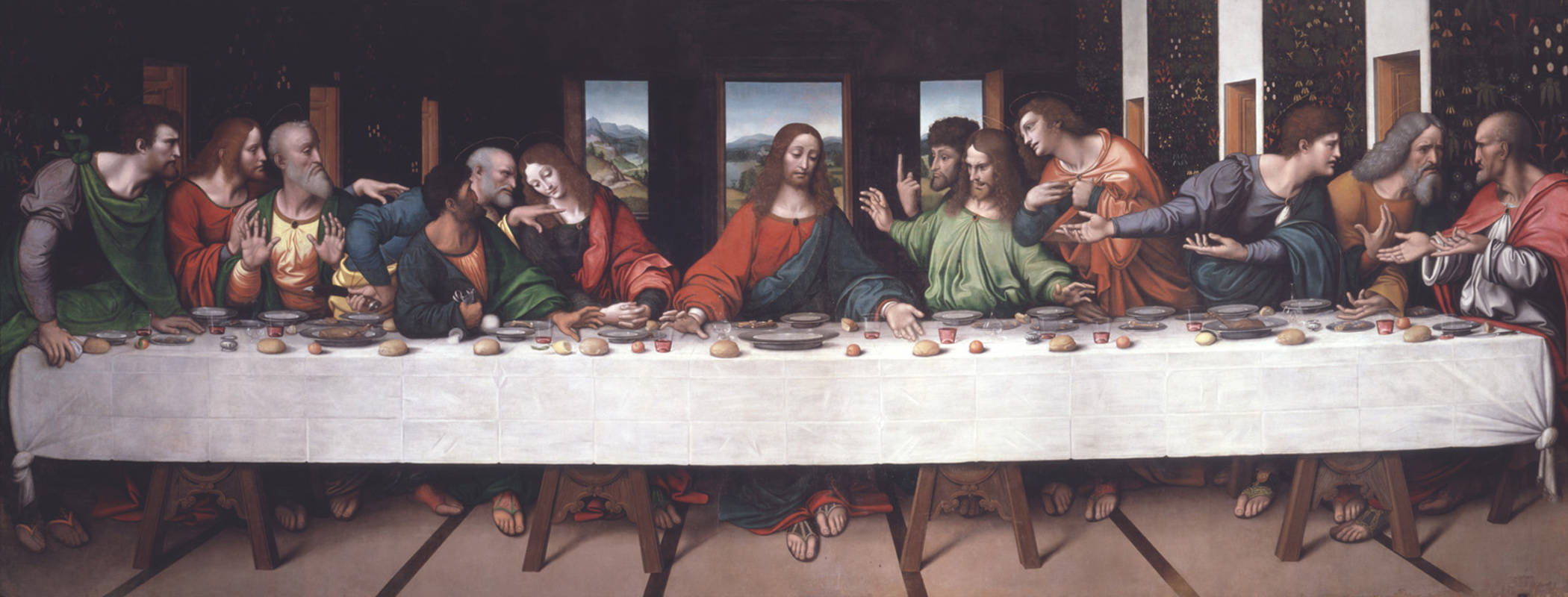
93.
Who painted "The Last Supper"?
a)
Machiavelli
b)
Botticelli
c)
Kepler
d)
Leonardo da Vinci
94.
Artist who painted the ceiling of the Sistine Chapel in Rome 
a)
Michelangelo
b)
Leonardo Da Vinci
c)
Perspective
d)
Patron
95.

What is a major reason why the Renaissance began in northern and central Italy?

a)

it was an empty country to start with

b)

Peasants there learned to read

c)

City-states there became wealthy and powerful

d)

Kings there fought one another.

96.

What ended to start the new time - Renaissance?

a)

Middle Ages

b)

Odd Ages

c)

New Ages

d)

WWI

97.

He invented the printing press

a)

William Shakespeare

b)

Marco Polo

c)

Leonardo da Vinci

d)

Johann Gutenberg

98.

A famous English playwright

a)

William Shakespeare

b)

Johann Gutenberg

c)

Dante Alighieri

d)

Niccolo Machiavelli

99.
The artist who painted The School of Athens sometimes used powdered gold in his paintings
a)
Leonardo da Vinci
b)
Michelangelo
c)
Rafael
d)
Titian
100.
The idea that the earth is the center of the universe is the ___________ theory.
a)
geocentric
b)
heliocentric
c)
earthcentric
d)
world's worst
101.
The idea that the sun is the center of the universe is the ____________ theory.
a)
geocentric
b)
heliocentric
c)
solar
d)
sunny
102.
Who created the heliocentric theory?
a)
Copernicus
b)
Galileo 
c)
Ptolemy
d)
Kepler
103.
Which scientist developed laws of motion?  
a)
Ptolemy
b)
Copernicus
c)
Galileo
d)
Newton
104.
The English philosopher who proposed the Scientific Method.
a)
Sir Francis Bacon
b)
Voltaire
c)
Thomas Hobbes
d)
hypothesis
105.
who created the first telescope?
a)
Ptolemy
b)
Nicolaus
c)
Galileo
d)
Abraham Lincon
106.
Galileo was tried for heresy because he argued  
a)
That heaven did not exist
b)
That Earth revolved around the sun
c)
Against the law of gravity
d)
That the sun revolved around the Earth
107.
According to Copernicus, the sun  
a)
Revolved around the earth
b)
Was the center of the Universe
c)
Was the biggest star
d)
 Had many moons
108.
Which French Enlightenment thinker promoted the idea of separation of power? 
a)
Mary Wollstonecraft
b)
Rene Descartes
c)
Charles-Louis Montesquieu
d)
Jean-Jacques Rousseau
109.

Who came up with the idea that all people had natural rights?

a)

Charles-Louis Montesquieu

b)

Jean-Jacques Rousseau

c)

John Locke

d)

Adam Smith

110.
Three motivations for European explorers: God, Gold, and ______.
a)
Grace
b)
Glory
c)
Greed
d)
Glaciers
111.
Europeans wanted to find which of the following to expand trade with the East 
a)
precious metals
b)
water
c)
fur
d)
lumber
112.
The art and science of map making is called:
a)
cartography
b)
mapography
c)
quilting
d)
mapology
113.
Which of the following helped explorers determine latitude from the position of the sun, moon, and stars?
a)
compass
b)
caravel
c)
astrolabe
114.
Fast ship that could sail with & against the wind, large cargo area, and shallow hull that could navigate shallow water
a)
navigation ship
b)
caravel
c)
astrolabe
d)
compass
115.
Conquistadors is a Spanish word meaning:
a)
to entrust
b)
to connect
c)
court
d)
conquerors
116.
Two things that conquistadors had that the Native Americans did not: horses and _______
a)
families
b)
gold
c)
guns
d)
land
117.

Central America is also known as?

a)

Guatamala

b)

Mesoamerica

c)

Mexico

d)

Panama

118.

Mayan achievements include: (multiple answers)

a)

astronomy (study of the stars)

b)

concept of zero

c)

creating a new variety of rice

d)

mathematics

119.

Most of the Mayan cities were on the ______ Peninsula

a)

Iberian

b)

Isthmus of Panama

c)

Yucatan

d)

Floridian

120.

How did the Aztec gain wealth? 2 answers

a)

taxed tribute

b)

controlling trade

c)

receiving tribute from conquered tribes

d)

kept the Gods happy with sacrifices

121.

Where were the Inca located? (2 answers)

a)

On the South American west coast

b)

Near the Central American west coast

c)

In the Andes mountains

d)

Along the Atlantic Ocean on Central America's west coast

122.

The Aztec and the Inca were conquered by?

a)

the Maya

b)

the Toltec

c)

the Spanish

d)

the English

123.

The Inca were ________________ meaning they believed in more than one God.

a)

monotheistic

b)

omnivore

c)

polygamous

d)

polytheistic

124.

T or F, the Aztec had a warrior society?

a)

True

b)

False

125.

T or F, the Maya were monotheistic?

a)

True

b)

False

126.
The man who is considered the prophet who founded Islam is -
a)
Muhammad
b)
Jesus
c)
Allah
d)
Adam
127.
The Muslim holy book is called the -
a)
Qur'an
b)
Torah
c)
Bible
128.
Islam spread quickly to Asia, North Africa, and ports along the Mediterranean Sea through
a)
trade and military conquest
b)
the sharing of Muhammad's teachings by his apostles
c)
Christians being forced to convert
d)
missionaries sent by the Byzantine emperor