wayground logo

Free Printable Worksheets

NEW

Font size

S
M
L
XL
Worksheets

Cell Unit Test

Total questions: 39

Worksheet time: 55mins

Name
Class
Date
1.
Plant cells take in light energy and change it into chemical energy in the form of glucose (food). Occurs in the chloroplasts.
a)
Photosynthesis
b)
Cellular Respiration
c)
Osmosis
d)
Diffusion
2.
Process where food is broken down to release chemical energy. Occurs in the mitochondria.
a)
Cellular Respiration
b)
Photosynthesis
c)
Active Transport
d)
Passive Transport
3.
Small particles such as oxygen and carbon dioxide move easily across the cell membrane from areas of high concentration to low concentration. 
a)
Active Transport
b)
Osmosis
c)
Diffusion
4.
Water moving from areas of high concentration to low concentration.
a)
Photosynthesis
b)
Osmosis
c)
Cellular Respiration
5.
Process by which the cell membrane removes material that is too large to pass through the membrane.
a)
Endocytosis
b)
Exocytosis
c)
Transport
d)
Respiration
6.
Process in which substances or particles move through the cell membrane, protein channel, or protein doorway from high concentration to low concentration without the use of energy 
a)
Diffusion
b)
Active Transport
c)
Osmosis
d)
Passive Transport
7.
Process by which the cell membrane envelops (engulfs) material that is too large to pass through the membrane 
a)
Endocytosis
b)
Diffusion
c)
Exocytosis
d)
Cellular Respiration
8.
Process in which particles move from less crowded (low concentration) to more crowded (high concentration) using energy
a)
Passive Transport
b)
Cellular Respiration
c)
Active Transport
d)
Osmosis
9.
Where does cellular respiration occur?
a)
Chloroplast
b)
Golgi Apparatus 
c)
Mitochondria
10.
Where does photosynthesis occur?
a)
Mitochondria
b)
Leaves 
c)
Chloroplast 
11.
The ___ is the basic unit of sturucture and function of organisms
a)
atom
b)
cell
c)
matter
d)
all other answers are correct
12.
Which statement is a part of the cell theory?
a)
all cells come from preexisting cells
b)
bacteria are prokaryotic cells
c)
eukaryotic cells are complex
d)
humans are multicellular
13.
Who looked at cork and named the cell?
a)
Robert Hooke
b)
Van Leeuwenhoek
c)
Robert Brown
d)
Francesco Redi
14.
The Cell Theory states...
a)
atoms create all matter
b)
living things evolve
c)
the cell is the backbone of all matter
d)
cells are the basic unit of structure and organization of organisms
15.
"All animals are made of cells". This fact was discovered by...
a)
Matthias Schleiden
b)
Theodor Schwann
c)
Robert Hooke
d)
Rudolf Virchow
16.
All plants are made of cells.  This was discovered by....
a)
Matthias Schleiden
b)
Rudolf Virchow
c)
Robert Hooke
d)
Aristotle
17.
Which of the following is NOT a cell theory.
a)
All non-living things are made of cells
b)
All cells come from pre-existing cells
c)
Cells are the basic unit of structure and function of all living things
18.
Rocks are not living because
a)
they never move
b)
they aren't needed for humans
c)
they are not made of cells
d)
they don't break down
19.
For generations, people believed in "spontaneous generation."  Spontaneous generation is the idea that . . . . 
a)
..... all living things are made of cells
b)
... all cells come from other cells.
c)
living things could "generate" from non-living matter. 
d)
cells are the basic unit of structure and function
20.

Organisms whose cells do not have a nucleus are called . . .

a)

Eukaryotes

b)

Multicellular

c)

Prokaryotes

d)

Unicellular

21.

An organism made of only one cell is called . . .

a)

Eukaryotic

b)

Monocellular

c)

Multicellular

d)

Unicellular

22.

The _____ is a densely packed area in a cell that contains the genetic material - DNA - for controlling the cell's activities.

a)

Chloroplast

b)

Nucleus

c)

Mitochondria

d)

Vacuole

23.

Organisms with cells that have a nucleus are called . . .

a)

Archaea

b)

Bacteria

c)

Eukaryotes

d)

Prokaryotes

24.

The basic unit of structure and function in an organism is the . . .

a)

Cell

b)

Chloroplast

c)

Lysosome

d)

Ribosome

25.

A _____ organism is made of many cells, each specialized to do certain jobs.

a)

Eukaryotic

b)

Multicellular

c)

Prokaryotic

d)

Unicellular

26.

This outermost layer protects and supports the cells of plants and some other organisms.

a)

Cell Membrane

b)

Cell Wall

c)

Cytoplasm

d)

Golgi Apparatus

27.

This structure surrounds the cytoplasm of all cells and controls what enters and leaves the cell.

a)

Cell Membrane

b)

Cellophane

c)

Cell Wall

d)

Cellulose

28.

This fluid in the cell is where the organelles are found. It contains water and chemicals the cell needs.

a)

Blood

b)

Cytoplasm

c)

Plasma

d)

Vacuole

29.

These organelles convert the energy in food molecules to a form the cell can use.

a)

Chloroplasts

b)

Mitochondria

c)

Lysosomes

d)

Ribosomes

30.

These tiny cell structures assemble protein molecules from amino acids.

a)

Carbohydrates

b)

Lipids

c)

Nucleic Acids

d)

Ribosomes

31.

These organelles in plants capture light energy and store it in glucose molecules to be used as food.

a)

Chloroplasts

b)

Mitochondria

c)

Endoplasmic Reticulum

d)

Vacuoles

32.

These organelles are used for storage. Plants have one that is very large and filled with water.

a)

Cell Wall

b)

Chloroplast

c)

Nucleus

d)

Vacuole

33.
A group of tissues that perform a similar function is called_____. (Examples include the heart, lungs or stomach)
a)
cells
b)
tissues
c)
organs
d)
organ system
34.
When many organ systems work together it can form...
a)
organ
b)
cells
c)
organ system
d)
organism 
35.
What is the correct order of organization
a)
tissues-cells-organs-organ systems-organism
b)
cell-tissue-organs-organ systems-organism
c)
organism-cells-tissues-organ systems-organism
d)
tissues-cells-organs-organ sytems-organism
36.
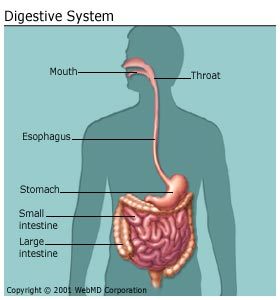
This is a example of........ 
a)
organ system
b)
cells
c)
organ
d)
tissue
37.
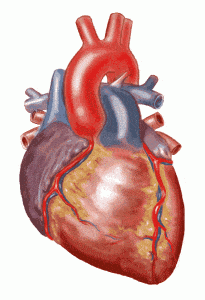
This is a example of ........
a)
cell
b)
tissue
c)
organ 
d)
organ system
38.
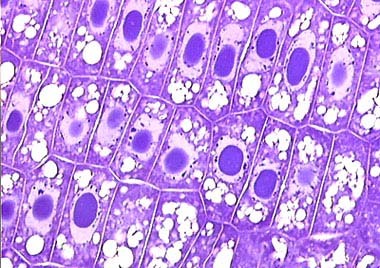
This is a example of ........
a)
cell
b)
organ system
c)
organ
d)
tissue
39.
A group of similar cells that come together to perform a specific function is a/an
a)
organ
b)
organism
c)
organ system
d)
tissue