wayground logo

Free Printable Worksheets

NEW

Font size

S
M
L
XL
Worksheets

Unit 7 Ecology

Total questions: 40

Worksheet time: 48mins

Name
Class
Date
1.

A group of eagles living around Lake Tahoe would be considered a(n):

a)

abiotic factor

b)

population

c)

community

d)

ecosystem

2.

Fish, their predators and the water, sunlight, and plants that they rely on would be considered a(n):

a)

abiotic factor

b)

population

c)

community

d)

ecosystem

3.

Humans increase carbon dioxide (CO2) in the atmosphere, and contribute to the carbon cycle by

a)

combustion from driving cars.

b)

planting trees to improve photosynthesis.

c)

conserving energy with alternative energies.

d)

using more solar power electricity.

4.
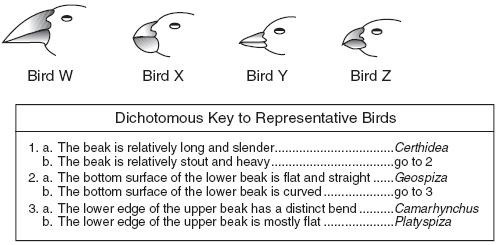
What is the name of bird W?
a)
Certhidea
b)
Geospiza
c)
Camarhynchus
d)
Platyspiza
5.

What are the two parts of the scientific name?

a)

Genus and structural

b)

Structural and physiological

c)

Genus and species

d)

Species and physiological

6.

Identify the organism's correct taxonomy

a)

Class Insecta

b)

Order Scorpiones

c)

Order Araneae

d)

Order Amblypygi

7.

What step do we always start with when using dichotomous keys?

a)

Step 1

b)

Step 2

c)

Step 3

d)

Step 4

8.

what kingdom?- eukaryotic, multi-celled-photosynthetic.

a)

animal

b)

plant

c)

protist

d)

fungi

9.

What kingdom-Prokaryotic-lives in hot,salts environments

a)

plants

b)

animals

c)

archaebacteria

d)

eubacteria

10.

MUSHROOMS ARE IN WHAT KINGDOM

a)

PLANT

b)

ANIMAL

c)

FUNGI

d)

PROTIST

11.

DECOMPOSERS CAUSE WOOD TO ROT-WHAT KINGDOMS ARE DECOMPOSERS

a)

PLANT - ANIMAL

b)

PROTIST-BACTERIA

c)

BACTERIA-FUNGI

d)

FUNGI-PROTIST

12.

CAUSES DISEASE-NO NUCLEUS

a)

FUNGI

b)

BACTERIA

c)

PROTIST

13.
The cells walls of fungi are made of a chemical compound known as ____________.
a)
Chitin
b)
Cellulose
c)
Phospholipid Bilayer
d)
Calcium Carbonate
14.
This kingdom is eukaryotic, multicellular, heterotrophic, and can be an invertebrate, or vertebrate.
a)
Protista
b)
Plante
c)
Fungi
d)
Animalia
15.
Archeabacteria...
a)
are eukaryotic
b)
live in extreme environments
c)
are non-living
d)
live in the soil
16.
What does not produce carbon dioxide?
a)
Photosynthesis
b)
Burning Fossil Fuels
c)
Animal respiration
d)
Plants decaying
17.

Plants use ____________ to make their own food

a)

Water

b)

Sunlight

c)

Carbon dioxide

d)

All of these

18.

What are fossil fuels made from?

a)

Plants and animals that are buried underground for millions of years.

b)

They absorb it from the atmosphere.

c)

Water

d)

Wind

19.

What organisms in the ocean absorb the most carbon dioxide?

a)

Algae and marine plants

b)

Ocean mammals, like whales and dolphins

c)

Fish

d)

Coral

20.
What converts nitrogen gas into a useable form for plants and animals?
a)
bacteria
b)
fungi
c)
rain
d)
car exhaust 
21.
How nitrogen is "fixed" into  a useable form for plants...
a)
through action of bacteria only
b)
through lightning only
c)
through action of bacteria & lightning
d)
through photosynthesis
22.
Organisms that need nitrogen to survive
a)
only plants
b)
only animals
c)
only bacteria
d)
all living organisms
23.
Plants and animals need nitrogen to make __________.
a)
Protein
b)
Carbohydrates
c)
Lipids
d)
Minerals
24.
How can fertilizer harm an ecosystem?
a)
May kill insects that help pollinate the crops
b)
May evaporate causing smog in the air
c)
May help crops to grow
d)
May run into a nearby body of water causing an algae bloom
25.

Something that regulates the size of a population is called...

a)

a limiting measure

b)

a limiting factor

c)

carrying capacity

d)

biodiversity

26.

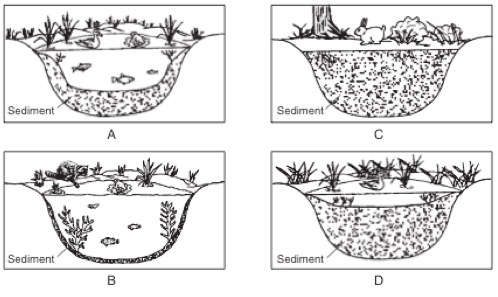
What is the correct order in this pond succession? (YOUNGEST to OLDEST)

a)

A, B, C, D

b)

D, C, B, A

c)

B, A, D, C

d)

C, D, A, B

27.
After a forest fire, an ecosystem would start regrowth through -
a)
primary succession
b)
secondary succession
c)
climax community
d)
limiting factors
28.
Which catastrophic event will most likely have the effect of returning an ecosystem to primary succession?
a)
A tornado
b)
A volcanic eruption
c)
A flood
d)
A drought
29.
succession that occurs in an area with no soil
a)
ecological succession 
b)
primary succession 
c)
secondary succession
d)
pioneer speciles
30.
First species to arrive in an area
a)
invasive species
b)
abiotic components
c)
pioneer species
d)
parasites
31.
Stable, final stage of succession
a)
adaptation
b)
pioneer species
c)
niche
d)
climax community
32.
Succession type?
a)
primary succession
b)
secondary succession
c)
tertiary succession
d)
variable succession
33.

A barn owl kills and eats a field mouse.

a)

Mutualism

b)

Commensalism

c)

Parasitism

d)

predation

34.

Barnacles create a home by attaching themselves to the skin of a whale. The barnacle is a filter feeder and obtains food as it rides on the whale. The whale is not affected.

a)

Mutualism

b)

Commensalism

c)

Parasitism

d)

Not Symbiosis

35.

Fleas obtain nutrients by feeding on the blood of a dog.

a)

Mutualism

b)

Commensalism

c)

Parasitism

d)

Not Symbiosis

36.

Oxpecker birds feed on ticks and other insects found on the rhino’s skin. The rhino provides protection for the oxpecker.

a)

Mutualism

b)

Commensalism

c)

Parasitism

d)

Not Symbiosis

37.

Hermit crabs live in shells made and then abandoned by snails. This neither harms nor benefits the snails.

a)

Mutualism

b)

Commensalism

c)

Parasitism

d)

Not Symbiosis

38.

A deer tick feeds on the blood of a human host.

a)

Mutualism

b)

Commensalism

c)

Parasitism

d)

Not Symbiosis

39.

Mistletoe vines wrap around a tree, robbing the tree of water and nutrients.

a)

Mutualism

b)

Commensalism

c)

Parasitism

d)

Not Symbiosis

40.
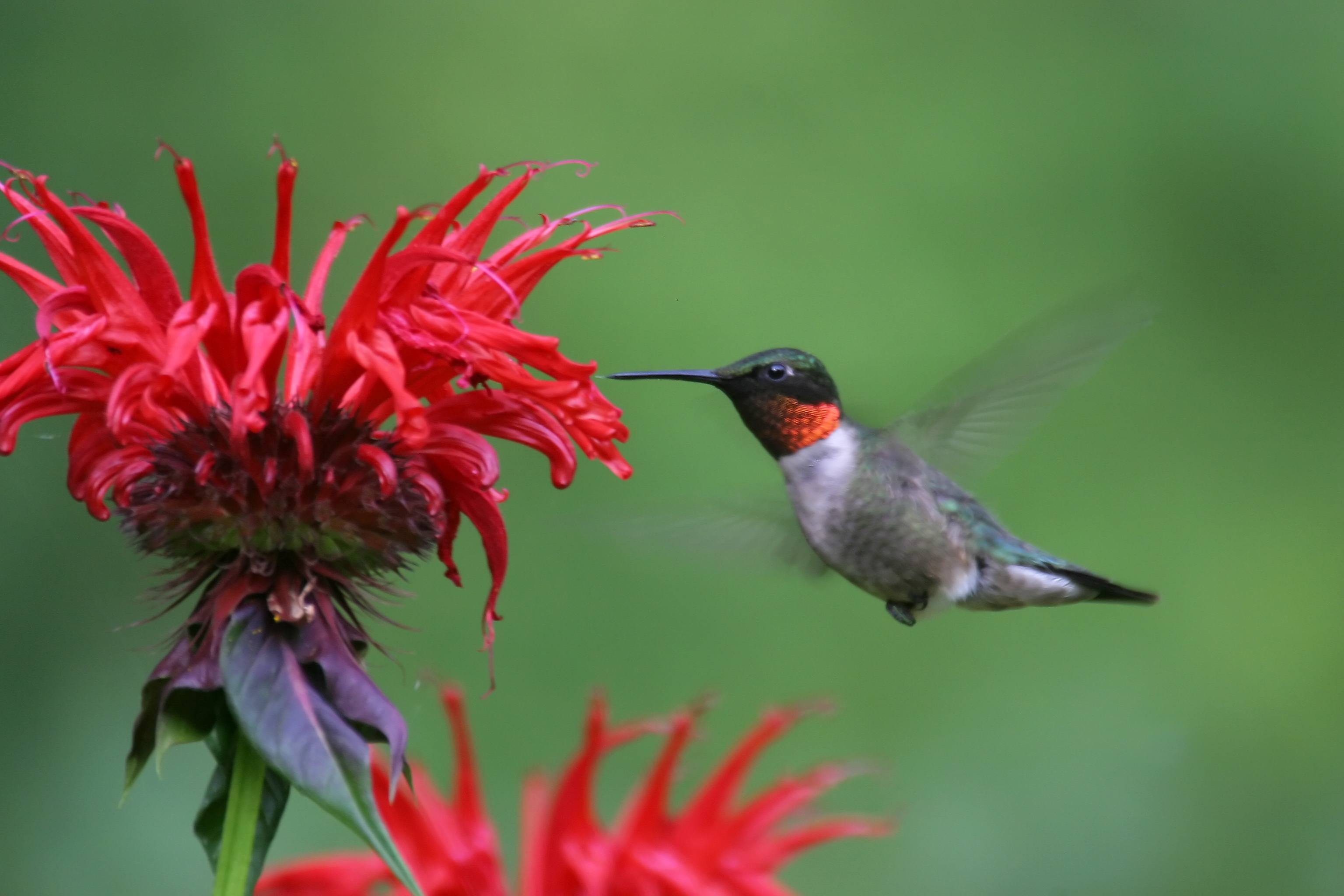
What type of symbiosis?  Hummingbirds feed on nectar from flowers.  The flowers are pollinated by hummingbirds as they move from flower to flower.
a)
commensalism
b)
mutualism
c)
parasitism
d)
predation