wayground logo

Free Printable Worksheets

NEW

Font size

S
M
L
XL
Worksheets

Review for DMD Assessment

Total questions: 33

Worksheet time: 30mins

Name
Class
Date
1.
What percentage of the offspring will have this recessive disease?
a)
0%
b)
25%
c)
50%
d)
75%
2.

What percentage of the FEMALE offspring will be a carrier for this recessive disease?

a)

0%

b)

50%

c)

100%

d)

25%

3.
Looking at this pedigree, how many family members have the disease?
a)
4
b)
7
c)
All
d)
None
4.
How many PAIRS of chromosomes do humans have?
a)
23
b)
46
c)
1
d)
2
5.
How many PAIRS of sex chromosomes do humans have?
a)
23
b)
46
c)
1
d)
2
6.
I have 2 X chromosomes. What am I?
a)
Male
b)
Female
7.
I have 1 X chromosome and 1 Y chromosome. What am I?
a)
Male
b)
Female
8.
If a gene is found only on the X chromosome and not the Y chromosome, it is said to be what?
a)
sex-linked trait
b)
polygenic trait
c)
codominant trait
d)
incomplete dominance trait
9.

Which one of the following gives rise to a normal human female?

a)

22 pairs of autosomes and XX

b)

23 pairs of autosomes and XO

c)

23 pairs of autosomes and XY

d)

23 pairs of autosomes and XX

10.
Both parents in this Punnet square
a)
are homozygous dominant
b)
are homozygous recessive
c)
are heterozygous
d)
have blue eyes
11.
How many boxes would say BB?
a)
1
b)
2
c)
4
d)
0
12.
To express the recessive trait you must be
a)
homozygous dominant
b)
heterozygous
c)
alleleerific
d)
homozygous recessive
13.

The goal of transcription is to make RNA.

a)

True

b)

False

14.
The process by which the genetic code of DNA is copied into a strand of RNA is called
a)
translation
b)
transcription
c)
transformation
d)
replication
15.
What type of RNA carries the DNA message out of the nucleus to the ribosomes?
a)
mRNA
b)
tRNA
c)
RNA
d)
DNA
16.
Amino acids are the building blocks of... 
a)
DNA
b)
RNA
c)
Atoms
d)
Proteins
17.
What process is occurring in this photo?
a)
Transcription
b)
DNA unwinding
c)
Translation
d)
Transfer RNA is creating bases
18.
Which of the following best describes a DNA molecule? 
a)
contains ribose 
b)
made of amino acids
c)
contains Uracil
d)
double helix
19.
Where does Translation occur?
a)
Proteins
b)
Mitochondria
c)
Ribosomes
d)
Cytoplasm
20.
_______ dictates the function of a protein
a)
Shape
b)
Temperature
c)
pH
d)
Time
21.
If you change the shape of a protein, will it work the same/properly?
a)
Yes
b)
No
22.
The structure of proteins can be changed by environmental factors such as temperature or pH.
a)
True
b)
False
23.
Which process and type of resulting cells are represented?
a)
mitosis, gametes
b)
mitosis, body cells
c)
meiosis, gametes
d)
meiosis, body cells
24.
Which of the following cell types is formed by meiosis?
a)
muscle cells
b)
skin cells
c)
sperm cells
d)
blood cells
25.
Which process is necessary for the inherited traits of an organism to be passed along by sexual reproduction?
a)
mitosis
b)
meiosis
c)
mutation
d)
fission
26.
Which statement correctly describes meiosis?
a)
Cells divide only once.
b)
Meiosis does not occur in reproductive cells.
c)
The cells produced at the end of meiosis are genetically identical to the parent cell.
d)
The cells produced at the end of meiosis contain half the number of chromosomes as the parent cell.
27.
Body cells of fruit flies contain 8 chromosomes.  Scientists used studies of flies to discover how egg and sperm are formed. What did they observe?
a)
Body cell of offspring flies have 16 chromosomes.
b)
Sperm cells have 8 chromosomes.
c)
Egg cells have 4 chromosomes.
d)
Body cells of offspring have 4 chromosomes.
28.

____________ do not display the phenotype of the disorder but do carry an allele for the disorder in their genotype.

a)

Carriers

b)

Hybrids

c)

Students

d)

Patients

e)

Homozygous recessive

29.
What type of gene mutation has occurred here? 
T-G-A-C-C-A
T-G-A-C-C-A-A
a)
Base Substitution
b)
Base Deletion
c)
Base Insertion
d)
Frameshift 
30.

Where can mutations occur?

a)

DNA and RNA

b)

DNA only

c)

RNA only

d)

In cell membranes

31.

Substitution

a)

Addition of one or more nucleic acids

b)

Removal of one or more nucleic acids

c)

Replacement of one or more nucleic acids

d)

When a codons shift ---nucleic acids are separated from their original marriage

e)

Copying or doubling of a sequence

32.
Why is DNA important?
a)
it is very small and very complicated
b)
it's in everything
c)
it serves as the blueprint for traits of all living things
d)
because we eat it every day for energy
33.
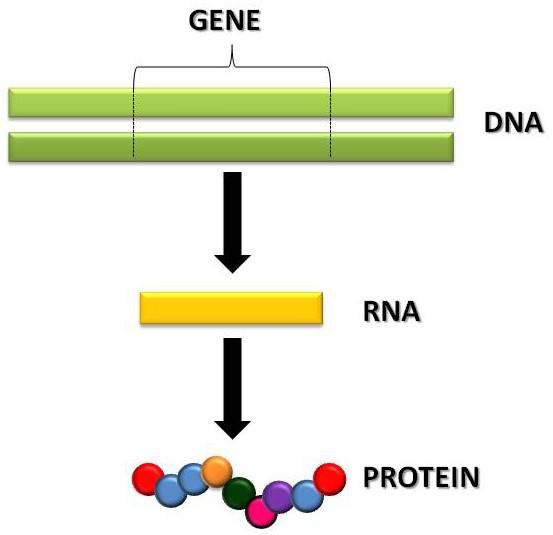
What is the name given to part of a DNA molecule that codes for a protein?
a)
Glucose
b)
Chromosome
c)
Gene
d)
Phosphate