Wayground logo

Free Printable Worksheets

Font size

S
M
L
XL
Worksheets

Chapter 10 - Organic Chemistry Review

Total questions: 35

Worksheet time: 42mins

Name
Class
Date
1.

What is a functional group?

a)

Group of atoms that give specific characteristics to a molecule

b)

Group of molecules that give specific characteristics to an atom

c)

Group of molecules that make up a group of atoms

d)

Group of atoms that give specific characteristics to an element

2.

What functional group is -OH

a)

Hydroxyl

b)

Carboxyl

c)

Amino

d)

Carbonyl Ketone

3.

What functional group(s) is/are present on the molecule? (check all that apply)

a)

Hydroxyl

b)

Carboxyl

c)

Methyl

d)

Carbonyl Aldehyde

4.

Classify the compound based on the functional group present.

a)

ketone

b)

ester

c)

carboxylic acid

5.
Classify the compound based on the functional group present.
a)
aldehyde
b)
ketone
c)
carboxylic acid
d)
ester
6.
Classify the compound based on the functional group present.
a)
carboxylic acid
b)
aldehyde
c)
alcohol
d)
ether
7.

Classify the compound based on the functional group present.

a)

alkane

b)

alkene

c)

alkyne

8.
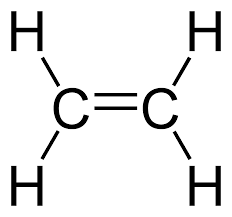
Classify the compound based on the functional group present.
a)
aldehyde
b)
ketone
c)
alcohol
d)
carboxylic acid
9.
Classify the compound based on the functional group present.
a)
alkane
b)
alkene
c)
alkyne
d)
aromatic
10.

Carboxylic acids combined with alcohols in high temperature will form a(n)

a)

ester

b)

alcohol

c)

amine

11.

Name the compound based on the functional group present.

a)

methanol

b)

aldehyde

c)

ethanol

12.

Identify the functional groups present in this compound.

a)

amine

b)

amide

c)

ether

d)

ester

13.

What functional group(s) is/are on the molecule (check all that apply)

a)

Carbonyl Ketone

b)

Hydroxyl

c)

Carboxylic Acid

d)

Amine

14.
Classify the compound based on the functional group present.
a)
Amine
b)
Amide
c)
Aldehyde
d)
Ether
15.
Classify the compound based on the functional group present.
a)
alkane
b)
alkene
c)
alkyne
d)
aromatic
16.
What side group does this benzene ring have on it?
a)
carbonyl group
b)
methyl group
c)
nitro group
d)
ethyl group
17.
Name the compound
a)
2, 4 methyl-3-ethylpentane
b)
3 ethyl-2,4-methylpentane
c)
3 ethyl-2,4-dimethylpentane
d)
pentane
18.
Name this compound
a)
4-ethyl-2,2-dimethylhexane
b)
5-dimethyl-3,3-ethylhexane
c)
3-ethyl-5,5-dimethylhexane
d)
4-ethyl-2-methylhexane
19.
Name the compound
a)
3-methyl-2-pentene
b)
2-ethyl-2-butene
c)
3-ethyl-2-butene
d)
1,1-dimethyl-propene
20.
Give the name of this compound...
C3H8
a)
Propene
b)
Butane
c)
Butene
d)
Propane
21.
Unsaturated hydrocarbons contain ___.
a)
at least one double or triple bond between carbon atoms
b)
only double bonds
c)
only single bonds between carbon atoms
d)
only triple bonds
22.
What is formed when an alcohol reacts with a carboxylic acid?
a)
an ester and water
b)
water
c)
alkali
d)
an ester
23.
The first member of the alkene series is methene.
a)
True
b)
False
24.
The longer the hydrocarbon, the _______ the boiling point
a)
Lower
b)
Higher
25.
a)
addition
b)
combustion
c)
double replacement
d)
substitution
26.
a)
fermentation
b)
combustion
c)
saponification
d)
substitution
27.
Which chemical reaction forms Carbon Dioxide and Water?
a)
Synthesis
b)
Single Replacement
c)
Combustion
d)
Decomposition
28.
What kind of reaction is this:
2C3H7OH +9O2 -> 6CO2 + 8H2O
a)
Double Replacement
b)
Combustion
c)
Single Replacement
d)
Decomposition
29.

Which of the following molecules could be a reactant in an addition reaction?

a)

CH4

b)

C3H8

c)

C2H5OH

d)

C2H4

30.

In the reaction, which answer represents the product X?

a)
b)
c)
d)
31.

Complete the reaction:


C5H12 + Cl2 --> ________________________________

a)

C5H11Cl + HCl

b)

C5H10Cl2 + H2

c)

C5H12Cl2

d)

C4H11Cl2 + CO2

32.
What is the product of the oxidation of the compund in the image
a)
3-methyl butanol
b)
3-methyl-3-butanol
c)
3-methyl butanoic acid
d)
3-methyl butanone
33.
What kind of alcohol is obtained from the reduction of a ketone?
a)
primary
b)
tertiary
c)
secondary
d)
not possible
34.
The product of reacting propene with hydrochloric acid is:
a)
2-chloropropane
b)
2-chloropropene
c)
2-chloropropyne
d)
chloropropane
35.
a) What catalyst is needed for hydrogenation?
b) What is needed for halogenation?
a)
a) Pt, Pd or Ni
b) UV ligth
b)
a) H+
b) Heat
c)
a) [O]
b) Heat
d)
a) [-O]
b) H+