
 Worksheets
APHG Unit 3 Review
Total questions: 47
Worksheet time: 22mins
Name
Class
Date
1.

One of the strongest connections that tie people to a certain environment is what?
a)
clothing
b)
building materials
c)
food supply
d)
weapons
2.

practice of judging another culture by the standards of one’s own culture and generates misunderstanding, ignorance and conflict
a)
Ethnosuperiorism
b)
Egotism
c)
Ethnocentrism
d)
Human nature
3.

NOT an example of a cultural landscape
a)
The street patterns of Bogota
b)
the buildings of Ciudad Perdida
c)
a rain forest
d)
A golf course
4.

Why is wine production so low in Africa and the Middle East?
a)
lack of sophistication and fine dining
b)
they can't grow grapes
c)
Islam discourages alcohol consumption
d)
they don't know how to make wine
5.

Cultural traditions, such as Carnaval (Brasil, Barranquilla...), are ________________ since they are a celebration that blends elements of African, European, and Indigenous cultures.
a)
wicked awesome
b)
exotic
c)
terrifying
d)
syncretic
6.
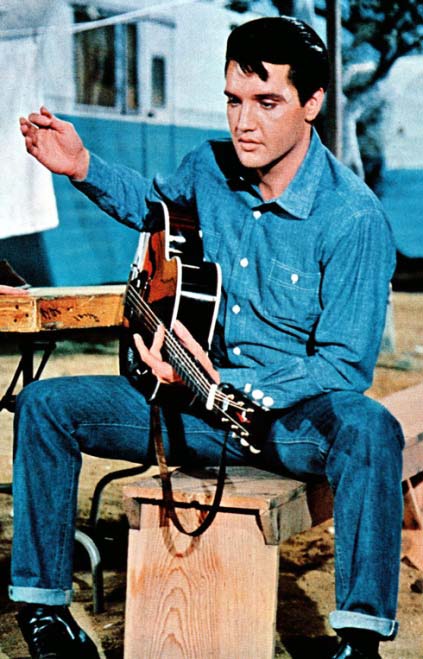
Which of the following best accounts for the universal appeal of blue jeans?
a)
Adoption of unique folk culture
b)
Need for durable clothing
c)
Impact of high income on clothing habits
d)
Diffusion of popular culture
7.
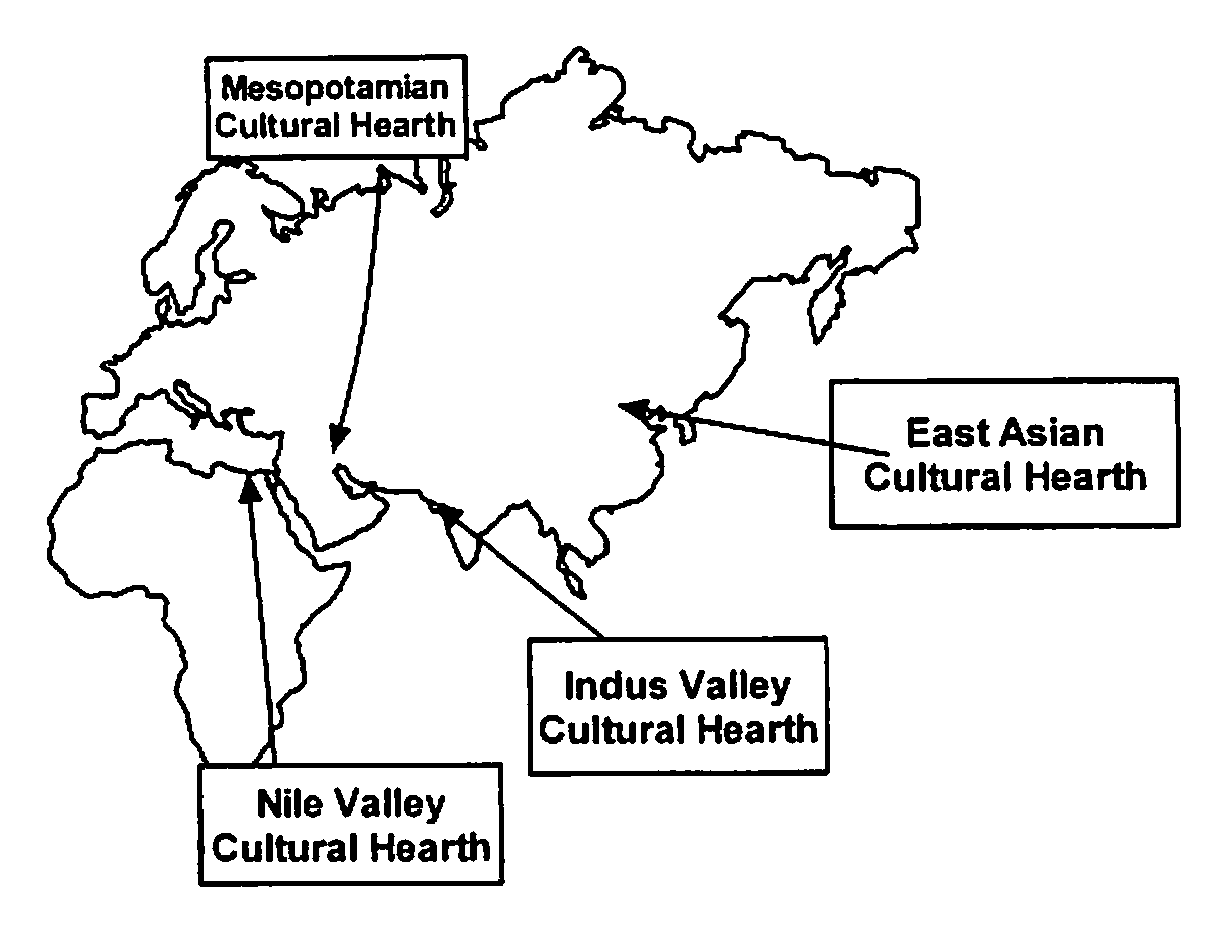
MAP The geographical locations of all four cultural hearths illustrate on the map (right) were in
a)
Areas with abundant rainfall
b)
Coastal areas
c)
Cold climates
d)
River valleys
8.
________________ culture is conceived as small, incorporating a homogeneous population, typically rural and cohesive in cultural traits.
a)
Material
b)
Popular
c)
Folk
d)
Ethnic
9.
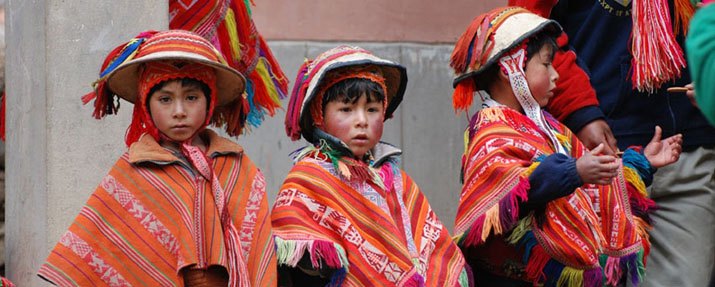
Folk culture is most likely to spread by _____.
a)
contagious diffusion
b)
relocation diffusion
c)
hierarchical diffusion
d)
stimulus diffusion
10.

Which of the following is true of popular culture?
a)
It is practiced among a homogeneous group of people in the world
b)
It is more static (unchanging) than folk culture
c)
It promotes regional diversity
d)
It incorporates traits that diffuse quickly to a wide variety of places
11.

The fact that trends in popular culture (e.g. fashion) proceed from large global centers (Milan, Paris, New York) through a series of progressively smaller cities is an example of
a)
diffusion
b)
migration
c)
hierarchical diffusion.
d)
relative location.
12.
Complete the following analogy: Habit is to individual as
a)
custom is to group
b)
diffusion is to region
c)
folk is to popular
d)
place is to space
13.

A language ____________ is a collection of languages related through a common ancestral language that existed long before recorded history.
Hint: The trunk of the tree
Hint: The trunk of the tree
a)
branch
b)
family
c)
dialect
d)
group
14.

A language ____________ is a collection of languages related through a common ancestral language that existed several thousand years ago.
a)
family
b)
branch
c)
dialect
d)
group
15.

What is the largest language branch in terms of spoken by most people?
a)
Afro-Asiatic
b)
Indo-European
c)
Sino-Tibetan
d)
Austronesian
16.

Which is NOT one of the 4 main branches of the Indo-European language family?
a)
Germanic
b)
Romance
c)
Balto-Slavic
d)
Sino-Tibetan
17.

A language _________ is a collection of languages within a branch that share a common origin in the relatively recent past.
a)
family
b)
branch
c)
group
d)
dialect
18.

Of the Indo-Iranian branch of Indo-European family, what GROUP does India, Pakistan and Bangladesh belong to respectively?
a)
Indic (Eastern) group
b)
Iranian (Western) group
19.

The following are reasons for the origin and diffusion of Romance languages EXCEPT
a)
The spread of the Roman Empire and its lingua franca Latin
b)
The collapse of the Roman Empire and its lingua franca Latin
c)
The isolation of many forms of Latin and their evolution into dinstinct languages
d)
The mountainless uniform topography which kept cultures similar and united
20.

The theory that languages spread by means of westward expansion on horseback by the Kurgan people is:
a)
Convergence Theory
b)
Nomadic Warrior Theory
c)
Agricultural Theory
d)
Nostratic Theory
21.

The theory that Colin Renfrew argues that the proto Indo-European languages diffused from Anatolia from agricultural practices
a)
Convergence Theory
b)
Conquest Theory
c)
Divergence Theory
d)
Sedentary Farmer Thesis
22.

a language developed from a mixture of different languages, usually through colonization.
a)
creole language
b)
mix language
c)
hybrid language
23.

a creole language based largely on 18th-century French with influences from Portuguese, Spanish, Taíno, and West African languages. The largest creole-speaking community in the world.
a)
Haitian creole
b)
Jamaican creole
c)
Sanandresano creole
d)
Swahili
24.

the language used by the government for laws, reports, and public objects, such as road signs, money, and stamps...
a)
creole language
b)
pidgin language
c)
official language
d)
standard language
25.

Why is English the official language in 57 countries?
a)
The Beatles!
b)
Most effective at destroying other cultures
c)
diffusion of Disney movies
d)
Colonization
26.

The Anglo-Saxon influence on English language and culture came from____________
a)
Denmark and Germany
b)
Norway
c)
Normandy and Brittany
d)
France
27.

Why did dialects develop in the U.S.?
a)
people got isolated
b)
people came from different places with different dialects
c)
people created them to be more distinct
28.

A word-usage boundary is known as an _______________,
Look at all the names for soft-drink in the USA
a)
standard language
b)
dialect
c)
isogloss
d)
language family
29.

Belgium is a ___________ speaking country.
a)
a)Belgae (a Celtic language)
b)
b)Flemish (a Germanic language)
c)
c)French (a Romance language)
d)
d)both B and C
30.

Which languages have the have the MOST speakers globally as their 1st language?
a)
English and Chinese
b)
English and Spanish
c)
Spanish and Chinese
d)
Chinese and Arabic
31.

The French government has _________ to protect French language and culture.
a)
banned foreign words in advertising and on radio&television
b)
established the Académie Française to standardize the language
c)
passed a law levying fines on those using foreign terms
d)
all of the above
32.

Dialects are distinguished by differences in
a)
accents and pronunciation
b)
vocabulary
c)
syntax
d)
all of the above
33.
A force or process that involves the entire world and results in making something worldwide in scope.
a)
space-time compression
b)
distance decay
c)
globalization
34.
Assimilation takes place when
a)
a smaller culture shares traits with a larger culture
b)
a smaller culture is totally absorbed by a larger, more dominant culture
c)
cultures give and take
d)
culture moves with people in relocation diffusion
35.
When people are assimilated in a culture they "assimilate" but hang on to this until the very end. It is their
a)
religion
b)
dress
c)
diet
d)
language
36.
Sharing of ideas or cultural across borders, like the US and Mexico is called
a)
Transculturation
b)
Assimilation
c)
Relocation diffusion
d)
migration diffusion
37.
Relocation diffusion is
a)
listening to pop music
b)
a Syrian family moving to the US
c)
wearing jeans
d)
eating at McDonalds
38.
Time-distance decay influences relocation diffusion, contagious diffusion, hierarchical diffusion and stimulus diffusion.
a)
True
b)
False
39.
Homes around the world are made of out different building materials because
a)
of the availability of building materials
b)
People like wooden homes better
c)
Brick and mortar are easier to work with
d)
Adobe homes are not as hot
40.
What is monotheism?
a)
The belief or worship of more than one god.
b)
The belief of the existence of only one god.
c)
The belief that objects or natural events have a discrete spirit and conscious life.
d)
The belief that an aspect of a living being starts a new life in a different physical body/form after death.
41.
Who is the founder of Judaism?
a)
Muhammad
b)
Abraham
c)
Jesus of Nazareth
d)
Siddhartha Gautama
42.
What is a major symbol in Christianity?
a)
Star of David
b)
Eight spoked wheel
c)
Moon with Star
d)
Cross, fish, martyr
43.
What are the names of the two religions who have a taboo against pork?
a)
Judaism and Islam
b)
Islam and Hinduism
c)
Judaism and Buddhism
d)
Buddhism and Hinduism
44.
What is polytheism?
a)
The belief or worship of more than one god.
b)
The belief of the existence of only one god.
c)
The belief that objects or natural events have a discrete spirit and conscious life.
d)
The belief that an aspect of a living being starts a new life in a different physical body/form after death.
45.
What is animism?
a)
The belief that objects or natural events have a discrete spirit and conscious life.
b)
The belief of the existence of only one god.
c)
The belief or worship of more than one god.
d)
The belief that an aspect of a living being starts a new life in a different physical body/form after death.
46.
Name 3 monotheistic religions:
a)
-Judaism
-Christianity
-Islam
-Christianity
-Islam
b)
-Hinduism
-Taoism
-Shintoism
-Taoism
-Shintoism
47.
Name 3 polytheistic religions:
a)
-Judaism
-Christianity
-Islam
-Christianity
-Islam
b)
-Hinduism
-Taoism
-Shintoism
-Taoism
-Shintoism
100 %

