wayground logo

Free Printable Worksheets

Font size

S
M
L
XL
Worksheets

8th Grade MSTEP Review

Total questions: 100

Worksheet time: 1hrs 13mins

Name
Class
Date
1.

A hemisphere is ...

a)

the study of the earth and how we, the people who live there, interact with it.

b)

a region created when the Earth is divided in half.

c)

an imaginary line going across the center of the earth.

d)

half of a cube

2.

The equator is ...

a)

an imaginary line going across the center of Earth that separates the eastern and western hemisphere.

b)

a region created when the Earth is divided in half.

c)

an imaginary line going across the center of Earth that separates the north and south hemisphere.

d)

another name for the North Pole

3.

The Prime Meridian is ...

a)

an imaginary line going across the center of the earth that separates the eastern and western hemispheres.

b)

an imaginary line going across the center of the earth that separates the north and south hemispheres.

c)

an absolute location on the map.

d)

a character on Game of Thrones

4.
The Five Themes of Geography are the Following:
a)
Place, Region, Interaction, Land-forms, Movement
b)
Place, Region, Interaction, Location, Movement
c)
People, Race, Interaction, Location Movement
d)
Power, Region, Interaction, Location Movement
5.
What places have in common: This groups these places together.
a)
Region
b)
Place
c)
Movement
d)
Landform
6.

What is movement?

a)

Tells us how people, goods, recourses, and ideas move from one place to another

b)

Tells us what makes an area special and what makes it different from every other area

c)

Tells us ways in which the places in an area are alike.

d)

PE class

7.
Cutting down trees to build houses is an example of which?
a)
Location
b)
Place
c)
Human-Environment Interaction
d)
Movement
8.
The Middle East is an example of which?
a)
Human-Environment Interaction
b)
Relative Location
c)
Movement
d)
Region
9.
This theme of Geography describes what the location is like. 
a)
Absolute Location
b)
Relative Location
c)
Place
d)
Region
10.
Fruit grown in South America is shipped to your local grocery store.
a)
Region
b)
Location
c)
Movement
d)
Human Interaction
11.
The amount of cars on the road has led to a high amount of smog in cities
a)
Absolute Location
b)
Movement
c)
Human Environment Interaction
d)
Place: Physical Characteristic
12.
How people and their surroundings interact
a)
human/environment interaction
b)
Place
c)
Region
d)
Location
13.
The study of the Earths surface, climate, landforms, and bodies of water.
a)
Migration
b)
Geography
c)
Social Studies
d)
Geology
14.
On which continent is China located? 
a)
Africa
b)
Asia
c)
Europe
d)
Australia 
15.
Early civilizations like Mesopotamia, Egypt, India and China have one thing in common.....
a)
each civilization flourished despite harsh desert conditions
b)
we know little about them due to catastrophic natural disasters
c)
they were founded along rivers and fertile valleys
d)
their coastal locations allowed them to trade with the Roman Empire
16.
What was the name of China's FIRST dynasty?
a)
Shang
b)
Zhou
c)
Hanfeizi
d)
Huang He
17.
Line of rulers from the same family
a)
Legalism
b)
long Chinese line
c)
filial piety
d)
dynasty
18.
Which physical feature is to the North of China and protects them from invaders?
a)
Himalayan Mts 
b)
Pacific Ocean
c)
Gobi Desert
d)
Yellow River
19.
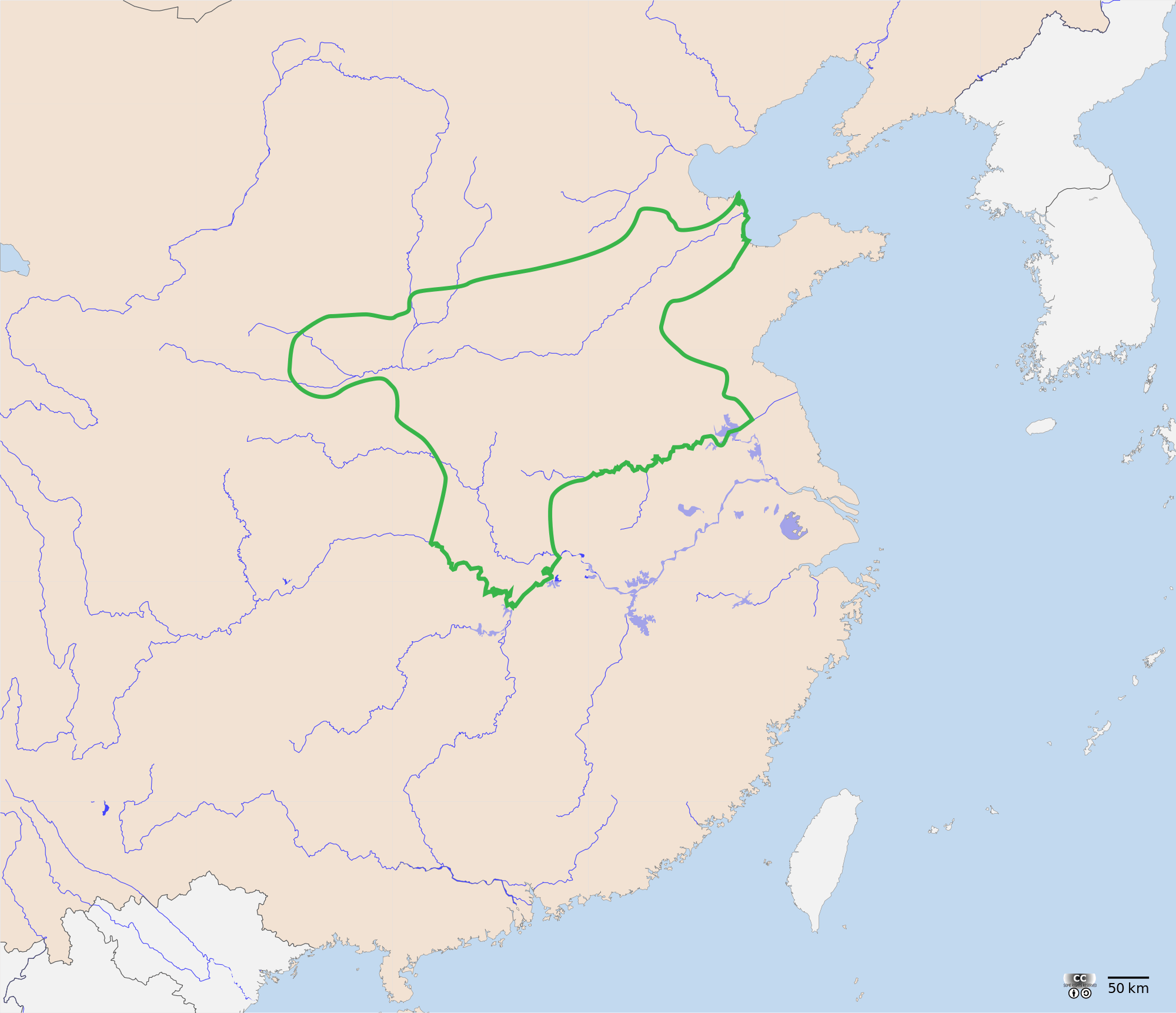
What are the names of the two major rivers in China?
a)
Tigris and Euphrates
b)
Indus and Ganges
c)
Yellow and Yangtze
d)
Nile and Yellow
20.

Title used by Egyptian rulers

a)

pharaoh

b)

Ka

c)

dynasty

d)

obelisk

21.

Period from 2700 to 2200 BC in Egyptian history that began shortly after Egypt was unified.

a)

Old Kingdom

b)

Middle Kingdom

c)

New Kingdom

d)

Ancient Kingdom

22.

Ancient Egyptian writing system that used picture symbols

a)

sphinx

b)

Rosetta Stone

c)

hieroglyphics

d)

papyrus

23.

Object inscribed with hieroglyphics that allowed historians to understand Egyptian writing

a)

papyrus

b)

obelisk

c)

Rosetta Stone

d)

delta

24.

Long-lasting, paper-like material made from reeds that Egyptians used to write on

a)

obelisk

b)

hieroglyphics

c)

papyrus

d)

delta

25.
who was the youngest Egyptian king
a)
hatshepsut
b)
king tut
c)
randy
d)
khfu
26.
Because one physical feature was so vital to ancient settlers of Egypt and Kush, MOST of their settlements were
a)
on hills
b)
in a desert
c)
near a river
d)
around trees
27.
How did the desert help the people of Egypt and Kush?
a)
It had fertile land for crops.
b)
It made trade and travel easier.
c)
It was grassy for grazing sheep.
d)
It gave protection from invaders.
28.
How did the yearly flooding of the Nile River affect the people of Egypt and Kush?
a)
It isolated the settlements.
b)
It left silt that improved the soil.
c)
It spread diseases that destroyed whole empires.
d)
It attracted hunters and gatherers looking for wildlife.
29.
During the ____________, the Egyptians began to build pyramids.
a)
Old Kingdom
b)
Middle Kingdom
c)
New Kingdom
d)
Newest Kingdom
30.
Who founded Buddhism?
a)
Buddha
b)
Theravada
c)
Siddhartha Guatama
d)
Mahayana
31.
What you do in this life determines what happens in the next life is __________.
a)
dharma
b)
reincarnation
c)
rebirth
d)
karma
32.
Which is NOT one of the Four Noble Truths?
a)
Life is suffering.
b)
Suffering is caused by other people.
c)
Attachment can be overcome.
d)
There is a life path to accomplish all of this.
33.
What determined what caste a person belonged to?
a)
They were born into whatever caste their parents belonged to.
b)
At age 12, children were tested over skills and knowledge to see where their achievement placed them.
c)
The priests assigned the caste when a child reached adulthood.
d)
Everyone began life as a Dalit, but moved up if they pleased the gods.
34.
India is called a sub-continent because:
a)
It is surrounded by the Indian Ocean.
b)
It is separated from the rest of Africa by rivers.
c)
It is separated from the rest of Asia by mountain ranges.
d)
The Himalayas run down the middle of it.
35.
Which of these games were most likely invented by the Indians?
a)
Parcheesi
b)
Chutes and Ladders
c)
Chess
d)
All of the above
36.

What are the 4 ideas that Confucius focused his philosophy on;

a)

The Monkeys see no evil, speak no evil and hear no evil

b)

Aristocrats, Merchants, Farmers, Bankers

c)

Proper Conduct, Respect, Education, Government

d)

Merchants Aristocrats, Farmers

37.

What religion/philosophy follows the 4 noble truths

a)

Hinduism

b)

Christianity

c)

Buddhism

d)

Taoism

38.

Who started the religion of Islam

a)

Buddha

b)

Jesus

c)

Moses

d)

Muhammad

39.

Who started Taoism

a)

Lao Tzu

b)

Sidartha

c)

Jesus

d)

Confucius

40.

The belief that when you die your soul finds another body

a)

The Middle Way

b)

Reincarnation

c)

Nirvana

d)

Hajj

41.

A belief systems about nature of the universe, the existence of one God or several gods, and the role of the individual is called

a)

party

b)

idea

c)

spirituality

d)

religion

42.

Monotheism

a)

belief in one god

b)

belief in more than one god

c)

belief in no god

d)

all of the above

43.

What is Polytheism?

a)

belief in one god

b)

belief in more than one god

c)

belief in no god

d)

all of the above

44.

Which 3 religions consider Jerusalem the Holy City?

a)

Islam, Judaism, Buddhism

b)

Buddhism, Hinduism, Judaism

c)

Islam, Judaism, Christianity

d)

Islam, Christianity, Buddhism

45.

Buddha is the Diety for which religion?

a)

Hinduism

b)

Buddhism

c)

Islam

d)

Christianity

46.

The Torah is the holy book for which Religion?

a)

Judaism

b)

Buddhism

c)

Islam

d)

Hinduism

47.

The Torah is the holy book for which Religion?

a)

Judaism

b)

Buddhism

c)

Islam

d)

Hinduism

48.

Which two religions were founded in India?

a)

Buddhism and Islam

b)

Islam and Christianity

c)

Judaism and Hinduism

d)

Hinduism and Buddhism

49.
There were, at one time, 282 laws that had to be followed. They were known as ...
a)
Rock River Intermediate Code of Conduct
b)
Code of Nebechudezzar
c)
Code of Hammurabi
d)
Code of Gilgamesh
50.
Ancient Mesopotamia was located between what two rivers?
a)
Mississippi and Rock
b)
Tigris and Euphrates
c)
Missouri and Wisconsin
d)
Nile and Amazon
51.
Empires of Mesopotamia built __________________ to honor their gods.
a)
statues
b)
pyramids
c)
ziggurats
d)
roads
52.
Who was the Babylonian King who created the earliest known collection/ code of laws?
a)
Sargon
b)
Hammurabi
c)
Eannatum
d)
Nebuchadnezzar
53.
What is the term for the writing system developed by the Sumerians that used wedge-shaped marks made in soft clay?
a)
writing
b)
monotheism
c)
cuneiform
d)
fertile crescent
54.
a city that governs itself and its surrounding territory
a)
city-state
b)
province
c)
empire
d)
Mesopotamia
55.
What modern day country is Mesopotamia mostly in?
a)
India
b)
Egypt
c)
China
d)
Iraq
56.
What did King Nebuchadnezzar build for one of his wives? 
a)
Written Laws
b)
A Ziggurat
c)
Hanging Gardens
d)
Calendars
57.
Why was Mesopotamia such a good area for growing crops?
a)
The land was covered with heavy vegetation
b)
the rivers flooded, making it easier for planters to pull out weeds that might harm crops
c)
the area did not have any agricultural pests
d)
the rivers flooded and deposited rich soil (silt)
58.
A __________ is a complex society that has cities, organized governments, art, religion, class divisions, and a writing system.
a)
ziggurat
b)
city-state
c)
civilization
d)
epic
59.
Mesopotamia was located between which two rivers?
a)
Tigris and Indus
b)
Huang and Euphrates
c)
Tigris and Nile
d)
Tigris and Euphrates
60.
The Fertile Crescent is an arc-shaped region that stretches from...?
a)
the Mediterranean Sea and the Nile River
b)
the Mediterranean Sea and the Persian Gulf
c)
the Mediterranean Sea and the Black Sea
d)
the Mediterranean Sea and the Caspian Sea
61.
the belief in many gods
a)
Polytheism
b)
Monotheism
c)
Catholicism
d)
Judaism
62.
What is the type of government where there is no ruler in charge, and has no structure of authority?
a)
Anarchy
b)
Oligarchy
c)
Theocracy
d)
Dictatorship
63.
A government where a God or divine ones are given the status of supreme ruler?
(Examples: The Vatican, Egyptians, etc..)
a)
Democracy
b)
Dictatorship
c)
Monarchy
d)
Theocracy
64.
When the central government is run by a small group of people. 
a)
Autocracy 
b)
Democracy 
c)
Oligarchy 
d)
Parliamentary 
65.
What type of government has a king or queen that holds all the power?
a)
Monarchy
b)
Dictatorship
c)
Direct Democracy
d)
Republic
66.
Which of the following is a good example of a dictatorship?
a)
Great Britain
b)
Germany
c)
North Korea
d)
Canada
67.
God and religious law are the government's authority.
a)
Anarchy
b)
Oligarchy
c)
Direct Democracy
d)
Theocracy
68.
Government authority is based on the consent of the governed.
a)
Anarchy
b)
Monarchy
c)
Democracy
d)
Dictatorship
69.

There are four types of economic systems. Most economies are _____.

a)

Traditional

b)

Command

c)

Market

d)

Mixed

70.
In this type of economy, the individual decides who to sell their products to.  
a)
Traditional 
b)
Mixed 
c)
Market
d)
Command
71.
If there are only 100 televisions on sale and 200 people want to buy TV's, that is a problem of ____. 
a)
desire
b)
demand
c)
supply
d)
scarcity
72.

_______ is another word for Market Economy.

a)

Capitalism

b)

Communism

c)

Socialism

d)

Antidisestablishmentarianism

73.
I am a farmer in Africa, and have always traded for my goods.  I have a _____ economy. 
a)
Traditional 
b)
Command 
c)
Market
d)
Mixed
74.
In a command economy, who holds power over the economy?
a)
The people
b)
The government 
c)
Beyonce
d)
The traditions of your ancesetors 
75.

What are the 3 economic questions?

a)

What to produce? How To Produce? For whom to produce?

b)

Who to produce? Why you produce? Like to produce?

c)

Why to produce? Tell who to produce? Things to produce?

d)

Where do I turn this in? When is it due? Do I have to do this?

76.
Which of the following is an economic system in which the government and individuals are used to decide how to use scarce resources?
a)
Market economy
b)
Command economy
c)
Traditional economy
d)
Mixed economy
77.

__________ : when people want or need more of something than there is.

a)

Scarcity

b)

Profit

c)

Opportunity Cost

d)

Tax

78.
In which region would you find plantations?
a)
New England
b)
Mid-Atlantic
c)
Southern
79.
Which statement about the New England Colonies is true? 
a)
The cold, dry winters prevented the planting of many crops.
b)
The warm, wet summers were good for growing tobacco.
c)
The lack of rivers and streams hurt crops and trade.
d)
The area was good for farming grains. 
80.

A company in which investors buy stock, in return for a share of the future profits.

a)

loyalist

b)

toleration

c)

joint-stock company

d)

export

81.

People chosen by the citizens to make decisions on their behalf and to represent them in the legislative assembly.

a)

Congress

b)

Legislative Branch

c)

representative government

d)

direct democracy

82.

An elected representatives to an assembly.

a)

burgesses

b)

representative government

c)

direct democracy

d)

theocracy

83.

A crop which is grown to make money.

a)

agriculture

b)

subsistence farming

c)

cash crops

d)

crop rotation

84.

Farmer who grew only what they needed to survive.

a)

cash crops

b)

plantation system

c)

surplus

d)

subsistence farmer

85.
What is another name for British soldiers?
a)
Redcoats
b)
Patriots
c)
Minutemen
d)
Continental Soldiers
86.
What did we call colonists who did NOT want independence from England?
a)
Minutemen
b)
Traitors
c)
Militia
d)
Loyalists
87.
The main American strength when the war began was
a)
an army of well-trained militia volunteers.
b)
a large and powerful navy.
c)
an able and inspiring leader in George Washington
d)
a large supply of guns and bullets.
88.
The Battle of Saratoga was a turning point in the war because it
a)
brought France into the war as an American ally.
b)
ended General Burgoyne's career.
c)
liberated Georgia from British control.
d)
forced the British to leave Canada.
89.
In the Treaty of Paris, the Americans won their independence and
a)
the right to strip Loyalists of their property.
b)
a pledge that future conflicts with Britain would be settled peacefully.
c)
the return of all taxes collected by Britain before the war.
d)
all the territory lying to the east of the Mississippi River.
90.
Who wrote "The Crisis?"
a)
Joseph Martin
b)
Thomas Paine
c)
George WAshington
d)
Nathaniel Greene
91.
Location of winter encampment of the Continental Army which was a low point during the war.
a)
Valley Forge
b)
Monmouth
c)
Saratoga
d)
New York
92.
This was our nation's first Constitution but failed because it gave all the power to the states. 
a)
Articles of Confederation
b)
Treaty of Paris 
c)
Declaration of Independence
d)
U.S. Constitution 
93.

This plan wanted representation in the Legislative branch to be based on equality.

a)

Virginia Plan

b)

New Jersey Plan

c)

Michigan Plan

d)

Connecticut Plan

94.
This event solved the debate between the New Jersey Plan and Virginia Plan and split the Legislative branch into 2 houses. 
a)
Treaty of Paris 
b)
Great Compromise
c)
Proclamation Line
d)
Declaration of Independence
95.
The Virginia Plan wanted representation to be based on ___________. 
a)
Population
b)
Equality
c)
Age
d)
Religion
96.
If a president does not agree with a law he is allowed to ________ the law. 
a)
Veto 
b)
Ratify
c)
Bill 
d)
Amend
97.
Which of the following explains the Constitutional principle called republicanism?
a)
Power is divided between state and federal government
b)
Power is divided into 3 government branches
c)
Elected representatives make and enforce laws
d)
Individuals have guaranteed liberties
98.
Many of our individual liberties are protected by which document?
a)
The Articles of Confederation
b)
The Declaration of Independence
c)
The Bill of Rights
d)
The Fundamental Orders 
99.
Which Constitutional principle states that the power of government comes from the people?
a)
Federalism
b)
Republicanism
c)
Checks and Balances
d)
Popular Sovereignty
100.
Which Constitutional principle divides government power between the states and the federal government?
a)
Republicanism
b)
Popular sovereignty
c)
States rights
d)
Federalism