wayground logo

Free Printable Worksheets

Font size

S
M
L
XL
Worksheets

Population Evolution

Total questions: 62

Worksheet time: 40mins

Name
Class
Date
1.

What increases genetic variation when animals move from one population to another

a)

genetic drift

b)

sexual selection

c)

bottleneck effect

d)

gene flow

2.
This mechanism of evolution occurs when populations migrate.
a)
Extinction
b)
Gene flow
c)
Genetic drift
d)
Natural Selection
3.

A change in a gene due to damage or incorrect copying is called

a)

evolution

b)

meiosis

c)

segregation

d)

a mutation

4.

The movement of alleles into or out of a population

a)

evolution

b)

natural selection

c)

gene flow

d)

genetic drift

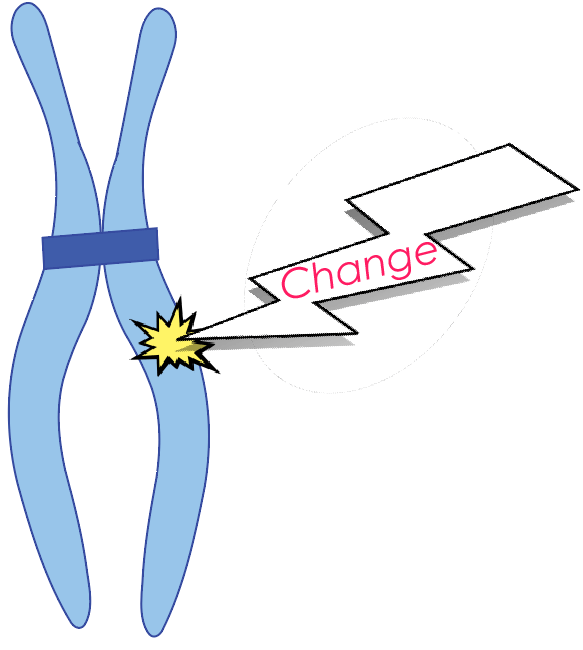
5.
Genetic drift is change in the allele frequency of a population due to...
a)
random chance
b)
natural selection
c)
non-random mating (sexual selection)
d)
artificial selection
6.

All of the genetic information found in a population.

a)

population

b)

genetic drift

c)

evolution

d)

gene pool

7.

Rapid decrease in population due to an environmental factor.

a)

adaptation

b)

bottleneck effect

c)

mutation

d)

geographic isolation

8.
The measure of how common an allele is in a population is known as ___________.
a)
Allele Combination
b)
Allele Frequency
c)
Gene Pool
d)
Genotypic Frequency
9.
Many members of one species in an area
a)
ecosystem
b)
community
c)
biodiversity
d)
population
10.
Which is a mechanism that causes a change in allele frequency?
a)
gene flow
b)
genetic drift
c)
natural selection
d)
all answers are correct
11.
One species splitting into two species is called...
a)
Mass extinction
b)
Speciation
c)
Sexual Selection
d)
None of these
12.
Darwin's finches, where one 14 species evolved from a common ancestor is called...
a)
Magic
b)
Adaptive Radiation
c)
Sexual Selection
d)
Hybridization
13.
Genetic drift is:
a)
the sum of all the alleles at all genes in a population.
b)
a significant number of individuals in a population die or are otherwise prevented from breeding.
c)
the change in the frequency of a gene variant (allele) in a population due to random sampling of organisms.
d)
an event that drastically reduces the size of a population.
14.
Which of the following is true of genetic drift?
a)
It can decrease genetic diversity in a population
b)
It is necessary in order for a population to be in equilibrium
c)
It can increase genetic diversity in a population 
d)
It plays a much larger role in determining the genetic makeup of populations than natural selection 
15.
There was once a large population of cheetah, but about 12,000 years ago most of the cheetahs were killed off because of human activity and only a few survived.  What is this an example of?
a)
Bottleneck Effect
b)
Genetic Drift
c)
Founder Effect
d)
Natural Selection
16.
Genetic drift is change in the allele frequency of a population due to...
a)
random chance
b)
natural selection
c)
non-random mating (sexual selection)
d)
artificial selection
17.
The type of genetic drift that follows the colonization of a new habitat by a small group of individuals is called
a)
the Hardy-Weinberg principle
b)
the founder effect
c)
directional selection
d)
the bottleneck effect
18.

Which of the following is an example of the founder effect?

a)

Bald Eagles are hunted until near extinction, population recovers.

b)

A bunch of seeds are blown to an island and populate that island.

c)

Red fox pups are more likely to survive in a snowy environment if they are born white.

d)

Farmer chooses seeds from largest apples to plant next year. This results in larger apples from year to year.

19.

An observable change in the allele frequencies of a population over time.

a)

gene flow

b)

directional selection

c)

normal distribution

d)

microevolution

20.

Formation of new allele combinations

a)

mutation

b)

positive selection

c)

deletion event

d)

recombination

21.

Genetic Drift is more likely to lead to loss of allele types in...

a)

aquatic populations

b)

small populations

c)

terrestrial populations

d)

older populations

22.
Which of the following is NOT a condition for Hardy-Weinberg Equilibrium?
a)
No mutations
b)
Random Mating
c)
No natural selection
d)
Gene flow 
23.
What does the Hardy-Weinberg equilibrium measure?
a)
changes in allele frequencies
b)
numbers of mutations
c)
fitness of organisms 
d)
genetic diversity
24.
a measure of how commonly a particular allele occurs in a population is known as the 
a)
gene pool
b)
allele frequency
c)
mutation rate
d)
phenotype
25.
Mutations are important because they bring about
a)
death of the organism in which they develop
b)
genetic variation needed for a population to evolve
c)
benefits for the individual, not for the population
d)
Hardey-Weinberg equilibrium within a population
26.

What does it mean if a population’s allele frequencies do not match the allele prediction of the Hardy-Weinberg equilibrium? (The population is not?)

a)

equal

b)

stabilizing

c)

evolving

d)

recombining

27.

What are some of the fields of science to which evolutionary biology contributes?

a)

geology

b)

ecology

c)

genetics

d)

chemistry

e)

All answers are correct

28.

Hawks eat snakes. Snakes evolved to have skin coloration that lets them blend into their environment. Hawks evolved to have excellent eyesight. What is this an example of?

a)

Coevolution

b)

Character displacement

c)

Resource partitioning

d)

Mutualistic partner

29.
What is the term for a feature that allows an organism to survive in its environment?
a)
adaptation
b)
variation
c)
homologous structure
d)
vestigial structure
30.
a)
analogous structures
b)
homologous structures
c)
vestigial structures
d)
none of the above
31.
What is the process of which humans breed organisms for certain traits?
a)
artificial selection
b)
descent without modification
c)
inheritance of acquired characteristics
d)
natural selection
32.
All the individuals of a species that live in a particular area are called a 
a)
group
b)
population
c)
variation
d)
fossil
33.
Starting in 1954, commercial fishers in the northwest Pacific were paid by weight, rather than by the individual fish, for pink salmon. The fishers increased the use of a type of net that selectively catches larger fish.  Which of the following effects did this change in fishing technique most likely have on the salmon population over the next 20 years?
a)
The average body size of the salmon population decreased significantly.
b)
The average body size of the salmon population increased significantly.
c)
The average body size of the males in the salmon population increased, and the females stayed the same.
34.
Comparing human hemoglobin of chimpanzees, horses, kangaroos, and chickens, reveal that humans have the fewest amino acid differences with 
a)
Kangaroos
b)
Horses
c)
chickens
d)
chimpanzees
35.
The formation of new species is a process known as ____________________, which is typically the product of divergence. 
a)
gradualism
b)
speciation
c)
reproductive isolation
d)
subspecies
36.
The hypothesis that evolution of a species occurs gradually over time as a slow and constant process is known as
a)
speciation
b)
punctuated equilibrium
c)
gradualism
d)
microevolution
37.
A biological ____________ is a group of interbreeding populations that is reproductively isolated from other groups.
a)
species
b)
family
c)
phylogeny
d)
hybrid
38.
______ _________ explains how two or more organisms could evolve similar traits even though they are not related to each other.
a)
convergent evolution
b)
reproductive isolation
c)
derived characters
d)
hybrid vigor
39.
__________ characters are similar characteristics that have evolved separately in two unrelated organisms.
a)
analogous
b)
homologous
c)
cladistic
d)
phylogenic
40.
_________ characters may or may not be similar between two organisms but they developed from a common ancestor.
a)
homologous
b)
analogous
c)
cladistic
d)
phylogenic
41.

Cheetah's all have 99% identical DNA. Which is/are true?

a)

They are more likely to evolve into a new species than other cats due to gene flow.

b)

They are likely to go extinct because they have so little variation.

c)

They likely underwent a bottleneck in their history.

d)

The founder's effect made it so they have several different subspecies.

e)

Cheetahs never prosper and winners never cheat.

42.

The three species pictured do not share a common ancestor, yet have evolved to have a similar anatomy and life style. This is an example of ?

a)

Homologous Structures

b)

Divergent Evolution

c)

Vestigial Organs

d)

Convergent Evolution

43.

The three species pictured share a common ancestor and have adapted so that each lives in a different environment. This is an example of

a)

Law of Superposition

b)

Evolutionary Arms Race

c)

Divergent Evolution

d)

Convergent Evolution

44.

By what mechanism did the anoles on Puerto Rico diverge to occupy species specific niches?

a)

Adaptive Radiation

b)

Artificial Selection

c)

Stabilizing Natural Selection

d)

Coevolution

45.

Which is not an element of Natural Selection

a)

Over production

b)

Struggle to Survive

c)

Differential Reproduction

d)

Genetic Drift

46.

The yucca moth depends on the small soap weed for food, and the small soap weed is only pollinated by the yucca moth. This is an example of

a)

Evolutionary Arms Race

b)

Convergent Evolution

c)

Coevolution

d)

Adaptive Radiation

47.

Forming of a new species by evolution from pre-existing species.

a)

Speciation

b)

Extinction

c)

Gradualism

d)

Punctuated equilibrium

48.

When unrelated species evolve similar characteristics because they live in similar environments.

a)

Convergent Evolution

b)

Coevolution

c)

Adaptive Radiation

d)

Divergent Evolution

49.

Two organisms change in response to each other forming a specialized relationship.

a)

Coevolution

b)

Convergent Evolution

c)

Gradualism

d)

Extinction

50.

Takes two organisms to make offspring; process of meiosis to create gametes.

a)

Sexual Reproduction

b)

Asexual Reproduction

51.

All dogs have the common ancestor the wolf. This is an example of -

a)

divergent evolution

b)

convergent evolution

52.

Male birds of paradise have extremely long, showy tail feathers. Which of the following statements best

describes a selective advantage for having this trait?

a)

The bird attracts more females and therefore mates more frequently.

b)

The bird is easier for predators to spot.

53.

What is genetic drift?

a)

the changes in allele frequencies (genes) ,in a population, happening due to random events/circumstances.

b)

It is an example of primary succession

c)

Genetic drift are different organisms in a population due to inherited traits from their parents

d)

It is part of symbiotic relationships such as mutualism, commensalism, parasitism
54.
Genetic drift is change in the allele frequency of a population due to...
a)
random chance
b)
natural selection
c)
non-random mating (sexual selection)
d)
artificial selection
55.
 Genetic Drift is more likely to happen in... 
a)
aquatic populations
b)
small populations
c)
terrestrial populations
d)
older populations
56.

A change in a gene, group of genes or chromosome that results in a change in the proteins

a)

Replication

b)

Mutations

c)

Translation

d)

Transcription

57.

Situation in which allele frequencies change as aresult of the migration of small subgroup of a population is known as:

a)

founder effect

b)

genetic bottleneck

c)

random mating

d)

natural selection

58.

A type of genetic drift in which small groups of organisms separate from a larger population and form new small colonies.

a)

Gene Flow

b)

Founder Effect

c)

Natural Selection

d)

Artificial Selection

59.

This occurs when a large population is drastically reduced by an event such as a natural disaster; the population's new gene pool only contains alleles from the survivors

a)

Founder effect

b)

Bottleneck effect

c)

Meteor effect

d)

Natural selection

60.
What does the picture represent?
a)
Founder Effect
b)
Mutations
c)
Bottleneck effect
d)
Gene Flow
61.
Since the 1800s humans have stopped burning coal, and the trees have returned to their original color. Which moth will be more successful in this environment?
a)
Dark moth
b)
Light moth
c)
Both will be equally successful
d)
Neither will be successful
62.

A small group of squirrels gets separates them from the rest of the population due to a large flood. These squirrels, now confined to this new island, begin to start a new population. This is an example of which of the following?

a)

Founder effect

b)

Bottleneck effect

c)

Natural Selection

d)

Gene Flow