wayground logo

Free Printable Worksheets

Font size

S
M
L
XL
Worksheets

Life Science Final Exam Review p. 11

Total questions: 257

Worksheet time: 4hrs 33mins

Name
Class
Date
1.
Which of the following is the smallest unit of life that can carry out all life functions?
a)
the mitochondria
b)
the vacuoles
c)
the nucleus
d)
the cell
2.
Which structures are found in every living cell?
a)
cell membrane and cytoplasm
b)
chloroplasts and mitochondria
c)
a cell wall and nucleus
d)
chloroplasts and cell wall
3.
Which cell structure is found in plant and animals cells and controls what can come into or leave a cell?
a)
cell membrane
b)
cytoplasm
c)
nucleus
d)
vacuole
4.
What is the function of the cell nucleus found in both plant and animal cells?
a)
to produce energy
b)
to control cell activity
c)
to remove waste products
d)
to allow molecules to enter the cell
5.
What is one basic function of the vacuoles?
a)
circulating oxygen
b)
producing food
c)
controlling cell processes
d)
storing water
6.
Chloroplasts in plant cells allow the plant to perform a function that animal cells cannot do.  What is the main function of the chloroplasts found in plant cells?
a)
to absorb light energy and manufacture food
b)
to remove waste materials by active transport
c)
to manufacture chemical energy from food
d)
to control the shape of the cell
7.
All cells need energy to function.  Which cell organelle is responsible for producing energy in the cell?
a)
chloroplasts
b)
mitochondria
c)
nucleus
d)
vacuoles
8.
What is the function of a cell wall?
a)
to protect and support the cell
b)
to perform different functions in each cell
c)
to prevent water from passing through it
d)
to prevent oxygen from entering the cell
9.
In what part of the plant cell does the process of photosynthesis take place?
a)
nucleus
b)
mitochondria
c)
chloroplasts
d)
vacuoles
10.
Cells with a nucleus and membrane-bound organelles are called ____________________.
a)
prokaryotes
b)
eukaryotes
c)
bacteria
d)
protists
11.
Who was the first  person to see cells under the microscope and give them their name?
a)
Mattias Schleiden
b)
Robert Hooke
c)
Theordor Schwann
d)
Anton van Leeuwenhoek
12.
The basic unit of structure and function in a living things.
a)
chloroplast
b)
nucleus
c)
cell
d)
cell membrane
13.
A cell is...
a)
the basic unit of structure and function in living organism
b)
an organism
c)
a basic part of everything that we see
d)
found only in animals, not plants
14.
Which of the following are NOT found in animal cells
a)
chloroplasts and cytoplasm
b)
chloroplasts and cell wall
c)
cell wall and cell membrane
d)
mitochondria and nucleus
15.
The nucleus is like the ____________ of the cell.
a)
foot
b)
hand
c)
stomach
d)
brain
16.

Which part of the cell is considered to be "selectively permeable" because it allows certain things to enter or leave the cell?

a)

Cell Membrane

b)

Nucleus

c)

Lysosome

d)

Cytoplasm

17.

The first scientist to use the term "cell" after looking at cork under a microscope was --

a)

Schleiden

b)

Schwann

c)

Hooke

d)

Virchow

18.

Which cell organelle helps break down food to release energy?

a)

Mitochondria

b)

Nucleus

c)

Vacuole

d)

Endoplasmic Reticulum

19.

The jelly like substance in the cell is called --

a)

cytoplasm

b)

lysosomes

c)

chromosomes

d)

cytokinesis

20.

What are organelles?

a)

Parts that come together to make an organ system.

b)

A group of similar cells that perform similar functions.

c)

A group of organs that perform similar functions

d)

Tiny structures within a cell that allow the cell to live, grow, and reproduce.

21.

What is the function of a chloroplast?

a)

Control center of the cell

b)

Makes food (sugar) from sunlight

c)

Protects the cell

d)

Makes ribosomes

22.

The hereditary material in a cells is...

a)

Cytoplasm

b)

ATP

c)

DNA

d)

ER

23.
Which level of organization is in order from smallest to largest?
a)
Cells, organs, tissues,organ systems
b)
Tissues, cells, organ systems, organs
c)
Organ system, organs, tissues, cells
d)
cells, tissues,organs, organ systems
24.
Which term refers to groups of different tissues that have combined to form a single structure?
a)
Cells
b)
Organs
c)
organ system
d)
Organisms
25.
Plant cells are the same as animal cells.
a)
True
b)
False
26.
Plant cells ......
a)
are called Prokaryotic cells.
b)
have a cell wall and chloroplast.
c)
are usually circular in shape
d)
All choices are correct.
27.
What what are groups of similar cells that do the same sort of work called?
a)
Organs
b)
Cells
c)
Tissues
d)
Organ System
28.
Which organelle is like a post office because it receives materials, packages, and distributes them?
a)
Chloroplasts
b)
Ribosomes
c)
Golgi Bodies
d)
Nucleolus
29.
A new organism is produced from one parent organism.
a)
Sexual Reproduction
b)
Asexual Reproduction
30.
Mitosis is a type of ________________ reproduction.
a)
Sexual
b)
Asexual
31.
How many chromosomes does a human cell have?
a)
42
b)
46
c)
24
d)
64
32.
How many daughter cells are produced in mitosis?
a)
1
b)
2
c)
4
d)
6
33.
Fruit fly body cells have 8 chromosomes. After mitosis, you would expect a resulting fruit fly daughter cell to have ...
a)
16 chromosomes.
b)
46 chromosomes.
c)
8 chromosomes.
d)
4 chromosomes.
34.

In which cell below would a student likely observe a cell plate during mitosis?

a)

rat muscle cell

b)

alligator stomach cell

c)

onion root cell

d)

human lung cell

35.
Why would it be important to replicate DNA before a cell divides in mitosis or meiosis?
a)
In order for genetic information to be transferred into daughter cells.
b)
In order for the cell to be able to increase in size.
c)
In order for the DNA to be contained in the nucleus.
d)
In order for the cell to re-order the DNA sequencing in the new cells.
36.
Structure A refers to the _____.
a)
chromatid
b)
chromosome
c)
centromere
37.

What is the image above:

a)

Chromosome

b)

Chromotid

c)

Centromere

d)

Centriole

38.

A chromosome is packaged

a)

DNA

b)

Protein

c)

Carbohydrates

d)

Lipids

39.
When is it OK to eat or drink in the lab?
a)
Always
b)
Never
40.
What should you do if you break glass in the lab?
a)
Tell the teacher.
b)
Sweep up the glass.
c)
Pick up the glass with your hands.
d)
Ignore it; the teacher will clean it up when she sees it later.
41.
Horseplay, jokes, and pranks are appropriate in the science classroom at any time.
a)
True
b)
False
42.
When in the lab...
a)
long sleeves and loose clothing should be rolled up
b)
closed toe shoes should be worn
c)
long hair should be pulled back
d)
all of the above
43.
It's fine to smell chemicals directly from their containers.
a)
True
b)
False
44.
A series of steps used by scientists to solve a problem or answer a question. 
a)
scientific method
b)
recipe
c)
data collection
d)
metric system
45.
What is a hypothesis?
a)
A hypothesis is the right answer to an experiment.
b)
A hypothesis is the wrong answer to an experiment.
c)
A hypothesis is an educated guess.
d)
I don't know.
46.
The summary at the end of an experiment that explains the results. 
a)
conclusion
b)
procedures
c)
materials
d)
responding variable
47.
An experiment is performed on plants to see how different liquids affect plant growth. Each plant in the experiment is given a different liquid; water, apple juice, or milk. Each plant has the same amount of soil, sunlight, and listens to the same music. In this investigation, the independent variable is ...
a)
The type of plant
b)
The amount of sunlight
c)
The type of music
d)
The type of liquid
48.
Dependent variable means
a)
the scientist controls what to test
b)
educated guess
c)
ask a question
d)
what is being measured
49.
If you increase the amount of spinach you eat, then you will increase the iron in your blood. 
What's the dependent variable?
a)
increase the amount of iron in your blood
b)
spinach you eat
50.
Will a construction paper air plane fly faster than an airplane made from notebook paper? Choose the best hypothesis.
a)
If I make a paper airplane from notebook paper, then it will fly faster than construction paper.
b)
Yes.
c)
No.
d)
I think the construction paper air plane will fly faster.
51.
The dependent variable in an experiment is what you ________________. 
a)
Change
b)
Measure
52.
The independent variable is what you _______ during an experiment.
a)
change
b)
do not change 
c)
measure
d)
count
53.
This is the group that we will compare our experimental group to. This group stays "normal."
a)
Control Group
b)
Experimental Group
c)
 Normal Group
d)
Weird Group
54.
This is the group that is affected by the independent variable or the group that is changed.
a)
Control Group
b)
Experimental Group
c)
Changed Group
d)
Cool Group
55.
What is the total magnification of a microscope with two lenses when one lens has a magnification of 10x, and the other lens has a magnification of 30x?
a)
15x
b)
30x
c)
40x
d)
300x
56.
When you focus on a new specimen, always begin with
a)
low power and coarse adjustment.
b)
low power and fine adjustment
c)
high power and coarse adjustment
d)
high power and fine adjustment
57.
If your teacher asks you to move a microscope to table, how do you carry it?
a)
by the body tube and the eyepiece
b)
with one hand
c)
one hand on the arm and the other under the base
d)
with one hand on the base and the other on the eyepiece.
58.
What is part 1?
a)
eye piece
b)
body tube
c)
arm
d)
coarse adjust
59.
What part is 3?
a)
eye piece
b)
base
c)
arm 
d)
coarse adjust
60.
What part is 5?
a)
coarse adjustment
b)
fine adjustment
c)
diaphragm
d)
stage
61.
What is part 2?
a)
arm
b)
base
c)
body tube
d)
illuminator
62.
What is part 6?
a)
arm 
b)
base
c)
body tube
d)
illuminator
63.

Label the part of the microscope. What is part E?

a)

stage

b)

stage clips

c)

focus knob

d)

eyepiece tube

64.

Label the part of the microscope. What is part F?

a)

stage

b)

stage clips

c)

body

d)

focus knob

65.

The ___________________________ are used to hold the slide on the stage.

a)

field

b)

mirror

c)

stage

d)

stage clips

66.
What is number 15?
a)
light source
b)
base
c)
coarse adjustment
d)
fine adjustment
67.
When looking at a specimen on your slide, you should always start with the
a)
low objective lens
b)
medium objective lens
c)
high objective lens
d)
super extra high power lens
68.
Never use this when on high power.
a)
Fine adjustment
b)
Diaphragm
c)
Course adjustment
d)
Stage clips
69.
Who was the person who used his microscope to observe a thin slice of cork, and concluded that the cork was made up of cells?
a)
Robert Hooke
b)
Bill Nye
c)
Matthias Schleiden
d)
Rudolf Virchow
70.
The base unit of metric length.
a)
Meter
b)
Liter 
c)
Kilogram
d)
milligram
71.
What number is the metric system based?
a)
10
b)
20
c)
1
d)
100
72.
The basic unit of metric volume is called a_____.
a)
Kilogram
b)
milligram
c)
Liter
d)
milliliter
73.
The base for mass is the
a)
meter
b)
gram
c)
kilogram
d)
liter
74.
The appropriate abbreviation of centimeter is..
a)
cm
b)
Cm
c)
cM
d)
CM
75.
What is the length of the key?
a)
2 cm
b)
0 cm
c)
4 cm
d)
2 inches
76.
The abbreviation for gram is...
a)
G
b)
gg
c)
g
d)
gr
77.
What is the correct volume of the blue liquid?
a)
5 ml
b)
15 ml
c)
20 ml
d)
25 ml
78.
What is the correct mass in grams?
a)
232.5
b)
237.0
c)
750.
79.
What is the correct mass in grams?
a)
375.8
b)
383.0
c)
375.0
80.
The basic metric unit for volume is the _.
a)
gram
b)
meter
c)
liter
81.
The basic metric unit for distance is the _.
a)
gram
b)
meter
c)
liter
82.
What is this tool called?
a)
Beaker
b)
Flask
c)
Graduated Cylinder
d)
Measuring Cup
83.
Which one is not in the metric system?
a)
Kilometer
b)
Yard
c)
Centimeter
d)
Meter
84.
The metric system is based on multiples of:
a)
100
b)
20
c)
10
d)
1
85.
What does the abbreviation km stand for?
a)
kilo
b)
kilometer
c)
kilogram
d)
meter
86.
What would be the best unit of measurement to measure the length of a toothbrush?
a)
millimeters
b)
meters
c)
centimeters
d)
kilometers
87.

Robert Hooke named the small compartments that made up the cork __________after the rooms monks lived in.

a)

organelles

b)

membranes

c)

mocroscopes

d)

cells

88.

Cell theory states that...

a)

cells are the basic building block of life

b)

cells are cool

c)

cells are microscopic

d)

cells cannot be destroyed

89.

Cell theory also states that...

a)

bacteria are eukaryotic cells

b)

animals are prokaryotic cells

c)

cells come from other cells (cell division or splitting apart)

d)

cells are awesome!

90.

Lastly cell theory states....

a)

cells don't do much

b)

cells are microscopic

c)

all living things are made up of cells (either unicellular or multicellular)

d)

bacteria aren't cells

91.

What kind of cell is this?

a)

virus

b)

animal

c)

plant

d)

bacteria

92.

What kind of cell is this?

a)

virus

b)

animal

c)

plant

d)

bacteria

93.

What kind of cell is this?

a)

virus

b)

animal

c)

plant

d)

bacteria

94.

Prokaryotes DO NOT HAVE...

a)

DNA

b)

flagella

c)

a membrane bound nucleus

d)

ribosomes

95.

Eukaryotes DO HAVE

a)

a membrane bound nucleus

b)

a virus

c)

pili

d)

antibacterial protection

96.

Bacteria is

a)

Eukaryotic

b)

Prokaryotic

97.

A plant cell is

a)

Eukaryotic

b)

Prokaryotic

98.
The ___ is the basic unit of sturucture and function of organisms
a)
atom
b)
cell
c)
matter
d)
all other answers are correct
99.
Robert Hooke, Anton van Leeuwenhoek, Theodor Schwann, Rudolf Virchow, and Matthias Schliden were all responsible for what theory?
a)
The Theory of Gravity
b)
The Theory of Relativity
c)
The Cell Theory
d)
The Theory of Continental Drift
100.
What tool do you use to view the cells?
a)
metric ruler
b)
centrifuge
c)
microscope
d)
pipette
101.
Bacteria are prokaryotes.
a)
True
b)
False
102.

What are the two types of cells?

a)

Prokaryotic & Eukaryotic

b)

Bacteria & Eukaryotic

c)

Eukaryotic

d)

Animal & Plant

103.

What is the full name of DNA?

a)

Departmental Network Administrator

b)

Does Not Apply

c)

Deoxyribonucleic Acid

d)

Ribonucleic Acid

104.

What is a unique characteristic of the plasma (cell) membrane?

a)

Semipermeable

b)

Rigid

c)

Jelly-like

d)

Orange

105.
Osmosis is the movement of _____ across a membrane.
a)
food
b)
energy
c)
oxygen
d)
water
106.
 An animal cell placed in a hypertonic (salty) solution will
a)
Stay the same
b)
Shrink- get smaller
c)
Swell- get bigger
107.
During osmosis
a)
water moves from high to low concentration
b)
large or oddly shaped molecules move across a cell membrane
c)
water moves when energy is used
d)
proteins are built
108.
What is diffusion?
a)
when molecules move 
b)
when molecules move from a high concentration to a low.
c)
no movement 
d)
molecules move everywhere
109.
Permeable means
a)
things can pass through
b)
the concentration levels are different
c)
it is permanent
d)
things are stuck
110.
The diffusion of water through a semi-permeable membrane is called?
a)
Osmosis
b)
Cell wall
c)
Diffusion
d)
Respiration
111.
What is the definition of  Selective Permeability?
a)
The movement of materials across the cell membrane that requires NO ENERGY from the cell.
b)
The movement of materials through (or across) the cell membrane
c)
The ability of the cell membrane to allow some things to pass through while preventing other things from passing through.
d)
The movement of molecules from an area of high concentration to a area of low concentration 
112.
What a cell needs to transport particles by active transport?
a)
Sun
b)
Wind
c)
Energy
d)
Channels
113.
Passive transport requires no
a)
concentration gradients
b)
osmosis
c)
motion
d)
energy
114.
In the given scenario what will happen?  An egg is placed in pure water for 48 hours.
a)
The egg will gain water and swell.
b)
Water will move in and out of the cell equally, and the cell with neither shrink nor swell.
c)
The egg will lose water and shrink.
115.
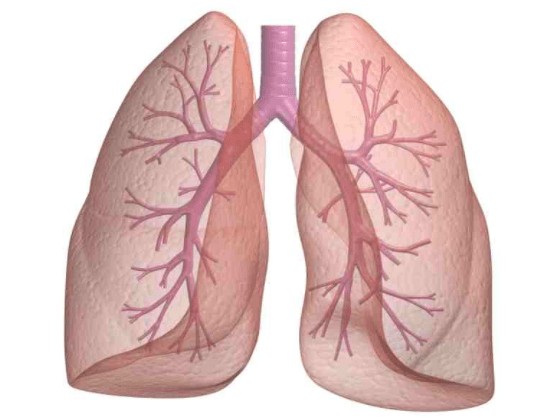
1. Which system are the lungs in?
a)
respiratory
b)
digestive
c)
excretory
d)
muscular
116.
 Which system is the stomach in?
a)
respiratory
b)
digestive
c)
nervous
d)
excretory
117.
 Which system is the esophagus in?
a)
digestive
b)
urinary
c)
integumentary
d)
skeletal
118.
 What is the main function of the respiratory system?
a)
take in oxygen and exhale waste like carbon dioxide
b)
move nutrients throughout the body
c)
take in carbon dioxide and exhale oxygen
119.
Where does digestion start?
a)
stomach
b)
mouth
c)
esophagus
120.
 What is the main job of the digestive system? 
a)
break down foods into nutrients that can be used by the body
b)
take in oxygen and exhale waste like carbon dioxide
c)
pump blood throughout the body
d)
makes the body hungry
121.
Which systems main function is to allow movement of the body?
a)
muscular
b)
digestive
c)
skeletal
d)
excretory
122.
The smallest units or parts of living things; the body's building blocks.
a)
cells
b)
organs
c)
tissues
d)
system
123.
Your large and small intestines are part of this body system.
a)
nervous
b)
digestive
c)
muscular
d)
skeletal
124.
A collection of the same kinds of cells working together to do the same job.
a)
cells
b)
tissues
c)
organs
d)
systems
125.
Your body systems work separately and do not effect each other.
a)
true
b)
false
126.
 Organs are body parts that have specific jobs.  Your body systems are made up of organs.
a)
True
b)
False
127.
Which system provides shape and support, enables you to move, protects your internal organs, and stores minerals?
a)
skeletal
b)
muscular
c)
digestive
d)
nervous
128.
The endocrine system communicates to the body using....
a)
electrical signals
b)
soluble gases
c)
digestive enzymes
d)
chemical hormones
129.
The body system that transmits information inside the body using electrical impulses.
a)
Endocrine
b)
Skeletal
c)
Muscular
d)
Nervous
130.
Which body system is required in producing offspring?
a)
Reproductive System
b)
Endocrine System
c)
Digestive System
d)
Immune System
131.
What is the main function of the excretory system?
a)
Convert food into nutrients
b)
Send signals in the form of hormones
c)
Filter water and remove waste products from the body
d)
Exchange gases between the body
132.
What is the main function of the Endocrine System?
a)
Take in Oxygen
b)
Take Carbon into the lungs
c)
Produce Sperm Cells
d)
Produce Hormones
133.
Which body system delivers nutrients to the cells inside the body?
a)
Reproductive
b)
Circulatory
c)
Nervous
d)
Excretory
134.
Which body system produces or absorbs nutrients?
a)
Circulatory
b)
Endocrine
c)
Digestive
d)
Reproductive
135.
Which representation would show the organization of life from simplest to the most complex?
a)
Heart muscle tissue, cardiovascular system, heart muscle tissue
b)
cardiovascular system, heart muscle cells, heart muscle tissue
c)
cardiovascular system, heart tissue, heart cells
d)
Heart muscle cells - heart muscle tisse, heart, cardiovascular system
136.
What type of cells are responsible for carrying oxygen to the cells of the body?
a)
White blood cells
b)
Nerve cells
c)
Lung cells
d)
Red blood cells
137.
Which system detects information from the environment and directs the way your body responds to this information?
a)
excretory
b)
circulatory
c)
respiratory
d)
nervous
138.
Which system includes bones, cartilage, and ligaments?
a)
nervous
b)
muscular
c)
skeletal
d)
excretory
139.

Which system produces hormones in your body?

a)

endocrine

b)

circulatory

c)

lymphatic/immune

d)

digestive

140.
Which system includes the mouth, esophagus, and the small and large intestines?
a)
nervous
b)
excretory
c)
respiratory
d)
digestive
141.
Which system collects and removes wastes?
a)
Muscular
b)
Circulatory
c)
Digestive
d)
Excretory
142.
List the levels of organization in the human body in order from least complex to most complex…
a)
Tissues, cells, organ systems, organs, and organism
b)
Cells, tissues, organ systems, organs, and organism
c)
Cells, tissues, organs, organism, and organ systems
d)
Cells, tissues, organs, organ systems, and organism
143.

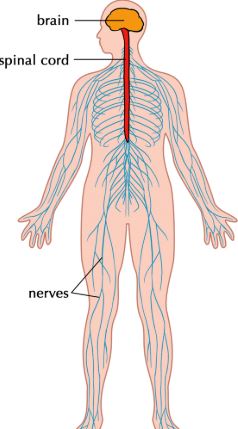
What system is pictured?

a)

Skeletal

b)

Circulatory

c)

Nervous

d)

Muscular

144.

How does the cardiovascular system and the respiratory system work together?

a)

The cardiovascular system allows the body to have energy while the respiratory system makes cells

b)

The cardiovascular system transports oxygen around the body while the respiratory system gives the body oxygen

c)

The cardiovascular system makes cells while the respiratory system moves them where they are suppose to go

d)

The cardiovascular system transports nutrients around the body while the respiratory system brings oxygen into the body

145.

The muscular organ that pumps blood through out your body is your

a)

Arteries

b)

Diaphragm

c)

Heart

d)

Larynx

146.
when you have two different genes
a)
heterozygous
b)
dominant
c)
homozygous
147.
when you have two of the same genes
a)
heterozygous
b)
recessive
c)
homozygous
148.
the physical look of a trait
a)
phenotype
b)
genotype
c)
recessive
149.
the following letters are an example of _______  dd
a)
recessive
b)
homozygous recessive
c)
homozygous dominant
d)
dominant
150.
Dd letters are an example of....
a)
heterozygous genes
b)
homozygous genes
c)
dominant genes
d)
recessive genes
151.
DD is an example of
a)
homozygous recessive
b)
dominant
c)
Homozygous dominant
d)
recessive
152.
B=brown eyes
b= blue eyes
What is true about two brothers that have brown eyes?
One has genotype BB the other Bb.
a)
they have same phenotype and genotype
b)
they have different genotypes and phenotypes
c)
they have same phenotype but different genotypes
d)
they have same genotype but different phenotypes
153.
W=white hair
w= non-white hair
If you cross a horse with WW and a horse with ww what fraction of the offspring would be expected to have white hair?
a)
none
b)
3/4
c)
1/2
d)
all
154.
In guinea pigs, the alleles for black hair(B) is dominant to the allele for brown hair(b). Two black-haired guinea pigs are crossed. One of the pigs is homozygous for black hair and one is heterozygous. What percentage of their offspring are expected to have black hair?
a)
25%
b)
50%
c)
75%
d)
100%
155.
A dog gives birth to 5 puppies. What percentage of the chromosomes does each puppy share with the mother?
a)
25%
b)
50%
c)
75%
d)
100%
156.
Which best explains why children resemble their parents?
a)
they eat same foods
b)
they have similar DNA
c)
they speak the same language
d)
they have the same interests
157.
What is the relationship between DNA and chromosomes?
a)
Chromosomes are made of DNA
b)
DNA is made of chromosomes
c)
DNA and chromosomes are the same thing.
d)
All of the above are correct
158.
How many pairs of chromosomes exist in each of your cells?
a)
10
b)
12
c)
23
d)
46
159.
Why are your chromosomes arranged in pairs?
a)
Scientists have no idea
b)
Because you get one from your mom and one from your dad
c)
Because pairs can divide easier
d)
Because DNA is awesome
160.
Put in order smallest to largest:
a)
Chromosome - DNA - Gene
b)
Gene - DNA - Chromosome 
c)
DNA - Gene  Chromosome
d)
Chromosome - Gene  - DNA
161.
Are recessive traits shown with capital or lowercase letters? 
a)
Capital
b)
Lowercase
162.
The physical appearance or the way a gene looks is known as it's....
a)
genotype
b)
allele
c)
gene
d)
phenotype
163.
The different forms of genes are known as
a)
environment
b)
probability
c)
traits
d)
alleles
164.
An allele or gene that always shows is
a)
recessive
b)
dominant
c)
hidden
d)
present
165.
Two of the same genes for a trait (sometimes called purebred). BB or bb
a)
homozygous
b)
hetrozygous
c)
protein
d)
chromosome
166.
Two different genes for a trait (sometimes called hybrid). Bb
a)
protein
b)
homozygous
c)
heterozygous
d)
genotype
167.
G = dominant green and y = recessive yellow
A fish has a Gy genotype, what will its phenotype be?
a)
yellow
b)
green
c)
greenish-yellow
d)
red
168.
T - tall and t = short
In the punnett square below, what belongs in the missing square
a)
tt
b)
Tt
c)
Bb
d)
TT
169.
Dominant alleles are represented by a:
a)
Male gene
b)
lowercase letter
c)
recessive trait
d)
capital letter
170.
A ________________________ is used to predict the possible genotype from certain parents
a)
Mendel Grid
b)
Genetic Tic Tac Toe
c)
Punnett Square
d)
Pedigree Plot
171.
Heredity is the passing of traits from _____________________ to _____________________
a)
predators to prey
b)
water to rain
c)
parents to offspring
d)
fungi to protists
172.
___________________________ is the field of science that studies of how traits are passed on, or inherited.
a)
dominant traits
b)
ratio
c)
phenotype
d)
genetics
173.
He is known as the father of modern day genetics.
a)
Gregory Mendel
b)
Greg Mendel
c)
Gregor Mendel
d)
Grace Mendel
174.
What is a genotype? 
a)
The genetic make up (code)
b)
The physical trait
175.

What is the term for a feature that allows an organism to survive better in its environemtn?

a)

variation

b)

adaptation

c)

homologous structure

d)

vestigial structure

176.
What is the process in which humans breed organisms for certain traits?
a)
natural selection
b)
inheritance
c)
artificial selection
d)
descent withOUT modification
177.
The Physical remains of a plant or animal preserved in rock or Earth's crust. 
a)
Adapt
b)
Fossil
178.
Charles Darwin came up with this theory 
a)
Natural Selection
b)
Mutation
179.
To adjust to a changing environment
a)
Mutation
b)
Adapt
180.
Most of the species found in fossil form are _______________. 
a)
Alive
b)
Extinct
181.
Darwin wrote that organisms with traits that are best suited to the environment will ________________
a)
increase in number
b)
become extinct
182.
Some organisms that share a common ancestor have features that have different functions, but similar structures.  These are known as
a)
vestigial structures
b)
analogous structures
c)
homologous structures
d)
fossil structures
183.
Who is the father of evolution?
a)
Darwin
b)
Mendel
c)
Newton
d)
Einstein
184.
What is another name for natural selection?
a)
survival of the smartest
b)
survival of the fastest
c)
survival of the biggest
d)
survival of the fittest
185.
What is the study of organisms at the early stages of development?
a)
DNA studies
b)
embryology 
c)
extinction
d)
fossil record
186.
Another word for adapt is ____________.
a)
change
b)
create
187.
Which of the following is NOT an example of natural selection? 
a)
People selectively breeding hamsters.
b)
Insect populations developing resistance to certain pesticides.
c)
Bacteria becoming resistant to antibiotics.
d)
Male birds of certain species developing colorful feathers to attract female mates.
188.
What characteristic did Darwin observe about the finches on the Galapagos Islands?
a)
Their feathers 
b)
Genotypes 
c)
Their beaks
d)
Their body sizes
189.
Which term refers to the process by which individuals that are better suited to the environment survive and reproduce therefore passing down their genes to their offspring? 
a)
Evolution 
b)
Variation 
c)
Adaptation
d)
Natural Selection 
190.
The environment around Manchester, England, changed during the Industrial Revolution.  How did this change affect peppered moths living in the area?
a)
Natural selection favored moths with dark wings because predators could not see them on the soot-colored trees.
b)
Natural selection favored moths with white wings that were easy for predators to see.
c)
Natural selection favored moths with white wings because predators could not see them on the soot-colored trees.
d)
Natural selection caused moths with white wings to become extinct.
191.
When an organism completely dies out, it is called.....
a)
Adaption
b)
Extinction
c)
Fossilization
d)
Mutation
192.

Scientists have collected millions of fossils of different organisms, and have developed a timeline of life on Earth. What do we call this?

a)

Mutation

b)

Natural Selection

c)

The theory of evolution

d)

Fossil Record

193.

Sometimes bones in the front limbs of animals are very similar in structure. What do we call similar bone structures that indicate a link to a common ancestor?

a)

Adaptations

b)

Gradualism

c)

Homologous Structures

d)

Extinction

194.

A physical or behavioral trait that helps an organism survive and reproduce in its environment is called a what?

a)

An adaptation

b)

A response to a stimulus

c)

A mutation

d)

Evolution

195.

When looking at two birds of the same species, you notice that one has darker feathers than the other one. You also notice that one has a beak that is just a little longer. These slight differences within members of the same species are called.....

a)

Fossils

b)

Extinction

c)

Meiosis

d)

Variations

196.

What do we call a change in a species over time?

a)

Adaptation

b)

Evolution

c)

Extinction

d)

Environmental influences

197.
Who was the naturalist that traveled the world to study plants and animals?
a)
Albert Einstein
b)
Charles Darwin
c)
Charles Barkley
d)
Isaac Newton
198.
Darwin's expedition was called the Voyage of the _________.
a)
Titanic
b)
Beagle
199.
Remains of ancient organisms are called
a)
Extinctions
b)
Fossils
c)
Mutations
d)
Variations
200.

What type of structures are shown?

a)

Homologous

b)

Analogous

c)

Vestigial

d)

Heterologous

201.

What is shown ?

a)

embryology

b)

fetalology

202.
Which layer is the oldest?
a)
1
b)
2
c)
3
d)
4
203.

This part of the plant holds the plant in the ground and gets water and nutrients from the soil.

a)

stem

b)

leaves

c)

flower

d)

roots

204.

The ___________ absorb sunlight to help make food for the plant.

a)

seed

b)

stem

c)

roots

d)

leaves

205.

The _________ helps hold the plant up and carries water and nutrients to the rest of the plant from the roots.

a)

leaves

b)

roots

c)

stem

d)

seed

206.
What is this?
a)
Xylem
b)
Phloem
207.
Moves water UP
a)
Xylem
b)
Phloem
208.
Roots absorb water into the __.
a)
Xylem
b)
Phloem
209.
Xylem and Phloem are both __.
a)
Transpiration
b)
Absorption
c)
Photosynthesis
d)
Vascular tissue
210.
Both the xylem and phloem are considered-
a)
Stomata
b)
Leaves
c)
Roots
d)
Vascular tissue
211.
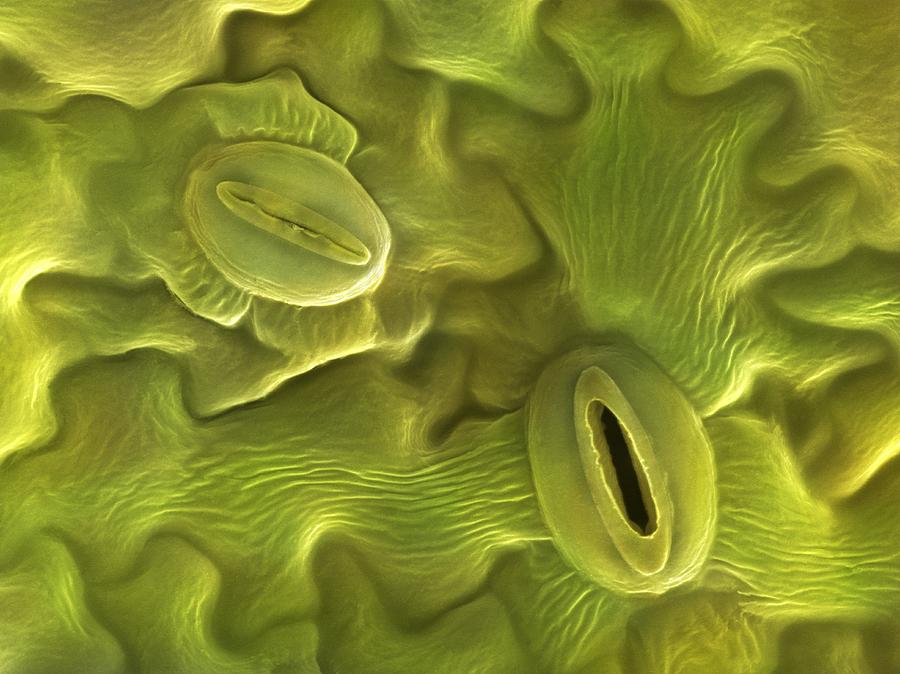
Opening that allows gas exchange
a)
Stomata
b)
Leaves
c)
Roots
d)
Vascular tissue
212.
The part of the plant that makes food.
a)
stem
b)
leaves
c)
roots
d)
flower
213.
The male part of the flower is known as the _____.
a)
stamen
b)
pistil
c)
ovary
d)
petal
214.
The female part of the flower is known as the ____.
a)
stamen
b)
anther
c)
filament
d)
pistil
215.
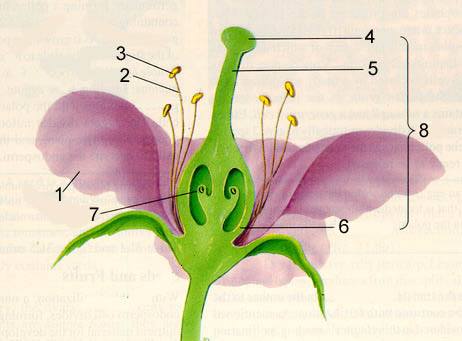
What is #3 pointing to?
a)
stigma
b)
filament
c)
ovary
d)
anther
216.
What is #4 pointing to?
a)
anther
b)
style
c)
stigma
d)
ovary
217.
What is #6 pointing to?
a)
stigma
b)
style
c)
ovary
d)
petal
218.
Plants need sunlight to survive because _________ .
a)
they need to stay very warm.
b)
they need to be able to see danger.
c)
they get minerals from sunlight.
d)
they make food from sunlight.
219.
How do plants get their energy?
a)
through a reaction called chlorophyll 
b)
by a process called photosynthesis 
c)
by absorbing mineral nutrients from soil 
d)
by eating other organisms 
220.
Three main things plants need to survive. 
a)
sunlight, oxygen, soil
b)
soil, carbon dioxide, sunlight 
c)
sunlight, air, soil 
d)
sunlight, air, water 
221.
The source of energy plants use to make food
a)
photosynthesis 
b)
air 
c)
sunlight 
d)
soil 
222.
What two materials are used in photosynthesis?
a)
carbon monoxide and water 
b)
carbon dioxide and soil 
c)
carbon dioxide and oxygen
d)
carbon dioxide and water 
223.
Glucose is ... 
a)
salt 
b)
sugar 
c)
air 
d)
water
224.
Plants are considered producers because 
a)
they produce carbon dioxide 
b)
they produce their own water 
c)
they produce sunlight 
d)
they produce their own food 
225.
Stomata is found in the _______. 
a)
stems 
b)
roots 
c)
leaves 
d)
flower 
226.
The green pigment in leaves that captures the energy from the sun. 
a)
borophyll 
b)
chlorophyll 
c)
photosynthesis 
d)
leaves 
227.
Which of the following methods is used by plants to disperse their seeds widely?
a)
sticking on animal fur
b)
traveling through an animal's digestive system 
c)
wind
d)
all of the above 
228.
Where does carbon dioxide for photosynthesis come from?
a)
soil 
b)
air 
c)
sun 
d)
water 
229.
What two substances are produced during photosynthesis?
a)
sugar and carbon dioxide 
b)
sugar and carbon monoxide
c)
sugar and water
d)
sugar and oxygen 
230.
What do plants release during photosynthesis that is essential for life?
a)
sugar 
b)
carbon dioxide
c)
oxygen 
d)
water 
231.
Example of a decomposer
a)
fungus
b)
mouse
c)
plants
d)
frogs
232.
A tree is a ....
a)
composer
b)
decomposer
c)
producer
233.
What is a herbivore?
a)
an animal that gets energy from eating other animals
b)
an organism that gets energy from eating only plants
c)
an animal that gets energy by eating both plants and other animals
d)
an animal that eats only herbs
234.
What is a carnivore?
a)
an animal that gets energy by eating other animals
b)
An animal that gets energy by eating only plants
c)
an animal that gets energy by eating both plants and animals
d)
an animal that makes its own energy through photosynthesis
235.
An animal that gets energy from eating both plants and animals is a 
a)
herbivore
b)
carnivore
c)
omnivore
d)
autotroph
236.
The shrew provides energy for the _______?
a)
cricket
b)
grasshopper
c)
frog
d)
snake
237.
Which of the following is a herbivore?
a)
cricket
b)
frog
c)
hawk
d)
shrew
238.
What is this called?
a)
Food Web
b)
Food Chain
c)
Abiotic Factors
239.
What is this called?
a)
Food Web
b)
Food Chain
c)
Abiotic Factors
240.
All food chains begin with a ____________.
a)
primary consumer
b)
secondary consumer
c)
producers
d)
scavengers
241.
All of the living and nonliving things in an area that interact with each other are called a/an ______.
a)
community
b)
habitat
c)
population
d)
ecosystem
242.
An area where an organism finds food, shelter and water in a specific arrangement
a)
niche
b)
biosphere
c)
biome
d)
habitat
243.
The living part of an ecosystem
a)
Biotic
b)
Abiotic
c)
Mother Earth
d)
Flowers
244.
The non-living part of an ecosystem
a)
Ocean
b)
Lava Flow
c)
Birds
d)
Abiotic
245.
The study of how living things interact with one another and with their environment.
a)
Biology
b)
Lithology
c)
Ecology
d)
Farmacology
246.
Some grasses grow in hot dry areas. Why might they grow deep roots?
a)
to protect the plant from sun damage
b)
to take in as much light as possible
c)
to spread seeds to new places
d)
to reach water down below
247.
What is one reason why some plants have scents?
a)
to shed extra water off the plant
b)
to take in nutrients from the soil
c)
to attract animals to spread its pollen
d)
to conserve water during dry periods
248.
Why might some plants that grow on the shady rain forest floor have large leaves?
a)
to stay safe from predators
b)
to attract different animals
c)
to survive harsh winters with heavy snowfall
d)
to take in as much sunlight as possible
249.
What is one possible reason for seeds to have hooks of barbs?
a)
to stay warm during the winter
b)
to protect themselves from sunlight
c)
to get attached to passing animals and get carried away
d)
to stick to animals and steal nutrients from them
250.

Some plants have brightly colored flowers to attract bees, birds, and butterflies.

a)

False

b)

True

251.

Helps the plant to anchor to the soil and get water and nutrients.

a)

Leaves

b)

Stems

c)

Roots

d)

Odd shapes

252.
What is a producer?
a)
an organism that gets energy from eating other organisms
b)
an organisms that uses sunlight to make its own food
c)
an organism that gets energy from eating dead organisms, non-living material or waste
d)
an organism that uses chemical energy to make its own food
253.
What are plants called in a food chain?
a)
Producers
b)
Consumers
c)
Decomposers
d)
Scavengers
254.
Which is the correct food chain order?
a)
Plant-->1st Consumer--> 2nd Consumer 
b)
Plant <-- 1st Consumer <-- 2nd Consumer
c)
2nd consumer     --> 1st consumer  --> Plant
d)
1st Consumer      --> 2nd consumer --> Plant
255.
Which of the following illustrates the correct ordering of trophic levels?
a)
decomposers-carnivores-autotrophs-herbivores
b)
herbivores-autotrophs-carnivores-decomposers
c)
producers-herbivores-carnivores-decomposers
d)
carnivores-producers-omnivores
256.
All the living things in an environment
a)
Biotic factors
b)
Traits
c)
Animals
d)
Natural Selection
257.
All the nonliving things in an environment
a)
Ecosystem
b)
Dead Animals
c)
Genes
d)
Abiotic factors