wayground logo

Free Printable Worksheets

Font size

S
M
L
XL
Worksheets

OAS PARCC Review

Total questions: 255

Worksheet time: 5hrs 34mins

Name
Class
Date
1.

What is the basic measurement for Science?

a)

U.S. Customary

b)

Inches

c)

Metric

d)

Yards

2.

What unit would this tool measure?

a)

Grams

b)

Ounces

c)

Kilograms

d)

Tons

3.

How many centimeters are in a meter?

a)

0.100

b)

1,000

c)

10,000

d)

100

4.

What is the volume of the liquid in the graduated cylinder?

a)

30mL

b)

24mL

c)

25mL

d)

29mL

5.

A meter is a unit of-

a)

Mass

b)

Length

c)

Sound

d)

I don't know

6.
What is Observation?
a)
Using your Five Senses to gather information.
b)
Looking at things.
c)
The process of thinking what might happen.
d)
The guess of what is happening.
7.
What is an Independent Variable?
a)
The variable that "I" change.
b)
The variable that stays the same.
c)
The thing that we are measuring
d)
A Teenager
8.

What is a Dependent Variable?

a)

The variable that "I" change.

b)

The thing that is being measured

c)

The variable that stays the same.

d)

A Child

9.

What type of bond occurs when atoms share an electrion?

a)

ionic

b)

covalent

c)

polar

10.

Most of the periodic table is made up of

a)

gasses

b)

non metals

c)

metaloids

d)

metals

11.

What is the smallest atom on the periodic table?

a)

helium

b)

gold

c)

carbon

d)

hydrogen

12.

what type of bond is formed between rows 1 and 17 on the periodic table?

a)

ionic

b)

covalent

c)

polar

13.

How many electrons does a one helium atom have?

a)

1

b)

2

c)

3

d)

4

14.

What is it called when a liquid becomes a gas?

a)

condensation

b)

sublimation

c)

evaporation

15.
Particles in an atom that are neutral and have no charge are 
a)
negatrons 
b)
electrons 
c)
neutrons 
d)
protons 
16.
The smallest particle of any particular type of matter is known by which of the following terms?
a)
Compound
b)
Atom
c)
Chemical
d)
Element
17.
all matter is made of what 
a)
energy 
b)
atoms 
c)
electrons 
d)
compounds 
18.
If the number of protons equal the number of _____, the atom will have no charge
a)
protons
b)
neutrons
c)
electrons
d)
nucleus
19.
The subatomic particle with a negative charge is the
a)
electron
b)
proton
c)
neutron
d)
nucleus 
20.
What is the atomic number?
a)
the number of protons
b)
the number of protons and neutrons
c)
the number of neutrons
d)
the number of protons and electrons
21.
Ions are: 
a)
atoms with a positive or negative charge
b)
atoms with no charge
c)
atoms with ONLY a positive charge
d)
atoms with ONLY a negative charge
22.
What is the compound for Lithium Fluoride?
a)
Li2F
b)
LiF2
c)
LiF
d)
FLi2
23.
How many electrons in Fluorine's outer shell?
a)
1
b)
2
c)
7
d)
8
24.
What is the atomic number of Sodium?
a)
11
b)
22
c)
23
d)
34
25.

What is the charge of rubidium?

a)

+1

b)

-1

c)

+2

d)

-2

26.
How many neutrons in Tantalum?
a)
181
b)
108
c)
115
d)
This is not an element
27.
Which group has full electron shells?
a)
Noble Gases
b)
Metals
c)
Non-Metals
d)
Ionic Compounds
28.
Which of the following statements is true for all living things (organisms)?
a)
All living things have organs
b)
All living things produce their own food through photosynthesis
c)
All living things are made of one or more cells
d)
All living things are made of more than one cell
29.
What is the most basic unit of life?
a)
Tissue
b)
Cell
c)
Organ
d)
Organ System
30.
Which of the following shows biological systems from least to most complex?
a)
Cells, tissue, organ, organ system
b)
Tissue, cells, organ, organ system
c)
Organ system, cells, organism, tissue
d)
Organ system, organ, tissue
31.
What is the function of the nucleus within a cell?
a)
Containing a cell's DNA and acting as the cell's "brain"
b)
Manufacturing proteins
c)
Completing photosynthesis
d)
Storage space
32.
Why are there so many different types of cells in multicellular organisms?
a)
Humans are relatively big
b)
Humans are heterotrophs
c)
Cells in multicellular organisms are specialized to complete different tasks or functions within the organism
d)
Cells in multicellular organisms are similar and complete only the same tasks or functions within the organism
33.
Where do plants receive the energy necessary to carry out photosynthesis?
a)
Heat from the sun
b)
Gamma radiation
c)
Light from the sun
d)
Wind
34.
Besides energy from the sun, what else does a plant require to complete photosynthesis?
a)
Wind energy
b)
Oxygen and carbon dioxide
c)
Oxygen and water
d)
Water and carbon dioxide
35.
The powerhouse of the cell is the...It converts energy from food into energy the cell can use
a)
Mitochondrion
b)
Golgi body
c)
Nucleus
d)
Ribosomes
36.
What organelle do plants have surrounding their cells that animal cells lack?
a)
Cell Wall
b)
Woody Stems
c)
Sharp thorns
d)
Cell Membrane
37.
According to Wegener's hypothesis of continental drift,
a)
Earth's surface is made up of seven major landmasses
b)
the continents DO NOT move.
c)
Earth is slowly cooling and shrinking.
d)
the continents were once joined together in a single landmass
38.
A rift valley forms at a _____
a)
convergent plate boundary
b)
divergent plate boundary
c)
transform boundary
d)
deep ocean trench
39.
In sea-floor spreading, molten material rises from the mantle and erupts
a)
along the edges of all the continents
b)
along mid ocean ridges
c)
in deep ocean trenches
d)
at the north and south poles
40.
The way that heat moves in flowing liquids and gases is called _______.
a)
convection
b)
radiation
c)
conduction
d)
temperature
41.
If an object has particles that are moving very quickly, the object's temperature is probably _____.
a)
cold
b)
slow
c)
big
d)
hot
42.
Heat from the sun travels to Earth by _____.
a)
conduction
b)
convection
c)
insulation
d)
radiation
43.
Which is a conductor?
a)
wool sweater
b)
aluminum foil
c)
oven mitt
d)
wooden spoon
44.
What is sediment?
a)
the process of rocks being broken down and carried away
b)
bits of rock, sand, and silt caused by the weathering of rocks
c)
the top layer of the soil
d)
decaying plant or animal material 
45.
According to the Law of Conservation of mass (matter), the amount of matter before and after a reaction must be the same. Which statement below is true?
a)
The total amount of matter is conserved
b)
The total amount of matter is less after a reaction
c)
The total amount of matter is more after a reaction
46.
What is mechanical weathering?
a)
Process through which rocks are physically broken into smaller pieces.
b)
Rocks are broken down through chemical changes.
c)
Rocks are worn away from acid in plant roots.
d)
Rocks broken down by machinery.
47.
A force is...
a)
a push 
b)
a pull 
c)
a push or pull 
d)
a push or pull with a specific magnitude and direction 
48.
The production of a new organism from a single parent
a)
Sexual Reproduction
b)
Vegetative Propagation
c)
Fertilization
d)
Asexual Reproduction
49.
What type of trait is gained by new experiences in the world?
a)
acquired trait
b)
inherited trait
c)
chromosome
d)
gene
50.
A dog sitting on command is an example of what type of trait?
a)
acquired trait
b)
inherited trait
51.
The shape of your nose is which type of trait?
a)
acquired trait
b)
inherited trait
52.
True or False. All the cells in an animal look the same and perform similar functions.
a)
True
b)
False
53.
Which organelle is in a plant cell but not in an animal cell?
a)
cytoplasm 
b)
chloroplast 
c)
mitochondrion
d)
cell membrane
54.
This organelle provides extra support for the plant cell and gives in shape.
a)
chlorophyll
b)
chloroplast
c)
cell wall
d)
vacuole
55.
Which rock layer in the diagram seems to be the oldest?
a)
F
b)
E
c)
B
d)
A
56.
What can scientists learn from the sequence of rock layers?
a)
Geologic history of that area
b)
Future geological events
c)
the number of organisms that live in the area
d)
the impact that hikers have had on an area.
57.
About how long does it take the Moon to make one complete cycle around the earth?
a)
24 hours
b)
7 days
c)
365 days
d)
28 days
58.
When the Northern Hemisphere of Earth is tilting away from the Sun, What season is the Southern Hemisphere experiencing?
a)
Summer
b)
Winter
c)
Spring
d)
Fall
59.
What would be the result if the Earth's axis was not tilted but straight up and down?
a)
Nothing would change
b)
There would be no seasons
c)
Days would always be longer
d)
The equator would freeze and the poles would be hot
60.
Which of the following statements is most accurate about the movement of Earth and the Sun?
a)
The Sun revolves around the Earth
b)
The Earth rotates around the Sun
c)
The Earth revolves around the Sun
d)
The Earth rotates while it revolves around the Sun 
61.
During sea-floor spreading at divergent boundaries, magma rises from the mantle and erupts _____________.
a)
along the edges of all the continents
b)
along mid ocean ridges
c)
in deep ocean trenches
d)
at the north and south poles
62.
Most geologists think that the movement of Earth's plates is caused by ______.
a)
conduction
b)
earthquakes
c)
convection currents in the mantle
d)
Earth's magnetic field.
63.
Which method of investigation would be best for answering the question, "At what time do the squirrels in White Bear like to eat?" 
a)
controlled experiment
b)
build a model
c)
field study
d)
review of research
64.
Which method of investigation would be best for answering the question, "How does the width of a bike tire affect the top speed?" 
a)
controlled experiment
b)
build a model
c)
field study
d)
review of research
65.
For the experiment, "How does the color of light affect plant height?", the amount of water each plant is given would be a _________ variable.
a)
changed
b)
measured
c)
controlled
d)
uncontrolled
66.
For the experiment, "How does the color of light affect plant height?", the color of light that each plant is given would be a _________ variable.
a)
changed
b)
measured
c)
controlled
d)
uncontrolled
67.
A community of living and nonliving things in their natural environment makes up a(n)_______________
a)
food web
b)
ecosystem
c)
food chain
d)
carbon cycle
68.
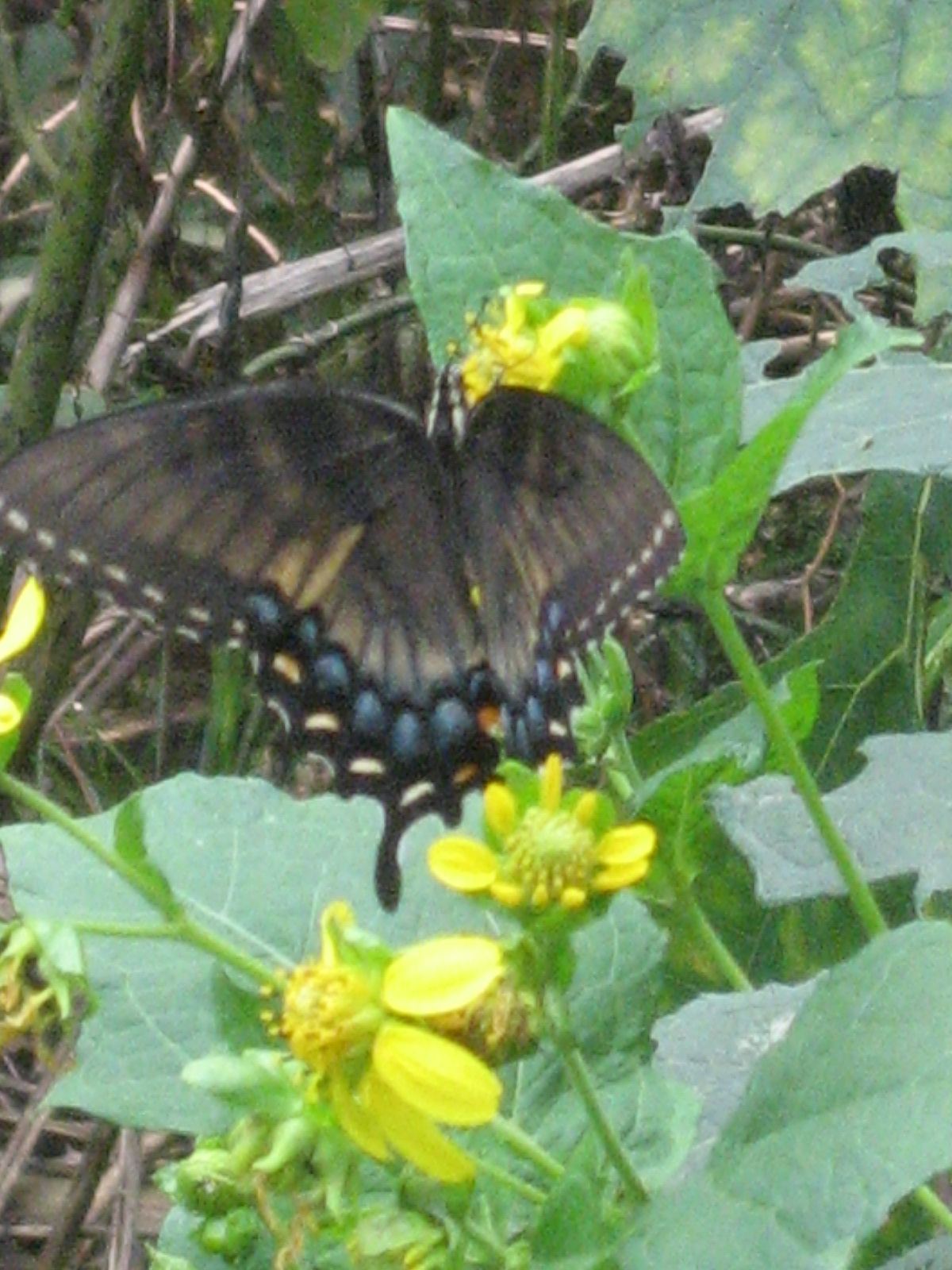
What role in an ecosystem is this organism?
a)
producer
b)
primary consumer
c)
secondary consumer
d)
decomposer
69.
An organism that gets energy from eating other organisms is a ______________
a)
producer
b)
consumer
c)
decomposer
70.
Scientists divide earth's atmosphere into four main layers, classified according to changes in _________________.
a)
temperature
b)
weather
c)
westerlies
d)
humidity
71.
What causes winds?
a)
differences in precipitation
b)
differences in humidity
c)
differences in air pressure
72.
The composition of the air is 78% _________.
a)
Oxygen
b)
Argon
c)
Carbon Dioxide
d)
Nitrogen
73.
The volume of water in a graduated cylinder in 12 mL. A marble is dropped in & the volume raises to 15 mL. What is the volume of the marble?
a)
3 mL
b)
12 mL
c)
15 mL
d)
27 mL
74.
The measure of the pull of gravity on an object is ___________________.
a)
motion
b)
weight
c)
mass
d)
friction
75.
The density of this material is 2 g/cm3.
There are 24 cm3  Find the total mass.
a)
12 grams
b)
48 grams
c)
12 g/cm3
d)
48 g/cm3
76.
Find the volume of this piece of brass.  
a)
50 g
b)
10 cm
c)
6 cm3
d)
12 cm3
77.
Here are 5 cubic centimeters (cm3).    All together they  have a mass of 20 g what is the density?
a)
20 g/cm3
b)
80 grams
c)
 4 g/cm3
d)
80 g/cm3
78.
Put the liquids in order from most dense to least dense?
a)
4, 3, 2, 1
b)
1, 2, 3, 4
c)
3, 4, 2, 1, 
d)
4, 3, 1, 2
79.
Imagine you travel to another planet. What will change as you walk around the surface of the planet, your mass or your weight?
a)
Mass
b)
Weight 
c)
Both 
d)
Neither 
80.
Which metric measurement would be a reasonable estimate for the length of a pencil? 
a)
20 mm
b)
20 cm
c)
20 dm
d)
20 m
81.
Convert 6098.3 centimeters to meters.
a)
60983
b)
609.83
c)
6.0983
d)
60.983
82.
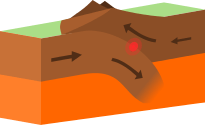
What type of plate boundary is this?
a)
Plate
b)
Divergent
c)
Convergent
d)
Transform
83.
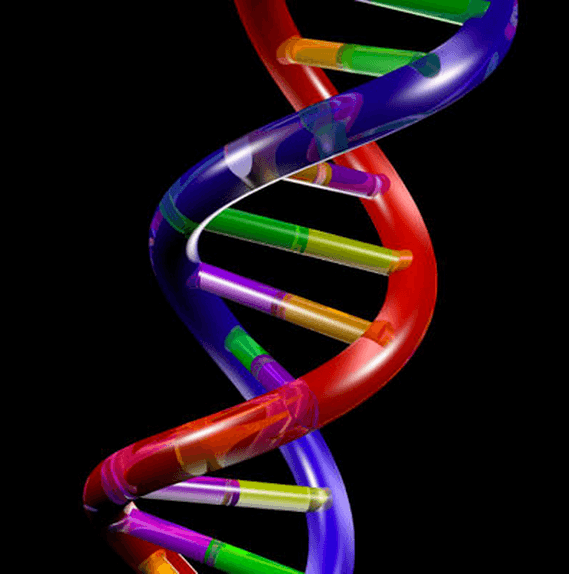
What determines the code, or information, of a DNA molecule?
a)
the shape (structure) of the nitrogen bases
b)
the order (sequence) of the nitrogen bases
c)
the color of the nitrogen bases
d)
the frequency (number) of nitrogen bases
84.
Why is DNA important?
a)
it is very small and very complicated
b)
it's in everything
c)
it serves as the blueprint for traits of all living things
d)
because we eat it every day for energy
85.
Which of the following best describes a DNA molecule?
a)
double helix
b)
contains ribose
c)
made of amino acids
d)
contains Uracil
86.
the genetic makeup of an organism
a)
heterozygous
b)
punnet square
c)
genotype
87.
The passing of traits from parent to offspring 
a)
Heredity 
b)
Genetics 
c)
Hybrid 
d)
Probability 
88.
What is this called?
a)
Food Web
b)
Food Chain
c)
Abiotic Factors
89.
A tree is a ....
a)
composer
b)
decomposer
c)
producer
90.
Example of a decomposer
a)
fungus
b)
mouse
c)
plants
d)
frogs
91.
Example of a consumer
a)
worm
b)
bacteria
c)
mushroom
d)
hawk
92.
The most important abiotic factors when studying biomes are...
a)
Food and Water
b)
Water and Sunlight
c)
Temperature and Oxygen
d)
Water and Temperature 
93.
Which of the following organisms are LEAST closely related?
a)
organisms that share a domain
b)
organisms that share a family 
c)
organisms that share a genus 
d)
organisms that share a species 
94.
The 8 levels of classification, most broad to most specific.
a)
Domain, Genus, Family, Order, Class, Phylum, Kingdom, Species
b)
Domain, Species, Kingdom, Genus, Phylum, Family, Class, Order
c)
Domain, Kingdom, Phylum, Class, Order, Family, Genus, Species
d)
Order, Kingdom, Species, Domain, Phylum, Family, Class, Genus
95.
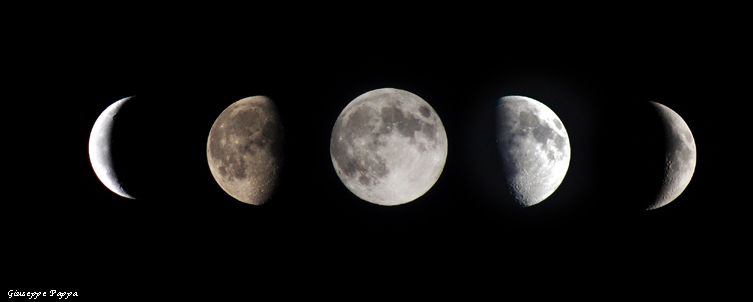
What moon phase is this picture?
a)
This is the waning crescent phase.
b)
This is the waxing gibbous phase.
c)
This is the waning gibbous phase.
d)
This is the new moon phase.
96.
What moon phase is this picture?
a)
This is the full moon phase.
b)
This is the waxing gibbous moon phase.
c)
This is the waning gibbous moon phase.
d)
This is the first quarter moon phase.
97.
What moon phase is this image?
a)
This is the full moon phase.
b)
This is the last quarter moon phase.
c)
This is the waxing gibbous moon.
d)
This is the new moon phase.
98.
What phase of the moon is this image?
a)
This is the last quarter moon phase.
b)
This is the full moon phase.
c)
This is the first quarter moon phase.
d)
This is the waxing gibbous moon phase.
99.
As the moon's shape appears to get smaller, we say that the moon is _.
a)
swelling
b)
waxing
c)
waning
d)
disappearing
100.
The moon seems to change shape from day to day in a cycle that lasts about a month as it goes through _.
a)
revolutions
b)
phases
c)
rotations
d)
eclipses
101.
A solar eclipse only happens during a ________ moon.
a)
New
b)
Cresent
c)
Gibbous
d)
Full
102.
A solar eclipse only occurs during which moon phase?
a)
1st Quarter
b)
New Moon
c)
Full Moon
d)
3rd Quarter
103.
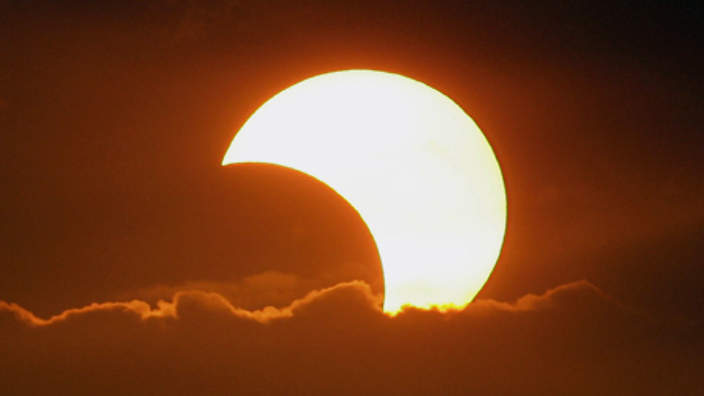
This image is an example of
a)
Lunar Eclipse
b)
Full Moon
c)
New Moon
d)
Solar Eclipse
104.
In order to have an eclipse, the Moon, Sun and Earth have to be?
a)
Below each other
b)
Above each other
c)
In alignment
105.
a)
solar eclipse
b)
lunar eclipse
106.
An eclipse in space is when....
a)
one object passes through the shadow of another object.
b)
two shadows collide.
c)
the moon is in the waxing crescent phase.
d)
the Sun and Moon are side by side.
107.
What is the order during a lunar eclipse
a)
sun, moon, earth
b)
sun, earth, moon
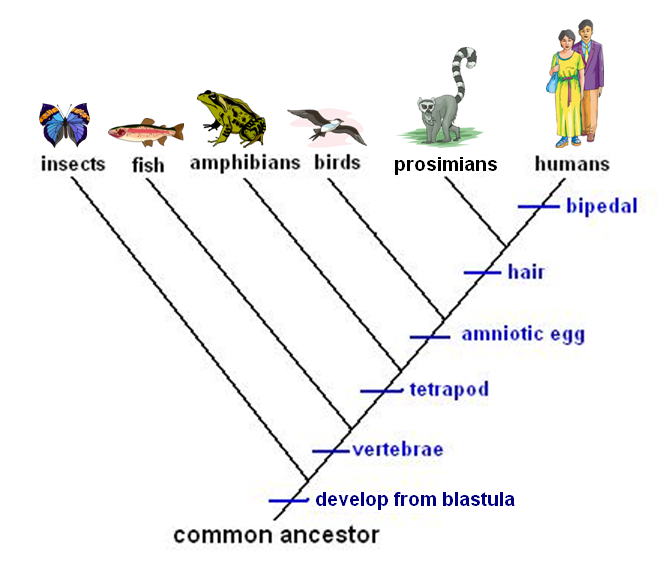
108.
Which organisms pictured on the cladogram have hair?
a)
prosimians only
b)
prosimians and humans
c)
humans only
d)
prosimians and birds
109.
Which organisms are most closely related?
a)
Equus caballas (Horse) & Equus burchellii (Zebra)
b)
Cyanea artica (Jellyfish) &
Ctenodiscus crispatus (Mud Starfish)
c)
Naja naja (cobra) & Glycine max (soya bean)
d)
Ophiocomina nigra (black brittle star) & Brassica nigra (black mustard)
110.
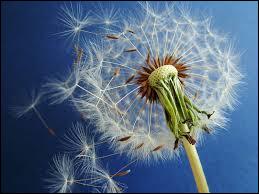
Dandelion, What kingdom does it belongs to?
a)
Plant Kingdom
b)
Animal Kingdom
c)
Fungi Kingdom
d)
Protista Kingdom
111.
Cells that have a true nucleus are called....
a)
eukaryotes
b)
prokaryotes
c)
unicellular
d)
multicellular
112.
Cells that do not have a true nucleus are called....
a)
eukaryote
b)
prokaryote
c)
unicellular
d)
multicellular
113.
Who first proposed binomial nomenclature as a way of classifying organisms?
a)
Carl Linnaeus
b)
Carl's Jr.
c)
Charles Darwin
d)
Henry Groseclose
114.
Term given to describe the 2 name naming system is:
a)
dichotmous key
b)
binomial nomenclature
c)
2 scientific names
d)
binomial key
115.
All of the following are examples of tissue except...
a)
organ
b)
muscle
c)
connective
d)
epithelial
116.
Which of the following is an example of homeostasis?
a)
taking out the trash
b)
drinking water
c)
sweating on a hot day
d)
taking a shower
117.
Which body system gets oxygen from the environment and removes carbon dioxide and other wastes from the body?
a)
Circulatory
b)
Respiratory
c)
Digestive
d)
Skeletal
118.
During this process, cells use O2 and glucose to release energy.  COis a waste product.
a)
Cellular Respiration
b)
Respiration
c)
Peristalsis
d)
Chemical Digestion
119.
The smallest unit that is a building block for all life.
a)
tissue
b)
organelle
c)
cell
d)
molecule
120.
Which system transports materials from the digestive system and respiratory system to the cells?
a)
circulatory
b)
respiratory
c)
digestive
d)
skeletal
121.
What does the digestive system do?
a)
Breaks down and handles food

b)
Pumps blood throughout the body
c)
Helps you breathe
d)
Helps your arms and legs move
122.
Your body couldn’t breathe without this system. Which one is it?
a)
circulatory
b)
skeletal
c)
respiratory
d)
urinary
123.
This system controls everything you do.
a)
nervous system
b)
olfactory system
c)
digestive system
d)
circulatory system
124.
What system moves the body?
a)
Endocrine System
b)
Muscular System
c)
Cardiovascular System
d)
Skeletal System
125.
What body system protects your organs?
a)
Nervous System
b)
Cardiovascular System
c)
Respiratory System
d)
Skeletal System
126.
What system sends and receives messages?
a)
Immune System
b)
Urinary System
c)
Digestive System
d)
Nervous System
127.
This system gets rid of waste.  What is it?
a)
Muscular System
b)
Urinary System
c)
Lymphatic System
d)
Endocrine System
128.
 What system brings food and oxygen to cells?
a)
Cardiovascular System
b)
Nervous System
c)
Digestive System
d)
Muscular System
129.
What system protects the body from disease?
a)
Lymphatic System
b)
Endocrine System
c)
Immune System
d)
Urinary System
130.
The humerus is part of this system?
a)
Muscular
b)
Reproductive
c)
Skeletal
d)
Nervous
131.
Gas exchange between the blood and the outside occurs in which system?
a)
Respiratory
b)
Circulatory
c)
Lymphatic
d)
Integumentary
132.
What is the first phase of Mitosis?
a)
Prophase
b)
Metaphase
c)
Anaphase
d)
Telophase
133.
In which phase does the cell spend most of it's life?
a)
Interphase
b)
Nuclear Division
c)
Telophase
d)
Mitosis
134.
Which of the following is NOT occuring during interphase?
a)
Cell growth
b)
DNA being copied
c)
DNA condensing
d)
Two new cells are made
135.
T - tall and t = short
In the punnett square below, what belongs in the missing square
a)
tt
b)
Tt
c)
Bb
d)
TT
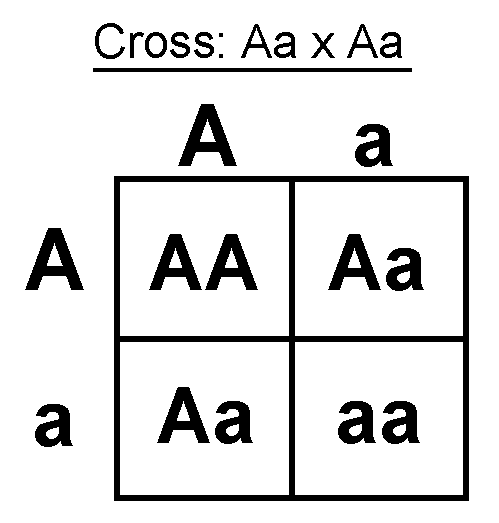
136.
What allele combination should go in the missing box?
a)
AA
b)
Aa
c)
aa
d)
none of these
137.
If B = brown hair and b = blonde hair, what is the probability of brown hair?
a)
25%
b)
50%
c)
0%
d)
75%
138.
In rabbits, black fur (B) is dominant over brown fur (b). If a rabbit has brown fur, what can you conclude about its genotype?
a)
It is BB.
b)
It is Bb
c)
It is brown
d)
It is bb.
139.
A ________________________ is used to predict the possible genotype from certain parents
a)
Mendel Grid
b)
Genetic Tic Tac Toe
c)
Punnett Square
d)
Pedigree Plot
140.
What is the phenotype of the offspring? (A-Brown hair; a-blond hair) 
a)
50 % Brown Hair and 50% Blond Hair 
b)
25 % Brown Hair and 75% Blond Hair 
c)
75 % Brown Hair and 25% Blond Hair 
d)
0% Brown Hair and 100% Blond Hair 
141.
Which of the following genotypes is homozygous dominant?
a)
A
b)
Aa
c)
AA
d)
aa
142.

What does a punnet square show us?

a)

The age of the offspring

b)

The chance of a genotype (trait) showing up in offspring

c)

Numbers

d)

Blue eyes

143.

Genotypes are:

a)

Green

b)

Dominant only

c)

Recessive only

d)

traits that appear in offspring

144.

What are the chances that the offspring will have homozygous recessive traits?

a)

1 in 4

b)

3 out of 4

c)

75%

d)

50%

145.

A recessive genotype will show when:

a)

The offspring have both dominant and recessive genotypes

b)

The offspring has two recessive genotypes

c)

The offspring have two dominant genotypes

d)

The mother has blue eyes

146.
How many boxes would say BB?
a)
1
b)
2
c)
4
d)
0
147.
Dominant alleles are represented by a:
a)
Male gene
b)
lowercase letter
c)
recessive trait
d)
capital letter
148.
Which of the following is a phenotype?
a)
Aa
b)
red hair
c)
heterozygous
d)
DNA
149.
Black hair color is dominant to white hair color in mice.  Determine the phenotypic ratio for the offpring of a heterozygous black mouse and a white mouse.
a)
4 Black: 0 White
b)
3 Black: 1 White
c)
2 Black: 2 White
d)
0 Black: 4 White
150.
In a certain species of rabbits, black coat color is dominant over brown coat color. What is the probability of producing a rabbit with brown coat color from two rabbits that are both heterozygous for black coat color?
a)
0%
b)
25%
c)
75%
d)
100%
151.
Phenylketonuria (PKU) is inherited as a recessive condition. A man with PKU marries a woman without any alleles for PKU. What is the probability that their child will inherit PKU?
a)
0%
b)
25%
c)
50%
d)
75%
152.

lithosphere

a)

the crust and upper part of the earths mantle

b)

the crust

c)

opening in in the surface of earth through which lava flows

153.

tectonic plates

a)

tells us that the is made up of moving plates

b)

rocks push together

c)

rocks moving apart

154.

reverse fault

a)

rocks push together

b)

rocks moving apart

c)

rocks moving horizontally

155.

normal fault

a)

rocks moving apart

b)

rocks pushing horizontally

c)

rocks moving horizontally

156.
Subduction is what?
a)
Were both the plates move up. 
b)
Were the go away 
c)
Were one goes under the other. 
d)
None of the above 
157.
How are caves formed
a)
From rain water
b)
erosion 
c)
waves
d)
carbon doxiasd. 
158.
what happens when one ocean plate hits a land plate.
a)
subdation
b)
valcanos 
c)
earthquakes
d)
none
159.
What does erosion do?
a)
Break down rock
b)
changes rock chemically
c)
changes sediment in rock
d)
moves broken pieces of rock, or sediment, from one place to another
160.
This rock formed when bits of other rocks became pressed into a solid. What type of rock is it?
a)
Sedimentary Rock
b)
Metamorphic Rock
c)
Igneous Rock
161.
This rock formed when lava cooled very quickly on Earth's surface. What specific type of rock is it?
a)
Extrusive Igneous Rock
b)
Intrusive Igneous Rock
c)
Non-Foliated Metamorphic Rock
d)
Biochemical Sedimentary Rock
162.
Two ways to describe types of igneous rocks are _____
a)
Extrusive and Intrusive
b)
Foliated and Non-Foliated
c)
Clastic and Biochemical
d)
Black and Gray
163.
The liquid portion at the center of the Earth.
a)
Asthenosphere
b)
Inner Core
c)
Outer Core
d)
Lithosphere
164.
Which of the words below describe broken up rock?
a)
stalactites
b)
magmas
c)
metamorphs
d)
sediments
165.
The upper and lower mantle stay solid because of the intense _____________ at that layer.
a)
Temperature
b)
Pressure
c)
Gravity
d)
Density
166.
Which layer is the thinnest, least dense and most brittle?
a)
Mantle
b)
Inner Core
c)
Crust
d)
Outer Core
167.
What is the core made of?
a)
steel
b)
iron 
c)
aluminum
d)
iron and nickel
168.
Which travels fastest, always being the first detected by seismic stations?
a)
P waves
b)
S waves
169.
The epicenter of an earthquake is
a)
The point below the surface where rock begins to break and the first motion occurs
b)
The seismic station closest to the earthquake
c)
The place where the greatest damage occurs
d)
The point on the surface directly above the focus
170.
If Marble is a rock that has large crystals and formed by exposure to high heat and pressure, what type of rock is it?  
a)
Igneous
b)
Metamorphic
c)
Sedimentary
d)
Sediment
171.
When magma is cooled and solidified it becomes what type of rock?
a)
igneous
b)
metamorphic
c)
sedimentary
d)
conglomerate
172.
Which of the following has the layers of Earth in order from outside to inside?
a)
lithosphere, outer core, inner core, asthenosphere 
b)
inner core, outer core, lithosphere, asthenosphere
c)
outer core, asthenosphere, lithosphere, inner core
d)
lithosphere, asthenosphere, outer core, inner core
173.
Which of the following explains how mountains are formed?
a)
Plates collide at divergent boundaries causing the crust to push upward.
b)
Plates collide at convergent boundaries causing the crust to push upward.
c)
Plates slide past each other at transform boundaries causing the crust to push upward.
d)
Plates collide at convergent boundaries causing the mantle to push upward
174.
How are ridges formed? 
a)
Two plates collide with one another.
b)
Two plates sink below Earth's surface.
c)
Two plates slide beside each other. 
d)
Two plates move away from one another.
175.
If plates move in the direction show in the picture, what will likely occur?
a)
Mountain Formation
b)
Earthquakes
c)
Trench formation
d)
Volcanic island formation
176.
Why does oceanic crust sub-duct under continental crust?
a)
The oceanic crust is more dense.
b)
The oceanic crust is less dense.
c)
The oceanic crust is hotter.
d)
The oceanic crust is cooler. 
177.
If an animal runs for 2 hours and covers 14 kilometers, what was the average speed of the animal? 
a)
1.5 km/h
b)
7.0 km/h
c)
13 km/h
d)
30 km/h
178.
What type of boundary does the picture show and what does it form? 
a)
divergent; mountains
b)
divergent; mid ocean ridge
c)
convergent; mid ocean ridge
d)
transform; earthquake
179.
The picture gives a description of what type of rock? 
a)
Sedimentary
b)
Igeneous
c)
Metamorphic
d)
Lava
180.
Rock X is produced by "cooling".  What type of rock is Rock X?
a)
Sedimentary Rock
b)
Metamorphic Rock
c)
Sediment
d)
Igneous Rock
181.
What name is used to describe all living things?
a)
organism
b)
ogrenism
182.
Which of the following statements is true for all living things (organisms)?
a)
All living things have organs
b)
All living things produce their own food through photosynthesis
c)
All living things are made of one or more cells
d)
All living things are made of more than one cell
183.
Where do plants receive the energy necessary to carry out photosynthesis?
a)
Heat from the sun
b)
Gamma radiation
c)
Light from the sun
d)
Wind
184.
Besides energy from the sun, what else does a plant require to complete photosynthesis?
a)
Wind energy
b)
Oxygen and carbon dioxide
c)
Oxygen and water
d)
Water, carbon dioxide, and chlorophyll
185.
Guess: how far back is the generally agreed upon oldest fossil rock record of life?
a)
500 Million Years ago
b)
3.5 Billion Years ago
c)
10 Billion Years ago
186.
clue: A scientific procedure undertaken to make a discovery, test a hypo.the.sis, or demonstrate a known fact. Which of these choices is best described by the given definition?
a)
Experiment 
b)
Procedure 
c)
Orientation 
d)
Conference 
187.
A)n __________ is any substance that cannot be broken down into simpler substances
a)
Compound
b)
Molecule 
c)
Element
d)
Atom
188.
Identify the four main kinds of organic compounds in living things
a)
food, water, protein, & heat.
b)
fat, water, protein + soda.
c)
carbohydrates, lipids, protein, nucleic acid.
d)
hydrogen, oxygen, carbon + H20
189.
What stores food and begins the process of breaking it down?
a)
Heart
b)
Teeth
c)
Stomach 
d)
Brain
190.
_______ grind food and start the process of digestion.
a)
teeth
b)
jaws
c)
lungs
d)
stomach
191.
Which components of an ecosystem are biotic?
a)
Trees, insects, oxygen, carbon dioxide
b)
Sun, water, air, sediments(such as rocks, dirt, and sand)
c)
Plants, animals, sun, wind, soil
d)
Plants, animals (including humans), fungi, decomposers
192.
When plants go through Photosynthesis to make glucose(food) they need _____, ______, and _____. As a result, ______ is released into the air making it cleaner!
a)
Oxygen, sunlight, water---carbon dioxide
b)
Carbon dioxide, sunlight, water---oxygen
c)
Soil, sunlight, water--- carbon dioxide
d)
Soil, sunlight, water --- oxygen
193.
When plants go through Photosynthesis to make glucose(food) they need _____, ______, and _____. As a result, ______ is released into the air making it cleaner!
a)
Oxygen, sunlight, water---carbon dioxide
b)
Carbon dioxide, sunlight, water---oxygen
c)
Soil, sunlight, water--- carbon dioxide
d)
Soil, sunlight, water --- oxygen
194.
Spider crab and algae - With the ocean as its habitat, spider crabs often spend their time in some of the most shallow areas of the sea making them highly visible to predators. However, living on their backs are algae that act as camouflage.
The algae has a place to live.
The spider crab remains camouflaged and safe from predators. 
This is an example of:
a)
Symbiotic relationship, which is a relationship where 1 or both organisms benefit
b)
Inherited trait
c)
Learned trait
d)
Symbiosis, which is when 2 organisms negatively effect each other.
195.
A food web contains a combination or producers and consumers. Which group transfers the most energy? 
a)
Carnivores
b)
Consumers
c)
Producers
d)
2nd level consumers
196.
In arctic regions, although there is plenty of sunlight during the summer, the wind blows unmercifully. As a result, trees grow very low to the ground, sometimes no more than a few inches tall, to avoid the howling wind. This is an example of an _______
a)
Environmental change
b)
Adaptation
c)
inherited behavior
d)
Arctic biome
197.
Mr. Toscano is very good at speaking Spanish. This is a.....
a)
Inherited behavior
b)
Learned behavior
c)
Inherited trait
d)
Learned trait
198.
Which individual in the first generation is a carrier?
a)
The male
b)
The female
c)
individual 1
d)
None of the above
199.
How many generations are shown in this pedigree?
a)
1
b)
2
c)
3
d)
4
200.
Lisa has two grandmothers in this picture.
a)
Mona and Jackie
b)
Marge and Mona
c)
Selma and Jackie
d)
Patty and Selma
201.
Hemophilia is a recessive sex-linked trait. If H = normal & h = has hemophilia, which genotype represents a male with hemophilia. 
a)
XHY
b)
XHXh
c)
XhXh
d)
Xh
202.
What is the gender of the individual whose karyotype is seen in the image?
a)
Male
b)
Female
203.
Is this trait (the shaded individuals) dominant or recessive?
a)
dominant
b)
recessive
204.
What do we use pedigrees for?
a)
To look at families
b)
To make determinations about the offspring
c)
To track traits in families
d)
Nothing
205.
Why do all the daughters in Generation II carry the colorblind gene?
a)
Because mom passed on the gene.
b)
Because dad passed on the X chromosome.
c)
Because their brother has it.
d)
Because their brother gave it to them.
206.
What you see, or the physical appearance.
a)
Genotype
b)
Phenotype
c)
Homozygous
d)
Heterozygous
207.
How many alleles (letters) do each person carry for a trait?
a)
1
b)
2
c)
3
d)
4
208.
Give the genotype for person III-3
a)
GG
b)
Gg
c)
gg
209.
Give the genotype for person II-1
a)
GG
b)
Gg
c)
gg
210.
In an experiment, the one variable that is changed by the scientist is called the ______.
a)
independent variable
b)
dependent variable
c)
random variable
d)
controlled variable
211.
In an experiment, the factor that we observe and/or measure is called the ____.
a)
independent variable
b)
dependent variable
c)
random variable
d)
controlled variable
212.
What type of data is shown here?
a)
qualitative
b)
quantitative
213.
A testable, possible explanation for a scientific question is called a(n) _____.
a)
theory
b)
random guess
c)
law
d)
hypothesis
214.
What type of data is shown here?
a)
qualitative
b)
quantitative
215.
A scientist studies how many days it takes people to get sick when eating different candies.  What is the independent variable?
a)
eating
b)
days until sick
c)
the scientist
d)
candies
216.
Which of the following is NOT a cell theory.
a)
All non-living things are made of cells
b)
All cells come from pre-existing cells
c)
Cells are the basic unit of structure and function of all living things
217.
This scientist discovered and named the cell.
a)
Robert Hooke
b)
Anton Van Leeuwenhoek
c)
Goldberg
d)
Mathias Schleiden
218.
This type of cell needs a cell wall and chloroplasts
a)
Plant cell
b)
Animal Cell
c)
Bacteria
219.
Where are proteins made? These are small, grain-like or rod shaped organelles.
a)
Golgi body
b)
Mitoichondrion
c)
Chromosomes
d)
Ribosomes
220.
This organelle is like a recycling center for the cell. It breaks down old materials. It is like a vacuum cleaner that cleans up the waste in cells.
a)
Ribosomes
b)
Lysosomes
c)
Mitochondria
d)
Chloroplasts
221.
Plants perform photosynthesis through this organelle.  It captures energy from the sun and uses it to produce food for the cell.
a)
Chlorophyll
b)
Chloroplasts
c)
Mitochondria
d)
Golgi Apparatus
222.
This structure is a storage area for the cell. Plants usually have one large one.
a)
Lysosome
b)
Vacuole
c)
Ribosome
d)
Golgi Body
223.
This structure packages and distributes proteins throughout the cell. 
a)
Golgi Body
b)
Lysosome
c)
Ribosome
d)
Mitochondria
224.
Tiny cell structures that carry out specific functions within the cell.
a)
membranes
b)
nucleus
c)
organelles
d)
animalicules
225.
A living thing that can't make its own food and must eat other living things
a)
Carnivore
b)
Consumer
c)
Herbivore
d)
Producer
226.
In an exothermic reaction, heat is ...
a)
taken in
b)
given out
227.
If a chemical reaction is EXOTHERMIC, the temperature would....
a)
Stay the same
b)
Increase
c)
Decrease
228.
In an endothermic reaction the system is releasing energy.
a)
True
b)
False
229.
The process by which plants release water through the pores in their leaves is called...
a)
accumulation
b)
dormancy 
c)
photosynthesis 
d)
transpiration
230.
The transformation of water vapor back into liquid water by cooling is called...
a)
condensation
b)
evaporation
231.
How are solids different from liquids?
a)
particles in solids are moving freely around each other.
b)
particles in solids have no motion.
c)
particles in solids are vibrating in place.
d)
particles in solids have more motion than in liquids
232.
2. A change of state from a liquid to a solid is called....
a)
Melting
b)
Freezing
c)
Evaporation
233.
Change from Gas to Solid is called........
a)
Sublimation
b)
Deposition
c)
Fusion
d)
condensation
234.
Change from Liquid to Solid is call......
a)
fusion
b)
Freezing
c)
sublimation
d)
evaporation
235.
What happens to particles when they are heated?
a)
They speed up and spread out
b)
They slow down and compress
c)
They stop moving
d)
They move closer together and speed up
236.
What is deposition?
a)
Phase change from gas to solid
b)
phase change from liquid to solid
c)
Phase change from solid to gas
d)
Phase change from liquid to gas
237.
What is sublimation?
a)
phase change between solid and liquid
b)
pahse change from gas to solid
c)
phase change from solid to gas
d)
phase change from solid to solid
238.
How many electrons should Lithium have around its Lewis dot model?
a)
1
b)
2
c)
3
d)
4
239.
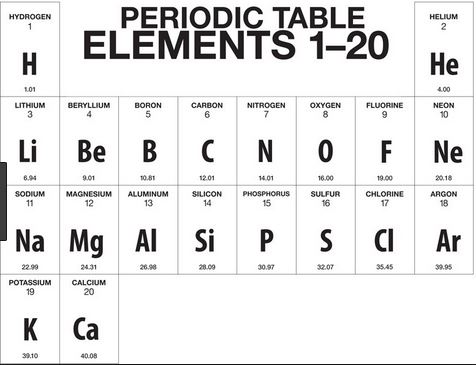
How many electrons does potassium K contain? (click to see image)
a)
19
b)
39
c)
20
d)
40
240.
What element is represented in this Bohr Model? 
a)
Carbon
b)
Hydrogen
c)
Aluminum
d)
Lithium
241.
What's a valence electron?
a)
electrons in the second energy level
b)
electrons in the outermost energy level
c)
the atomic number
d)
electrons in the first level
242.
How many electrons are in the outer shell of Sodium (Na)?
a)
3
b)
1
c)
2
d)
4
243.
The majority of an atom's mass exists where?
a)
In the nucleus
b)
In the electron cloud
c)
In the space between the nucleus and the electrons
d)
In the neutrons
244.
How many electrons should Lithium have around its Lewis dot model?
a)
1
b)
2
c)
3
d)
4
245.

How many total valence electrons are participating in bonding in the molecule above?

a)

8

b)

4

c)

2

d)

3

246.

How many valence electrons does Helium Have?

a)

1 Valence electron

b)

2 Valence electron

c)

3 Valence electron

d)

4 Valence electron

e)

5 Valence electron

247.

How many valence electrons does Calcium Have?

a)

1 Valence electron

b)

2 Valence electron

c)

3 Valence electron

d)

4 Valence electron

e)

5 Valence electron

248.
At higher temperatures
a)
particles in an object have less energy
b)
particles in an object move faster
c)
a gas contracts
249.
Which state of matter has tightly packed molecules?
a)
solid
b)
liquid
c)
gas
250.
Define a liquid.
a)
Indefinite shape, indefinite volume
b)
Definite shape, definite volume
c)
Found in stars
d)
Definite volume, indefinite shape
251.
Particles of a liquid
a)
are tightly packed together and stay in a fixed position.
b)
have no viscosity.
c)
decrease in volume with increasing temperature.
d)
are free to move around one another but still touch.
252.
An object with which of the following densities will float on water?
a)
0.7 g/cm3
b)
1.2 g/cm3
c)
3.5 g/cm3
d)
11.4 g/cm3
253.
A box sliding down an inclined plane attains a velocity of 27 m/s in 3 seconds from rest.  Find the acceleration.
a)
30 m/s
b)
24 m/s2
c)
9 m/s2
d)
81 km/hr
254.
Erosion is...
a)
the breaking apart, wearing away, or dissolving of rock. 
b)
the scraping away of materials
c)
material that comes from the weathering of rock
d)
the moving of sediment and rock from one place to another. 
255.
Weathering is...
a)
the breaking apart, wearing away, or dissolving of rock. 
b)
the scraping away of materials
c)
material that comes from the weathering of rock
d)
the moving of sediment and rock from one place to another.