Wayground logo

Free Printable Worksheets

Font size

S
M
L
XL
Worksheets

Social Studies STAAR academy

Total questions: 195

Worksheet time: 2hrs 9mins

Name
Class
Date
1.
The last MAJOR battle of the American Revolution was the __________.
a)
Battle of Bunker Hill
b)
Battle of Yorktown
c)
Battle of Trenton
d)
Battle of Lexington
2.

What is considered the first shots of the American Revolution?

a)

Lexington and Concord

b)

Bunker Hill

c)

Trenton

d)

Yorktown

3.
Common Sense was written by
a)
Thomas Jefferson
b)
George Washington
c)
John Locke
d)
Thomas Paine
4.
Who was the main author of the Declaration of Independence?
a)
Thomas Jefferson
b)
Ben Franklin
c)
George Washington
d)
John Adams
5.
What were American's called who supported independence?
a)
Tories
b)
Separatists
c)
Patriots
d)
Loyalists
6.
Colonists who chose to side with the British were known as
a)
Redcoats
b)
Loyalists
c)
Neutrals
d)
Patriots
7.
This treaty formally ended the American Revolution
a)
Treaty of Ghent
b)
Treaty of Paris of 1763
c)
Treaty of Boston
d)
Treaty of Paris of 1783
8.
What was one purpose of the Declaration of Independence?
a)
to establish a framework for government
b)
to state the reasons for the colonies to separate from England
c)
to express reasons for limiting immigration
d)
to list arguments for women’s suffrage
9.
What was the primary purpose of the Declaration of Independence?
a)
to persuade England to end slavery in America
b)
to list reasons the colonies should be free from England
c)
to provide a plan for financing the American Revolution
d)
to convince the king to grant colonists more land
10.
The Battle of Saratoga was significant in the Revolutionary War because it
a)
ended the British threat to the South
b)
guaranteed Canadian help for the colonists
c)
convinced the French to support the Americans
d)
forced the British to withdraw from North America
11.
In order to pay off French and Indian War debt, the British Parliament took what action?
a)
Closed the Boston Harbor
b)
Passed new colonial taxes like the Stamp Act
c)
Held a seaside tea party
d)
Allowed the colonists to chose their own governors
12.
Who commanded the Continental Army?
a)
Henry Knox
b)
John Hancock
c)
Benedict Arnold
d)
George Washington
13.
What group tracked new British laws and met to organize and start colonial protests?
a)
Writs of Assistance
b)
Sons of Anarchy
c)
Sons of Liberty
d)
Liberty Ladies
14.
After the Boston Tea Party, the British Parliament passed this set of laws in order to punish Massachusetts.
a)
Proclamation of 1863
b)
Sugar and Stamp Acts
c)
Writs of Assistance
d)
Intolerable/Coercive Acts
15.
The Proclamation of 1763 restricted--
a)
colonists from moving back to Great Britain.
b)
the western movement of settlers.
c)
the control of colonial legislatures.
d)
the amount of tea imported from Europe.
16.
Colonists opposed taxes from Great Britain because the--
a)
colonies had no representation in Parliament.
b)
taxes were too high.
c)
British people had no representation in Parliament.
d)
colonists wanted American Indians and French to pay all the taxes.
17.
Paul Revere became famous as a patriot who--
a)
gained Spain's support for American independence.
b)
was a member of the Continental Congress.
c)
saved the lives of many patriots as a battlefield doctor.
d)
made a daring ride to warn colonists of the British arrival in Lexington.
18.
What significant event happened at the Battles of Lexington and Concord?
a)
End of the Revolutionary War.
b)
Colonists were shot after taunting British soldiers.
c)
Site of the first armed conflict of the Revolutionary War.
d)
The French joined the American colonists in fighting the British.
19.
What battle that ended with an American victory was the turning point of the Revolutionary War?
a)
Battle of Bunker Hill
b)
Boston Massacre
c)
Battle of Quebec
d)
Battle of Saratoga
20.
In which event were colonists shot after taunting British soldiers?
a)
Lexington & Concord
b)
Boston Tea Party
c)
First Continental Congress
d)
Boston Massacre
21.
Who published a pamphlet, "Common Sense," encouraging Americans to declare independence?
a)
John Adams
b)
Samuel Adams
c)
Patrick Henry
d)
Thomas Paine
22.
The "shot heard round the world" occurred at
a)
Boston
b)
Philadelphia
c)
Lexington
d)
New York
23.
Where did Washington's army endure a terrible winter?
a)
Valley Forge
b)
Saratoga
c)
Philadelphia
d)
Yorktown
24.
What act taxed printed material in the colonies?
a)
Townshend Act
b)
Intolerable Act
c)
Stamp Act 
d)
Print Act
25.
After what war did England issue the Proclamation of 1763?
a)
American Revolution
b)
War of 1812
c)
French and Indian War
d)
The war of the Roses
26.
What was the punishment for the Boston Tea Party?
a)
Townshend Acts
b)
Intolerable Acts
c)
Stamp Act
d)
Lexington and Concord
27.
What was the religious movement that helped inspire Revolutionary thought in the colonies? 
a)
The Great Sleeping
b)
The Great Awakening
c)
The Evangelical Movement 
d)
The Crusades
28.
What did the Quartering Act do? 
a)
A tax on coins; it made quarters more expensive
b)
It made it illegal to wear capri pants
c)
Made it so you had to let British soldiers sleep in your house and eat your food
d)
Made it so British Soldiers had to create their own quarters
29.
The French and Indian War was fought between which two countries?
a)
France and American Indians
b)
Britain and France
c)
France and French Indians
d)
Britain and French Indians
30.
Parliament is another name for _________________.
a)
British hair style
b)
British tea time
c)
British government
d)
Washington's government
31.
Colonists had no representation in Parliament, so the people cried, "______________!"
a)
"Help Us!"
b)
"Kill the King"
c)
"Go Dawgs!"
d)
"No taxation without representation!"
32.
The protest that ended with 342 chests of tea dumped in Boston Harbor was called _________________.
a)
The Boston Massacre
b)
The Boston Tea Party
c)
The Boston Coffee Party
d)
The New York Tea Party
33.
The ________________ dressed up like Mohawk Indians and dumped British tea in the Boston Harbor.
a)
Daughters of Liberty
b)
Sons of Liberty
c)
colonists
d)
loyalists
34.
The Patriots chose ________________ to lead the Continental Army.
a)
King George
b)
George Washington
c)
Benjamin Franklin
d)
Patrick Henry
35.
As the Secretary of the Treasury, Alexander Hamilton was best known for his creation 
a)
the Supreme Court
b)
the Federal Reserve 
c)
the Internal Revenue Service 
d)
a national bank
36.
President Washington set an important precedent by-
a)
not seeking reelection after 2 terms as president 
b)
recognizing Washington, DC, as the nation's capital 
c)
establishing the annual State of Union address
d)
he set up two political parties 
37.
What document prevented further European colonization in the Western Hemisphere?
a)
Farewell Address
b)
Marbury v. Madison
c)
Monroe Doctrine
d)
Madison Doctrine
38.
What is a controversial legislation of President Adams' administration restricted citizens from criticizing the government?
a)
The Embargo Acts
b)
Alien and Sedition Acts
c)
The Monroe Doctrine
d)
The Judiciary Act
39.
What is a direct result of the Whiskey Rebellion? 
a)
puts the power in the hands of the federal government to stop the rebellion 
b)
the farmers protested and the war of 1812 broke out as a result 
c)
Embargo Act was implemented to cut off all trade with Europe 
d)
the National Bank is set up to fund the rebellion 
40.
In Gibbons v. Ogden was is significant about the court's decision?
a)
only the states can regulate interstate commerce
b)
only the federal government has the power to regulate interstate commerce
c)
The Constitution does not grant anyone the power to regulate trade between states
d)
established the practice of judicial review by the Supreme Court
41.
Why is Marbury v. Madison significant?
a)
only states could regulate the type of transportation used on rivers
b)
reinforced federal authority over trade
c)
establish federal authority over American Indian affairs
d)
established judicial review
42.
The Era of Good Feelings came after what major event?
a)
War of 1812
b)
Election of George Washington
c)
The Embargo Act
d)
The Election of 1796
43.
What is a characteristic of the Era of Good Feelings?
a)
many states called for restructuring of the federal government 
b)
The US gave land to Great Britain to avoid war
c)
there was a renewed sense of nationalism 
d)
tariffs on whiskey were prohibited 
44.
What best summarizes the Monroe Doctrine?
a)
Europe is prohibited from colonizing in the West
b)
Spain can freely colonize in South America 
c)
Prohibited immigrants from Europe from moving to America
d)
enforced impressment of British soldiers to fight for the US
45.
French agents tried to bribe US negotiators who came to talk about attacks on US ships. This is  the- 
a)
Alien and Sedition Act
b)
Whiskey Rebellion 
c)
Embargo Act
d)
XYZ Affair 
46.
What document officially ended the War of 1812?
a)
Treaty of Ghent
b)
Monroe Doctrine 
c)
Adams Onis Treaty
d)
Missouri Compromise
47.
Which political party believed in a strong central/federal government?
a)
Federalists 
b)
Domocratic Republicans 
c)
Democrats 
d)
Independent Party 
48.
What is NOT a characteristic of the Democratic-Republicans?
a)
based on agriculture 
b)
strong state government 
c)
strong federal government 
d)
fear of rule by one or few 
49.
The Embargo Act of 1807
a)
banned all U.S. imports and exports
b)
increased the amount of exports to France
c)
placed a heavy tax on all imported goods
d)
led to war with England
50.
Marbury v. Madison established the idea of 
a)
judicial review
b)
an embargo
c)
impressment
d)
nationalism
51.
What is the defintion of IMPRESSMENT?
a)
British capturing American sailors
b)
Showing off to the person next to you
c)
Forcing Native Americans west of the Mississippi
d)
British giving guns and ammunition to Native Americans 
52.
Which is NOT a cause of the War of 1812?
a)
British impressment of American sailors
b)
British searching and seizing American ships
c)
British giving guns and ammunition to Native Americans
d)
British burning down Washington D.C.
53.
What general (president) led these troops to the victory of the battle of New Orleans?
a)
Sam Adams
b)
Andrew Jackson
c)
George Washington
d)
John Adams
54.
When was Mayflower Compact written?
a)
1410
b)
1492
c)
1655
d)
1620
55.
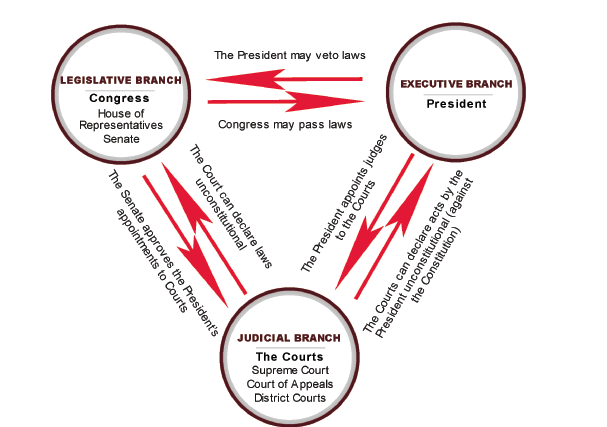
Principle of US Gov’t
People = source of Gov’t Power
Gov’t exists only w/consent of People
a)
Popular Sovereignty
b)
Separation of Powers
c)
Checks & Balances
d)
Federalism
56.
Idea that government power is divided/shared between the national and state levels.
a)
Repubicanism
b)
Popular Sovereignty
c)
Limited Government 
d)
Federalism
57.
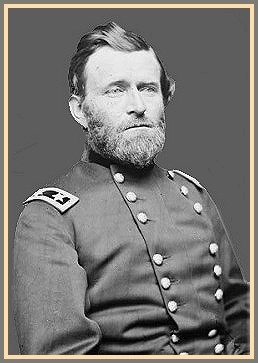
The Union General that forced General Lee to surrender at Appomattox.
a)
Fort Sumter
b)
Abraham Lincoln
c)
Robert E. Lee
d)
Ulysses S. Grant
58.
A book written by Harriet Beecher Stowe that described the cruelty of slavery.
a)
Gone with the Wind
b)
Across the Lines
c)
Uncle Tom's Cabin
d)
Gettysburg
59.
The place where Confederate General Robert E. Lee surrendered his army to General Ulysses S. Grant.
a)
Fort Sumter
b)
Sherman's March to Sea
c)
Appomattox Court House
d)
Uncle Tom's Cabin
60.
An abolitionist who tried to start a slave rebellion by attacking an armory at Harpers Ferry, VA.
a)
Fort Sumter
b)
Sherman's March to Sea
c)
state's rights
d)
John Brown's raid on Harpers Ferry
61.
Southern General from Virginia who led the South's largest army and lost a major battle at Gettysburg, Pennsylvania.
a)
Jefferson Davis
b)
Robert E. Lee
c)
Abraham Lincoln
d)
Ulysses S. Grant
62.
President of the U.S. during the Civil War who issued the Emancipation Proclamation which freed slaves in the states that seceded.
a)
George Washington
b)
Thomas Jefferson
c)
Ulysses S. Grant
d)
Abraham Lincoln
63.
3 day battle that the South lost and is considered the turning point in the war
a)
Gettysburg
b)
Fort Sumter
c)
The Atlanta Campaign
d)
Uncle Tom's Cabin
64.
The place where Confederate cannons opened fire thus starting the Civil War
a)
Sherman's March to Sea
b)
Gettysburg
c)
Atlanta Campaign
d)
Fort Sumter
65.
The 1st and only President of the Confederacy during the Civil War.
a)
Abraham Lincoln
b)
Robert E. Lee
c)
Ulysses S. Grant
d)
Jefferson Davis
66.
The Battle of Vicksburg was important in the Civil War because it --
a)
allowed the Confederate army to seize Washington D.C.
b)
broke the Union blockade along the Gulf of Mexico
c)
enabled the Confederate army to seek French assistance
d)
gave the Union army control of the Mississippi River
67.
At the beginning of the Civil War, President Abraham Lincoln maintained that the war was being fought to 
a)
uphold national honor
b)
prevent foreign involvement
c)
free all slave 
d)
preserve the Union
68.
Abraham Lincoln's Emancipation Proclamation declared --
a)
United State's freedom from Great Britain
b)
an end to the Civil War
c)
freedom for slaves in rebellious southern states
d)
the beginning of Reconstruction
69.
Why was the Battle of Gettysburg significant to the Civil War?
a)
It led to the Emancipation Proclamation
b)
It brought an end to the Civil War
c)
It resulted in the passing of the 15th Amendment
d)
It was a turning point because General Lee was forced to fight a defensive war
70.
Which event was the immediate cause of the secession of several Southern states from the Union in 1860?
a)
The Dred Scott decision by the U.S. Supreme Court
b)
The election of President Abraham LIncoln
c)
The enactment of the Missouri Compromise
d)
The raid on the arsenal at Harpers Ferry by John Brown
71.
The Civil War began when Confederate forces launched an attack at which location?
a)
Fort Sumter
b)
Fort Williams
c)
Fort Pillow
d)
Fort Apache
72.

The single bloodiest DAY in the Civil War took place here:

a)

Appomatox

b)

Bull Run

c)

Antietam

d)

Gettysburg

73.

The commanding general of the Union army was

a)

Ulysses Grant

b)

Robert E. Lee

c)

William Sherman

d)

John Wilkes Booth

74.

The commanding general of the Confederate army was

a)

Ulysses Grant

b)

Robert E. Lee

c)

Abraham Lincoln

d)

William Sherman

75.

The Confederacy surrendered to the Union army at this courthouse in Virginia.

a)

Appomattox

b)

Antietam

c)

Manassas

d)

Richmond

76.

Which state was the first to succeed from the Union?

a)

Virgina

b)

Texas

c)

South Caronlia

d)

Georgia

77.

What was the MAIN point of Lincoln's first inaugural address?

a)

Abolish slavery throughout the US

b)

Preserve the union and stay together as the US

c)

Strike back at confederate rebel states

d)

Appoint a new general of the Union Army

78.

Which major battle had the most casualties and was the turning point of the Civil War?

a)

Anteitem

b)

Gettysburg

c)

Vicksburg

d)

Fort Sumter

79.

Lincoln's famous speech to rally the north towards a common cause

a)

Gettysburg Address

b)

Anteitem Address

c)

The Sumter Address

d)

Emancipation Proclamation

80.
What was the effect of the cotton gin on slavery in the South?
a)
It reduced the need for slaves on plantations.
b)
It increased the demand for slaves to produce more cotton.
c)
It helped improve the slaves' work conditions.
d)
It had no significant effect on slaves or slavery.
81.
What did the Dred Scott decision say?
a)
It considered slaves to be property without rights.
b)
It outlawed slavery in all U.S. states
c)
It required that slavery not be allowed in all new states
d)
It gave slaves all the rights of U.S. citizens
82.
What did the Missouri Compromise say about the future of slavery?
a)
It would be legal in all future states
b)
It would be illegal in all future states
c)
It would be prohibited above the 36,30 line
d)
The Southern states had to give up their slaves
83.
An abolitionist is  
a)
a person who fights for slavery
b)
a soldier that fights for the Confederate
c)
A person who fights against slavery
d)
a soldier that fights for the Union
84.
Why did South Carolina secede from the Union?
a)
They thought Lincoln would free their slaves
b)
Wanted to make laws to fit their states needs
c)
They were trying to hold onto their way of life
d)
all of the above
85.
What was the main issue that divided the nation and led to the Civil War?
a)
westward expansion
b)
tariffs
c)
slavery
d)
foreign affairs
86.
A consequence of the Kansas-Nebraska Act was:
a)
violence between pro-slavery and abolitionist groups
b)
gold was discovered in Nebraska
c)
John Brown led a slave revolt
d)
Dred Scott sued for his freedom
87.
A series of passageways to escape to freedom was the
a)
Underground Railroad
b)
tunnel vision quest
c)
Freedom Crossing
d)
way to slavery
88.
A person who was against slavery and fought to end it was 
a)
a sharecropper
b)
a fugitive
c)
a slave owner
d)
an abolitionist
89.
In the Dred Scott Decision, the Supreme Court decided that slaves were
a)
freed from their owners
b)
able to choose slavery or freedom
not considered property of their owners
c)
going to have new slave owners
d)
considered property of their owners
90.
Which Constitutional principle states that no one is above the law and the government only has powers listed in the Constitution?
a)
Limited Government
b)
Individual Liberties
c)
Federalism
d)
Republicanism
91.
Many of our individual liberties are protected by which document?
a)
The Articles of Confederation
b)
The Declaration of Independence
c)
The Bill of Rights
d)
The Fundamental Orders 
92.
Which president was also called the Father of the Constitution?
a)
George Washington
b)
Thomas Jefferson
c)
Alexander Hamilton
d)
James Madison
93.
What is the name for a change or addition to the Constitution?
a)
Amendment
b)
Preamble
c)
Ratification
d)
Compromise
94.
Which Constitutional principle states that the power of government comes from the people?
a)
Federalism
b)
Republicanism
c)
Checks and Balances
d)
Popular Sovereignty
95.
Which branch of government interprets laws?
a)
Judicial (courts)
b)
Executive (president)
c)
Legislative (Congress)
96.
Which group wanted to keep the Articles of Confederation and give more power to the states?
a)
Federalists
b)
Anti-Federalists
c)
Judiciary
d)
Legislature
97.
Central and national are two words that mean the same thing as - 
a)
state
b)
federal
c)
local
d)
regional
98.
What was the name for the essays written in support of ratification of the Constitution?
a)
Letters from a Pennsylvania Farmer
b)
The Anti-Federalist Essays
c)
The Federalist Papers
d)
The Fundamental Orders
99.
Which compromise concerned the issue of how to count slaves for representation and taxation?
a)
The Great Compromise
b)
The Commerce Compromise
c)
The 3/5 Compromise
d)
The Connecticut Compromise
100.
Which compromise concerned how many representatives different sized states would have in Congress?
a)
The Great Compromise
b)
The 3/5 Compromise
c)
The Commerce Compromise
d)
The Intolerable Compromise
101.
Who is the head of the executive branch?
a)
The Supreme Court
b)
The Senate
c)
The President
d)
The Cabinet
102.
Which of the following is a system that allows each branch of government to limit the powers of the other branches in order to prevent abuse of power?
a)
Tyranny
b)
Checks and balances
c)
Federalism
d)
Ratification
103.
Which amendment in the Bill of Rights deals with States Rights?
a)
1
b)
5
c)
6
d)
10
104.
Which amendment in the Bill of Rights deals with the rights of the accused, including Due Process?
a)
3
b)
5
c)
7
d)
9
105.
Which amendment in the Bill of Rights prohibits cruel and unusual punishment and excessive fines?
a)
3
b)
4
c)
6
d)
8
106.
Which Constitutional principle divides government power between the states and the federal government?
a)
Republicanism
b)
Popular sovereignty
c)
States rights
d)
Federalism
107.
What year was the Constitution written in?
a)
1776
b)
1787
c)
1803
d)
1861
108.
Was Alexander Hamilton a federalist or an anti-federalist?
a)
Federalist
b)
Anti-Federalist
109.

Which principle of U.S. government is illustrated above?

a)

Checks and Balances

b)

Federalism

c)

Popular Sovereignty

d)

Separation of Powers

110.

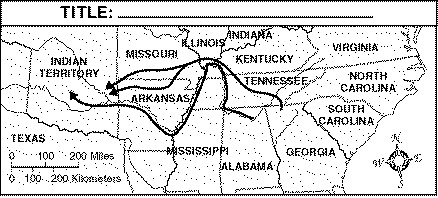
Which present day state was the main destination of American Indians forced to relocate as part of the Trail of Tears?

a)

Oklahoma

b)

Texas

c)

California

d)

Oregon

111.

Which answer best completes the diagram?

a)

War of 1812

b)

American Revolution

c)

French and Indian War

d)

Civil War

112.
a)

Colonists sought military support from France.

b)

Colonists organized boycotts of British goods.

c)

Colonists signed the Declaration of Independence.

d)

Colonists dumped tea into Boston Harbor.

113.

In Marbury v. Madison, the Supreme Court first stated the principle that —

a)

only the courts may regulate interstate commerce

b)

the president may veto federal legislation

c)

the courts may declare a federal law unconstitutional

d)

only the president may issue an executive order

114.

What was one effect of these events on the 1828 presidential election?

a)

Poll taxes were reduced.

b)

Votes were cast by secret ballot.

c)

Property qualifications for voting were strengthened.

d)

Voter participation increased.

115.

Which of the following is an example of a civic duty?

a)

Jury duty

b)

Parents boycott city public schools

c)

donating money to a disaster relief fund

d)

employees vote to go on strike

116.
The spoils system refers to
a)
the informal advisers to President Jackson.
b)
the removal of the Cherokee from their lands.
c)
giving jobs to one's political supporters.
d)
the banks owned by Jackson's supporters where the administration put money after closing down the National Bank.
117.
What event of the 1830s is shown by the heavy black lines on the map?
a)
The expansion of suffrage
b)
The spoils system
c)
The Trail of Tears
d)
Battles of the Seminole War
118.
Which state threatened to secede during the Nullification Crisis?
a)
South Carolina
b)
Texas
c)
Rhode Island
d)
Georgia
119.
The theory of nullification, whereby a state can reject a federal law, was most likely argued by
a)
John C. Calhoun
b)
John Marshall
c)
James Madison
d)
Andrew Jackson
120.
To nullify a law means …
a)
to agree to the law
b)
to secede.
c)
to void or cancel the law.
d)
to vote on the law.
121.
Andrew Jackson was a member of which political party?
a)
Whigs
b)
National Republicans
c)
Democrats
d)
Anti-Federalists
122.
Which Supreme Court case ruled that Georgia could not take Cherokee lands?
a)
Gibbons vs Ogden
b)
Marbury vs Madison
c)
Worcester vs Georgia
d)
McCulloch vs Maryland
123.
Passed in 1830, this authorized the removal of Native Americans who lived east of the Mississippi River to lands in the West.
a)
Indian Removal Act
b)
Worcester v. Georgia
c)
Bureau of Indian Affairs
d)
Trail of Tears
124.
Describes poor, no parents, self-made man, nothing given to you/ everything earned (think of qualities of Jackson)
a)
wealthy man
b)
common man
125.
Forced removal of the Cherokees, during harsh winter, from their native homeland to new territory in Oklahoma. A 1/4 of the natives did not survive the trip/journey
a)
Trail of Tears
b)
Happy trails
126.
Henry Clay helps John Quincy Adams win presidency & Adams appoints Clay Secretary of State. Jackson claims this was the reason why he lost the election of 1824.
a)
good deal
b)
corrupt bargain
127.
After Jackson's election, Adams fires people in government. Practice of giving government jobs to political backers.
a)
spoils system
b)
bank system
128.
Idea of spreading political power to all people and ensuring majority rule, Govt. by the people (common man & not wealthy), changed voting requirements.
a)
Jacksonian Democracy
b)
Bureaucracy
129.
Which map shows the boundaries of the United States just after the Treaty of Guadalupe Hidalgo?
a)
A
b)
B
c)
C
d)
D
130.
Mormons moved from New York to the West in the early 1830s in order to
a)
obey the Book of Mormon
b)
prosper in the fur trade
c)
seek out religious freedom
d)
gold
131.
What is the territory the U.S. acquired in 1848 identified in the picture? 
a)
Florida Purchase
b)
Thirteen Colonies
c)
Mexican Cession
d)
Oregon County
132.
What is the name given to the belief that the United States had the right and duty to expand across the North American continent?
a)
Manifest destiny 
b)
Monroe Doctrine 
c)
Great Awakening 
d)
Louisiana Purchase
133.
Land purchased from France in 1803 when Thomas Jefferson was president that doubled the U.S size. 
a)
Texas Annexation 
b)
Louisiana Purchase
c)
Northwest Territory
d)
Mexican Cession
134.

What piece of land was purchased in 1853 in order to build something in the South? What did they want to build?

a)

Mexican Cession/Trails

b)

Louisiana Territory/Canals

c)

transcontinental/Oregon Country

d)

Gadsden Purchase/Railroad

135.
The primary goal of manifest destiny was
a)
End slavery in the new territories
b)
removal of European influence from South America
c)
expansion westward to the Pacific Ocean
d)
secession of southern states from the nation
136.

In 1846, war broke out between the United States and Mexico. What was the main cause of this war?

a)

a dispute over the number of settlers in the Oregon Territory

b)

issues arising over the boundaries of Texas (border dispute)

c)

the discovery of gold in California

d)

the relocation of American Indians from the Southeast

137.

What was the main reason Chinese immigrants came to America?

a)

to experience the wagon trail

b)

to search for Gold in California

c)

to help America fight Mexico

138.

Which of these would be an Economic Motive For Manifest Destiny Policies?

a)

New Markets, inexpensive farmland, gold

b)

religious persecution, spreading faith

c)

security and spreading of democracy

139.

President Polk won the Election of 1844 by a landslide because...

a)

He was the only person running for President

b)

He was committed to fulfilling the goals of Manifest Destiny

c)

He was a "Common Man" and people felt connected to him

d)

He actually didn't win, Henry Clay was the 11th President

140.

Letter 'E" marks which of the following:

a)

United States in 1783

b)

Mexican Cession

c)

Texas

d)

The Louisiana Purchase

141.

What state was given to the U.S. as part of the Adam-Onis treaty with Spain in 1819?

a)

Texas

b)

California

c)

Florida

d)

Oregon

142.

What land area was acquired after the signing of the Treaty of Guadalupe-Hidalgo?

a)

A

b)

B

c)

C

d)

D

143.

What group of people settled in present day Utah after leaving the east coast because of religious persecution?

a)

The Catholics

b)

The Mormons

c)

The Forty-Niners

d)

Spanish Settlers

144.

What state boomed in 1849 due to the Gold Rush?

a)

Texas

b)

Florida

c)

Oregon

d)

California

145.
Which of the following is the term used to describe crops that are sold for money?
a)
Subsistence farming
b)
Plantation production
c)
Cash crop
d)
Diversity
146.
Which of the following was NOT a reason for European Colonization?
a)
Fur trade
b)
Spread Christianity
c)
Religious freedom
d)
Economic reasons
147.
The most significant thing about the Virginia House of Burgesses was that it was the first what of The New World?
a)
Established home in Jamestown
b)
English parliament established by the King 
c)
Representative assembly elected by the people
d)
Safe haven for escaped slaves 
148.
Which of the following was authored by Thomas Hooker?
a)
Fundamental Orders of Connecticut
b)
Mayflower Compact
c)
Pennsylvania's 1st constitution
d)
Peace treaty between Pilgrims and Native Americans
149.
What is the Middle Passage?
a)
The route taken by slaves to the New World.
b)
The route taken by raw materials to Europe.
c)
The route taken by refined materials to the New World.
d)
The route taken by refined materials to Africa.
150.
Which of the following was the first document written to establish a form of self-government?
a)
Declaration of Independence
b)
Mayflower Compact
c)
Fundamental Orders of Connecticut
d)
The New England Constitution
151.
Anne Hutchinson founded which colony?
a)
Virginia
b)
North Carolina
c)
Rhode Island
d)
Mexico
152.
Who founded the colony of Pennsylvania?
a)
William Penn
b)
Peter Stuyvesant
c)
King Charles II
d)
Tamanend
153.
What religious group founded the Maryland Colony with Lord Baltimore?
a)
Catholics
b)
Quakers
c)
Puritans
d)
Christians
154.
James Oglethorpe founded what colony for debtors?
a)
Georgia
b)
Carolina
c)
Virginia
d)
Maryland
155.
Why did the PILGRIMS and PURITANS come to America?
a)
gold
b)
slaves
c)
tobacco
d)
escape religious persecution
156.
Which statement describes the GEOGRAPHY of the New England region?
a)
Rich soil, mild winter, flowing rivers
b)
Eskimos and polar bears
c)
Very rich soil, long growing season
d)
Rocky soil, very short growing season
157.
Which colonies are associated with the Southern region?
a)
Texas, California, Alaska
b)
N.Carolina, S.Carolina, Georgia, Virginia and Maryland
c)
Connecticut, New Hampshire, Massachusetts, Rhode Island
d)
New York, New Jersey, Delaware, and Pennsylvania 
158.
Which colony was established as a debtors colony?
a)
North Carolina
b)
New York
c)
Georgia
d)
Texas
159.
Which region had slavery as an economy?
a)
Southern
b)
New England
c)
Middle
d)
United States
160.
What is a characteristic of a Quaker?
a)
Strict religious practices
b)
Puritans and Pilgrams
c)
No religious practices
d)
Religious Tolerance
161.
Which Southern Colony was established as a refuge for Catholics?
a)
N. Carolina
b)
Maryland
c)
Georgia
d)
S. Carolina
162.
Which region was know for its strict religious groups?
a)
Southern
b)
Middle
c)
New England
d)
United States
163.
Which two people were banished from Massachusetts for religious reasons?
a)
Thomas Hooker and Rosa Parks
b)
King George III and Parliment
c)
William Penn and James Oglethorp
d)
Roger Williams and Ann Hutchinson
164.
What type of economic system existed between Great Britain and the 13 colonies?
a)
Free trade
b)
Communism
c)
Mercantilism
d)
Salutary Neglect
165.

The first governing document for the Pilgrims in America was the

a)

Magna Carta

b)

Mayflower Compact

c)

Declaration of Rights of Man

d)

Constitution

166.
What amendment abolished slavery?
a)
13th
b)
14th
c)
15th
d)
16th
167.
The 14th Amendment of the United States Constitution...
a)
Gave African Americans citizenship
b)
Gave African Americans the right to vote
c)
Freed the slaves
d)
Gave landowners the right to sharecrop
168.
The 15th Amendment of the United States Constitution...
a)
Gave African Americans the right to own businesses
b)
Freed the Slaves
c)
Gave African Americans the right to vote
d)
Forced African Americans back into slavery
169.
Which of the following was not a goal of Reconstruction?
a)
Reunite the North and the South
b)
Rebuild the South
c)
Develop the system of sharecropping
d)
Determine what to do with African Americans
170.
Who assassinated President Abraham Lincoln?
a)
Nathan Bedford Forrest
b)
John Wilkes Booth
c)
Henry Clay
d)
John Breckinridge
171.
What group in Congress felt that Lincoln's plan was too lenient?
a)
Deciduous Democrats
b)
Radical Republicans
c)
Wistful Whigs
d)
Fancy Federalists
172.
Northerners who went south after the Civil War to make large profits from the destruction in the south were called
a)
Scalawags
b)
Ku Klux Klan
c)
Carpetbaggers
d)
Sharecroppers
173.
Laws passed by southern states soon after the Compromise of 1877.  These laws legalized segregation whites and blacks to use separate facilities. 
a)
Jim Crow Laws
b)
Black Codes
c)
Freedman's Bureau
d)
Reconstruction
174.
The process of rebuilding the South after the Civil War. 
a)
Reconstruction
b)
Freedman's Bureau
c)
Black Codes
d)
Jim Crow Laws
175.
The organization put in place after the Civil War to provide food, clothing, health care and education in the South was known as:
a)
The Civil Rights Committee
b)
The Freedmen's Bureau
c)
The Welfare Committee
d)
The Salvation Army
176.
Which three Amendments where designed to ensure equality for the slaves?
a)
17th,18th,19th
b)
13th,14th,15th
c)
13th,14th,16th
d)
8th,9th,10th
177.

Lincoln's "10 Percent Plan" dealt with

a)

his idea for instituting an income tax.

b)

how to draft more men into the Union Army.

c)

re-admitting Southern states into the Union.

d)

his quest to reconquer only 10% of the South

178.
After an electoral dispute resulting in the Compromise of 1877, it was agreed that Rutherford B. Hayes would become President if
a)
he would create a new Freedmen's Bureau
b)
he ended Reconstruction and removed troops from the south
c)
he would allow African Africans full rights in the North only
d)
he created pro-cotton legislation in Congress
179.
What did the 13th Amendment do?
a)
made slavery illegal
b)
made former slaves citizens and gave them rights
c)
gave black men the right to vote
d)
gave former slaves land to begin farms
180.
What did the 14th Amendment do?
a)
made slavery illegal
b)
made former slaves citizens and gave them rights
c)
gave black men the right to vote
d)
gave former slaves land to begin farms
181.
What did the 15th Amendment do?
a)
made slavery illegal
b)
made former slaves citizens and gave them rights
c)
gave black men the right to vote
d)
gave former slaves land to begin farms
182.
What was segregation?
a)
equal treatment for all people
b)
the forced separation of races
c)
a farmer shares part of his crop to pay for land
d)
the period of time after the Civil War
183.
What was Reconstruction?
a)
equal treatment for all people
b)
the forced separation of races
c)
a farmer shares part of his crop to pay for land
d)
the period of time after the Civil War
184.
What were Jim Crow Laws?
a)
equal treatment for all people
b)
laws that made segregation legal
c)
a farmer shares part of his crop to pay for land
d)
the period of time after the Civil War
185.
The US government created what organization to help former slaves and poor whites?
a)
Bureau of Parks and Recreation
b)
Free Food Bureau
c)
Jobs and Education Bureau
d)
Freedman's Bureau
186.
Laws that required the African-Americans be separated from white in public places are...
a)
Jim Crow Laws
b)
Black Codes
c)
Grandfather Codes
d)
Integration Laws
187.
System of farming where farmers gave part of their crop to pay for the land they rented
a)
Family-Farming
b)
Sharecropping
c)
Groupcropping
d)
Split-Farming
188.
What was the purpose of the Freedman's Bureau?
a)
provide food, clothing, and medical care
b)
provided legal advice to poor whites and former slaves
c)
set up hospitals and schools
d)
all of the above
189.
What group gained control of Congress after Lincoln's assassination?
a)
Southern Democrats
b)
Former Confederates
c)
Radical Republicans
d)
Communists 
190.
Southern whites passed laws restricting the rights of African Americans called--
a)
Black codes
b)
Slave Laws
c)
Confederate Rights
d)
Merica Laws
191.
Who was the first African American to serve in the US senate?
a)
Frederick Douglass
b)
Harriet Tubman
c)
Hiram Revels
d)
Barack Obama
192.
The white terrorist group that attacked Blacks and white republicans to restore Democratic control in the South was the--
a)
Kappa Kappa Kappa
b)
Redeemers
c)
Pure Race Fraternity 
d)
Ku Klux Klan
193.
Many southern states passed laws after the Compromise of 1877.  The laws that legalized the segregation of whites and blacks were called--
a)
Jim Crow Laws
b)
Black Codes
c)
Freedman's Bureau
d)
Reconstruction
194.
How did the 14th amendment overrule the Dred Scott decision?
a)
It abolished slavery
b)
It said slaves could vote
c)
It protected African Americans as equal citizens
d)
It said that African Americans could move north
195.
Which act gave states land grants to establish agricultural universities like Texas A&M University?
a)
The Morrill Act
b)
The Dawes Act
c)
The Homestead Act
d)
The Kansas Nebraska Act