
 Worksheets
4th grade science review
Total questions: 114
Worksheet time: 1hrs 8mins
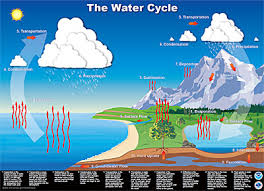
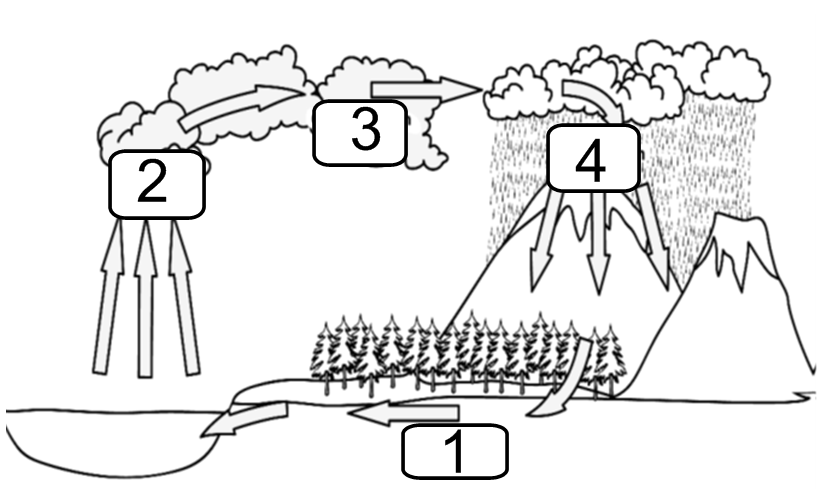
Most of the water that is evaporated comes from rivers and lakes.
True
False
Which shows the correct distribution of all of Earth's water?
salt water - 97%; ice and glaciers - 2% - freshwater - 1%
salt water - 97%; ice and glaciers - 1%; freshwater - 2%
saltwater - 50%; ice and glaciers - 25%; freshwater - 25%
saltwater - 71% - ice and glaciers - 28%; freshwater - 1%
Which of the following are examples of condensation?
Clouds forming
Dew on grass
A pot of boiling water
A foggy window inside a car
Precipitation often starts in clouds as snow. If the precipitation falls through air that is above freezing temperature, it hits the ground as:
Rain
Sleet
Snow
Hail
This type of precipitation starts in the cloud as snow and only passes through air that is below freezing temperature. It hits the ground as:
Rain
Sleet
Snow
Hail
This type of precipitation starts off as snow in the cloud. When it falls from the cloud, it first goes through a layer of warm air that melts it. If there is a layer of freezing air before it hits the ground, it freezes into tiny balls of ice.
Rain
Sleet
Snow
Hail
This type of precipitation starts in the cloud as small ice pieces. They fall from the cloud only when they are heavy enough, usually as large ice stones.
Rain
Sleet
Snow
Hail
A barometer shows that air pressure is rising. The weather will likely be:
Hot
Rainy
Cold
Clear
A barometer shows that air pressure is decreasing. The weather will likely be:
Hot
Rainy
Cold
Clear
What type of cloud is high, feathery, made of ice particles, and often predict a change in the weather?
Cirrus
Cumulonimbus
Cumulus
Stratus
What type of clouds look like flat sheets, blanket the sky, and usually indicate an overcast day or precipitation?
Cirrus
Cumulonimbus
Cumulus
Stratus
What is soil made of?
Inorganic (mineral) matter
Decayed plants and animals (organic matter)
Air
Water
Dirt
What is humus made from?
Topsoil and minerals
Fertilizer and loam
Sand, silt, and clay
Decayed plants and animals
The difference between soil types is:
The minerals they are made from
The size of the particles
The color of the particles
Why do we need soil?
To grow our food
To provide building materials
To provide homes for animals
To prevent erosion
This type of soil feels smooth when wet and is made of medium particles.
Sand
Silt
Clay
This type of soil holds the most water and is made of small particles.
Sand
Silt
Clay
This type of soil doesn't hold water well and is made of large particles.
Sand
Silt
Clay
How do farmers conserve their topsoil?
By rotating crops
By controlling irrigation or watering
By leaving part of the crops behind to decay
By planting crops in straight rows
Which of the following are examples of erosion?
Deepening canyons like Bryce Canyon
Widening valleys as rivers flow through
Water freezing inside a rock, cracking it into pieces
Sediment deposited and the bottom of a river
What is the most powerful agent of weathering?
Wind
Plants
Extreme temperatures
Water
Which of the following are examples of weathering?
Ice grinds down rock as it slides down a mountain
Builders carve out sides of mountains for new roads
Roots of a plant cause cracks in a rock
Desert winds carrying sand away
Which of the following are characteristics of minerals?
A pure, inorganic substance
Solid
Crystal structure
Man-made
Made of rocks
A student found a sample of a solid material that was gray, shiny, and made of all the same material. What category does this sample best fit?
Sedimentary rock
Igneous rock
Metamorphic rock
Mineral
A student is trying to identify a mineral. He noticed that it breaks easily into flat sections. What property can be observed?
Streak
Fracture
Cleavage
Hardness
A student is trying to identify a mineral. He noticed that it has a glassy shine. What property can be observed?
Streak
Luster
Cleavage
Hardness
Mineral A has hardness number 2 on Moh's scale, while Mineral B has hardness 7 on Moh's scale. Therefore:
Mineral A can scratch Mineral B
Mineral B can scratch Mineral A
Both minerals can be scratched by a fingernail
Neither mineral can be scratched by a fingernail
What is melted rock on the Earth's surface called?
Lava
Magma
Igneous rock
Sediments
Sandstone, shale, limestone, and conglomerate are common rocks in Utah. What type of rocks are they?
Igenous
Sedimentary
Metamorphic
Marble, gneiss, schist, and slate are common rocks in Utah. What type of rocks are they?
Igneous
Sedimentary
Metamorphic
A rock sample has been changed by heat and pressure. It has wavy folds. What kind of rock is it?
Intrusive igneous
Extrusive igneous
Sedimentary
Metamorphic
A rock sample has visible crystals and no layers. What type of rock is it?
Intrusive igneous
Extrusive igneous
Sedimentary
Metamorphic
Which of the following correctly matched a rock type with the process involved in forming the rock?
Igneous - heat, pressure, and time
Sedimentary - weathering, erosion, deposition, and time
Metamorphic - Heating, melting, and time
Which of the following correctly matches which rocks turn into which metamorphic rocks?
Shale turns into slate
Limestone turns into marble
Granite turns into gneiss
Granite turns into marble
Which of the following is not an example of a track or trace fossil?
Dinosaur footprint
Coprolite
Petrified wood
Fossilized animal burrows
What is a common cause of plant or animal extinction?
Dying out from overeating
Running out of homes to live in
Climate change
Getting trapped and moved

What is the elevation of most of Utah's forests?
3,000 - 5,000 feet
0 - 5,000 feet
5,000 - 10,000 feet
10,000 - 15,000 feet
The precipitation in Utah's forests could be described as:
very low, only raining occasionally
very high - showing rain, sleet, hail, and snow at some times
very high - raining often, but never snowing
very low, only snowing occasionally
What is the elevation for most of Utah's deserts?
3,500 - 6,000 feet
0 - 5,000 feet
5,000 - 10,000 feet
10,000 - 15,000 feet
The precipitation in Utah's deserts could be described as:
very low, only raining or snowing occasionally
very high - showing rain, hail, sleet, and snow at some times
very high - raining often, but never snowing
very low, only snowing occasionally
What adaptations might a desert plant have?
Large, green leaves and a very deep root system
Small, waxy leaves and spines.
The plants grow very tall in order to get as much sunlight as possible.
The plants only have needle type leaves. They keep their leaves all winter
What ecosystem found in Utah has cattails, brine shrimp, and bulrush?
forest
desert
wetland
rainforest
What ecosystem found in Utah has muskrats, beavers, and trout?
forest
desert
wetland
rainforest


The air is dry and fair weather occurs. What pressure system causes this?
Light pressure
Low pressure
High pressure
No pressure
A barometer measures air pressure and tells whether the pressure is rising or falling. What weather can be expected when the air pressure is falling?
Sunny and dry conditions
Calm and clear conditions
Stormy and wet conditions
Possible hurricane conditions
Which of the following are indicators that a storm is approaching?
Wind from the south
Warmer temperatures
A falling barometer
Cumulus clouds

Imagine you found a trilobite fossil in your backyard. What inference about your state's environment could you make?
It was once a desert.
It was once the floor of an ancient sea or ocean.
It was once a swampy forest.
It was once covered with a glacier.

An insect trapped in amber is an example of:
preserved fossil
mineral replacement
trace fossil
It is NOT a fossil
Which fossil is the oldest?
Horn coral
Mammoth's tusk
Trilobite
T-rex's bone
A dinosaur footprint is an example of (check all that apply):
trace fossil
preserved fossil
mineral replacement
impression fossil
How long ago did dinosaurs go extinct?
4.5 billion years ago
500 million years ago
65 million years ago
32,000 years ago
How old is the Earth?
Over 4.5 billion years
500 million years
65 million years
32,000 years

What kind of fossils are these?
Mold fossils
Cast fossils
True Form fossils
Trace fossils

What kind of fossil is this?
Mold fossil
Cast fossil
True Form fossil
Trace fossil
Footprints, nests, and eggs are all examples of what kind of fossils?
Mold fossil
Cast fossil
Trace fossil
True Form fossil
What might a paleontologist conclude about an animal whose fossil footprints were far apart?
It could swim.
It was walking.
It was able to fly.
It ran fast.

What could you NOT conclude by looking at this dinosaur fossil?
It has sharp teeth so it probably ate meat.
It had long legs so it probably ran fast.
It had a long tail which it probably used for defense.
It had claws so it was probably a great swimmer.
A student rubbed a mineral on a tile. He noticed the mineral left powder on the tile. What property of minerals did the student observe?
cleavage
hardness
streak
luster
Which statement(s) is/are true?
Minerals are naturally occurring materials found in nature.
Minerals can be man made.
Minerals have a crystalline structure.
Minerals are usually solids, but they also occur in a gas or liquid form.

Mineral pyrite breaks into cubes. Therefore, pyrite has:
cleavage
hardness
streak
magnetism

A student found a rock that was very light and had air holes. What kind of rock did the student most likely find?
sedimentary
intrusive igneous
extrusive igneous
metamorphic

A student found a rock that was very coarse and had large crystals. What kind of rock did the student most likely find?
sedimentary
intrusive igneous
extrusive igneous
metamorphic

A student found a rock that was very smooth and shiny. What kind of rock did the student most likely find?
sedimentary
intrusive igneous
extrusive igneous
metamorphic

A student found a rock with a fossil in it. What kind of rock did the student most likely find?
sedimentary
intrusive igneous
extrusive igneous
metamorphic

A student found a rock that was gritty and had layers. What kind of rock did the student most likely find?
sedimentary
intrusive igneous
extrusive igneous
metamorphic
Which statement best describes metamorphic rocks?
They are made of layers of squeezed material.
They are made from fast cooling lava.
They are made from slow cooling magma.
They are made from rocks exposed to heat and pressure.
What is the difference between intrusive and extrusive igneous rocks?
Intrusive rocks are made from lava, while extrusive rocks are made from magma.
Intrusive rocks are made from magma, while extrusive rocks are made from lava.
Intrusive rocks have air holes, while extrusive rocks do not.
Extrusive rocks have large crystals.
Check all the characteristics that apply to igneous rocks.
May have air holes
Particles are cemented together
May have layers
May have large crystals
Check all the characteristics that apply to sedimentary rocks.
May have air holes
Particles are cemented together
May have layers
May have large crystals
Made of other rocks
Check all the characteristics that apply to metamorphic rocks.
May have air holes
Particles are cemented together
May have large crystals
May have layers
How are sedimentary rocks formed?
from magma (melted rock) below Earth's surface or cooled lava above Earth's surface
changed from heat and pressure deep under Earth's surface
from sand, soil, and fossils that are compacted and cemented
How are igneous rocks formed?
from magma (melted rock) below Earth's surface or cooled lava above Earth's surface
changed from heat and pressure deep under Earth's surface
from sand, soil, and fossils that are compacted and compressed
How are metamorphic rocks formed?
from magma (melted rock) below Earth's surface or cooled lava above Earth's surface
changed from heat and pressure deep under Earth's surface
from sand, soil, and fossils that are compacted and compressed
Which of the following are igneous rocks? Select all that apply.
basalt
shale
pumice
conglomerate
granite
Which of the following are metamorphic rocks? Select all that apply.
obsidian
schist
marble
gneiss
sandstone
Which of the following are sedimentary rocks? Select all that apply.
shale
conglomerate
limestone
sandstone
schist
What does cold-blooded mean?
an animal that cannot maintain its own body temperature
an animal with a body temperature below freezing
an animal that can maintain its own body temperature
an animal with a body temperature above freezing
Which characteristics belong to mammals?
have hair, produce milk, cold-blooded, live offspring
have hair, produce milk, warm-blooded, live offspring
have hair, have gills, warm-blooded, lay eggs
have scales, produce milk, cold-blooded, live offspring
Which characteristics belong to birds?
hollow bones, feathers, lay hard-shelled eggs, cold blooded
hollow bones, feathers, lay leathery eggs, warm blooded
hollow bones, feathers, lay hard shelled eggs, warm blooded
hollow bones, feathers, lay leathery eggs, cold blooded
Which characteristics belong to reptiles?
dry scales, lay leathery eggs, cold blooded, invertebrates
dry scales, lay leathery eggs, cold blooded, vertebrates
dry scales, lay hard shelled eggs, warm blooded, vertebrates
dry scales, lay hard shelled eggs, cold blooded, vertebrates
Which characteristics belong to amphibians?
lay jelly-coated eggs in water, moist skin, live only in water
lay jelly-coated eggs in water, dry skin, live on land and water
lay leathery eggs in water, moist skin, live on land and water
lay jelly-coated eggs in water, moist skin, live on land and water
Which characteristics belong to fish?
fins, wet scales, lay eggs in water, breathe through gills
feathers, wet scales, lay eggs in water, breathe through gills
fins, wet scales, lay eggs in water, breathe through lungs
feathers, wet scales, lay eggs in water, breathe through lungs
Arachnids have six legs.
True
False
Insects' bodies are divided into three parts.
True
False
What are some characteristics of coniferous trees? (Select all that apply.)
Needle-like leaves
Cones or berries
Lose their leaves in the fall
Keep their leaves all year
What are some characteristics of deciduous trees? (Select all that apply.)
Flat leaves of varying widths
Lose their leaves in the fall
Visible veins
Keep their leaves all year

Which describes the leaf arrangement?
Compound
Single
Double Compound
Triple Compound

What is the vein pattern?
Parallel
Pinnate
Palmate
They do not have veins

Which describes the leaf arrangement?
Compound
Single
Double Compound
Triple Compound

Which describes the leaf arrangement?
Compound
Single
Double Compound
Triple Compound

What is the vein pattern?
Parallel
Pinnate
Palmate
They do not have veins
Which tree has pointed needles that grow in clusters and woody cones?
Pine
Spruce
Fir
Juniper
Which tree has flat, flexible needles?
Pine
Spruce
Fir
Juniper
Which tree has sharp, single, square needles?
Pine
Spruce
Fir
Juniper
Which tree has scaly leaves and berries instead of cones?
Pine
Spruce
Fir
Juniper

What describes the leaf's edges?
Smooth
Toothed
Rounded lobed
Pointed lobed

What describes the leaf's edges?
Smooth
Toothed
Rounded lobed
Smooth lobed

What describes the leaf's edges?
Smooth
Toothed
Rounded lobed
Pointed lobed

