wayground logo

Free Printable Worksheets

Font size

S
M
L
XL
Worksheets

Universe

Total questions: 50

Worksheet time: 35mins

Name
Class
Date
1.
What color of star is the hottest?
a)
Blue
b)
Red
c)
Yellow
d)
Orange
2.
What color of star is the coolest?
a)
Red
b)
Yellow
c)
Blue
d)
White
3.
What is the name of the gas/dust clouds that form stars?
a)
Nebulas
b)
Protostars 
c)
Supernova
d)
Neutron Star
4.
True or False
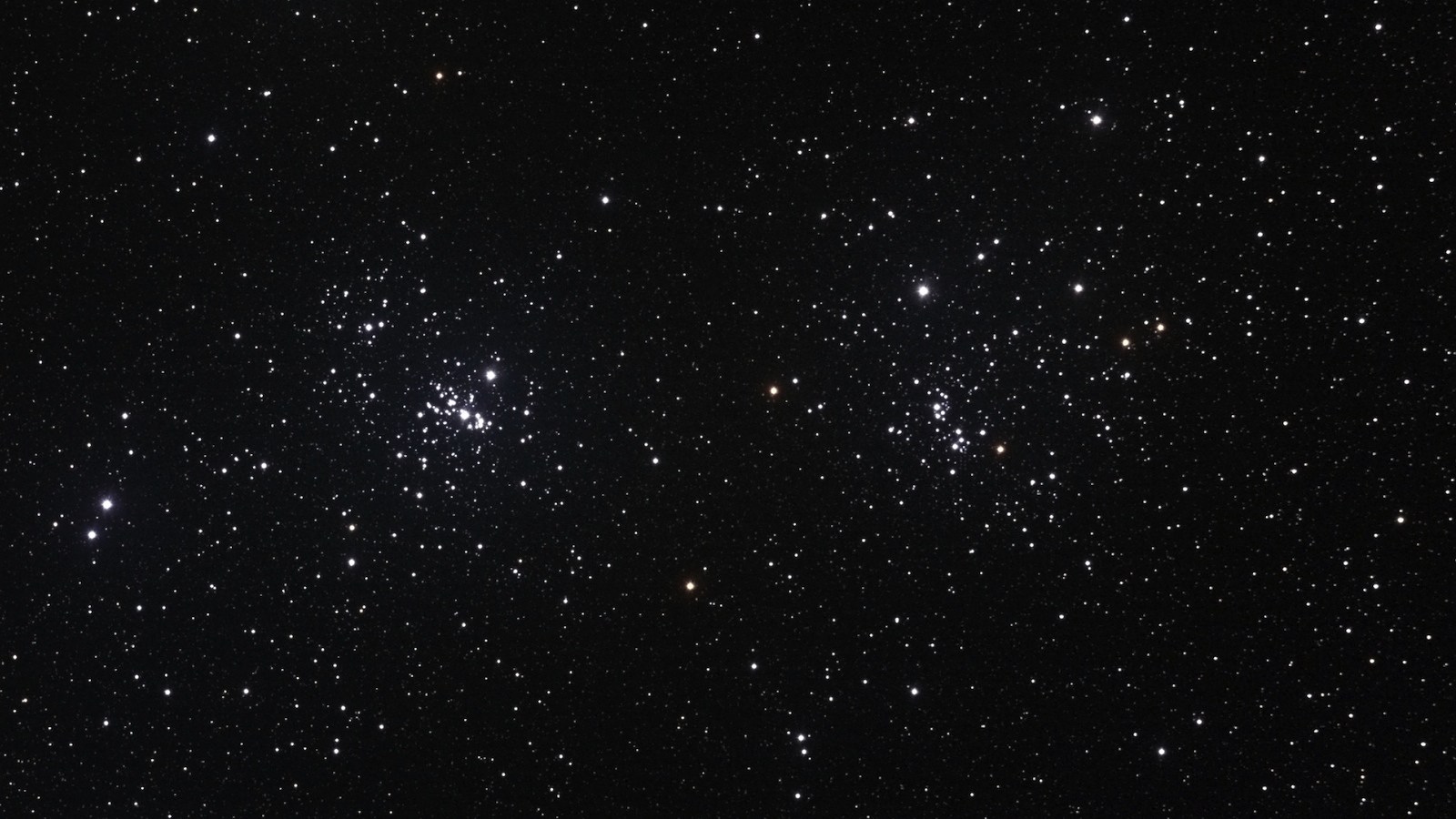
Constellations are stars that appear to be in a pattern.
a)
True
b)
False
5.
True or False
Stars are really close together in outer space.
a)
True
b)
False
6.
What are stars?
a)
Rocky bodies
b)
Hot exploding balls of gas
c)
5 pointed shapes
d)
Hollywood actors
7.
Most stars are made of which elements?
a)
Hydrogen only
b)
Hydrogen and Lithium
c)
Hydrogen and Sodium
d)
Hydrogen and Helium
8.
Our galaxy is called the
a)
Earth Nebula
b)
The Hubble Galaxy
c)
The Milky Way
d)
The Snickers
9.
What are stars?
a)
Rocky bodies
b)
Burning balls of gas
c)
5 pointed shapes
d)
Hollywood actors
10.
The color of a star tells us its
a)
magnitude
b)
temperature
c)
size
d)
age
11.
Galaxies are composed of 
a)
billions of stars
b)
a star and the planets that orbit around it
c)
all of the bodies and objects in space
12.
True or False
Constellations are stars that appear to be in a pattern.
a)
True
b)
False
13.

A constellation is ...

a)

a map of planets

b)

a group of stars that form a shape

c)

a giant star

14.

The Big Dipper is ...

a)

a galaxy

b)

a universe

c)

a constellation

15.

Why do stars twinkle?

a)

We see them through layers of moving air.

b)

They are burning quickly

c)

We always blink our eyes.

16.

A shooting star is ...

a)

a planet blowing up

b)

a burning meteor

c)

part of a constellation

17.

What tool can you use to see the stars closely?

a)

binoculars

b)

3D glasses

c)

telescope

18.
A telescope.....
a)
makes an image from far away look blurry.
b)
makes an image from far away look dimmer.
c)
doesn't change the way we see an object from far away.
d)
makes an image look clearer.
19.
What tool do we use to help us see stars more clearly?
a)
telescopes
b)
cell phones
c)
cameras
d)
video cameras
20.
______ is a force that causes dust particles to stick together in a nebula.
a)
nuclear fusion
b)
gravity
c)
hydrogen
d)
friction
21.
Space and all the matter and energy in it.
a)
Space
b)
Solar System 
c)
Universe
d)
Sun
22.
A large celestial body that is composed of gas and that emits light.
a)
star
b)
black hole
c)
element 
d)
big bang
23.
A collection of stars, dust, and gas bound together by gravity.
a)
Nebula
b)
Galaxy 
c)
Universe
d)
Protostar
24.
The most commonly accepted theory that explains the beginning of our known universe is the -
a)
Theory of Evolution
b)
Big Bang Theory
c)
Cell Theory
d)
Blackhole theory
25.
Which of the following is the largest?
a)
star
b)
universe
c)
cluster
d)
galaxy
26.
Light Years are a measure of - 
a)
time
b)
speed
c)
distance
d)
light
27.

The explosion that sent the universe flying out is called _____.

a)

The Big Bang

b)

The Milky Way

c)

The Solar System

d)

The Sun

28.
The shape of our Milky Way galaxy can be classified as ____________.
a)
Spiral
b)
Elliptical
c)
Irregular
d)
French
29.

Select all ingredients a comet is composed (made) of

a)

Dust

b)

Iron

c)

Ice

d)

Small rocky particles

30.

Which object in space looks like a "dirty snowball" because of its composition of ice, gas and dust?

a)

Asteroid

b)

Meteoroid

c)

Comet

d)

Meteor

31.

A _____________ bursts through Earth's atmosphere at amazingly fast speeds and appears as a "shooting star"

a)

Meteorite

b)

Meteor

c)

Meteoroid

32.

A meteor that does not burn up in Earth's atmosphere and reaches Earth's surface

a)

Meteorite

b)

Meteoroid

c)

Meteor

33.

What's the difference between comets and asteroids?

a)

Asteroids are made of metal and rock, while Comets are ice and rock

b)

Asteroids are made of ice and rock, while Comets are made of metals and rock

c)

There is no difference

d)

Asteroids are made of stardust, while Comets are made up of water

34.

What is the composition of most Comets?

a)

Rock, Ice, Salt, Carbon

b)

Rock, Ice, Magma, Frozen Gases

c)

Ice, Dust, Rock, Frozen Gases

d)

Ice, Dust, Rock, Soil

35.
Where are Asteroids found in the Solar System?
a)
Between Earth and Mars
b)
In the Oort Cloud beyond Neptune
c)
In the Asteroid Belt between Mars and Jupiter
d)
Close to the Sun
36.
A light streaking across the night sky is classified as a/an....
a)
Meteorite
b)
Asteroid
c)
Comet
d)
Meteor
37.
Meteorites...
a)
 hit the ground
b)
burn up completely in the atmosphere
c)
debris from asteroids/comets that float around in space
38.

Sometimes I am called a "dirty snowball."

a)

Asteroid

b)

Star

c)

Meteor

d)

Comet

39.
We are composed mainly of rock and metal.
a)
comets and stars
b)
stars and meteors
c)
asteroid and meteors
d)
comets and asteroid
40.
What does Reflecting Telescope have?
a)
Lens
b)
Mirrors
c)
Bat ears
41.
What does Refracting Telescope have?
a)
Sand
b)
Mirrors
c)
Lens
d)
Batmobile 
42.
what are telescopes used for ?
a)
telescopes  are used for looking at food 
b)
telescopes are used for seeing distance things up close. 
c)
they are used for looking at the city 
d)
they are used to look at new things .
43.
what do you do with pigs
a)
eat them
b)
make bacon out of them
c)
love and take care of them
d)
dont buy one
44.
A ______ telescope uses a mirror to focus light onto a small area.
a)
reflecting
b)
refracting
c)
radio
d)
spectrum
45.
a)
reflection telescope
b)
refraction telescope
c)
radio telescope
46.
a)
reflection telescope
b)
refraction telescope
c)
radio telescope
47.
What is the MAJOR problem with trying to see stars in or near a city?
a)
Not as many people with telescopes
b)
Light pollution
c)
Clouds
d)
The stars are too far away.
48.
A constellation is a group of visible ____ that form a pattern when viewed from Earth.  
a)
planets
b)
stars
c)
patterns
d)
creatures
49.

Constellation

a)

A group of patterns that form a star

b)

A group of stars that form a pattern

c)

Fine Italian cuisine

d)

A star

50.

Number of constellations

a)

12

b)

72

c)

88

d)

1