
 Worksheets
Earth Science Final Review - Second Semester.
Total questions: 100
Worksheet time: 1hrs 21mins

The Earth is the center of the solar system.

Mercury,Saturn
Jupiter, Uranus, Neptune
Jupiter, Neptune,
Mercury,Saturn,
Uranus
Mars,Jupiter,
Saturn,Uranus
Neptune


When do planets move the fastest?
Close to the sun
Far away from the sun
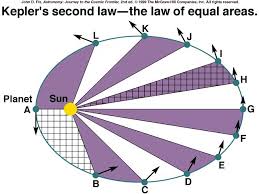

Explain how the Earth's rotation and revolution about the Sun affect its shape and is related to seasons and tides.
The Earth revolves around the sun while rotating on its axis. This rotation causes the annual season cycle. Rotation and revolution causes the Earth to bulge, as well as effect our tides.
The Sun revolves around the Earth while rotating on its axis. This rotation causes the annual season cycle. Rotation and revolution causes the Sun to bulge, as well as effect our tides.
Both A and B.
The moon revolves the sun, which causes the Earth to create tides on the Sun.

Members of a species in a defined area
Ecosystem
community
biodiversity
population


Anything that can decrease the size of a population including living (biotic) and non living (abiotic) features of an ecosystem such as predators and drought.
limiting factor
habitat
ecosystem
carrying capacity

About this much of Earth is covered in water...
3%
50%
70%
90%


Earth's current atmosphere is
78% nitrogen, 21% oxygen, 0.9% argon and 0.037% carbon dioxide
78% oxygen, 21%nitrogen, 0.9% argon, 0.037% carbon dioxide
78% nitrogen, 21% argon, 1% oxygen
78% oxygen, 21% nitrogen, 1% carbon dioxide

The layers of the atmosphere in order from bottom to top are
troposphere, stratosphere, mesosphere, thermosphere, exosphere
troposphere, mesosphere, atmosphere, thermosphere
mesosphere, thermosphere, troposphere, stratosphere, exosphere
thermosphere, stratosphere, mesosphere, troposphere, exosphere

True or false? Air is a force.
true
false

What two gases make up the majority of air?
helium & argon
helium & oxygen
ozone & nitrogen
nitrogen & oxygen

True or False? Water vapor is a variable gas (the amounts of the gas in the air can change/vary).
True
False

What is the “fuel” that “feeds” a hurricane
cold air
dry air
warm and moist air
warm and dry air

Why does dew form in the morning?
Because morning time is the right time for dew to form.
Water molecules in the air continually bombard surfaces, like blades of grass.
Dew is water in the form of droplets that appears on thin, exposed objects in the morning or evening due to condensation.
Dew on Earth cycles from the oceans, where it evaporates from the surface, into the atmosphere, forms clouds, falls onto the land as rain, travels through wetlands, rivers, lakes and underground then returns to the ocean

El Nino is a change in the ocean currents in the western Pacific. How does that change affect currents on the eastern side of the Pacific along the South American and North American coasts?
It has no effect; the western Pacific is too far away to affect the eastern edge
The heat of El Nino causes the Ring-of-Fire earthquake zone around the Pacific plate to be more active
Upwelling currents in the east are blocked and there is a large die-off of sea life
Both b and c are true

Which of the following is a potential cause of climate change?
the drift of continents across the globe
volcanic eruptions
burning of fossil fuels
All of the above.

What causes an onshore breeze?
The wind will blow from the lower pressure over the water to higher pressure over the land causing the sea breeze.
The wind will blow from the higher pressure over the water to lower pressure over the land causing the sea breeze.
Onshore breezes do not exist on Earth.
Both A and C.

Which rock is composed of the highest percentage of plagioclase?
Quartz
Gabbro
Granite.
Ryolite.

What role do plants have in the water cycle?
Plants are involved in evaporation.
Plants are involved in precipitation.
Plants are involved in percolation.
Plants are involved in transpiration.

California has many climate zones which are affected by many different factors. One of these is the ocean currents off our coast. Which statement is TRUE about the California Current?
It is responsible for the San Andreas Fault.
It brings warm waters from the North.
It brings cold waters from the North.
It mixes water from the North and South.

If there are 24 hours of daylight, then _____.
The Earth is revolving around the sun.
it is a warm day in a temperate zone.
It's spring time.
it is summer near the north pole .

What is the, "Rain Shadow" effect?
An area having relatively little rain due to the effect of a barrier, especially a mountain range, that causes the prevailing winds to lose their moisture on the windward side.
An area having relatively little rain due to the effect of a barrier, especially a mountain range, that causes the prevailing winds to lose their moisture on the opposite side from the where the wind is blowing.
An area having a relatively large amount of rain due to the effect of a barrier, especially a mountain range, that causes the prevailing winds to lose their moisture on the windward side.
An area having relatively no rain due to the effect of a barrier, especially a mountain range, that causes the prevailing winds to gain their moisture on the opposite side of the wind.

What is density?
A measure of mass per unit of volume.
A measure of volume per unit of mass.
The amount of matter contained in an object.
A push or a pull.

How is weathering different from erosion?
Erosion is the process where rock is dissolved, worn away or broken down into smaller and smaller pieces, while Weathering happens when rocks and sediments are picked up and moved to another place by ice, water, wind or gravity.
Weathering is the process where rock is dissolved, worn away or broken down into smaller and smaller pieces, while Erosion happens when rocks and sediments are picked up and moved to another place by ice, water, wind or gravity.
Both weathering and erosion are forms of deposition.
Both A and B.

Which zone would tend to be the hottest?
Zones located north and south of the Prime Meridian.
Zones located in the Artic Circle.
Zones located in the Antartic Circle.
All of the above.

Which of the following does not show a simplified version of the photosynthesis reaction?
water + carbon dioxide + sunlight --> sugar + oxygen.
oxygen + water --> sunlight + carbon dioxide + sugar.
sugar --> sunlight + carbon dioxide + oxygen.
sunlight + water --> carbon dioxide + sugar + oxygen.

The circular motion of surface currents is known as _____.
A trade wind.
A chicken.
An up welling.
A tide.

The oxygen produced in photosynthesis comes from what molecule?
Carbon dioxide.
Glucose.
Oxygen.
Water

What does every food chain start with?
Decomposers.
Producers.
Fungi.
Energy from the sun.

What are the four main branches of Earth Science?
Geology, Astrology, Psychology, and Physics.
Astronomy, Meteorology, Oceanography, and Geology.
Meteorology, Geology, Biology, and Paleontology.
Astronomy, Geology, Oceanography, and Biology.

What organism returns nutrients to the soil in a food web?
Heterotrophs.
Producers.
Autotrophs.
Decomposers.

Identify one of the the consumers in this image.
The sun.
Grasshopper.
Hawk.
Both the grasshopper and the hawk.

Identify the tertiary consumer in this image.
The grass.
The snake.
The mouse.
The hawk.

Changes in the chemical composition of the atmosphere that may produce acid rain
are most closely associated with
insects that excrete acids
runoff from acidic soils
industrial smoke stack emissions
flocks of migrating birds

What is the minimal number of seismic stations that are needed to determine the location of and earthquake epicenter
Three.
Two.
Five.
One.

What are five causes of damage during or after an earthquake?
Aftershocks, flooding, erosion, soil shifting, falling debris.
Building collapse, water pipes and sewage lines breaking, power outages, loss of cable service.

The splitting of a nucleus into smaller nuclei is
fusion
fission
decay
gamma radiation

In the equation E=MC2, which of the following correctly represents one or more the constants?
M=the sum of the masses
E= the amount of energy absorbed
C2= the speed of light
All of the above




If I have freshwater that is less dense, what will it do in comparison to salt water that is more dense?
The more dense water will float and the less dense water will sink.
The more dense water will sink and the less dense water will float
Nothing they will mix evenly.


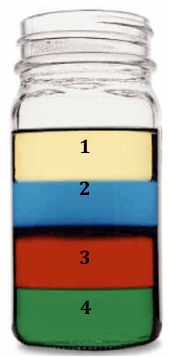
What portion of the ocean has the highest levels of oxygen?
the bottom - because the oxygen sinks
the bottom - because of high levels of photosynthesis
the surface - because of high levels of photosynthesis
the surface - because of high rates of decomposition

Why is water called the universal solvent?
It is polar.
It exist in the universe.
It dissolves many materials.
It has oxygen and hydrogen.


The hydrogen atoms in a water molecule are ________________ charged.
not
negatively
neutrally
positively

When water molecules stick to other materials it is called _____________.
adhesion
cohesion
capillary action
surface tension


What molecule is this?
calcium
hydrogen
helium
water

Where is the shallowest part of the ocean floor?
continental slope
continental shelf
abyssal plains
rift zones

Which part of the ocean floor is shown?
Seamount
Trench
Volcanic Island
Continental margin

Moving crustal plates plunging back into Earth's mantle causes this feature
deep-ocean trench
turbidity currents
continental rise
submarine canyon


A rift zone or valley is what?
An opening in the surface where lava may flow
Wide-Flat areas of land
Low land between hills or mountians
Land which rises high about the ground

These plains are the most level places on Earth.
abyssal plains
coastal plains
continental plains
ocean plains

A supercontinent that means "all lands".
continental drift
elevation
relief
Pangaea

The repeated rise and fall in the level of the ocean.
tide
tide pool
wave

Which factor is MOST responsible for the ocean tides?
the wind
earthquakes
the moon's gravity
density differences in water


Tides with the highest tidal range are spring tides.
true
false


Which body has the greater effect on Earth's tides?
Sun
Saturn
Moon
Venus

What causes tides?
gravity
wind
spring
neap


