
 Worksheets
2025 Fall Semester Mod Civ Final
Total questions: 100
Worksheet time: 1hrs 5mins
The Christian effort to retake Spain from the Muslims was
the Inquisition
led by the Hanseatic League
part of the Peasant Crusade
the Reconquista
The manor economy was based on
trade among many villages.
metalworking.
farming.
herding and weaving
What did Henry II do to broaden the system of royal justice?
He established a Supreme Court.
He stiffened the requirements necessary to become a lawyer.
He taxed the rich and used the money to build a court house.
He helped establish English common law.
Why was the Magna Carta important?
It approved money for wars in France.
It allowed the monarch to abolish Parliament.
It asserted that the monarch must obey the law.
It limited the power of the pope
What was the chief goal of the Crusades?
to liberate Spain
to conquer England
to conquer the Holy Land
to defeat the Hindus
The event that began the Middle Ages was the?
fall of Rome
death of Julius Caesar
birth of Christ
invention of the printing press
The Church had great power over people during the Middle Ages because
It protected them in times of warfare.
It provided them with education.
It decided who could achieve salvation/heaven.
It controlled food production.
Which of the following is true of the Black Death?
The virus was carried by rats and transmitted by fleas
It was also known as the Bubonic plague
It sometimes started with tumors that would grow under the armpit and groin
all of the above are true.
When popes claimed power and control over political rulers like kings, it is called
Canon Law
Parish Control
Papal Supremacy
Pope Power!
English Protestants who rejected practices of the Church of England
encomienda
conquistador
Pilgrim
tariff
Which of the following best explained why European rulers encouraged ocean exploration?
They wanted to find new trade routes.
They wanted to conquer new lands.
They wanted to spread Islam.
They wanted to test new navigational tools.
Which of the following represents a Native American influence on European colonists?
horses
corn
Christianity
disease
Who began a vast global exchange that included people, plants, technologies, and cultures?
Samuel de Champlain
Christopher Columbus
Bartolomé de las Casas
Hernan Cortés
Which of the following statements accurately describes the economic policy of mercantilism?
It downplayed the role of government in stimulating economic growth.
It discouraged the establishment of overseas colonies.
It encouraged trade by abolishing laws that regulated trade.
It was based on a belief that a nation’s real wealth was measured in its gold and silver treasure.
After the Europeans arrived in the Caribbean, what caused the deaths of countless Native Americans?
wars
diseases
hurricanes
droughts
One of the main goals of European exploration was to
Form alliances
End mercantilism
Spread Christianity
Find slaves
What is the swollen bleeding gums due to lack of vitamin C?
small pox
chicken pox
Alzheimer's
scurvy
Who was the first navigator to sail around the world?
Amerigo Vespucci
Christopher Columbus
Ferdinand Magellan
Montezuma
Who is the explorer from whom America got its name?
Cabot
Vespucci
Da Gama
Cortez
Funded Columbus’ voyages to the Americas.
Vasco Da Gama
King Ferdinand/Queen Isabella
Hernan Cortez
Christopher Columbus
Conquered Peru for the Spanish.
Jacques Cartier
Francisco Pizarro
Montezuma II
Hernan Cortez
The French colonial economy was based largely on…
exports of Native American weaving and pottery
tobacco farming
the mining of gold and silver
fur and fish trading
In the Spanish empire, these were mixed Spanish and Native Americans near the bottom of the colonial class system.
creoles
Mestizo
Mulattos
Natives
What was the first successful British colony in North America?
Plymouth
Roanoke
Jamestown
Charleston

Which was not a Renaissance artist?
Leonardo De Vinci
Michelangelo
Splinter
Raphael

Which turtle is this? Clue: He painted The Last Supper
Leonardo
Raphael
Donatello
Michelangelo

What is one way European society changed thanks to the printing press?
People quit the feudal system to find work else where
People began reading books in their vernacular
Literacy declined during the Renaissance
People began writing scripts for movies

Which statement is true about Humanists during the Renaissance?
Humanists believed that citizens needed a good, well-rounded education
Humanists believed that the church should make all political decisions
Humanists believed that the church should control every part of civic (city/government) matters
Humanists believed that citizens should only look to the Church & their teachings for knowledge
Which technological advancement helped spread Luther's writings and the Reformation?
The printing press.
The steam engine.
The telephone.
The compass.
In 1517, Luther composed the _______ expressing questions and differing opinions on theological issues.
Ninety-Five Theses
Edict of Worms
Diet of Augsburg
Peace of Westphalia
According to Catholic doctrine, what is Purgatory?
A place for souls that are not pure enough to ascend to heaven but not bad enough to go to hell.
A place where souls are eternally punished for their sins unless their relatives give to the church
A paradise where only saints reside.
A realm where souls are reincarnated into new lives.

Where is considered the birth place of the Renaissance?
Rome, Italy
Florence, Italy
Istambul, Turkey
Paris, France
Which classical civilization was a major influence on Renaissance humanism?
Mesopotamian
Egyptian
Greek and Roman
Chinese
What was the primary language of the Bible before Martin Luther translated it into the vernacular?
Greek
Latin
Hebrew
Aramaic
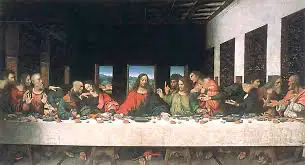
Which Renaissance artist painted The Last Supper?
Galileo Galilei
Michelangelo
Gian Lorenzo Bernini
Leonardo da Vinci

Which Renaissance artist carved the statue of David
Galileo Galilei
Michelangelo
Gian Lorenzo Bernini
Leonardo da Vinci
What Renaissance author wrote The Prince?
Shakespeare
More
Gutenberg
Niccolò Machiavelli
Famous playwright inspired by the Greek and Roman classics who wrote works like Romeo and Juliet and Macbeth
Thomas More
William Shakespeare
Niccolò Machiavelli
Martin Luther
All of the following were Renaissance artists EXCEPT
Michelangelo
Da Vinci
Raphael
Medici
Renaissance means
Rebirth
Reread
Revive
Relive
Europe from the 1500s could be roughly divided between
a Protestant south and a Catholic north
a Protestant north and a Catholic south
a Protestant east and a Catholic west
a Protestant west and a Catholic east
Belief that the authority to rule comes directly from God.
Divine right
Social contract
Popular sovereignty
Constitutional monarchy
Location of King Louis XIV’s elaborate palace.
Versailles
Paris
Louvre
Fontainebleau
Ruler who forced western technologies and social customs on the Russian people.
Peter the Great
Ivan the Terrible
Catherine the Great
Nicholas II
States that no person can be held in prison without first being charged with a specific crime.
Habeas corpus
Ex post facto
Double jeopardy
Due process
What were William and Mary required to sign before taking the throne?
Glorious Revolution
Long Parliament
English Bill of Rights
habeas corpus
Why was the Glorious Revolution considered "glorious"?
It was the first democratic election in England.
It marked England's victory over France in the Hundred Years' War.
It was a peaceful transfer of power with little bloodshed.
It established England's dominance in the New World.
Galileo had to withdraw his theories about the Earth’s rotation because
he found out he was wrong.
the Church threatened him with death if he did not.
the ideas had caused him public ridicule.
he wished to do more research.
Which of Galileo’s theories was most offensive to the Church?
The theory that gravity produces equivalent acceleration in falling bodies regardless of weight
The theory that there were many more stars than had previously been observed
The theory of the doctrine of uniformity
The theory that earth was not the center of the universe
An object in motion tends to stay in motion unless acted upon by an outside force. Who developed this first law of motion?
Robert Boyle
William Harvey
Isaac Newton
Frances Bacon
Kepler's relationship to the Copernican thesis was to
prove it by using the telescope
challenge it because it
denounce Galileo for denying the church
provide mathematical proof for it
The most radical idea expressed by women in the Enlightenment was that women
should not believe that mothering was their first duty.
were not inferior to men.
should have equal pay for equal work.
should depend on men to make decisions.
What was a direct result of the Scientific Revolution in Europe?
a gradual decline in the growth of cities
an increase in the use of the divine right theory of government
the rise of the manorial system
the application of reason and experimentation to political thinking
Francis Bacon, Galileo, and Isaac Newton promoted the idea that knowledge should be based on
the experiences of past civilizations
emotions & feelings
experimentation and observation
the teachings of the Catholic Church
The new intellectual movement that stressed reason and thought and the power to try and solve problems was the
Scientific Revolution
Enlightenment
Great Awakening
Geocentric theory
Thinkers during the Age of Reason challenged the established social order by
calling for an end to government
calling for a just society based on reason
denying the existence of heaven
supporting peasant rebellions.
John Locke and Jean-Jacques Rousseau would be most likely to support
a return to feudalism in Europe
a government ruled by a Divine Right monarchy
a society ruled by the Church
the right of citizens to decide the best form of government.
According to a social contract, where does a democratic government get its power?
The courts
The ruling political party
the government
the people
All of the following were a legacy of the Age of Enlightenment EXCEPT
belief in progress
a belief that religion conquers all
a more Secular Outlook, a non religious outlook
importance of the Individual
What was believed to be a universal moral law that, like physical laws, could be understood by applying reason?
constitution
moral law
natural rights
natural law
In 1789, King Louis XVI summoned the Estates-General primarily to
eliminate feudal dues
raise taxes to pay off growing debt
increase the influence of the peasants
protect the privileges of the First and Second Estates
The nobility’s main source of income was
feudal dues collected from peasants
government salaries
taxes on the income of artisans and merchants
tithes collected from church members
An estimated 40,000 people suspected of being traitors, were executed by the guillotine in one year during the French Revolution. This was known as
the Execution
the Horror
the Reign of Terror
the Reign of Burt
The Declaration of the Rights of Man guaranteed all of the following EXCEPT
freedom of speech
freedom of the press
freedom of religion
equal rights for women
Historians believe that one of Napoleon’s greatest impacts is
conquering of Austria and Prussia
the Revised
his escaping from Elba
the Napoleonic Code
The outbreak at the Bastille released a wave of peasant violence throughout France called the
the Execution
the Horror
Montezuma’s Revenge
the Great Fear
Which group made up the vast majority of French society?
the clergy
the First Estate
the ancient regime
the Third Estate
Marie Antoinette was the wife of which French monarch?
Napoleon
Louis XIV
Louis XV
Louis XVI
What did the National Assembly vow in the Tennis Court Oath?
to behead the king
to prepare for war
to draft a constitution for France
to revolt
In 1792, the National Convention voted to abolish the monarchy and declare France
dissolved
bankrupt
a republic
a nation
In 1793 King Louis XVI and Queen Marie Antoinette were
returned to the throne
deported to England
saved from the Robespierre
executed
The leader of the Reign of Terror was
Marie Antoinette
Maximilien Robespierre
Olympe de Gouges
Dr. Joseph Guillotin
How did the Napoleonic Code reflect Enlightenment principles?
It guaranteed the equality of all citizens before the law
It guaranteed women equal rights
It valued individual rights above all else
It valued the security of the state over individual liberty
Government spending more money than it takes in due to borrowing? (one of the economic problems in France)
deficit spending
compound interest
Madam deficit
The Directory
Factors that contributed to Great Britain’s industrial success included all of the following EXCEPT
a labor pool due to agricultural revolution
an abundance of capital
rich natural resources, coal and iron
political instability provided by an absolute monarchy
Factors that contributed to Great Britain’s industrial success included all of the following EXCEPT
a labor pool due to agricultural revolution
an abundance of capital
rich natural resources, coal and iron
political instability provided by an absolute monarchy
Which of the following helped British farmers increase food production in the 1700s?
reducing the size of their farms
improved farm machinery
crop rotation
the availability of more farm workers
During the 1700s, the percentage of Europeans living in towns or cities was about
10 percent
25 percent
50 percent
80 percent
Which of the following became an important source of power for the Industrial Revolution?
the steam engine
animals
the windmill
the dynamo
Where did the Industrial Revolution begin?
United States
England
Africa
China
Most rural villagers in pre-industrial times were
farmers
merchants
artisans
servants
Which of the following conditions during the Industrial Revolution supported Karl Marx’s ideas?
There were a few wealthy business people while the majority of people were poor.
More material goods were available.
Factory workers gained great wealth.
People were no longer threatened by famine.
Which of the following statements regarding workers in mines and factories during the early Industrial Revolution is true?
They were allowed to form unions.
Their working conditions were dangerous and inhumane.
Although working conditions were harsh, they were paid well.
The British government was interested in improving their lives.
In nineteenth-century cities, the poor lived
in planned residential neighborhoods.
on the outskirts of the city.
in skyscrapers.
in tenements near the factories.
The country nicknamed “the workshop of the world” because of the success of its industrialists was
Great Britain
Germany
the United States
France
The philosophy that the goal of society should be to bring the greatest happiness for the greatest number of people is known as:
Utilitarianism
Entrepreneur
Factory system
Communism
Who is a person that undertakes risks to establish a business?
Utilitarian
Entrepreneur
Factory worker
Social Darwinist
Socialism according to Marx, where capitalism would fail and lead to the creation of a classless society with no private property, is called:
Utilitarianism
Communism
Capitalism
Industrial Revolution
Who wrote the Wealth of Nations, promoting laissez-faire?
John Stuart Mill
Robert Owen
Adam Smith
Karl Marx
Most of the early factories were located near:
Cities
Rivers
Natural harbors
Railways
The industry that spurred the introduction of the factory system was:
Textile production
Glass blowing
Coal mining
Automobile production
By 1870, the two countries that most closely ranked alongside Great Britain as industrial powers were the U.S. and:
France
Germany
Italy
Japan
Steam engine trains and steamboats were developed with the advent of steam power and:
Oil
Factories
Steel
All of these
Which of the following is the most closely linked to labor reform?
Ministers
Social Darwinists
Unions
City planners
Who was the first person to bring the knowledge of machines (intellectual property) to America?
Samuel Colt
Samuel Slater
James Watt
Richard Arkwright
Who wrote The Communist Manifesto?
Karl Marx
Friedrich Engels
Karl Marx and Friedrich Engles
Adam Smith and Fridrich Engles
What was the primary source of heat for the steam engine?
Coal
Oil
Natural gas
Wood
What invention transformed communication during the Industrial Revolution?
Telegraphy
Telephone
Radio
Television
What did the Industrial Revolution lead to in terms of economic growth?
Sustained economic growth
Economic recession
Economic inequality
Economic isolation
Christianity is rooted from (a) ?

