
 Worksheets
Judicial Branch (AP GOV) Review
Total questions: 98
Worksheet time: 1hrs 3mins
America's federal judiciary is established in...
Article I
Article II
Article III
Article IV
Which branch of government has the authority to establish "inferior" federal courts?
Executive branch
Legislative branch
Judicial branch
State legislatures
The court that has the authority to hear a case first has
Appellate Jurisdiction
Primary Jurisdiction
Original Jurisdiction
Secondary Jurisdiction
Most of the cases SCOTUS hears come from
Original Jurisdiction
Appellate Jurisdiction
The US Constitution directly creates only the (a) Court.
While the President has the power to appoint federal judges, who must approve them?
(a)
How is the Judicial Branch able to check the power of the other branches?
By refusing to seat members of Congress
By impeaching members of the other branches
By using Judicial Review
By Judicial Declaration
The Supreme Court expresses its official opinion through the ________ _______
Judicial Review
Majority Opinion
Concurring Opinion
Dissenting Opinion
Which type of judicial philosophy goes by what is directly written within the Constitution to help to decide the case?
Judicial Restraint
Judicial Activism
The majority opinion, issued by the Supreme Court as the final decision of a case, becomes the standard or guide that will be followed in deciding similar cases in the future. this standard or guide is known as a
Precedent
Stare Decisis
Brief
Decision
The judicial philosophy that advocates the courts' active role in policymaking is called
strict constructionist
loose constructionist
judicial activism
judicial restraint
"It is emphatically the province and duty of the judicial department to say what the law is. Those who apply the rule to particular cases, must of necessity expound and interpret that rule. If two laws conflict with each other, the courts must decide on the operation of each."
-Chief Justice John Marshall
Which of the following principles is most accurately reflected in the quote from John Marshall?
Republicanism
Judicial Review
Constitutionalism
Checks and Balances
What is the document that must be filed in order for SCOTUS to hear an appeal?
Writ of Breve
Writ of Mandamus
Writ of Habeus Corpus
Writ of Certiorari
What kind of opinion is written by a justice who disagrees with the majority opinion of the court?
Majority Opinion
Dissenting Opinion
Concurring Opinion
Minority Opinion
When district Courts are encouraged to rule in the same manner as other districts courts, they are said to adhere to
Persuasive Precedent
Binding Precedent
Stare Decisis
Amicus Curiae
A guiding principle in which justices rely on precedent; basically states that the ruling in the lower court is upheld.
Dissenting Opinion
Amicus brief
Stare decisis
Original Jurisdiction
Literally meaning "friend of the court", these are submitted to the SCOTUS by non-parties in a case that have a stake in the case. Some justices read them. Some don't.
Amicus Curiae
Writ of habeus corpus
Miranda rights
Appellate jurisdiction
After the President nominates a federal judge...
They must be approved by a ⅔ majority in the senate
They must be approved by a simple majority in the senate
They must be approved by 60 senators
They must be approve by a simple majority in the house
the Supreme Court declares a law unconstitutional?
Congress impeaches a judge?
Congress refuses to approve judicial appointments.
Congress proposes Constitutional Amendments?
the Supreme Court declares an presidential act unconstitutional?
How is the power of the judicial branch limited by the U.S. Constitution?
It lacks the authority to approve new legislation.
It lacks the authority to hand down punishments.
It lacks the authority to evaluate the actions of government officials.
It lacks the authority to make people appear in court without their consent.
In The Federalist 78, Alexander Hamilton states, “A constitution is, in fact, and must be regarded by the judges, as a fundamental law. It therefore belongs to them to ascertain its meaning.” Which of the following Supreme Court cases is most relevant to this statement?
Baker v. Carr (1962)
Marbury v. Madison (1803)
Shaw v. Reno (1993)
McCulloch v. Maryland (1819)
Supreme Court justices were given life terms subject to good behavior by the Framers of the Constitution in order to ensure that...
justices are free from direct political pressures
justices are encouraged to make politically popular decisions
cooperation between the judicial and legislative branches is assured
justices remain accountable to the public
What is "Jurisdiction"?
The final decision in a court case.
An order given by the president.
The court's authority to hear a case.
The way Donald Trump's wig fits over his head.
How long is a term for a Supreme Court justice?
2 years
4 years
6 years
Life
Who nominates a Supreme Court Judge?
President
Senate
House of Representatives
Vice President
Who approves a Supreme Court judge?
President
Senate
House of Representatives
Speaker of the House
What is the main job of the Judicial Branch?
Make Laws
Enforce Laws
Interpret Laws
What "check" does the Judicial Branch have over the other branches?
Declare laws or acts unconstitutional
Veto laws
Appoint cabinet members
Create a national budget
Which case confirmed the court's power of Judicial Review?
Marbury v. Madison
McCulloch v. Maryland
Baker v. Carr
Gideon v. Wainwright
The majority of cases reviewed by the Supreme Court are
Appellate Jurisdiction
Original Jurisdiction
Lower court Jursidiction
Criminal Jurisdiction
How are cases chosen by the Supreme Court?
The people vote in an election for cases
The Supreme Court Justices must be unanimous in agreeing to hear a case
The Supreme Court Justices need a majority opinion to hear a case
The Supreme Court Justices need 4 Justices to agree to hear a case
What would happen if Texas passed a law eliminating all jury trials and the law was challenged in the courts?
The Supreme Court would rule it was unconstitutional.
The federal government would pass a similar law.
The court would be fine with it.
The state courts would defend it.
A "friend of the court" files a/an
amicus curiae
writ of certiorari
friendly waiver
lawsuit
What is the difference between original jurisdiction and appellate jurisdiction?
1. Case is filed in a federal district court.
2. ???
3. Case is appealed to the US Supreme Court, which does one of the following:
a. Allows the lower court ruling to stand.
b. Sends the case back to the lower court for reconsideration.
c. Decides to try the case.
Appellate Jurisdiction is when:
a court is the first to hear a case
a court has the authority to hear a case
a court reviews the decision of a lower court
power is shared between the Federal and State courts to hear a certain case
Original Jurisdiction is when:
a court is the first to hear a case
a court has the authority to hear a case
a court reviews the decision of a lower court
power is shared between the Federal and State courts to hear a certain case
District courts are
the highest level in the federal court system
the intermediate level in the federal court system
the lowest level in the federal court system
the state court system
When the Supreme Court declares a law unconstitutional
the law gets passed
the law must be voted on by the people
the law must be rewritten
the law becomes void
What term means the authority of a court to be the first to hear a case?
Limited Jurisdiction
Appellate Jurisdiction
Original Jurisdiction
Primary Jurisdiction
What is an appeal?
Having your evidence presented at an Arraignment
Being arrested and having your rights read to you
Asking a higher court to review your case
Asking a lower court to review your case
Why did the Founding Fathers want federal judges to serve life terms?
they wanted to ensure that judges couldn't be bribed
they didn't want masses of uneducated people to influence the outcome of the judicial process
they wanted an independent judiciary that was free from the influence of politics
they wanted to make sure that there was long-lasting stability in the judiciary
When the Supreme Court enacts social justice rulings this is viewed as __.
judicial activism
judicial restraint
a mittimus judgment
preemptory challenge
Which of the following best explains the principle of stare decisis?
It requires that at least four Supreme Court justices agree to hear a case.
It encourages presidents to take judicial experience into account when nominating judges.
It encourages judges to follow precedent when deciding cases.
It reinforces the philosophy of judicial activism.
It increases the number of cases judges are required to hear.
A judicial philosophy in which supporters believe that judges should interpret and apply provisions in the Constitution and in stature law in light of ongoing changes in conditions and values.
Judicial Activism
Judicial Review
Writ of Certiorari
Certificate
An opinion written by a justice who does not agree with the Court’s decisions, explaining the reasons why not.
Brief
Majority Opinion
Concurring Opinion
Dissenting Opinions
An opinion which is basically in agreement with the decision that the Court has made, but which bases the opinion on different reasons.
Brief
Majority Opinion
Concurring Opinion
Dissenting Opinions
The opinion on which the decision of the Court is based, which identifies the issues in the case and the reasons for the decision.
Brief
Majority Opinion
Concurring Opinion
Dissenting Opinions
A judicial philosophy that refrains from departure from precedent and keeps a strict interpretation of Constitutional law.
Judicial review
Judicial restraint
Judicial activism
Judicial supremacy
Announces the Court’s decision in a case and sets out the reasoning upon which it is based.
Judicial opinion
Majority opinion
Concurring opinion
Dissenting opinion
Written explanation of the views of one or more judges who disagree with a decision reached by a majority of the court.
Judicial opinion
Majority opinion
Concurring opinion
Dissenting opinion
A judicial philosophy that the courts can and should go beyond the applicable law to consider broader societal implications and protect or expand individual rights.
Judicial review
Judicial restraint
Judicial activism
Judicial supremacy
Court decision that stands as an example to be followed in future, similar cases.
Precedent
Judicial review
Jurisdiction
Concurring opinion

the practice of using earlier judicial rulings as a basis for deciding cases
stare decisis
caseload
docket
writ of certiorari
The legal doctrine under which courts follow legal precedents when deciding cases with similar facts; means “let the decision stand”.
Writ of certiorari
Jurisdiction
Stare decisis
Strict constructionist
Someone who interprets the Constitution as a living document and takes into account changes and social conditions since ratification.
Loose (liberal) constructionist
Concurring opinion
Strict constructionist
Dissenting opinion
Someone who interprets the Constitution in its original context.
Strict constructionist
Judicial activist
Loose (liberal) constructionist
Judicial reviewer
What Supreme Court case established the concept of judicial review?
Brown v. Board of Ed.
McCulloch v. Maryland
U.S. v Lopez
Marbury v. Madison
This document, written by Alexander Hamilton, makes the argument that justices should have lifetime appointments and have the power of judicial review.
Federalist 10
Federalist 51
Federalist 70
Federalist 78
Supreme court opinion that agrees with the majority opinion, but for a different reasoning.
(a)
Doctrine used in court cases for referring to their previous
judgments based on similar issues.
(a)
Supreme court opinion in which one or more judges disagree with the court ruling decisions.
(a)
Supreme Court opinioin that is joined more than half of the judges.
(a)
The Rule of 4 states that:
Attorney's are only allotted 4 minutes per witness for questioning
If there are ever less than 4 Supreme Court Justices, the role of the Judicial Branch is taken over by the President
There must be at least 4 members of a jury in order to try a case
4 or more Justices must agree to hear a case for it to go to the Supreme Court
What is the opinion of the Supreme Court justices who make up the minority?
Majority Opinion
Concurring Opinion
Unanimous Decision
Dissenting Opinion
Original Jurisdiction is when:
a court is the first to hear a case
a court has the authority to hear a case
a court reviews the decision of a lower court
power is shared between the Federal and State courts to hear a certain case
Appellate Jurisdiction is when:
a court is the first to hear a case
a court has the authority to hear a case
a court reviews the decision of a lower court
power is shared between the Federal and State courts to hear a certain case
Choose the answer(s) that are true of Judicial Review.
Allows the US Supreme Court the authority to choose which cases they will hear.
Is the result of Marbury v Madison
The actions of the executive and legislative branches of government are subject to review.
Gives the US Supreme Court authority to rule actions unconstitutional.
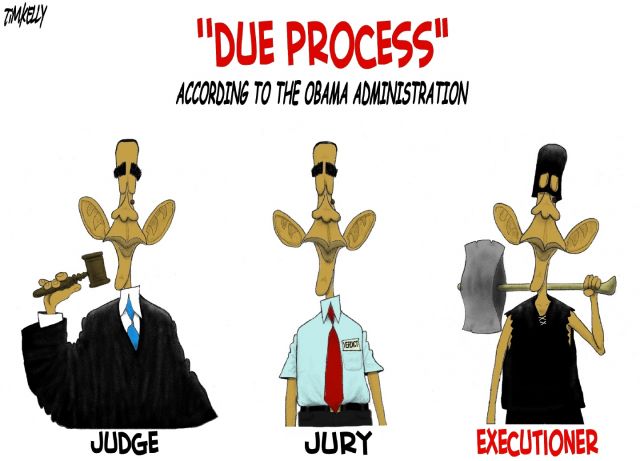
What is "due process of law?"
Government must not enact too many laws or regulations.
Office holders and officials must be bound by the laws.
The process of citizens following the law.
Government must act fairly and in accordance with established rules.
How many justices must agree to hear a case on the Supreme Court?
3
4
5
ALL
What is the Judiciary Act of 1789?
The difference between an appellate court and a district court is that an appellate court
conducts trials by jury
has original jurisdiction
reviews previous court decisions
hears civil cases but not criminal cases
Which branch of government has the authority to establish "inferior" federal courts?
Executive branch
Legislative branch
Judicial branch
State legislatures
Literally meaning "friend of the court", these are submitted to the SCOTUS by non-parties in a case that have a stake in the case. Some justices read them. Some don't.
Amicus Curiae
Writ of habeus corpus
Miranda rights
Appellate jurisdiction
A guiding principle in which justices rely on precedent; basically states that the ruling in the lower court is upheld.
Dissenting Opinion
Amicus brief
Stare decisis
Original Jurisdiction
What is the main topic of Federalist 78?
Executive Branch
Legislative Branch
Judicial Branch
Constitutional Amendments
Why does Hamilton argue for lifetime appointments for federal judges? (Choose all that apply)
To please the people for re-election
To maintain independence and impartiality
To increase the power of the judiciary
To prevent legislative encroachments
According to Hamilton, does the power of judicial review make the federal court system more powerful than the legislature?
Yes, it gives the judiciary more power
No, it balances and checks the legislature
Yes, it undermines the authority of the legislature
No, it is irrelevant to the power dynamics
Which of the following are described in Federalist Number 78? (Check all that apply)
Judges should have protected salaries
Judges should be impartial
Judges should be highly partisan
Which of the following are described in Federalist Number 78? (select all that apply)
Federal judges are appointed for life terms
Federal judges are appointed for 16 year terms
The judicial branch is the most powerful branch of US government
The judicial branch is the weakest brancy of US government
The judicial branch serves as a check on the power of the legislative and executive branches
True or False:
In Fed 78 Hamilton supports limited terms for Judges.
True
False
What is it called when a judge considers past decisions as a guiding basis for their decision in a current matter, especially when the cases are similar.
Stare Decisis
Common Law
binding precedent
persuasive precedent
When a lower court hears a case that parallels and already decided case from a higher level, the lower court is obligated to rule the same way. This is called:
Stare Decisis
Common Law
binding precedent
persuasive precedent
What is the Latin meaning of Certiorari:
"to get it right"
"to hear all arguments"
"to make more certain"
"to do a TikTok"
Interpreting the US Constitution exactly as it is written - not accounting for societal changes
liberal construction
strict construction
narrow construction
broad construction
Interpretating the US Constitution as a living document - which can have different meanings throughout time
liberal construction
broad construction
narrow construction
strict construction
Why did the Founding Fathers want federal judges to serve life terms?
they wanted to ensure that judges couldn't be bribed
they didn't want masses of uneducated people to influence the outcome of the judicial process
they wanted an independent judiciary that was free from the influence of politics
they wanted to make sure that there was long-lasting stability in the judiciary

