wayground logo

Free Printable Worksheets

NEW

Font size

S
M
L
XL
Worksheets

Year 7 Chemistry Topic Revision

Total questions: 76

Worksheet time: 1hrs 2mins
Name
Class
Date
1.
At higher temperatures
a)
particles in an object have less energy
b)
particles in an object move faster
c)
a gas contracts
2.
A gas
a)
has a definite shape but no definite volume
b)
has a definite volume but no definite shape
c)
has fast-moving particles
3.
Freezing
a)
Solid to gas
b)
Liquid to solid
c)
Gas to solid
d)
Liquid to gas
4.
Boiling
a)
liquid to gas
b)
gas to solid
c)
gas to liquid
d)
solid to liquid
5.
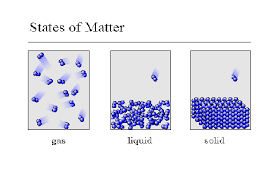
Which state of matter has tightly packed molecules?
a)
solid
b)
liquid
c)
gas
6.
What is happening when my ice cream changes from a solid to a liquid?
a)
freezing
b)
melting
c)
burning
d)
evaporation
7.
Which state of matter has a definite shape?
a)
solid
b)
liquid
c)
gas
8.
Particles (molecules) in a ______________________ have more energy than the other states of matter.
a)
gas
b)
solid
c)
liquid
9.
What term describes a solid changing to a gas?
a)
Deposition
b)
Sublimation
c)
Evaporation
d)
Freezing
10.

Particles of a liquid

a)

are tightly packed together and stay in a fixed position.

b)

have no energy

c)

decrease in volume with increasing temperature.

d)

are free to move around one another but still touch.
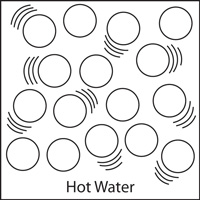
11.
What is condensation?
a)
gas to solid
b)
gas to liquid
c)
liquid to solid 
d)
solid to liquid 
12.
The speed of the molecules determines the _____.
a)
volume
b)
density
c)
pressure
d)
temperature
13.
The slower the particles in a substance move,
a)
the colder it is.
b)
the warmer it is.
c)
the more energy it has.
d)
the less energy it has.
14.
Thermal energy is...
a)
heat energy.
b)
the energy of motion
c)
energy of nuclear processes.
d)
an indication of physical change.
15.
What is matter?
a)
Anything that has mass and volume
b)
The shape of an object
c)
How much an object weighs
d)
The pull of objects on one another
16.
Two of more substances that are mixed together but can be separated is...
a)
solutes
b)
solutions
c)
liquids
d)
mixtures
17.

Which is an example of a mixture?

a)

Salt Water

b)

Pure water

c)

Oxygen

d)

Ice

18.
Mixtures can always be separated into their parts 
a)
True
b)
False
19.

What are the three states of matter?

a)

solution, suspension, colloid

b)

particles, homogeneous, heterogeneous

c)

earth, wind, fire

d)

solid, liquid, gas

20.
Water vapor cooling and turning into water droplets/steam is an example of......
a)
Condensation
b)
Melting
c)
Freezing
d)
Evaporation
21.

An example of a solution is....

a)

pure water

b)

rocks

c)

trail mix

d)

salt water

22.
The _____is the part that gets dissolved. 
a)
solute 
b)
solvent 
c)
solution 
d)
Sacajawea 
23.
A solution is a kind of ________. 
a)
mixture 
b)
compound 
c)
element 
d)
stuff 
24.
A solution is a ________ mixture. 
a)
heterogeneous 
b)
homogeneous 
c)
dumb 
d)
mixed 
25.
The universal solvent is ______. 
a)
sodium 
b)
acid 
c)
water 
d)
wind 
26.

This is the part of the solution that does the dissolving.

a)

solute

b)

solvent

c)

salt water

d)

particles

27.
What is a solvent?
a)
The substance that does the dissolving in a solution.
b)
The substance that is being dissolved in a solution.
c)
The mixing of different substances.
d)
The process in which neutral molecules lose or gain electrons
28.
This is the part of a solution that dissolves
a)
Solute
b)
Solvent
c)
Solution
d)
Mixture 
29.
The concentration of a mixture can be increased in which of the following ways?
a)
Heating the mixture
b)
Adding more water “solvent”
c)
Adding more powder “solute”
d)
Stirring the mixture
30.
A solution that is considered dilute would be....
a)
Dark in color
b)
Have a strong scent
c)
Have a large amount of solute
d)
Have a small amount of solute
31.
Another name for a homogeneous mixture is 
a)
an element.
b)
a solution.
c)
a compound.
32.

Lemonade - Water, lemon juice, and sugar

Identify the solute

a)

water

b)

lemon juice

c)

sugar

33.
When solute dissolves into a solvent it is called a _____________.
a)
mixture
b)
solution
c)
element
34.
When a certain amount of solvent cannot hold any more solute it is called a ________ solution.
a)
Diluted
b)
Saturated
35.

To make a solute dissolve more quickly in a solvent which would you do?

a)

Put it in cold water and stir it

b)

Put it in warm water and stir it

36.

This type of mixture contains two or more substances that you can see that it is made of different particles

a)

homogeneous

b)

heterogeneous

c)

solution

d)

colloid

37.

Which of the following is not a way to increase how much a of a solute dissolves

a)

evaporation

b)

stirring

c)

increasing temperature

d)

using a smaller particle size

38.
What is the boiling point of water?
a)
0oC
b)
100oC
c)
80oC
d)
95oC
39.

How can we separate a solid from a liquid?

a)

chromatography

b)

evaporation

c)

filtration

d)

condensation

40.
The clear liquid which passes through the filter paper is called
a)
filt
b)
filter
c)
filtrate
d)
filtration
41.
Which one of the following is NOT an example of a separation technique?
a)
boiling an egg
b)
fishing net
c)
surgical mask
d)
 tea strainer
42.

Which one of the following is the name for separation technique in the picture below

a)

distillation

b)

filtration

c)

evaporation

d)

chromatography

43.
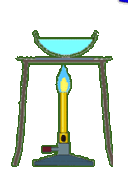
In the process of evaporation, which one of the following pieces of laboratory apparatus would NOT be used?
a)
evaporating basin
b)
filter funnel
c)
bunsen burner
d)
Wire gauze
44.

Which separation technique is shown below

a)

filtration

b)

crystallization

c)

sublimation

d)

evaporation

45.
Can a mixture be separated? 
a)
No
b)
Yes
c)
Only sometimes
46.
The diagram shows the apparatus for separating soil and water. What are the labelled parts?
a)
A = distillate, B = filtrate
b)
A = filtrate, B = residue
c)
A = residue, B = filtrate
d)
A = residue, B = distillate
47.

To separate a mixture of salt and water what separation method is used?

a)

Filtration

b)

Distillation

c)

Chromatography

d)

Evaporation

48.

Filtration can be used to separate...

a)

solutions

b)

suspensions

c)

colloids

d)

suspensions and colloids

49.

Look at the apparatus setup. It cannot be used to separate which of the following mixtures?

a)

Marble chips from oil

b)

Salt from sea water

c)

Chalk from sugar solution

d)

Sand from water

50.
Which technique is shown the diagram below
a)
seiving
b)
filtration
c)
decanting
d)
crystallization
51.
Sand and gravel may be separated from each other through using
a)
a filter funnel
b)
leibig condenser
c)
an evaporating basin
d)
sieve
52.
If you shake up the sand and water, the sand spreads through the water forming a cloudy ______.
a)
substance
b)
suspension
c)
sediment
d)
solution
53.

No matter what you do, sand will not dissolve in water, sand is _________ ?

a)

dissolved

b)

soluble

c)

insoluble

54.

Evaporation is a process that removes a...

a)

solvent (liquid part of solution)

b)

solute (material that dissolves in the solvent)

55.
The drops of water that appear on the outside of a glass of cold water on a warm day are an example of?
a)
sublimation
b)
condensation
c)
evaporation
56.
Which of these is an example of precipitation?
a)
snow
b)
air
c)
clouds
d)
vapor
57.
Which is the opposite of condensation?
a)
runoff
b)
evaporation
c)
precipitation
d)
transpiration
58.
What is it called when plants give off water vapor as a waste product?
a)
condensation
b)
evaporation
c)
sublimation
d)
transpiration
59.
What is the water cycle?
a)
the 3 forms of water
b)
the movement of water on, above, or below the surface of the Earth
c)
when water melts
d)
when clouds form
60.
During which stage do clouds form?
a)
condensation
b)
evaporation
c)
precipitation
61.
Which stage does ground water try to return to the ocean or soak into the ground?
a)
condensation
b)
evaporation
c)
precipitation
d)
run off
62.
What is A?
a)
Evaporation
b)
Condensation
c)
Precipitation
d)
Runoff
63.
What is C?
a)
Evaporation
b)
Condensation
c)
Precipitation
d)
Runoff
64.
What is B?
a)
Evaporation
b)
Condensation
c)
Precipitation
d)
Runoff
65.
What is D?
a)
Evaporation
b)
Condensation
c)
Precipitation
d)
Runoff
66.

When changing from a liquid to a solid, the water molecules are ____________________________.

a)

freezing and moving away from each other.

b)

evaporating and moving away from each other

c)

condensing and moving closer to each other

d)

freezing and moving closer to each other

67.

When changing from a solid to a liquid, the water molecules are ____________________________.

a)

melting and moving away from each other.

b)

evaporating and moving away from each other

c)

melting and moving closer to each other

d)

freezing and moving closer to each other

68.

When changing from a gas to a liquid, the water molecules are ____________________________.

a)

condensing and moving away from each other.

b)

evaporating and moving away from each other

c)

condensing and moving closer to each other

d)

freezing and moving closer to each other

69.

Water in its gas form is called ____________________,

a)

water vapor

b)

precipitation

c)

ice

d)

air

70.

Living things can be a part of the water cycle.

a)

True

b)

False

71.

This provides the power to keep the water cycle running.

a)

The Sun

b)

The Earth

c)

The wind

d)

living things

72.
The water that falls from the sky can be _______ or collected, and stored in rivers, lakes, and oceans.
a)
accumulated
b)
runoff
c)
ground water
d)
transpiration
73.
The transformation of water vapor back into liquid water by cooling is called...
a)
condensation
b)
evaporation
74.
Any form of water that falls from clouds and reaches Earth's surface as rain, snow, sleet, or hail is called...
a)
surface water
b)
precipitation 
c)
ground water
d)
runoff
75.
What can cause surface water to evaporate forming water vapor?
a)
runoff water
b)
wind and heat
c)
pollutants 
d)
clouds
76.
The water cycle plays a key role in _______ around the world.
a)
weather
b)
climate