
 Worksheets
Grade-7
Total questions: 77
Worksheet time: 1hrs 10mins


If an atom has no charge, which of the following must be true?
It has more neutrons than protons or electrons.
There are only neutrons inside the atom.
Its number of protons is equal to its number of electrons.
The neutrons in the atom outnumber the electrons and protons.
Which of these are an ion?
3 protons, 3 neutrons, 3 electrons.
8 protons, 8 neutrons, 8 electrons
2 protons, 3 neutrons, 2 electrons
6 protons, 6 neutrons, 7 electrons


Carbon is in 4A, so how many bonds can it form based on electrons needed to fill its outer shell?
1
3
4
5

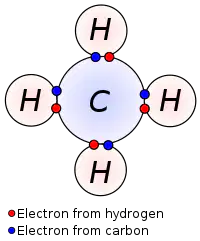
What is the correct formula for this molecule?
CH
C1H4
CH4
C4H

Why are dots and crosses used to show the electrons in the bonds?
To show which atoms the electrons belong to
Because this is what electrons looks like
To show if the electron came from a metal
To show if the electrons are gained or lost

Single bonds are formed when ____ pair(s) of valence electrons are shared.
one
three
two
four


How many electrons are involved in bonding in this molecule?
2
3
4
8
Covalent bonds form between which of the following?
metal and non-metal ion
non-metal and non-metal ions
metal and non-metal atoms
non-metal atoms only
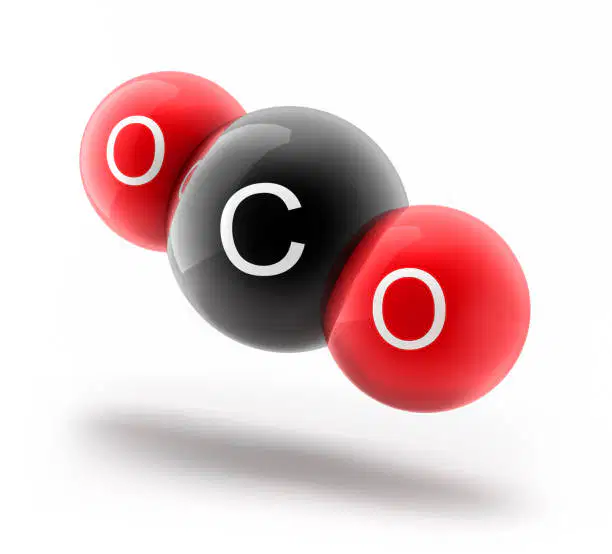
Single covalent bonds form when...
atoms share a pair of electrons
atoms donate electrons
atoms share an electron
atoms form compoounds
In a covalent bond the electrons involved in bonding are...
attracted to each other
attracted to other pairs of electrons
attracted to other paired electrons
attracted to the nucleus of each atom
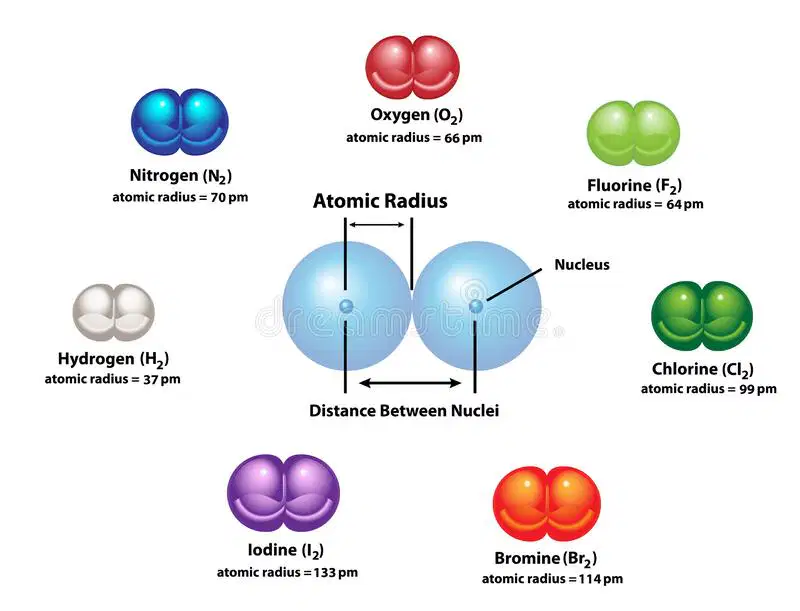
Covalent bonds are every strong. What type of forces hold the bond together making them so strong?
Magnetic
Friction
Electrostatic
Electromagnetic
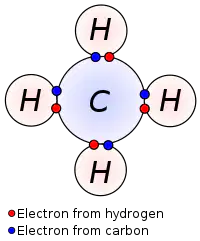
Dot and cross diagrams are used to show bonding in covalent compounds. Which of the following is NOT an advantage of this type of diagram?
Show the overlap of outer electron shells
Show the atoms which share electrons
Show the number of shared electron pairs
Show the sizes of the atoms sharing electrons

Displayed formula shows covalent bonds as a single line between atoms. Which of the following is NOT shown in this type of formula?
How atoms are connected
3D structure
Which atoms the electrons come from
The number of each type of atom in the compound
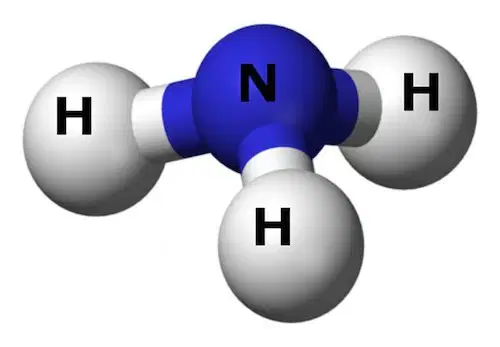
Three dimensional ball and stick models show the atoms (ball), the covalent bonds (sticks) and their arrangement in space. What is no shown in this type of model?
electron pairs
shared electrons
number of atoms involved
where the electrons have come from
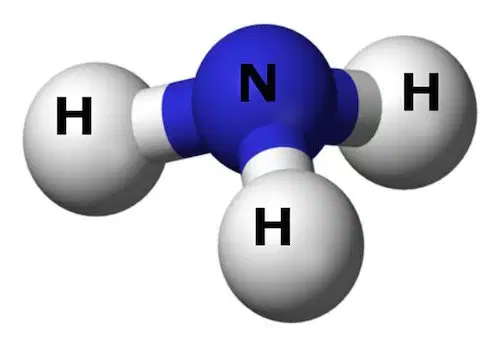
The diagram shows the ball and stick model for ammonia. Molecular formula show how many and which atoms are in a compound.
What is the molecular formula of ammonia?
H2NH
NH3
HNHH
H2NH
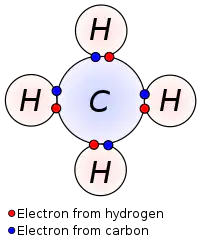
What type of formula is shown in the diagram?
Dot and cross
Ball and stick
Displayed formula
Molecular formula

What type of formula is shown in the diagram?
Dot and cross
Ball and stick
Displayed formula
Molecular formula

How do we identify covalent compounds or substances?
they are made up of metals and non-metals
they are made up of non-metals only
they are made up of metals only
Which of the following are covalent substances?
CO2
NH3
NaF
N ≡ N
MgO
What are covalent bonds?
transfer of electrons
sharing of electrons
Which of the following is the correct dot-and-cross diagram of fluorine molecule?


Which of the following dot-and-cross diagrams of water molecule are correct (valence shell only)?


What is the chemical formula of phosphorous trichloride?
P3Cl
P3Cl
P3Cl
PCl3
Covalent substances have _________ melting point and boiling points due to __________ ________________ forces of attraction. (type the 3 answers with a space between the words.)
(a)
Covalent substances are usually (a) in water.
Which keywords explain whether covalent substances conduct electricity or not?
conduct electricity
does not conduct electricity
free moving ions
no free moving ions nor electrons
neutral, no charge
Which of the following is/are most likely covalent substance(s)?
A: has a boiling point of 78 oC.
B: forms a solution that can light up a lightbulb.
C: insoluble in water and has weak forces of attraction.
D: has a melting point of 500 oC and conducts electricity when melted.
What is the chemical formula of ammonia which is made up of nitrogen and hydrogen atoms? [ N (2, 5) ; H(1) ]
NH
NH2
N3H
NH3
Which statements compare ionic compounds and covalent compounds correctly?
ionic compounds are made up of ions while covalent compounds are made up of molecules
ionic compounds contains strong intermolecular forces while covalent compounds contain weak electrostatic forces.
ionic compounds conducts electricity when solid state while covalent compounds cannot conduct electricity.
ionic compounds transfer electrons while covalent compounds share electrons.
Which of the following techniques can we use to separate homogeneous mixtures?
Crystallisation
Distillation
Evaporation
All of the above

Name the separation technique
Centrifuge
Crystallisation
Distillation
Evaporation

Name the separation technique
Distillation
Crystallisation
Evaporation
Condensation

Name the separation technique
Filtration
Evaporation
Centrifugation
Distillation

Name the separation technique
Filtration
Evaporation
Distillation
Separation
True or false: Magnets can be used to separate iron filings from sand
True
False
In a salt water solution ...
Salt is the solute and water is the solvent
Salt is the solvent and water is the solute
True or false: Sieving can be used to separate a mixture with two solid components of different sizes
True
False
True or false: Decanting is a technique that can be used to separate a salt water solution
True
False
What is the basis for separating the components of a mixture through distillation?
freezing point of the substances
room temperature
decaying period
boiling point of the substances

The image shows a mixture of concrete nails and saw dusts. What technique is best to use to separate the nails from the saw dusts?
sieving
chromatography
decantation
magnetic separation

Water is the univeral ____.
solute
solvent
solution
solute + solvent =
solution
equation

Mixture of sugar and hot water.
Homogeneous
Heterogeneous

Homogeneous
Heterogeneous

Homogeneous
Heterogeneous
Which of the following techniques can we use to separate homogeneous mixtures?
Crystallisation
Distillation
Evaporation
All of the above
Which of the following techniques could be used to separate a heterogeneous mixture?
Filtration
Chromatography
Magnetic separation
Seiving
Name the separation technique
Centrifuge
Bunsen burner
Distillation
Evaporation
Name the separation technique
Distillation
Crystallisation
Magnetic Separation
Condensation
Name the separation technique
Filtration
Evaporation
Centrifuge
Distillation
Name the separation technique
Filtration
Evaporation
Distillation
Separation
True or false: Magnets can be used to separate iron filings from sand
True
False
True or false: Filtration can be used to separate substances in a solution
True
False
In a salt water solution ...
Salt is the solute and water is the solvent
Salt is the solvent and water is the solute

Name the separation technique
Distillation
Filtration
Sieving
Crystallisation
True or false: Sieving can be used to separate a mixture with two solid components of different sizes
True
False
True or false: Decanting is a technique that can be used to separate a salt water solution
True
False

