
 Worksheets
Particles, solutions and chemical reactions
Total questions: 72
Worksheet time: 1hrs 12mins
When a solute can dissolve in a solvent we say it is
solute
dissolves
soluble
solution
When we lower the temperature of the solvent, the rate of dissolving of the solute will
decrease
saturated
stir
solution
The substance that dissolves in the solvent is called the
solute
solvent
soluble
saturated
The mixture of solute and solvent is called the
soluble
solute
solution
dissolves
When we cannot dissolve any more solute in a solution, we say the solution is
saturated
solution
dissolves
soluble
The substance that dissolves the solute is called the
soluble
solute
solvent
solution
The solute … in the solvent.
dissolves
decrease
stir
saturated
When we want the solute to dissolve more quickly we should … the solution.
stir
saturate
dissolve
solve


What happened to the sugar?
When dissolving sugar in water... Sugar melts.
True
False
When dissolving sugar in water... sugar loses mass.
True
False
When dissolving sugar in water... sugar molecules spread out in the water.
true
false
When dissolving sugar in water... sugar forms a mixture with the water.
true
false
When dissolving sugar in water... the sugar disappears and no longer exists.
true
false
When dissolving sugar in water... the sugar can be separated from the water.
true
false
When dissolving sugar in water... the sugar molecules break apart and is not sugar anymore.
true
false
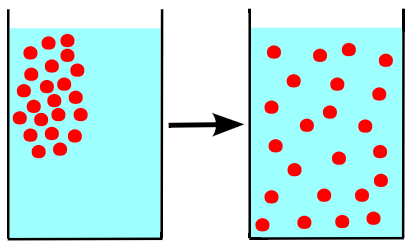
water can't dissolve ...............
sugar
oil
salt
coffe
Which will dissolve faster crushed table salt or crystal of table salt?
crushed table salt
crystal of table salt

To press together, to force into less space.
Thermal Expansion
Density
Compression
Dissolving
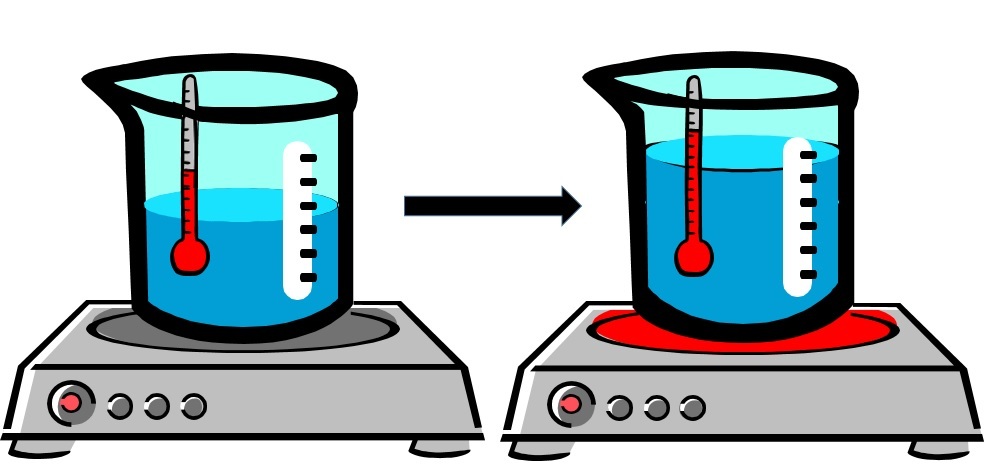
When temperature increases (gets "hotter"), the volume of matter increases (gets bigger).
Dissolving
Compression
Thermal Expansion
Diffusion
All _____ is made of tiny _____, called atoms and molecules.
matter, particles
matter, elements
particles, matter
Matter, mixtures
The _____, of matter are always _____.
speed, constant
particles, moving
volume, consistent
particles, faster
There are always _____ between the particles that make up matter.
movement
spaces
speed
temperature
Volume is how much _____ an object occupies.
matter
space
mass
particles
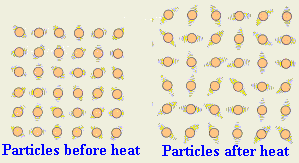
This picture is an example of...
Compression
Diffusion
Thermal Expansion
Dissolving
Which of the following is not a chemical change?
food coloring dissolving in water
leaves turning color
fruit ripening
silver tarnishing
New substances are produced by a _______ change.
Chemical
Physical
How could you prove that dissolving table salt in water is a physical change, not a chemical change?
The solution would taste salty so you would know the salt is still present
Boiling the liquid would separate the water and salt.
Freeze the solution to see if it turns blue.
Poor the solution in a cup to see if bubbles form.
An ______ change releases energy.
exothermic
endothermic
The law of ______ of mass states that in any physical or chemical change, matter is neither created nor destroyed.
conservation
elimination
creation
combustion
Which of the following is not a physical change?
cooking bacon
glass breaking
sugar disolving
ice melting

Is melting butter for popcorn a chemical or physical change?
chemical
physical
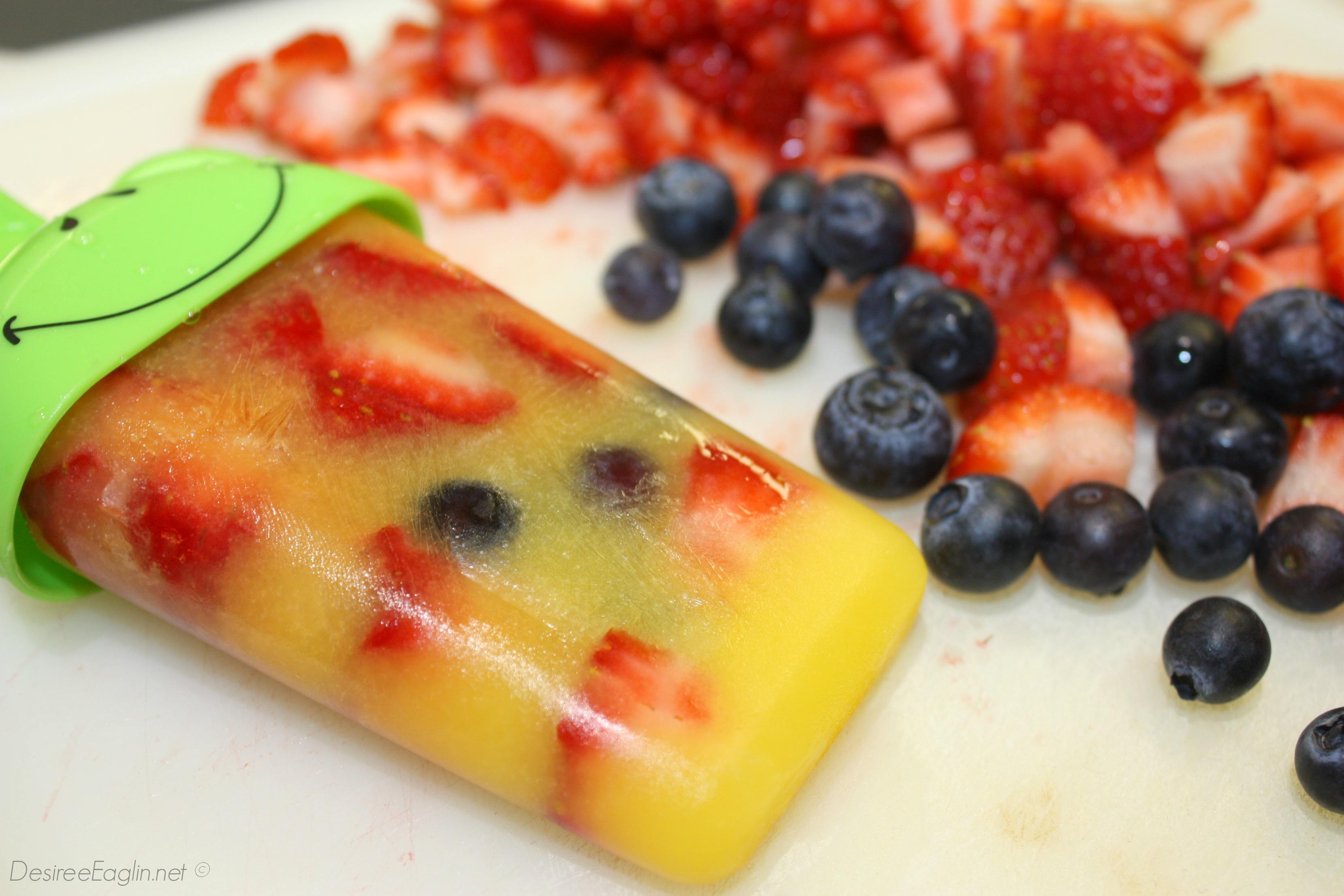

Change in color is a physical change.
True
False

Rust on an iron bar is an example of chemical change.
True
False

When you break a cracker into pieces it is a...
Chemical change
Physical change

A ______________ is a substance that increases the speed of a reaction.
catalyst
product
reactant
solute
H2 + O → H2O
elements or compounds that start a chemical reaction and undergo a change.
product
reactant
yield
law of conservation of mass
substance that is produced in a chemical reaction
product
reactant
yield
law of conservation of mass
Three things that are needed for combustion are:
oxygen, nitrogen and carbon dioxide
fuel, oxygen and carbon dioxide
fuel, heat and oxygen
fuel, heat and carbon dioxide
What does a fuel need in order to burn?
fuel
electricity
oxygen
hydrogen
What is the scientific term given when something burns?
a fuel
flammable
combustion
heating
True or false: A change in state is a chemical reaction
True - something melting would be an example of a chemical reaction
False - a change in state is a physical change
What is produced when a fuel burns?
nitrogen and carbon dioxide
water and hydrogen
nitrogen and hydrogen
water and carbon dioxide

The word equation for combustion is:
fuel + oxygen --> water + ..........................................
Carbon dioxide
Limewater
Hydrogen
Nitrogen
The word equation for combustion is:
fuel + oxygen --> water + ..........................................
Carbon dioxide
Limewater
Hydrogen
Nitrogen
What is the boiling point of water?
212°C
100°C
32°C
0°C
A substance's melting point is the same as its
freezing point.
condensation point.
boiling point.
If you have a sample of water that is 144 °C, what state is it in?
solid
liquid
gas
If you have a sample of water that is 44 °C, what state is it in?
solid
liquid
gas

On a hot, humid summer day drops of water form on a can of cold soda. What process caused this to happen?
condensation
freezing
vaporization
deposition

