Wayground logo

Free Printable Worksheets

Font size

S
M
L
XL
Worksheets

Quiz - Absolute and Relative Dating

Total questions: 37

Worksheet time: 29mins

Name
Class
Date
1.
Why are isotopes with short half-lives not useful for dating very old rocks?
a)
because not enough of the parent isotope remains to measure accurately
b)
because not enough of the daughter product has formed to be detectable
c)
because neither the parent isotope nor the daughter product will be detectable
d)
because very old rocks would never have contained these isotopes
2.
Scientists use radioactive decay to measure...
a)
relative time
b)
absolute time
c)
half-lives
d)
time of day
3.
The length of time required for half of the radioactive atoms in a sample to decay is its...
a)
era
b)
age
c)
half-life
d)
eon
4.
How does absolute age differ from relative age?
a)
only absolute dating indicates which rock is older than another
b)
only absolute dating finds the age in years
c)
only relative dating finds the age in years
5.
According to the law of superposition, the oldest fossils are found 
a)
At the top of the rock layers
b)
Near the bottom of the rock layers
c)
In the middle of the rock layers
d)
Somewhat near the surface
6.
Which rock layer in the diagram seems to be the oldest?
a)
F
b)
E
c)
B
d)
A
7.
Which type of dating method can be used on rock layers by applying the Law of Superposition?
a)
relative dating
b)
absolute dating
c)
radioactive dating
d)
radiometric dating
8.
Which of the following is the oldest?
a)
Layer L
b)
Intrusion D
c)
Intrusion H
d)
Layer E
9.
What element is usually used to date fossils?
a)
uranium-235
b)
carbon-14
c)
mercury-203
d)
thorium-234
10.
Letter "F" is a....
a)
inclusion
b)
intrusion
c)
fault
d)
unconformity 
11.
All plants and ANIMALS contain carbon.
a)
True
b)
False
12.
How old is the Earth?
a)
4.6 billion years
b)
1.4 billion years
c)
4.6 million years
d)
6000 years
13.
Traces or remains of organisms that lived long ago
a)
Fossil
b)
Unconformity
c)
Superposition
d)
Column
14.
_______________is the method of determining the absolute ages of rocks.
a)
radioactive dating
b)
carbon-14 dating
15.
States that younger rocks lie above older rocks if the layers have not been disturbed
a)
Law of crosscutting
b)
Law of superposition
c)
Relative Dating
d)
Unconformity
16.
Analyze the seashell found in the white layer.  Which statement is true of the rock layer that contains this fossil?
a)
It could also contain a fossil from the bottom layer.
b)
It is older than the layers below it.
c)
It is younger than the layers above it.
d)
It is older than the layers above it.
17.
True or False....Only dinosaurs have been fossilized.
a)
True
b)
False
18.
True or False...All living things that die become fossils.
a)
True
b)
False
19.
True or False...Fossils have been found all over Earth.
a)
True
b)
False
20.

If you determine the age of fossil/rock by measuring it amount of carbon this is called____

a)

radio dating

b)

relative dating

c)

absolute dating

d)

element dating

21.

Why is the fossil record incomplete?

a)

The fossil record is complete

b)

We have found all fossils

c)

All organism fossilize

d)

Human activities (such as drilling/digging) destroy rock layers

22.
Which rock layer or intrusion is the youngest?
a)
A
b)
B
c)
C
d)
D
23.
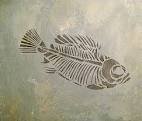
If scientists found this fossil, what could they infer?
a)
what fish are like today
b)
that this fish lacked oxygen
c)
what kind of animal ate this fish
d)
that water once covered the area
24.

List from youngest to oldest

a)

ECADB

b)

CABED

c)

BADCE

d)

BDACE

25.
Which layer is oldest?
a)
A
b)
W
c)
G
d)
Z
26.
Many fossils of large amphibians were found in an area that is currently barren desert. Which is most likely true?
a)
The climate of the area was once much wetter than it is now.
b)
Amphibians were once better at surviving in dry environments.
c)
The amphibians migrated there after a catastrophic event destroyed their habitats.
d)
The amphibians are not native to the area and their bones were brought there by other animals.
27.

What is radio active decay?

a)

The preserved remains of an organism.

b)

Atoms in an unstable element break down to form another element.

c)

When things die and their remains are buried.

d)

The time it takes for 1/2 of the radioactive atoms to decay in an element.

28.

If the same species of reptile was found in Africa and south america, what could this evidence support?

a)

the used to be a land bridge between Africa and South America

b)

That reptiles swam accross the ocean

c)

Africa and South America used to be joined together

d)

humans moved the reptiles from one continent to the other.

29.

To become fossilized an organism needs to be (2 answers)

a)

a large body size

b)

buried slowly

c)

with hard parts

d)

buried quickly

30.
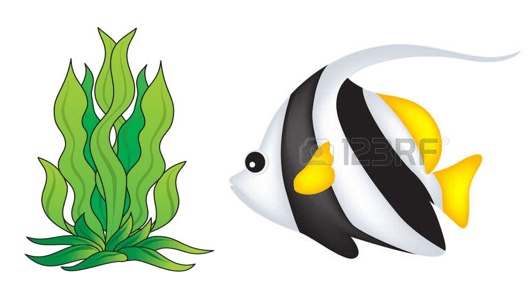
Suppose both of these living things die on the same day.  Which one is more likely to become a fossil?  EXPLAIN your answer!
a)
The plant because it is bigger.
b)
The fish because it has more hard parts than the plant.
c)
The plant because it is green.
d)
The fish because it has gills.
31.
What evidence did Wegener use in his theory?
a)
Continents and fossils fitting together/matching-up like puzzle pieces 
b)
glacier scars and evidence from temperature
c)
mountain ranges and coal deposits line up across continents
d)
all of the above
32.
What drives tectonic plate movement? 
a)
gravity
b)
coriolis effect
c)
convection currents
d)
the earth's magnetic core
33.
The picture shows the fossilized tooth of an extinct shark called a Megalodon. Which evidence can scientist most likely gain from studying the fossilized tooth?
a)
the different types of prey eaten by the shark
b)
the differences from teeth of iving sharks
c)
the events that led to how the shark died
d)
the color of the skin of the shark
34.
The original element that undergoes radioactive decay is known as the...
a)
daughter element
b)
half-life
c)
parent element
d)
carbon-14
35.
In radioactive decay the radioactive isotope you start with is called the
a)
daughter
b)
parent
c)
son
d)
father
36.
The more _ isotope there is the older the rock or fossil
a)
parent
b)
daughter
c)
radioactive
d)
ancient
37.
The three most commonly used isotopes for absolute dating of rocks and fossils are
a)
Uranium-238, potassium-40, carbon-14
b)
radon-24, potassium-40, sodium-13
c)
Lithium-8, carbon-16, oxygen-18