

wayground logo

Free Printable Worksheets

Font size

S
M
L
XL
Worksheets

APUSH Super Review

Total questions: 195

Worksheet time: 8hrs 19mins

Name
Class
Date
1.
Which of the following best describes the impact European colonization had on the Western Hemisphere's native population?
a)
the native population was highly respected in terms of territorial possessions and religious beliefs
b)
the Europeans for the most part did not interact with the native population
c)
Spain was the only European country to successfully create and alliance with the native population
d)
Native populations were often killed off or driven away by the Europeans
2.
Which of the following regions was home to bands of nomadic Native Americans who relied on their game for the vast majority of their needs?
a)
the Southwest
b)
the Northwest
c)
the Great Plains
d)
the Eastern Seaboard
3.
Which of the following shows how Native Americans adapted to an transformed the environment in which they lived?
a)
the creation of large-scale irrigation works to promote the growing of maize
b)
the development of highly structured systems of social stratification
c)
the construction of monuments to nature-based deities
d)
the organization of self-governing confederacies among disparate tribes
4.

Which of the following tribes was encountered by English settlers and best known for their highly evolved system of government?

a)

the Pueblo

b)

the Chinook

c)

the Sioux

d)

the Iroquois

5.
As a result of the Columbian Exchange, the New World gained...
a)
a significant new source of staple food crops
b)
an influx of gold and silver capital for the construction of new urban centers
c)
advanced medical techniques that extended the life-span of Native Americans
d)
new animals as sources of food and to serve as beasts of burden
6.
European diseases that arrived in the New World were particularly deadly because...
a)
little medical aid was available so far from European urban centers
b)
the European conquerors deliberately accelerated the spread of the most deadly strains
c)
the Native Americans had no natural resistance to these diseases
d)
the vast devastation of warfare with the Europeans left few to care for the sick
7.
One significant impact of the Columbian Exchange on the Old World was...
a)
the growth of the food supply and subsequent population increase
b)
the introduction of slavery as a significant source of labor for European landowners
c)
the widespread devastation of new diseases among the poor
d)
a drainin gof capital from the royal families and a shift of wealth to the hands of the merchant class
8.
Which of the following explains the impact of the Treaty of Tordesillas (1494)?
a)
it offered eternal life to anyone who would convert the natives of North America
b)
it encouraged Spanish exploration of the New World
c)
it banned the Portuguese slave trade
d)
it condoned the use of the encomienda system
9.
Which of the following served as the initial motivation for Spanish exploration?
a)
desires to convert the Native Americans to Catholicism
b)
hopes of establishing permanent colonies for settlement
c)
the desire to beat out European rivals in the land grab for North America
d)
the need of new sources of wealth to support the growth of the nation
10.
All of the following contributed to European expansion into the New World EXCEPT...
a)
the development of new navigational technology
b)
an end to European wars between competing royal families
c)
a rise of nationalism among European states
d)
the desire to spread Christianity
11.
Which European nation was first to lay claim to the New World?
a)

Portugal

b)
Spain
c)
France
d)
England
12.
In the view of the encomienda system, Native Americans were seen primarily as...
a)
a source of labor
b)
a group to be protected
c)
a focus of evangelization
d)
outcasts to be excluded from Spanish settlement
13.
What aspect of Spanish colonization did missionary Bartolome de Las Casas famously protest?
a)
the refusal of explorers to tithe on the wealth they discovered
b)
the lack of missionary zeal among the conquistadors
c)
the treatment of Native Americans as subhuman and expendable
d)
the focus of the Spanish Crown on Latin America while neglecting the Reconquista at home
14.
All of the following encouraged the growth of African slavery EXCEPT..
a)
the cooperation of Portuguese, Arab, and African merchants
b)
the cultural unwillingness of the Spanish to work alongside the Native Americans who they perceived to be pagan
c)
the success of the slave-based labor system in the English colonies
d)
the dramatic reduction in the population of able-bodied Native Americans due to disease
15.
All of the following characteristics of the Atlantic Slave Trade distinguished it from the forms of slavery that had existed previously EXCEPT...
a)
the scale of the slave trade
b)
slavery's basis in race
c)
the use of African slaves
d)
the permanent nature of this form of slavery
16.
American Indian cultures...
a)
established a common written language
b)
established trade networks and communication over relatively large areas
c)
had peaceful relationship with each other that included voluntary emigration
d)
formed major alliances to combat attempts by Europeans to encroach on their lands
17.
American Indian culture had a different view of landownership than did Europeans in that they thought...
a)
land should be owned by individual members of the society
b)
tribal ownership of land was perpetual and exclusive
c)
they owned the use of the land but not the land itself
d)
all land was open to settlement by all people at any time
18.
Which of the following is true about American Indian cultures prior to contact with Europeans?
a)
they experienced frequent epidemic diseases
b)
they had developed wheeled vehicles pulled by livestock
c)
they exchanged goods with African societies
d)
they were engaged in frequent conflicts with other American Indian groups
19.
"The gold and silver mined with forced labor in Mexico and what is now Bolivia constituted a windfall that could have been used to develop Spanish agriculture, industry, and commerce. It could have helped the country catch up with northwestern Europe's more developed economies. But Spain [in the 1500s] was in the grip of a tiny ruling class of royalty, Catholic church hierarchy, and landed aristocracy. Two to three per cent of the population owned 97 per cent of the land in Castile, Spain's heartland. The great landowners had no incentive to modernize Spain. They just wanted to raise more sheep and sell more wool. The environmental degradation that overgrazing vast numbers of sheep entailed seems to have bothered the ruling class no more than the cutting of forests for timber to build ships and provide charcoal to smelt domestic Spanish silver ore. And so, what if the wool went to Holland to be manufactured into cloth rather than being processed in Spain itself. Meanwhile, successes in the new World swelled the Spanish monarchy's ambitions in the Old. The bonanza of bullion from the Americas encouraged Spain's rulers to build up the army into Europe's largest military force, setting off an arms race that forced rivals to multiply their armed forces as well...Hegemonic wars against the French, Dutch, and English followed...The most lasting and far-reaching effect of the increase of money in circulation was to set off a long wave of inflation that spread throughout Western Europe. To be sure, deficit spending on unproductive armies, navies, and wars as well as debasement of coinage by monarchs in search of additional royal revenue contributed to the in-up in prices." (A. Kent MacDougall, University of California, Berkeley, March 1992.)Which of the following best describes a central point of A. Kent MacDougall's argument above?
a)
During the age of exploration and conquest, a growing divide developed in Spain between the Catholic church and the monarchy over the treatment of American Indians
b)
The large-scale migration of Spanish peasants to the new World left Spain with a scarcity of workers and a depressed economy
c)
Spanish conquest of the New World led Spain to focus its military and diplomatic efforts toward subduing resistance in the New World and removing itself from the conflicts of Europe
d)
the successes of Spanish conquest in the New World did not result in a general economic improvement in Spain itself
20.
"The gold and silver mined with forced labor in Mexico and what is now Bolivia constituted a windfall that could have been used to develop Spanish agriculture, industry, and commerce. It could have helped the country catch up with northwestern Europe's more developed economies. But Spain [in the 1500s] was in the grip of a tiny ruling class of royalty, Catholic church hierarchy, and landed aristocracy. Two to three per cent of the population owned 97 per cent of the land in Castile, Spain's heartland. The great landowners had no incentive to modernize Spain. They just wanted to raise more sheep and sell more wool. The environmental degradation that overgrazing vast numbers of sheep entailed seems to have bothered the ruling class no more than the cutting of forests for timber to build ships and provide charcoal to smelt domestic Spanish silver ore. And so, what if the wool went to Holland to be manufactured into cloth rather than being processed in Spain itself. Meanwhile, successes in the new World swelled the Spanish monarchy's ambitions in the Old. The bonanza of bullion from the Americas encouraged Spain's rulers to build up the army into Europe's largest military force, setting off an arms race that forced rivals to multiply their armed forces as well...Hegemonic wars against the French, Dutch, and English followed...The most lasting and far-reaching effect of the increase of money in circulation was to set off a long wave of inflation that spread throughout Western Europe. To be sure, deficit spending on unproductive armies, navies, and wars as well as debasement of coinage by monarchs in search of additional royal revenue contributed to the in-up in prices." (A. Kent MacDougall, University of California, Berkeley, March 1992.)Concerns raised in Spain in the 1540s about "forced labor in Mexico and what is now Bolivia," mentioned in the first paragraph of MacDougall's article, led to which of the following changes?
a)
limits being placed on the encomienda system and a shift toward African slavery
b)
the growth of the Spanish abolitionist movement and a royal decree ending slavery in the New World
c)
a shift in Spanish economic activities in the new World from export-oriented activities toward production for local consumption
d)
the establishment of a line of demarcation in Spanish-held territories in the New World between areas for American Indians and areas for Spanish colonists
21.
The primary positive benefit of the Columbian Exchange was...
a)
the exchange of food products between Europe and the Western Hemisphere
b)
the introduction of horses into Europe
c)
the introduction of cattle into Europe
d)
the exchange of architectural design techniques between the two continents
22.
The primary negative consequence of the Columbian exchange was the exchange of...
a)
food products that led to debilitating illnesses for both American Indians and Europeans
b)
concepts of autocratic governments that delayed the development of democracy
c)
epidemic diseases introduced from Europe into the Americas
d)
modern methods of warfare introduced to Europeans by American Indians
23.
Prior to European contact, North American Indians were...
a)
dominated by the Plains Indians, who possessed horses
b)
dominated by the eastern woodland tribes, who possessed firearms
c)
dependent on imports of foodstuffs from Mexican tribes for survival
d)
distinct societies with different economies and lifestyles
24.
William Penn founded Pennsylvania as a place where _____________ could practice their beliefs.
a)
Quakers
b)
Catholics
c)
Pilgrims
d)
Jews
25.
__________ was a puritan leader who became the first governor of the Massachusetts Bay Colony.
a)
William Penn
b)
John Winthrop
c)
Lord Baltimore
d)
Roger Williams
26.
The English settlement, _________, was where Pocahontas met John Smith, and married John Rolfe.
a)
Roanoke
b)
Charles Town
c)
Jamestown
d)
Philadelphia
27.
___________ was the Catholic owner of the colony of Maryland.
a)
James Oglethorpe
b)
William Penn
c)
Roger Williams
d)
Lord Baltimore
28.
___________ founded the colony of Pennsylvania.
a)
William Penn
b)
Lord Baltimore
c)
John Winthrop
d)
Sir Walter Raleigh
29.
Which of the following was a belief held by Roger Williams?
a)
Puritans should be banned from Rhode Island.
b)
Everyone should be forced to attend church.
c)
Puritans should not impose their beliefs on others.
d)
Church and state should not be kept separate.
30.
Why did the Maryland Assembly pass the Act of Toleration?
a)
To protect Catholics
b)
To Prohibit persecution of religious groups
c)
To protect Jews
31.
Left MA and founded Providence RI
a)
John Winthrop
b)
Roger Williams
c)
Anne Hutchinson
d)
Thomas Hooker
32.
Each Puritan town governed itself by setting up _ to decide local issues
a)
toleration
b)
persecute
c)
town meetings
d)
charter
33.
A _____ is an official paper in which certain rights are given by a government to a person, group, or business.
a)
dissent
b)
expel
c)
charter
d)
frontier
34.
Why did the Puritans found the Massachusetts Bay Colony?
a)
They wanted a place where they could live by their religious beliefs and start farms and businesses.
b)
They wanted a place where they could purchase land and start plantations.
c)
They wanted a place where they could start farms and own indentured servants.
d)
They were looking for gold and land.
35.
What was the first representative house in America and what colony was its home?
a)
Liberty Hall; Virginia
b)
House of Burgesses; Pennsylvania
c)
Plymouth House; Massachusetts
d)
House of Burgesses; Virginia
36.
Which system, used by the Virginia Company to attract colonists, promised parcels of land to immigrate to America?
a)
mercantilism
b)
headright
c)
capitalism
d)
joint stock
37.
The Mayflower Compact foreshadows the US Constitution in which of the following ways?
a)
it posits the source of government power in the people rather than in God
b)
it ensures both the right to free speech and the separation of church and state
c)
it limits the term of office for all government officials
d)
it establishes three branches of government in order to create a system of checks/balances
38.
Bacon's Rebellion was initiated by a group of farmers who felt most directly threatened by
a)
an increase in royal taxes
b)
the power of large planters
c)
conflicts with American Indians
d)
the growth of the slave trade
39.
Which of the following was a long-term effect of the jury's decision in the John Peter Zenger case?
a)
Zenger became a colonial leader
b)
The colonial press became more willing to criticize the British
c)
Restrictions on free press increased
d)
New York became the center of anti-British sentiments
40.
Anne Hutchinson was tried and banished from the Massachusetts Bay Colony because she
a)
led a group of farmers in revolt against the political leaders
b)
was teaching that salvation is attained through faith and divine grace
c)
was accused of being a witch
d)
refused to pray
41.
This word was used to describe slaves since they were seen as lifelong property.
a)
Chattel
b)
Peculiar
c)
Indentured
d)
None of the above
42.
This administrative body was created by King James II in order to implement the Navigation Acts and help the colonies defend themselves against hostile French and Native American forces.
a)
House of Burgesses
b)
Dominion of New England
c)
Plymouth Company
d)
None of the above
43.
Which of the following was NOT a result of the First Great Awakening?
a)
a number of colleges were founded
b)
more Christian denominations were formed
c)
the Old Lights split from churches 
d)
a greater allegiance to the king of England
44.
As a result of England's policy of salutary neglect, the colonies developed 
a)
A desire for fine British goods
b)
A self-sufficient economy
c)
A desire for greater self-sufficiency
d)
A disloyal attitude toward Britain
45.
The purpose of the Navigation Acts was to 
a)
Restrict colonial trade with other countries
b)
Expand colonial trade
c)
Strengthen England's Navy
d)
Make the colonies self-sufficient
46.
The "Middle Passage" referred to
a)
the creation of the Panama Canal in Central America.
b)
the transportation of slaves from Africa to the New World.
c)
Lewis and Clark's expedition into the Louisiana Territory.
d)
the best route over the Rocky Mountains to get to California.
47.
Colleges and universities during the colonial period were dedicated primarily to the training of...
a)
medical doctors
b)
scientists
c)
political leaders
d)
the clergy
48.
The Iroquois were allied with the French in the French and Indian War
a)
True
b)
False
49.
All of the following were effects of the French and Indian War on the colonists EXCEPT:
a)
It was a socializing experience for American men
b)
Impressment caused resentment among colonists
c)
Colonists began to view English authority as illigitimate
d)
It resolved tensions between colonists and Native Americans
50.
Which was NOT a weakness of the Articles of Confederation
a)
No chief executive
b)
all states needed to approve amendments
c)
Congress could not tax or regulate trade
d)
Survey, organize, and set up a process for the development of new states. 
51.
 Which event shows the economic issues with the Articles of Confederation?
a)
Shay's Rebellion 
b)
Whiskey Rebellion
c)
 Stono Uprising
d)
The United States could now trade at New Orleans 
52.
What was the outcome of Pickney's Treaty?
a)
Canada and the US agreed to a mutual disarmament
b)
The United States could now trade at New Orleans 
c)
British left the forts in the Northwest
d)
Native Americans were banned from the Midwest
53.
The Judiciary Act of 1789-
a)
created the federal court system 
b)
established the principal of judicial review
c)
Designated the Supreme Court to hear issues w/fed gov't
d)
Established the Attorney General
54.
What was not part of Hamilton's Financial Plan?
a)
Established the National Bank
b)
Put the capital in Washington DC
c)
Levying of excise taxes and tariffs
d)
Assumption of state debts
55.
What did the Northwest ordinance do? 
a)
prohibited the extension of slavery in the NW territory
b)
settled the land dispute between Canada and US
c)
Ended British control over the Ohio Valley
d)
Prevented slavery north of 36-30 north latitude
56.
Washington's actions in the Whiskey Rebellion in 1794 demonstrated what?
a)
the federal gov't could enforce the laws of the land
b)
the federal gov't control of the production of whiskey
c)
the federal gov't prohibition of liqour
d)
suspension of habeas corpus
57.
The Great Compromise-
a)
established the executive branch
b)
established the judicial branch
c)
established two houses in the legislative branch
d)
stated slaves would be counted as 3/5 of the population
58.
According to the Proclamation of 1763-
a)
colonial militiamen were required to put down rebellion
b)
Colonial paper could not be printed
c)
Contact between colonists and Indians were illegal
d)
settlers could not cross the Appalachian Mountains
59.
What was a consequence of the French and Indian War?
a)
American colonists began to resist control from England
b)
colonists feared yet another involvement in a war
c)
Britain gave up Canda
d)
Iroquois Confederacy fell apart
60.
The Stamp Act Congress was significant because it-
a)
demonstrated the colonists were loyal to England
b)
Repealed the Stamp Act
c)
Led directly to the 1st Continental Congress
d)
Marked an important step toward the unity of the colonies 
61.
Election of 1800 illustrated what?
a)
The Constitution needed to be reformed
b)
US could peacefully transfer power from political parties 
c)
There was NO need for a two party system
d)
Washington was no longer a hero
62.
 Alexander Hamilton believe in a-
a)
Loose interpretation of the Constitution 
b)
Strict interpretation of the Constitution
63.
Disagreements between Hamilton and Jefferson led to what? 
a)
first American Political Parties
b)
Supreme Court
c)
 Bicameral legislature
d)
Cabinet
64.
Which is NOT a part of Washington's Farewell Address?
a)
Warning against political parties
b)
Warning against making Native American treaties
c)
Warning against permanent alliances
d)
Warning against getting involved in European affairs
65.
The Battle of Fallen Timbers led to the end of resistance of Native American tribes in the Northwest and the _________________.
a)
Treaty of Paris 1783
b)
Jay's Treaty
c)
Treaty of Greenville
d)
Treaty of Tecumseh 
66.
85 essays written by Alexander Hamilton, James Madison, and John Jay in support of the ratification of the Constitution-
a)
The Federalist Papers
b)
Virginia and Kentucky Resolutions
c)
Common Sense
d)
The Constitutional Papers
67.
Which of the following was NOT an issue that led to the formation of political parties in the 1790s?
a)
Hamilton's Financial Plan
b)
French Revolution 
c)
Slavery
d)
Strict vs. Loose Interpretation of the Constitution
68.
Marbury v. Madison was the court case that set up ______________.  This is the concept that allows the Court to overturn laws passed by Congress and the President.
a)
judicial review
b)
states' rights
c)
sedition
d)
being extra
69.

Which is an outcome of the war of 1812?

a)

The Americans were defeated

b)

Britain took over America again

c)

The Americans were disappointed in war

d)

The Americans felt a sense of pride that they held their own against a major world power

70.

What was the 1815 and 1825 period known as?

a)

Era Of Good Feelings

b)

Era Of Joyful

c)

Era Of Madness

d)

Era Of Happiness

71.

Literary Naturalism began in-

a)

The Early 2000s

b)

Mid 16th century

c)

330 AD

d)

The Late 19th Century

72.

Romance literature was

a)

inspired by reforms and had Native American influence

b)

inspired by God and had English influence

c)

inspired by the industrial revolution and had European influence

d)

inspired by Shakespeare and had New Age influence

73.

The Erie Canal played a key role in the Industrial Revolution, Westward Expansion of the country, and connecting regional and national economics.

a)

True

b)

False

74.

Who benefitted the most from the Transportation Revolution?

a)

North

b)

South

c)

Great Britain

d)

Mexico

75.
True or False: The War of 1812 boosted manufacturing.
a)
True
b)
False
76.

What jobs were women NOT often wanted for in factories?

a)

Running spinning and weaving machines

b)

Unskilled labor

c)

Providing first aid to male workers

d)

cheap labor

77.

In regards to the Abolitionist Movement, which of the following is NOT true

a)

many Americans were indifferent

b)

many Americans accepted Slavery as normal

c)

William Lloyd Garrison condemned slavery

d)

the institution of slavery was becoming insignificant

78.
Which of the following is true about the Missouri Compromise?
a)
It was only a temporary solution
b)
The Unorganized Territory permitted slavery
c)
The Arkansas Territory prohibited (banned) slavery
d)
It solved all issues concerning slavery in the west
79.

Which of the following early 19th century policies would Jacksonian Democrats have supported?

a)

Tariffs because they raised the price of manufactured goods.

b)

A national bank because it made loans to humble citizens.

c)

The abolition of property requirements for elections and political candidates.

d)

The right of Southern states to secede when their complaints were ignored.

80.

True or False: Jacksonian Democrats oppose the Market Revolution and industrialization because it creates inequality and wage dependency.

a)

True

b)

False

81.

True or False: Soil depletion pushed farmers east in search of new land.

a)

True

b)

False

82.

In order for the Monroe Doctrine to work, the United States needed

a)

to have faith other countries would leave the western hemisphere alone

b)

The British Navy to help enforce the Doctrine

c)

Latin American countries to abstain from revolutions

d)

to keep their state militias armed and ready

83.

In the early 1830's the Supreme Court reinforced the rights of _____________ to remove Native Americans from disputed lands.

a)

National Government

b)

France

c)

Mexico

d)

States

84.

King Philip's War, The Trail of Tears, and The Pequot War all have a history of discrimination towards ___________.

a)

Americans

b)

Immigrants

c)

Latin Americans

d)

Native Americans

85.
What was the cause of the growth of slavery to the west?
a)
Cotton  depletes the soil of nutrients and there was little knowledge of fertilizers and crop rotation, so cotton farmers had to move west to find fresh soil.
b)
Most of the cotton was purchased by the Indians, so by moving west, there was less of a lag time between harvesting the cotton and selling it to the Indians.
c)
It was discovered that cotton grew best in the mountains because it prefers cold temperatures, so people moved west to claim land.
d)
All of the above
86.

What did cotton bring to the south and how did that affect them?

a)

Slaves—Before cotton, slaves had only been used in the islands of the Caribbean.

b)

Disease—Cotton carried fleas which would bite any person near the plant and give them the plague.

c)

Wealth—Along with this wealth came much pride in the southern way of life which led to sectionalism.

87.

in which case did a state try to tax a branch of the federal government, only to have that tax collection denied by John Marshall?

a)

McCullough v. Maryland

b)

Cohens v. Virginia

c)

Fletcher v. Peck

88.
The practice of rewarding supporters with government jobs.
a)
Muckraking
b)
The Spoils System
c)
The Civil Service
d)
Idealism
89.

A series of resolutions issued at the end of the Seneca Falls Convention, NY. in 1848; modeled after the Declaration of Independence, the list of grievances called for economic and social equality for women, along with a demand for the right to vote.

a)

Declaration of Independence

b)

Declaration of Sauce

c)

Declaration of Sentiments

d)

Deceleration of Van Rooster

90.

Took place in upperstate New York in 1848. Women of all ages and even some men went to discuss the rights and conditions of women. There, they wrote the Declaration of Sentiments, which among other things, tried to get women the right to vote.

a)

Great Convenntion

b)

Niagara Falls Convention

c)

Green Falls Convention

d)

Seneca Falls Convention

91.

This reformer worked with the mental ill and reformed mental health institutions with the belief that they could be rehabilitated and incorporated back into society?

a)

Dorothea Dix

b)

Elizabeth Cady Stanton

c)

Lucretia Mott

92.
This amendment outlawed slavery. 
a)
12th
b)
13th
c)
14th
d)
15th
93.
The revolt of the Texans is best remembered by which battle?
a)
Sam Houston
b)
Santa Anna
c)
Alamo
d)
Santa Fe
94.
Which party is also known as the "Know-Nothing" Party?
a)
Whigs
b)
Democrats
c)
Republican
d)
American
95.
African American men fought during the Civil War. 
a)
True
b)
False
96.
Women were instrumental in serving in various aspects during the Civil War. 
a)
True
b)
False
97.
Which Amendment guaranteed federal protection of citizenship and equal rights under the law?
a)
12th
b)
13th
c)
14th
d)
15th
98.
Which Amendment prohibited voting restrictions based on race, color, or previous conditions of servitude?
a)
12th 
b)
13th
c)
14th
d)
15th
99.
Who became president upon Lincoln's assassination? 
a)
Ulysses S. Grant
b)
Andrew Jackson
c)
Andrew Johnson
d)
George McClellan
100.
Who won the election of 1868?
a)
Ulysses S. Grant
b)
Andrew Jackson
c)
Andrew Johnson
d)
George McClellan
101.
Which of the following slave states never seceded from the Union? 
a)
Missouri
b)
Illinois
c)
Virginia
d)
South Carolina
102.
What were those slave states that did not secede during the fighting called?
a)
Traitor States
b)
Border States
c)
Free States
d)
Ideal States
103.
This court decision ruled that the slaves were not citizens, and therefore had no rights to sue in court. 
a)
Marbury v. Madison
b)
Plessey v. Ferguson
c)
Brown v. Board
d)
Dred Scott v. Sanford 
104.
This was the system set in place after the Civil War to employ freed slaves. 
a)
Tenet Farming
b)
Manufacturing
c)
Head-right System
d)
Sharecropping
105.
Which compromise brought California into the Union? 
a)
Missouri Compromise
b)
3/5ths Compromise
c)
Compromise of 1840
d)
Compromise of 1850
106.
Which compromise ended the slave trade in Washington, DC? 
a)
Missouri Compromise
b)
3/5ths Compromise
c)
Compromise of 1840
d)
Compromise of 1850
107.
Which law was passed in 1793, making it harder for slaves to successfully escape the bondage of slavery?
a)
Fugitive Slave Act
b)
Interstate Commerce Act
c)
Bleeding Kansas
d)
Personal Liberty Laws
108.
What did the Republican Party platform of 1860 attempt to broaden its appeal to include?
a)
Southern route for transcontinental railroad
b)
Support for expeditions to Latin America
c)
Know-Nothing supporters who had cost them the election of 1856
d)
Northern manufacturing interests
109.
Which of the following was the most immediate result of Lincoln's election?
a)
Civil War began
b)
South Carolina seceded
c)
Emancipation Proclamation
d)
Attempts at compromise abandoned
110.
The Mexican-American war was fought primarily over which current US state?
a)
Arizona
b)
New Mexico
c)
Texas
d)
California
111.

Who of the following represented the American notion that through hard work, even a poor immigrant could become tremendously successful?

a)

Andrew Carnegie

b)

John D. Rockefeller

c)

Jay Cooke

d)

Thomas Edison

112.

After the Civil War, Republican economic policies led to...

a)

huge budget deficits

b)

significant tax increases

c)

the dominance of large corporations

d)

sustained inflation

113.

New corporate managers pioneered which system to rack expenses and revenues in the late nineteenth century?

a)

Cost accounting

b)

balanced spending

c)

line-by-line bookeeping

d)

the management revolution

114.

As American industry expanded in the late nineteenth century, its energy source shifted from

a)

electric to steam

b)

water to coal

c)

coal to iron

d)

steam to water

115.

The US had become the leading steel producer in the world by 1900 because of...

a)

incorporation

b)

government subsidies

c)

the transportation revolution

d)

the Bessemer process

116.

Which of the following statements characterizes the employment of women in the American labor force during the late nineteenth century?

a)

more than 75% of all stenographers were female

b)

by the 1920s, the two-career marriage was the middle-class norm

c)

young women were not encouraged to enter the workforce until they married

d)

in 1890, almost half of all married white women worked outside the home

117.

Which of the following were skilled workers with a relatively high degree of autonomy in the 1870s?

a)

Domestic servants

b)

Labor gangs

c)

Mechanics

d)

Assembly-line workers

118.

The introduction of mass production in the late-nineteenth-century American economy had which of the following advantages?

a)

Mass production made work more interesting

b)

It gave workers a greater sense of accomplishment

c)

It gave workers greater control over the pace of their work

d)

Mass production increased workers' output

119.

"It looks to me like slavery to have a man stand over you with a stop watch." This statement by an iron molder refers to

a)

scientific management

b)

industrial unionism

c)

yellow-dog contracts

d)

working conditions for breaker boys

120.

The outcome for the implementation of scientific management was

a)

resistance from workers

b)

resistance from managers

c)

decreasing production efficiency

d)

the workers found unions less appealing

121.

Why did so few African American men hold factory jobs in the US in 1890?

a)

there were almost no factories in the South, where the majority of African Americans lived at that time

b)

white-dominated labor unions generally refused to allow blacks to join and seek industrial employment

c)

factory owners could satisfy labor needs with immigrant workers, so they rejected most black applicants

d)

black workers intensely disliked factory work and preferred agricultural or casual urban labor

122.

Why did Chinese immigrants come to the US in the nineteenth century?

a)

they were motivated by poverty and upheaval in southern China

b)

Chinese immigrants came to open laundry businesses in American cities

c)

The burgeoning population of China created widespread famine and shortages

d)

Chinese men sought jobs as indentured servants in the houses of rich Californians

123.

Which of these factors were the critical determinants of workers' occupational opportunities in the late 19th century?

a)

Gender and race

b)

Age and ethnicity

c)

Ethnicity and skills

d)

Skills and race

124.

Why has the labor movement always been relatively weak in American politics?

a)

Poor leadership has often hindered the political effectiveness of the labor movement

b)

Historically, labor unions have not been interested in engaging in the political process

c)

most industrial workers live in urban areas and cities, which are underrepresented in Congress

d)

Industrial workers put other concerns ahead of labor issues, making it difficult for labor unions to present a cohesive platform

125.

In terms of membership, the Knights of Labor discriminated

a)

by ethnicity

b)

against women

c)

against unskilled laborers

d)

by excluding the Chinese

126.

The Knights of Labor advocated which of the following reforms in their 1878 platform?

a)

the right to bear arsm

b)

workplace safety laws

c)

the family wage

d)

workers' revolution

127.

Established in 1887, the Interstate Commerce Commission (ICC)

a)

encouraged companies to cooperate in setting prices

b)

investigated in-state shipping

c)

sued in court to force companies to reduce high rates

d)

helped to transition companies into public ownership

128.

Which of the following pairs is properly matched?

a)

closed ship - force applied on a comparable industry to bring pressure on the primary target

b)

yellow-dog contract - workers in one industry organized into a single organization, regardless of skill

c)

collective bargaining - union negotiates with the employer for all the employees

d)

trade union - all jobs reserved for union members

129.

Which of the following resulted from industrialization in the decades after the Civil War?

a)

a shortage of agricultural products

b)

slowing immigration

c)

a higher standard of living

d)

rapid price inflation

130.

During the 1800s, an adult male immigrant from which of the following locations would most likely be a skilled worker?

a)

Poland

b)

Wales

c)

Italy

d)

Greece

131.
Which country was imperializing Cuba before the US took it over?
a)
France
b)
Spain
c)
Colombia
d)
Mexico
132.

Emilio Aguinaldo fought for independence in which country that America imperialized?

a)

Hawaii

b)

Philippines

c)

Cuba

d)

Puerto Rico

133.
What was Roosevelt's policy called?
a)
Dollar Diplomacy
b)
Big Stick Diplomacy
c)
Sphere of Influence
d)
Pan-Americanism
134.

This type of foreign policy encourages stronger nations to extend their influence over weaker ones.

a)

Imperialism

b)

Isolationism

c)

Globalism

d)

Communism

135.

Identify reasons for American Imperialism

a)

Economic Interests

b)

Military Interests

c)

Cultural Superiority

d)

Self Interests

136.
President William McKinley's belief that Cuba deserved to be free and independent from Spain led to which event?
a)
France sold Cuba to the United States
b)
The construction of the Panama Canal began.
c)
The United States issued a boycott of trade with Spain
d)
The Spanish American War began.
137.
The USS Main exploded while it was in Havana, _____. This was a leading cause to the start of the Spanish American War.
a)
Cuba
b)
Guam
c)
Mexico
d)
Panama
138.
Which boat was sunk by the Germans?
a)
U.S. Maine
b)
Lusitania
c)
Titantic
d)
Princess
139.
Who was president of the United States during World War I?
a)
Abraham Lincoln
b)
Theodore Roosevelt
c)
Bill Clinton
d)
Woodrow Wilson
140.
This was a major innovation found in most homes by the end of the 20s.
a)
Radio
b)
Television
c)
Telephone
d)
Microwave.
141.
Prohibition created which one of the following?
a)
Reduction in crime.
b)
Reduction in alcohol related deaths
c)
Organized Crime.
d)
More money being made.
142.
Which decade saw the rise of the automobile, the red scare, and Scopes Trial?
a)
1910s
b)
1920s
c)
1930s
d)
1940s
143.
Which decade saw bank failures, the Dust Bowl, and the New Deal?
a)
1910s
b)
1920s
c)
1930s
d)
1940s
144.
Which New Deal program targeted the problem faced by bank failures?
a)
AAA
b)
FDIC
c)
Social Security
d)
SEC
145.

Muckraker Upton Sinclair wrote a book called The Jungle that...

a)

exposed the unclean/unsanitary processes of the meat-packing industry.

b)

told readers what the Amazon Jungle was really like,

c)

gave people a glimpse into what animals are like in the wild.

146.
• Became President after Herbert Hoover
• Pushed for many new programs called “The New Deal”
• President during World War II  

 The list above refers to which person?
a)
Duke Ellington
b)
Abraham Lincoln
c)
Theodore Roosevelt
d)
Franklin Roosevelt
147.
What is one way the New Deal was supposed to help the economy out of the Great Depression?
a)
by eliminating trading on the stock market
b)
by encouraging war with Germany and Japan
c)
by creating jobs through various new programs
d)
by giving people money through new bank laws
148.
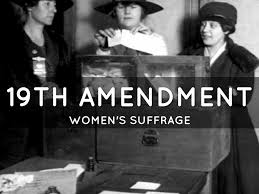
Which amendment guarantees women the right to vote?
a)
1st Amendment
b)
4th Amendment
c)
19th Amendment
d)
12th Amendment
149.

What event changed the role of the US and led to us declaring war and sending troops into battle?

a)

attack on Pearl Harbor

b)

Lend-Lease Act

c)

Operation Torch

150.

Which WWII leader became President after FDR passed, wanted to save American lives in the Pacific, and decided to drop the atomic bombs?

a)

Franklin D. Roosevelt

b)

Winston Churchill

c)

Harry S. Truman

d)

Joseph Stalin

151.
Why were posters like this produced during World War II? 
a)
A. to encourage women to join community defense organizations in case of invasion 
b)
B. to encourage women to work in defense industries in order to support the war effort 
c)
C. to encourage women to serve in government and replace men drafted into the military 
d)
D. to encourage women to join the military and support their country by fighting overseas
152.
To make sure troops had everything they need, Americans were forced to ______________
a)
ration
b)
give everything they had to troops
c)
have less children
153.
The need for workers in the Southwest led to the ____________ Program that allowed the recruitment of Mexicans to work in the U.S. during World War II.
a)
Bracero
b)
Navajo
c)
Barrio
d)
None of these are correct
154.

Who were the Tuskegee Airmen

a)

African-American military pilots

b)

Navy seals

c)

Brave foot soldiers

d)

Silent and Sneaky snipers

155.

The Great Migration refers to

a)

The movement of African Americans from the south to the north

b)

The movement of African Americans from the north to the south

c)

The spread of African culture after slavery ended

d)

The advocacy of political union of all the indigenous inhabitants of Africa

156.
The Zoot Suit Riots were an eruption of tension that led to 5 days of rioting between which groups...
a)
African-Americans and US Army Soldiers
b)
Mexican-American youth and White Servicemen 
c)
Japanese-Americans and White Servicemen
d)
Multiracial Street Gangs and White Servicemen
157.

Who was Langston Hughes?

a)

famous African American author and poet

b)

famous African American musician

c)

famous African American artist

158.

How did the Harlem Renaissance influence the world? Click all that apply

a)

it only had an impact on the immediate area of New York

b)

it spread from the area of Harlem to other parts of the nation

c)

it not only influenced African Americans, but other cultures as well

159.

The court case that ended segregation in public schools

a)

Brown v. Board

b)

Plessy v. Ferguson

c)

Miranda v. Arizona

d)

Engel v. Vitale

e)

Tinker v. DesMoines

160.

LBJ's plan for increased domestic spending on anti-poverty & anti-racism programs

a)

New Deal

b)

New Frontier

c)

Great Society

d)

Welfare for All

e)

Southern Strategy

161.

Truman wanted to intervene in ________ to avoid what happened in China in 1949.

a)

Vietnam

b)

Korea

c)

Greece

d)

Turkey

162.

Which of the following did NOT grow during the 1950s?

a)

Middle Class

b)

Opposition to the Vietnam War

c)

Suburbs

d)

Nuclear Arsenal

e)

Counterculture

163.

Which of the following was NOT a factor in the rise of conservatism before 1980?

a)

Backlash against the counterculture

b)

Backlash against the Civil Rights Movement

c)

Backlash against the Rights Revolution

d)

Backlash against the hawks of the Vietnam era

164.

The overall strategy of the US during the Cold War

a)

Truman Doctrine

b)

Containment

c)

Marshall Plan

d)

Domino Theory

165.

Which mid-20th-century phenomenon helps to explain Vietnam?

a)

Civil Rights Movement

b)

Decolonization

c)

Space Race

d)

Liberalism

166.

Which of the following is NOT true of McCarthyism?

a)

It was a search for Communist infiltrators in the State Department

b)

It mirrored the First Red Scare of the 1920s.

c)

It resulted in the downfall of its namesake Senator.

d)

It prolonged the simultaneous war in Korea.

167.

What organization was formed to pursue world peace in 1945?

a)

United Nations

b)

NATO

c)

Warsaw Pact

d)

League of Nations

168.

What effect did the Pentagon Papers have on society?

a)

It increased the Credibility Gap

b)

It exposed government corruption

c)

It increased the pressure on Nixon to resign

d)

It created the public know about government plans

169.

Which of the following lead to Carter's downfall as a president?

a)

Stagflation

b)

Watergate

c)

Iran-Contra

d)

Bay of Pigs

170.

Nixon's policy of relaxing tensions with the USSR

a)

Detenté

b)

Containment

c)

Domino Theory

d)

Brinksmanship

171.

Which of the following is NOT associated with the extension of the civil rights movement?

a)

Silent Majority

b)

Stonewall Riots

c)

AIM

d)

Cesar Chavez

172.

Racism hurt the US during the Cold War because...

a)

the US needed African allies against the USSR

b)

the Soviets resented our racism towards them

c)

the US needed African American votes to pass bills

d)

astronauts refused to fly with Blacks

173.

The Civil Rights process of registering black voters in Mississippi in 1964.

a)

Freedom Summer

b)

Freedom Rides

c)

Sit-Ins

d)

March on Selma

174.

This Civil Rights Legislation outlawed Housing Segregation

a)

Civil Rights Act of 1964

b)

Civil Rights Act of 1968

c)

Civil Rights Act of 1965

d)

Civil Rights Act of 1967

175.

Which President faced two separate assassination attempts?

a)

Gerald Ford

b)

Ronald Reagan

c)

Barack Obama

d)

George W. Bush

176.

Which President negotiated a peace between Egypt and Israel at Camp David?

a)

George W. Bush

b)

George H. W. Bush

c)

Jimmy Carter

d)

Barack Obama

177.

Who was the first woman to be nominated to the Supreme Court?

a)

Nancy Pelosi

b)

Hillary Clinton

c)

Sandra Day O'Connor

d)

Ruth Bader Ginsberg

178.

President Reagan asked who to "Tear Down this Wall!"

a)

Mikhail Gorbachav

b)

Josef Stalin

c)

Nikita Kruschchev

d)

Vladimir Putin

179.

Reagan's SDI program was nicknamed for which popular film of the era?

a)

Back to the Future

b)

Star Wars

c)

E.T.

d)

Jaws

180.

During whose Administration do we get involved in the Persian Gulf War?

a)

Bill Clinton

b)

George H. W. Bush

c)

Jimmy Carter

d)

Gerald Ford

181.

The Cold War between the United States and the Soviet Union officially ends during the administration of whom?

a)

Bill Clinton

b)

George H. W. Bush

c)

Ronald Reagan

d)

Barack Obama

182.

Don't Ask to Don't Tell (DADA) discouraged which minority group from enlisting in the military?

a)

African Americans

b)

Latinos

c)

Japanese

d)

LGBT

183.

Who did Bill Clinton choose to lead a task force on his government sponsored health care initiative?

a)

Newt Gingrich

b)

Al Gore

c)

Ken Starr

d)

Hillary Clinton

184.

Which First Lady wanted you to "Just Say No" to drugs?

a)

Michelle Obama

b)

Nancy Reagan

c)

Barbara Bush

d)

Hillary Clinton

185.

Who was our nation's first female secretary of state?

a)

Nancy Pelosi

b)

Hillary Clinton

c)

Condaleeza Rice

d)

Madeline Albright

186.

Only two presidents have ever been impeached: Andrew Johnson and _____?

a)

Barack Obama

b)

Ronald Reagan

c)

Richard Nixon

d)

Bill Clinton

187.

The terror attack on September 11, 2001 were perpetrated by which terrorist organization?

a)

ISIS

b)

KKK

c)

Al Qaeda

d)

Black Panther Party

188.

The Bush (Jr.) Administration brought down which terrorist leader/dictator?

a)

Osama bin Laden

b)

Saddam Hussein

c)

Assad

d)

Josef Stalin

189.

Who became the first (and as of right now the only) female Speaker of the House?

a)

Sonya Sotomayor

b)

Nancy Pelosi

c)

Sandra Day O'Conner

d)

Condaleeza Rice

190.

During the Administration of George W. Bush, the U.S. entered military engagements in which countries?

a)

Afghanistan

b)

Iraq

c)

Syria

d)

Egypt

191.

During whose administration did the United States suffer the greatest economic disaster since the Great Depression of 1929-1942?

a)

Bill Clinton

b)

Gerald Ford

c)

George W. Bush

d)

Barack Obama

192.

Barack Obama's use of the internet/social media emulate what?

a)

FDR's "Fireside Chats"

b)

Kennedy-Nixon Debates

c)

Eisenhower's Farewell Address

d)

Nixon's Resignation

193.

This famous picture most likely to depicts which event?

a)

Obama's Cabinet reacting to the murder of Osama bin Laden

b)

Obama's cabinet reacting to the attack on 9/11

c)

Obama's cabinet reacting to Donald Trump becoming president

d)

Obama's cabinet reacting to the murder of Saddam Hussein

194.

President Obama opened up diplomatic ties with Cuba for the first time since

a)

the Eisenhower Administration

b)

the Kennedy Administration

c)

the Truman Administration

d)

the Nixon Administration

195.

Which Supreme Court case legalized same sex marriage throughout the 50 states?

a)

Roe v. Wade

b)

Brown v. Board of Education

c)

Obergefell v. Hodges

d)

Town of Skokie v. USA
