wayground logo

Free Printable Worksheets

NEW

Font size

S
M
L
XL
Worksheets

Watershed Review

Total questions: 40

Worksheet time: 3hrs 16mins

Name
Class
Date
1.
The water that fills lakes and rivers
a)
groundwater
b)
surface water
c)
water table
d)
saturated zone
2.
What is a watershed?
a)
Land that collects and channels water froma small body of water to a larger body of water
b)
the shape of the land determined by elevation
c)
A natural stream of water of considerable  volume
d)
a river and all its tributaries
3.
An area of permeable layer of rock or soil that holds a large amount of water in the saturated zone is called what?
a)
Aquifer
b)
Spring
c)
Well
d)
Reservoir
4.
Water stored  in cracks and pores below the Earth's surface is called:
a)
Groundwater
b)
Bogs
c)
Water in the ground
d)
surface water
5.
A divide is 
a)
well in which water rises because of pressure
b)
Forms the boundaries of a watershed
c)
type of hot spring from which the water periodically erupts
d)
place where groundwater bubbles or flows out of cracks in the rock
6.
What is the top of the water-filled spaces  (saturated zone) in the ground called?
a)
Groundwater
b)
Reservoir
c)
Water Table
d)
Well
7.
Water from precipitation soaks down through permeable rock and soil layers.  These layers contain air as well as water, so they are NOT filled, with water.  This top layer is the 
a)
unsaturated zone
b)
saturated zone
8.
Sand is ___________, meaning that water can pass through easily.
a)
Permeable
b)
Impermeable
c)
Solid
d)
Soft
9.
Pollution has ___________
a)
a negative human impact
b)
positive human impact
c)
humans have no impact 
10.
Water from precipitation soaks down through permeable rock and soil layers.  These layers contain water.  This bottom layer is the 
a)
unsaturated zone
b)
saturated zone
c)
in the zone, auto zone
11.
What is the movement of soil from one place to another?
a)
weathering
b)
deposition
c)
discharge
d)
erosion
12.
What causes a valley like the grand canyon to form?
a)
earthquake
b)
running water
c)
landslide
d)
erosion by wind
13.
What force is responsible for erosion and deposition in landslides?
a)
gravity
b)
ice
c)
wind
d)
temperature
14.
Rain washing away soil from a hillside is an example of
a)
Weathering
b)
Erosion
c)
Deposition
15.
Your teacher filled a box with sand. She put a fan at one end and turned the fan on. The sand was blown to the opposite side of the box and collected at that side. What 2 processes was the teacher demonstrating?
a)
Weathering and erosion
b)
Weathering and deposition
c)
Erosion and deposition
d)
Chemical and mechanical weathering
16.
Glaciers shape and carve away the land beneath them and can drastically reshape the landscape over hundreds or even thousands of years.
a)
True
b)
False
17.
Weathering and erosion are the same thing.
a)
True
b)
False
18.
What is sediment?
a)
the process of rocks being broken down and carried away
b)
bits of rock, sand, and silt caused by the weathering of rocks
c)
the top layer of the soil
d)
decaying plant or animal material 
19.
Which of these is an example of erosion
a)
Trees roots breaking a rock
b)
Rain breaking down rock 
c)
Wind blowing away sediment
d)
All of the above
20.
What happens when weathering and erosion work together?
a)
New Mountains are created
b)
The climate changes overnight
c)
Metal objects become rusty
d)
They change the Earth's surface
21.
What is the correct order of the processes?
a)
they all happen at the same time
b)
erosion, weathering, deposition
c)
weathering, erosion, deposition
d)
weathering, deposition, erosion
22.
How does vegetation (plants) in the soil affect the rate of erosion?
a)
It doesn't affect erosion.
b)
It decreases erosion.
c)
It increases erosion.
23.
What is an enormous mass of ice moving over land?
a)
Ice wedging
b)
Glacier
c)
Iceberg
d)
Dune
24.
Which option best tells the rate at which glacial erosion takes place?
a)
Slow
b)
Quick
25.
What causes the greatest erosion effect on our beaches?
a)
Waves
b)
Gravity
c)
Glaciers
d)
Wind
26.
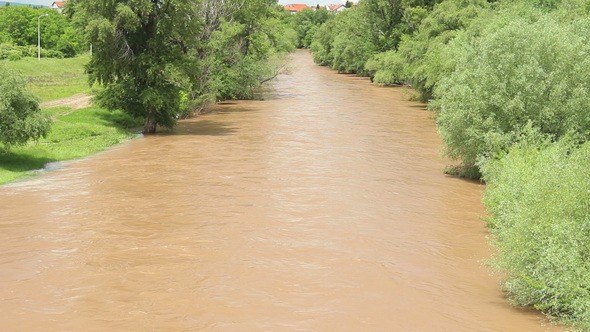
Muddy water being carried away by a fast-moving river is an example of
a)
Weathering
b)
Erosion
c)
Deposition 
d)
A nice place to swim
27.

Where are rivers located?

a)

In the highest part of an area

b)

Under landforms

c)

Flat land

d)

At the lowest parts of a landscape

28.

Which way does running water always flow?

a)

Uphill

b)

To the north

c)

Downhill

d)

Down towards the center of earth

29.
process that breaks up rocks 
a)
landforms
b)
erosion
c)
weathering 
d)
thunder 
30.
Land that supplies water to a river system.
a)
wetlands
b)
watershed
c)
estuary
d)
river system
31.
Areas of higher elevations that separate watersheds.  Mountains and ridges are examples.
a)
wetlands
b)
estuary
c)
divides
d)
watershed
32.
Nonliving factors in an ecosystem
a)
biotic
b)
abiotic
c)

estuary

d)
wetlands
33.
temperature, water, rocks, soil, geology, weather are all ___ factors in an ecosystem.
a)
abiotic
b)
biotic
c)
estuary
d)
wetlands
34.
The smaller streams and rivers that feed into the larger river.
a)
tributaries
b)
estuary
c)
wetlands
d)
river system
35.
How healthy the water is.
a)
water quantity
b)
water quality
c)
good water
d)
tasty water
36.

Which is an example of point-source pollution?

a)

Too much fertilizer in a yard

b)

A factory spilling chemical waste into a river

c)

Oil coming out of a car

d)

Trash piling up in the storm drains

37.

What is another word for tributary?

a)

Large river

b)

River mouth

c)

Stream

d)

Pond

38.

What does it mean when a rock is "permeable?"

a)

It is solid

b)

It is broken

c)

There are small holes that let water flow through

d)

There are small holes but nothing can get through

39.

What are the slight turns of a river called?

a)

Curves

b)

Meanders

c)

Ridges

d)

All rivers are straight

40.

Love First

a)

Shares Glide

b)

Bear Pride

c)

Pears Died

d)

Glares Flied