
 Worksheets
Moon Phases
Total questions: 36
Worksheet time: 20mins
Name
Class
Date
1.
What causes the moon's phases
a)
Where you are standing on Earth
b)
the amt of sunlight reflected onto the moon from the sun
c)
The tilt of Earth
d)
how fast the moon is moving
2.
Define Waxing
a)
Moon is increasing and light part appears to be growing
b)
Completely illuminated
c)
dark side is facing earth
d)
Moon is decreasing and light part appears to be shrinking
3.
Define Gibbous (a)
Choose from the below words
Less than half of moon visible
More than half of moon visible
All of moon visible
None of moon visible
4.
Define Full Moon
a)
None of moon is visible
b)
Half moon phase is visible
c)
Complete moon face is visible
d)
Less Than half of moon is visible
5.
Define New Moon
a)
None of moon is visible from Earth
b)
All of moon visible from Earth
c)
Moon is 1/2 visible from Earth
d)
Moon is more than Half Visible from Earth
6.
Define Quarter Moon
a)
None of moon visible
b)
Less than Half the moon is visible
c)
More than half of moon is visible
d)
Half of the moon is visible
7.

Name this moon phase
a)
Waxing Gibbous
b)
Waxing Crescent
c)
Waning Crescent
d)
Waning Gibbous
8.

Name this moon phase
a)
Waning Crescent
b)
Waxing Crescent
c)
Waning Gibbous
d)
Waxing Gibbous
9.
The phase of the moon that occurs between the sun and Earth
a)
Full moon
b)
Waxing crescent
c)
Waning Crescent
d)
New Moon
10.
In which moon phase, can the moon not be seen at all?
a)
Waning crescent
b)
Full moon
c)
Waxing gibbous
d)
New moon
11.
What is the correct order of the moon phases?
a)
new, full, 1st quarter, 3rd quarter
b)
new moon, 1st quarter, full moon, 3rd quarter
c)
1st quarter, 3rd quarter, new moon, full moon
d)
new, 1st quarter, 3rd quarter, full
12.
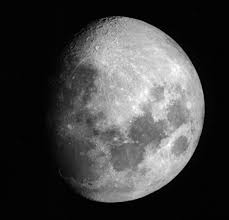
Name this moon phase
a)
waning crescent
b)
waxing crescent
c)
waning gibbous
d)
waxing gibbous
13.
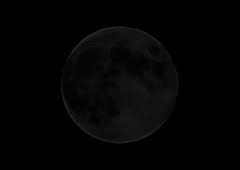
Name this moon phase
a)
First Quarter
b)
Last Quarter
c)
New Moon
d)
Full Moon
14.
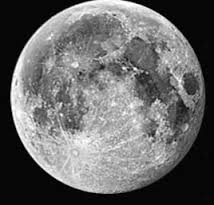
Name this moon phase
a)
First Quarter
b)
Last Quarter
c)
New Moon
d)
Full Moon
15.
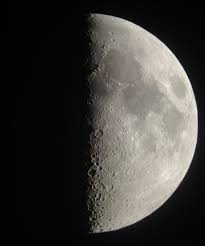
Name this moon phase
a)
First Quarter
b)
Last Quarter
c)
New Moon
d)
Full Moon
16.
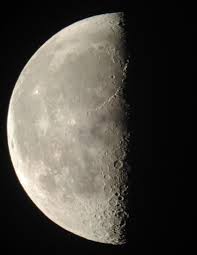
Name this moon phase
a)
First Quarter
b)
Last Quarter
c)
New Moon
d)
Full Moon
17.

What are the reasons for the season?
a)
Earth's tilt & rotation
b)
Earth's tilt & revolution
c)
Earth's rotation & revolution
d)
Earth's tilt & resolution
18.
CHALLENGE
When the moon is lined up exactly between the sun and Earth, it is called a ______ ______.
When the moon is lined up exactly between the sun and Earth, it is called a ______ ______.
a)
Solar Eclipse
b)
Lunar Eclipse
19.
The moon ____________ around the Earth.
a)
orbits
b)
rotates
c)
up
d)
down
20.
The cycle of the moon lasts about a _.
a)
day
b)
year
c)
week
d)
month
21.
How many phases does the moon go through?
a)
4
b)
8
c)
10
d)
16
22.

What is the missing phase?
a)
b)
c)
d)
23.

What is the missing phase?
a)
b)
c)
d)
24.

_______are daily changes in ocean water.
a)
Waters
b)
Tides
c)
Colors
d)
Earths
25.

As the _____ revolves around the Earth and Earth rotates, the tidal bulge moves around the Earth.
a)
sun
b)
ocean
c)
Earth
d)
moon
26.

The tidal bulge follows the movement of the _____.
a)
moon
b)
sun
c)
Earth
d)
ocean
27.

_____ Tides occur when the Sun, the Earth, and the Moon are in a __________ line.
a)
Spring, straight
b)
Neap, straight
c)
High, zigzag
d)
Low, zigzag
28.

_____ ______ occur when the Sun, the Earth, and the Moon are in a ______ degree angle.
a)
Spring tides. 90°
b)
Neap tides, 90°
c)
High tides, 90°
d)
Low tides, 90°
29.

What type of tide does this represent?
a)
Neap
b)
Full
c)
Quarter
d)
Spring
30.

What type of tide does this represent?
a)
Spring
b)
low
c)
Neap
d)
high
31.
A solar eclipse only happens during a ________ moon.
a)
New
b)
Cresent
c)
Gibbous
d)
Full
32.
A lunar eclipse only happens during a ________ moon.
a)
New
b)
Cresent
c)
Gibbous
d)
Full
33.
What do we call the sun's outer atmosphere that you see during a solar eclipse?
a)
an umbra
b)
a corona
c)
an orbit
d)
a shadow
34.
What is the darkest inner part of the shadow cone called, where a total eclipse can be viewed.
a)
Total
b)
Umbra
c)
Penumbra
35.
What is the larger outer lighter part of the shadow cone called, where a partial eclipse can be viewed?
a)
Partial
b)
Umbra
c)
Penumbra
36.
In order to have an eclipse, the Moon, Sun and Earth have to be?
a)
Below each other
b)
Above each other
c)
In alignment
100 %

