wayground logo

Free Printable Worksheets

Font size

S
M
L
XL
Worksheets

Invasion of the Body Snatchers (Human body systems, homeostasis, Science 7 review)

Total questions: 16

Worksheet time: 3hrs 7mins
Name
Class
Date
1.
Which structure is a 'trapdoor' that prevents food from entering the trachea?
a)
epiglottis
b)
esophagus
c)
pharynx
d)
appendix
2.
Which of the following is NOT an example of CHEMICAL digestion?
a)
chewing your food into small pieces 
b)
stomach acid dissolving food
c)
bile breaking down fats in the small intestine
d)
salvia changing starch into sugar in your mouth
3.
What is the organ where water is absorbed from the digested food and returned to the bloodstream?
a)
mouth
b)
small intestine 
c)
esophagus
d)
large intestine
4.
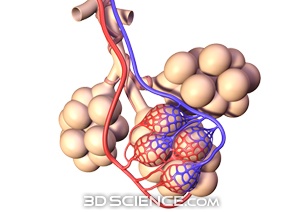
The air sacs that are covered with capillaries where gas exchange takes place
a)
bronchi
b)
lungs
c)
oxygen
d)
alveoli
5.
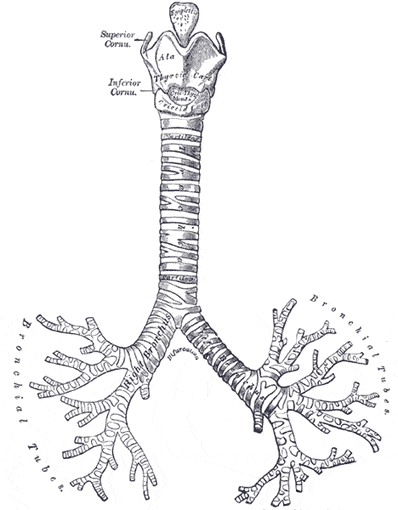
The two main branches from the trachea (one to each lung)
a)
bronchi
b)
alveoli
c)
capillaries
d)
bronchioles
6.
The circulatory system works with the __________ system to obtain energy from nutrients that we eat. 
a)
respiratory 
b)
digestive
c)
skeletal
d)
nervous
7.

The job of the red blood cell is to

a)

fight infection

b)

deliver oxygen and discard carbon dioxide

c)

form scabs

8.
The tube that carries urine from the kidney into the bladder is called the:
a)
Ureter
b)
Urethra
c)
Proximal Tubule
d)
Collecting Duct
9.
What is the main function of the excretory system?
a)
to collect and remove wastes from the body
b)
to strengthen skeletal muscles
c)
to protect the nervous system
d)
to bring oxygen to body cells
10.
Tiny filtering structures where urine is produced in the kidneys are called
a)
ureters.
b)
alveoli.
c)
nephrons.
d)
bronchi.
11.
Where does fertilization usually occur?
a)
ovary
b)
uterus
c)
vagina
d)
fallopian tube
12.

According to Newton’s third law of motion, when a hammer strikes and exerts force on a nail, the nail

a)

creates a friction with the hammer.

b)

disappears into the wood.

c)

exerts an equal and opposite force on the hammer.

d)

moves at a constant speed.

13.

To find average speed of an object, you must know...

a)

Distance & Time

b)

Distance & Velocity

c)

Time & Speed

d)

Distance & Acceleration

14.

Which of the following is NOT an example of acceleration?

a)

A truck slowing down for a stop sign

b)

A motorcycle turning a corner at a consistent speed

c)

A truck driving straight and using cruise control

d)

A plane taking flight

15.
The force of __________________ is a type of friction that works against the motion of falling objects.
a)
Terminal Velocity
b)
Gravity
c)
Free Fall
d)
Air Resistance
16.

The greater the mass of an object,

a)

the easier the object starts moving.

b)

the greater its inertia.

c)

the more balanced it is.

d)

the more space it takes up.