
 Worksheets
Energy in Ecosystems (chains, webs, and pyramids)
Total questions: 20
Worksheet time: 22mins

This diagram shows a linear relationship of energy flow within an ecosystem and is commonly known as a(n)...
Food Web
Food Chain
Abiotic Factors
Food Pyramid

Which of these organisms would receive energy from the toad?
Plant
the Insects
Snake
Hawk
The direction of the flow of energy in a food web or food chain is represented by ______________.
asterisks
dotted lines
arrows
bubbles

Which of these is an example of an autotroph?
Grass
Toad
Snake
Hawk
In food chains and food webs, the trophic level where one finds any heterotroph contains this word.
heterotroph
consumer
producer
autotroph


Bacteria, fungi, and earthworms are examples of:
scavengers
predators
prey
decomposers
A food web consists of?
Many overlapping food chains in an ecosystem.
A diagram that shows relationships between decomposers and scavengers only.
A diagram that shows relationships between producers only.
A linear relationship with a single organism at each trophic level.
When we were young, we were taught that autotrophs "made their own food." But that isn't precisely accurate. In reality, autotrophs are the only organisms that are able to....
...convert inorganic compounds into organic compounds
...convert organic compounds into inorganic compounds.
...cannibalize one another.
...release energy to the atmosphere.

This diagram shows a a number of pathways of energy flow rather than a single, linear pathway. This type of representation is commonly known as a(n)
Food Web
Food Chain
Abiotic Factors
Food Pyramid

In food chains and food webs, the trophic level where one finds any autotroph contains this word.
heterotroph
consumer
producer
autotroph
Decomposers are organisms that eat dead and decaying matter. Another word that describes this type of consumer is...
omnivores
piscivores
herbivores
detrivores

In the energy pyramid here, which organisms have the most energy available to them?
Producers
Carnivores
Herbivores
Top Predator

If there is 1000 Kcal available in the producers in trophic level 1, approximately how much energy is available in the herbivores in trophic level 2?
10 Kcal
1 Kcal
100 Kcal
1000 Kcal

This diagram represents the amount of energy that moves from one trophic level to another in an ecosystem.
Food Pyramid
Food Web
Food Community
Food Chain

Which organism has the least amount of energy available to it from the producer in this diagram?
Owl
Grasshopper
Lilypad
Mouse

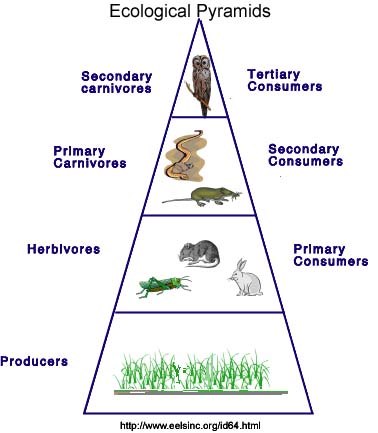
The largest group of organisms found in any ecosystem is the one whose trophic level is....
Primary Consumer
Producers
Decomposers
Secondary Consumers
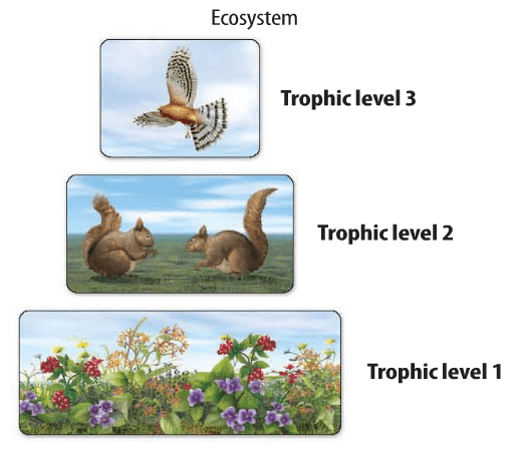
Position that an organism occupies in a food chain, web or pyramid (based upon the source of its energy) is known as its
biomass
autotroph
trophic level
biodiversity

