
 Worksheets
Chap. 7 (Cells) Final Exam Review
Total questions: 54
Worksheet time: 31mins

The basic structural and functional unit of all living organisms.
Cells
Organelles
Skeleton
Eukaryotes

Which organelle is only in PLANT cells?
Cell Membrane
Mitochondrion
Nucleus
Chloroplast

This scientist is known for discovering the nucleus in plant cells.
Robert Brown
Robert Frost
Charlie Brown
Charles Dickens

The "brain" of the cell that controls the cell function is called the
Nucleus
Vacuole
Mitochondria
Cytoplasm

Cells with a nucleus and membrane-bound organelles are called ____________________.
prokaryotes
eukaryotes
bacteria
protists
Which of the following is NOT part of the cell theory?
cells must contain DNA
all living things are made from cells
cells can only come from other cells
cells are the basic unit of life

He discovered that all plants are made of cells:
Anton van Leeuwenhoek
Theordor Schwann
Robert Hooke
Mattias Schleiden

Who was the first person to see cells under the microscope and give them their name?
Mattias Schleiden
Robert Hooke
Theordor Schwann
Anton van Leeuwenhoek

Which of the following scientists was the first to observe bacteria under a microscope?
Anton van Leuwenhoek
Matthais Schleiden
Robert Hooke
Theodor Schwann
Prokaryotic cells include bacteria.
True
False
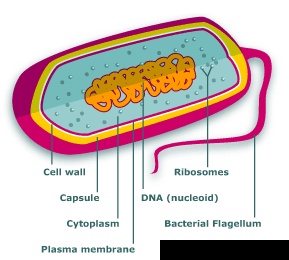
Which type of cell?
Prokaryote
Eukaryote
Has membrane bound organelles
Prokaryote
Eukaryote
both
The diffusion of WATER across a semi-permeable membrane is
osmosis
diffusion
endocytosis
exocytosis
What is diffusion
active transport
passive transport
cell division
cell mutation
Active transport requires
energy
the nucleus
chloroplasts
lysosomes
What organelle PRODUCES proteins?
ribosomes
centrioles
lysosomes
nucleus
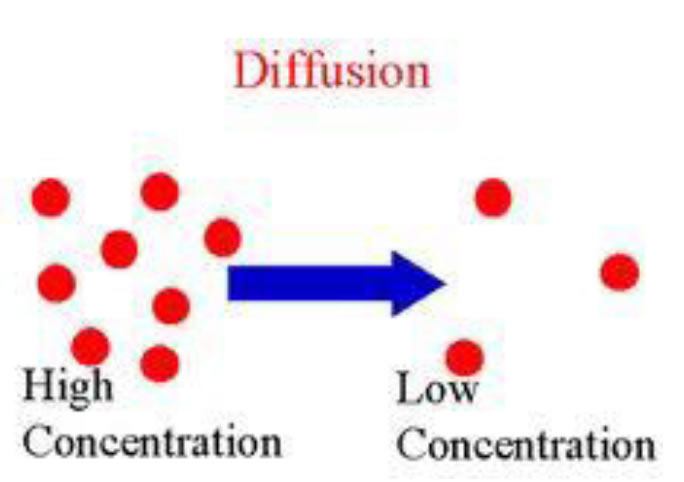
Movement of particles from high to low concentration.
Passive Transport
Active Transport
Exocytosis
Passive Transport
Active Transport
Solutes move against the concentration gradient, therefore energy is needed.
Passive Transport
Active Transport
Gives the cell a rigid, box-like shape; outside of the cell membrane; in plants.
cytoplasm
chromatin
cell wall
cell membrane

I am a protein packaging and shipping machine! Who am I?
vacuole
ribosome
endoplasmic reticulum
golgi apparatus

What is this?
mitochondria
lysosomes
chloroplast
endoplasmic reticulum

Which statement about cells is TRUE?
They are only in plants
They are only in animals
They are in all living things
They are really large
What is it called when molecules move across the cell membrane from an area of high concentration to an area of low concentration through a carrier protein?
Diffusion
Osmosis
Active Transport
Facilitated Diffusion
When molecules are spread evenly across the cell membrane, ______________________ is reached.
difference
transportation
equilibrium
solution
A cell will _____________________ in a hypertonic solution.
swell
shrink
will not change
will explode
A cell will __________________ in a hypotonic solution.
swell and perhaps burst (lyse)
shrink
the size of the cell will not change
the size of the cell will change from large to small and from small to large
Which part of the cell is considered to be "selectively permeable" because it allows certain things to enter or leave the cell?
Cell Membrane
Nucleus
Lysosome
Cytoplasm
Which organelle does photosynthesis take place?
Mitochondria
Nucleus
Cell Membrane
Chloroplast
Which organelle gets rid of worn-out cell parts?
Lysosomes
Vesicles
Cell Membrane
Nucleus
The nucleus is only found in the animal cell
True
False
Ribosomes are only in plant cells
True
False
The cell wall is found only in plant cells
True
False
An organism made of one cell is called
unicellular organism
multicellular organism

Name structure #1.
(Click on the picture to enlarge.)
Nucleolus
Nucleus
Endoplasmic Reticulum
Golgi Body
Name structure #5.
(Click on the picture to enlarge.)
ER
nucleus
vesicle
cytoplasm

Name structure #6.
(Click on the picture to enlarge.)
rough ER
Golgi body
Smooth ER
cytoplasm

What is the structure labeled #5?
(Click on the picture to enlarge.)
Vacuole
Chloroplast
Mitochondria
Lysosome

What is the structure labeled #9?
(Click on the picture to enlarge.)
Cell Wall
Cytoplasm
Chloroplast
Mitochondria

What is the structure labeled #8?
(Click on the picture to enlarge.)
Vacuole
Golgi body
Nucleus
Lysosome

What is the structure labeled #1?
(Click on the picture to enlarge.)
Nucleus
Ribosome
Cell Membrane
Cytoplasm
What is the structure labeled #4?
(Click on the picture to enlarge.)
Vacuole
Cell wall
Cytoplasm
Cell membrane

What is the structure labeled #2?
(Click on the picture to enlarge.)
Lysosome
Vesicle
Ribosome
Mitochondria

What is the structure labeled #10?
(Click on the picture to enlarge.)
Cell membrane
Cell wall
Cytoplasm
Centriole
Which of the following is NOT part of the Cell Theory?
All living things are made up of 1 or more cells
All cells come from pre-existing cells
Cells are basic unit of structure for living things
All cells have a nucleus
All existing cells are produced by other
living cells
dead cells
atom cells
animal cells
What is the primary function of the cell membrane?
To produce proteins
To control the movement of substances in and out of the cell
To store genetic information
To provide structural support

This type of cell transport moves charged molecules (ions) and large molecules across the plasma membrane using channel proteins. This is a type of passive transport.


Euglena are unicelled organisms that live in pond water. They move around using a flagella and can perform photosynthesis when needed. They contain many organelles . What type of cells are they?
Animal Cell
Prokaryotic Cell
Eukaryotic Cell
Plant Cell

Prokaryotic cells are usually _______ and do not contain a ______
Multicellular, Nucleus
Unicellular, Nucleus

Bacteria is what kind of cell?
Eukaryotic
Prokaryotic


