wayground logo

Free Printable Worksheets

Font size

S
M
L
XL
Worksheets

STAAR review part two

Total questions: 129

Worksheet time: 2hrs 47mins

Name
Class
Date
1.
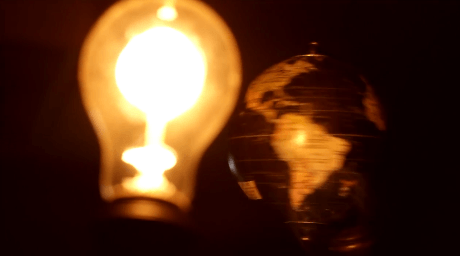
Look at the picture below.  Which part of the lamp system could be removed and the lamp still work?
a)
The lamp shade
b)
The electrical cord
c)
The light bulb
d)
The wall outlet
2.
Which object is the best conductor of electricity?
a)
A ceramic mug
b)
A plastic fork
c)
A penny
d)
A wooden craft stick
3.

What is energy?

a)

The ability to do work

b)

A force

c)

Electricity

d)

The ability to transform work

4.
The type of energy that allows us to hear is
a)
Mechanical
b)
Sound
c)
Light
d)
Electric
5.
What kind of energy?
a)
Thermal
b)
Electrical
c)
Mechanical
d)
Radiant
6.
The surroundings in which an organism lives 
a)
niche
b)
biotic
c)
ecosystem
d)
environment
7.
Living parts in the environment
a)
biotic
b)
abiotic
c)
community
8.
Nonliving parts in the environment 
a)
cooperation
b)
predation
c)
abiotic
d)
biotic
9.
Organisms of the same species living in the same environment together
a)
population
b)
community
c)
ecosystem
d)
environment
10.
Populations living in the same environment at the same time 
a)
population
b)
community
c)
biotic 
d)
niche
11.
Movement of water through earths ecosystems
a)
precpitation
b)
transpiration
c)
condensation
d)
water cycle
12.
a)
The dead plants sink to the bottom of the pond and get
buried by sediment for millions of years.
b)
The dead plants get buried for millions of years and form fossils that attract carbon.
c)
The dead plants sink to the bottom of the pond and are consumed by decomposers.
d)
The dead plants produce carbon that is consumed by fish, which form fossils.
13.
a)
Sedimentary rock is made of layers.
b)
Sedimentary rock is cemented bits of rock.
c)
Sedimentary rock is often limestone.
d)
Sedimentary rock is common in Texas.
14.
a)
Sand in the sediment melts and turns into rock.
b)
The weight of the water compacts the sediment into rock.
c)
Changing water temperatures turn sand in the sediment into rock.
d)
Pollution caused by humans turns the sediment into rock.
15.
Which type of soil is made up of very, very tiny grains of rock?
a)
humus
b)
sand 
c)
loam
d)
clay
16.
A fossil is
a)
the imprint or remains of something that lived long ago
b)
sedimentary rock formed from layers of sand and mud
c)
the soft part of the animal from long ago
17.
Weathering occurs when rock
a)
get wet in the rain or snow
b)
is worn away or broken down into smaller and smaller pieces.
c)
melts
18.
Renewable resources are
a)
resources that cannot be reused or replaced
b)
resources that will never run out
c)
resources that can be replaced to be used over and over again
d)
resources such as fossil fuels
19.
Sedimentary rock is Not formed by
a)
the constant layering of the sediments
b)
pressure on sediment layers
c)
compaction and cementation
d)
doing experiments
20.

How does a glacier change the Earth's surface?

a)

melting ice

b)

scraping sediments

c)

triggering landslides

d)

condensing water vapor

21.

Lakes and valleys can be formed by _____.

a)

deltas

b)

glaciers

c)

erosion of sand

d)

waves crashing

22.

____ of water is how much water soil holds in.

a)

Reversal

b)

Resolving

c)

Resorting

d)

Retention

23.

Nonrenewable resources ________.

a)

can be replaced easily.

b)

take millions of years to replace

c)

never run out

d)

don't need to be conserved

24.

The breaking down of rock is known as _____.

a)

erosion

b)

a landform

c)

weathering

d)

deposition

25.

Weathering, erosion, and deposition are caused by _____.

a)

wind

b)

water

c)

ice

d)

all of the above

26.

The creation of a delta is an example of _____.

a)

erosion

b)

a landform

c)

weathering

d)

deposition

27.

A sediment washing up on a beach is an example of ______.

a)

erosion

b)

a landform

c)

weathering

d)

deposition

28.

Which of the following is not an example of weathering?

a)

waves hitting rock on a cliff

b)

acid rain hitting rocks

c)

ice cracking rocks

d)

gravel moving across the parking lot during a rainstorm

29.
If you found a fossil like the one pictured, what prediction could you make about the area of land. At one time that area was...
a)
filled with fresh water.
b)
a dessert.
c)
a forest then turned into a swamp. 
d)
a tundra.
30.
Which of the following best explain how this canyon was formed?
a)
Floods eroded the sandstone away from the walls. 
b)
Glaciers eroded the canyon rock as it melted and moved
c)
Ice wedged into cracks in the rock and weathered the canyon walls 
d)
Wind blew rocks that crashed into the canyon walls 
31.

Deltas forming at the mouths of rivers

a)

Weathering

b)

Erosion

c)

Deposition

32.

What landform is created when wind creates a hill or mound of sand or sediment?

a)

mountain

b)

dune

c)

hill

d)

canyon

e)

delta

33.

What landform is formed where a river empties into a larger body of water and it is made of sand and sediment?

a)

mountain

b)

dune

c)

hill

d)

canyon

e)

delta

34.
Coal, oil and natural gas formed over millions of years are called
a)
rare
b)
fuel energy
c)
fossil fuels
d)
ancient fuels
35.
Which of the following is not a fossil fuel?
a)
natural gas
b)
electricity
c)
oil
d)
petroleum
36.
What is coal made of?
a)
decomposed animal and plant remains
b)
water
c)
electricity
d)
all of the above
37.
Light bounces when it is 
a)
reflected
b)
absorbed
c)
refracted
38.
Light bends when it is 
a)
refracted
b)
reflected
c)
absorbed
39.
prism
a)
reflection
b)
refraction
c)
absorption
40.
mirror
a)
absorbs
b)
reflects 
c)
refracts
41.
lenses
a)
reflect
b)
refract
c)
absorb
42.
This is an example of? 
a)
Absorb
b)
Reflect
c)
Refract
d)
Transmit
43.
wood is a _____?
a)
conductor
b)
insulator
44.
water is a______?
a)
conductor
b)
insulator
45.
Would would best complete this circuit?
a)
A wire
b)
A switch
c)
A battery
d)
A light bulb
46.
What part of the water cycle does this picture show?
a)
condensation
b)
precipitation
c)
evaporation
47.
What is the next stage after EVAPORATION in the water cycle?
a)
CONDENSTATION
b)
GROUNDWATER
48.

What is it called when WATER is FORMED from an LIQUID to a WATER VAPOR or an [GAS]?

a)

EVAPORATION

b)

PRECIPITATION

c)

TRANSPIRATION

49.
Levi is wanting to light a bulb.  What does he need to get the bulb to light?
a)
A battery and a paper clip
b)
A battery and a wire
c)
A paper clip and a wire
d)
A switch and a wire
50.
If you replace the paper clip with a plastic spoon, what happens?
a)
The bulb doesn't light
b)
The bulb is dimmer
c)
The wires get hot
d)
There is no change
51.
A series circuit has ____ path(s) that the electric current can take. 
a)
One
b)
Two 
c)
Three 
d)
Four
52.
In a parallel circuit, if one connection is broken, all of the connections stop working.
a)
True
b)
False
53.
Which of these objects is an insulator?
a)
Copper Wire
b)
Paper Clip
c)
Steel Pole
d)
Rubber Gloves
54.
Which statement is true?
a)
The light bulb will light up because the  circuit is complete.
b)
The light bulb will light up because the  circuit is broken.
c)
The light bulb will not light up because the  circuit is complete.
d)
The light bulb will not light up because the  circuit is broken.
55.
Would would best complete this circuit?
a)
A wire
b)
A switch
c)
A battery
d)
A light bulb
56.
What kind of circuit is this?
a)
series
b)
parallel
57.
An incomplete circuit is shown.
To complete the circuit, a wire should be placed from —
a)
Point D to Point C
b)
Point B to Point C
c)
Point A to Point D
d)
Point B to Point D
58.
Which bulbs will light?
a)
1 and 2
b)
2 and 3
c)
3 and 4
d)
4 and 2
59.
Choose the correct sentence.
a)
This circuit will work because it is an open circuit.
b)
This circuit will work because it is a closed circuit.
c)
This circuit will NOT work because it is an open circuit.
d)
This circuit will NOT work because it is a closed circuit.
60.
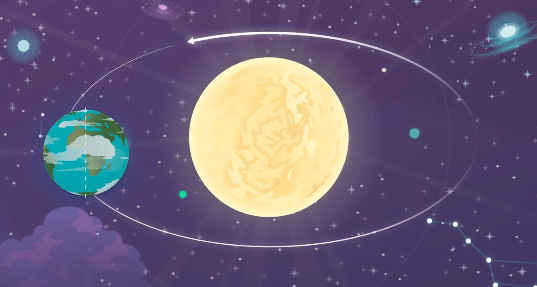
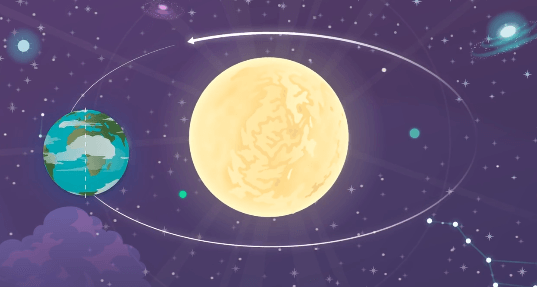
How long does it take for the Earth to make one full orbit around the Sun?
a)
one day
b)
one week
c)
one month
d)
one year
61.
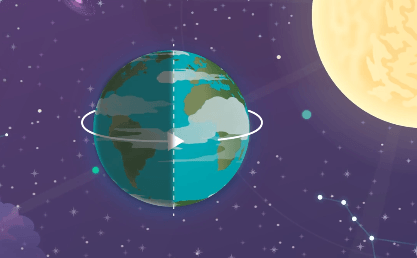
The Earth is rotating on its axis, creating _____
a)
the 12 months
b)
the years
c)
the seasons
d)
day and night
62.
As the Earth travels around the Sun, it creates a pattern that makes _____
a)
the months
b)
the years
c)
the seasons
d)
day and night
63.
When the Earth completes a full orbit around the Sun, it has completed _____ rotations or days
a)
7
b)
30
c)
91
d)
365
64.
What looks to be the motion of the Sun in the sky is really caused by the motion of _____
a)
the Earth
b)
the stars
c)
the planets
d)
the Earth's axis
65.
The spinning movement of the Earth about its axis is called the Earth's _____
a)
revolution
b)
rotation
c)
precession
d)
orbit
66.
The movement of the Earth around the Sun is called its _____
a)
revolution
b)
rotation
c)
precession
d)
gyration
67.
When the part of the world that you're living in is leaning towards the Sun, its _____
a)
winter
b)
spring
c)
summer
d)
fall
68.
When the part of the world that you're living in is leaning away from the Sun, its _____
a)
winter
b)
spring
c)
summer
d)
autumn
69.
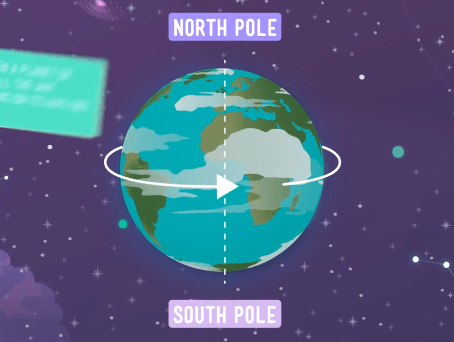
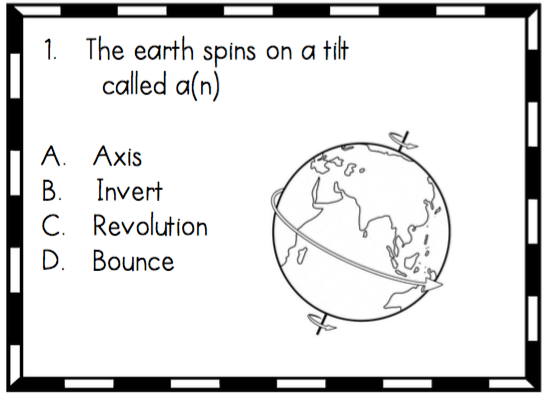
The invisible line that passes through the North Pole and the South Pole is called Earth's ____
a)
axis
b)
equator
c)
ecliptic
d)
prime meridian
70.
a)

A

b)

B

c)

C

d)

D

71.
What causes day and night?
a)
revolution of Earth
b)
rotation of Earth
c)
orbit of Earth
d)
The moon blocks the Sun
72.
How long does it take for Earth to rotate on its axis one time?
a)
24 hours
b)
24.25 hours
c)
365 days
d)
365.25 days
73.
Period of 24 hours or the time it takes Earth to make one complete spin on its axis
a)
Rotation
b)
Compass
c)
Sundail
d)
Movement
74.

Why is it colder in winter than in summer?

a)

The earth is tilted toward the sun.

b)

The earth is farther away from the sun.

c)

The earth is tilted away from the sun.

d)

The earth is closer to the sun.

75.

When does the sun create the longest shadows?

a)

Summer

b)

Winter

c)

Spring

d)

Fall

76.
Why do we experience the changing of the season on the earth?
a)
distance from the sun
b)
rotation of the earth
c)
change in solar output
d)
tilt of the earth's axix
77.

When the sun gets higher in the sky, shadows get ______.

a)

longer

b)

gone

c)

shorter

d)

darker

78.

When the sun gets lower in the sky, shadows get______.

a)

longer

b)

gone

c)

shorter

d)

darker

79.

Shadows are longest during _______.

a)

morning and evening

b)

noon

c)

night

80.

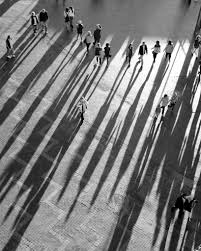
When was this picture most likely taken?

(Hint: think about the shadow's length)

a)

morning or evening

b)

night

c)

noon

d)

afternoon

81.

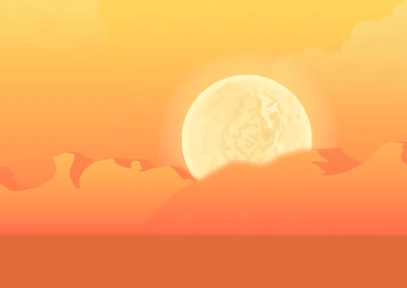
The sun appears to __________.

a)

rise in the east, set in the west

b)

rise in the west, set in the east

82.
Which planet is closest to the sun?
a)
Earth
b)
Venus
c)
Mercury
d)
Mars
83.
The order of the planets is:
a)
Mars,Venus,Earth,
Mercury,Saturn
Jupiter, Uranus, Neptune
b)
Earth,Venus,Mars
Jupiter, Neptune,
Mercury,Saturn,
Uranus
c)
Mercury,Venus,Earth
Mars,Jupiter,
Saturn,Uranus
Neptune
84.
Which planet is seventh from the sun?
a)
Saturn
b)
Earth
c)
Venus
d)
Uranus
85.
Which planet is fifth from the sun?
a)
Saturn
b)
Jupiter
c)
Mars
d)
Earth
86.
which planet is the third from the sun?
a)
Mercury 
b)
Neptune 
c)
Pluto 
d)
Earth 
87.
What force holds the planets in motion around the sun?
a)
Magnetic
b)
Electrical
c)
Gravitational
d)
Air Resistance
88.
What force ultimately slows the roller coaster to a stop?
a)
Applied
b)
Normal
c)
Friction
d)
Magnetic
89.
How does friction affect speed?
a)
more friction decreases speed
b)
more friction increases speed
c)
less friction decreases speed
90.
The rougher the surface, the faster an object will travel over the surface.
a)
True
b)
False
91.
When most objects with smooth surfaces rub, there is less friction.
a)
True
b)
False
92.
What does friction produce?
a)
light
b)
sound
c)
heat
d)
gravity
93.

Which of the following is NOT an example of friction?

a)

using the brakes on your bike to slow you down

b)

putting your hand out the window

c)

a satellite traveling through deep space

d)

a hockey puck going across an ice rink

94.
A puck slides along an icy surface. What makes it slow down?
a)
It runs out of push
b)
It rubs against the ice
c)
It runs out of electricity
95.
On which surface will a toy car travel the furthest?
a)
Carpet
b)
Polished Wood
c)
Ice
96.
What would likely be the result if a pesticide is used to reduce the # of harvester ants?
a)
an increase in snakes & a decrease in hawks
b)
a decrease in snakes & an increase in hawks
c)
a decrease in mesquite bushes & an icnrease in horned lizards
d)
an increase in mesquite bushes & a decrease in horned lizards
97.
Human-built dams across rivers have both positive & negative effects on the environment.  What effect does building dams have on environments downstream?
a)
a positive effect due to increasing the natural flow of nutrients
b)
a negative effect due to reducing populations of non-native species
c)
a negative effect due to increasing the populations of native species
d)
a negative effect due to decreasing the natural flow of nutrients
98.
An organism that is hunted for food
a)
Predator
b)
Gather
c)
Prey
d)
Hunter
99.
An organism that hunts its food
a)
Predator
b)
Prey
c)
Hunter
d)
Gather
100.
Organism's role within its community
a)
Job
b)
Niche
c)
Work
d)
Population
101.
The place where an organisms lives
a)
Home
b)
Habitat
c)
Community
d)
Population
102.
Eats plants (example: deer)
a)
Herbivore
b)
Carnivore
c)
Omnivore
d)
Decomposer
103.
Eats plants and animals (example: humans)
a)
Herbivore
b)
Carnivore
c)
Omnivore
d)
Decomposer
104.
Breaks down dead organisms (example: bacteria and fungi)
a)
Herbivore
b)
Carnivore
c)
Omnivore
d)
Decomposer
105.
Grasslands have a rainy and dry season.
a)
Weather
b)
Climate
106.
Determines the type of animals that can live there.
a)
Weather
b)
Climate
107.
The tropical rainforest has experienced 50 to 260 inches of rainfall annually for the last  few decades.
a)
Weather
b)
Climate
108.
Wind speed is changing as the Hurricane moves over land.
a)
Weather
b)
Climate
109.
We can expect rain on Tuesday.
a)
Weather
b)
Climate
110.
The North and South Poles are usually cold and dry.
a)
Weather
b)
Climate
111.
A body part of behavior that helps a living thing survive
a)
instinct
b)
physical adaptation
c)
hibernation
d)
migration
112.
The loss of a kind of living thing
a)
extinction
b)
hibernation
c)
migration
d)
instinct
113.
An adaptation that helps an animal hide from predators
a)
migration
b)
camouflage
c)
hibernation
d)
extinction
114.
Behavior an animal is born with
a)
migration
b)
instinct
c)
physical adaptation
d)
camouflage
115.
A monkey has a long tail to help it swing from branch to branch.
a)
Behavioral Adaptation
b)
Structural Adaptation
116.
A squid will squirt black ink at predators when frightened.
a)
Behavioral Adaptation
b)
Structural Adaptation
117.
Which feature of a rose helps it grow without being eaten by large animals?
a)
flowers with bright colors
b)
sharp thorns
c)
small seeds
d)
deep roots
118.
A giraffe has a long neck in order to better reach leaves to eat.  This is an example of _____. 
a)
an adaptation
b)
environment
c)
response
d)
stimulus
119.
How do adaptations help animals?
a)
To escape animals
b)
to hunt for food
c)
to survive in their habitats
d)
All of these are correct
120.
Plants with spines and waxy leaves are well suited for life in which environment?
a)
Desert
b)
Temperate forest
c)
Grassland
d)
Tropical Rainfroest
121.
Dandelions have light furry seeds that allow them to spread easily. 
a)
True
b)
False
122.
Traveling done by an animal to find food and water. 
Adaption: birds flying south for the winter
a)
Camouflage
b)
Migration
c)
Hibernation
d)
Locomotion
123.
The polar bear's white fur allows it to hide in the cold arctic. This adaptation is called________________.
a)
White on white
b)
Camouflage
c)
Color matching
d)
behavioral adaptation 
124.
What adaptation does this squirrel have that allows it to glide through the air?
a)
Extra skin under the arms and legs to capture air as it falls.
b)
Big ears to capture are as it falls
c)
Small eyes to see where it will land
d)
A short thin tail
125.
Some likenesses between parents and offspring are learned. Which of the following is a learned behavior in dogs?
a)
eating
b)
running
c)
barking
d)
shaking hands 
126.
Which is an example of a learned behavior?
a)
blinking
b)
riding a bike
c)
swallowing
d)
crying
127.
Is the following a learned behavior or inherited trait? 
Sally likes playing catch.
a)
inherited trait
b)
learned behavior
128.
Is the following a learned behavior or inherited trait? 
Jordan loves swimming
a)
inherited trait
b)
learned behavior
129.
Is the following a learned behavior or inherited trait? 
Cheetahs have a long tail.
a)
inherited trait
b)
learned behavior