

wayground logo

Free Printable Worksheets

Font size

S
M
L
XL
Worksheets

APUSH Period 7

Total questions: 85

Worksheet time: 5hrs 10mins

Name
Class
Date
1.
Theodore Roosevelt formed a group of soldiers during The Spanish American War and named them what? 
a)
The Rough Riders
b)
The Blue Angels
c)
The Green Berets
2.
What area is known as "Seward's Folly"?
a)
Hawaii
b)
Cuba
c)
Alaska
d)
Puerto Rico
3.
Roosevelt Corollary is also known as
a)
Big Stick Policy
b)
Dollar Diplomacy
c)
Rough Riders
d)
Monroe Doctrine
4.
What is the type of sensational reporting where writers exaggerated or even invented stories?
a)
muckraking
b)
yellow journalism
c)
journalism
d)
paparazzi
5.
Imperialism is __________.
a)
when a powerful nation uses its resources to help a weaker nation
b)
when a weaker nation invites a powerful nation to help it industrialize
c)
when a powerful nation takes control of the economy and government of a weaker nation
d)
when weak nations join together to fight a strong nation
6.
 Last monarch of Hawaii
a)
King Kamehameha I
b)
Queen Liliuokalani 
c)
King Kalakaua
d)
Queen Emma
7.
Exaggerated, “fake news” meant to sell papers. 
a)
Tabloid Press
b)
Hot Mess News
c)
Yellow Journalism
d)
Enquirers Delight
8.
U.S. becomes this after the Spanish-American War
a)
Annexed by Spain
b)
A monarchy
c)
A dictatorship
d)
An imperial/world power
9.
U.S. gains these territories after the Spanish-American War (Spain cedes them)
a)
Hawaii, Alaska, Cuba
b)
Cuba, Spain, Canary Islands
c)
Guam, Puerto Rico, the Phillipines
d)
Panama, Columbia, Guatemala 
10.
U.S. gains easier access to Pacific Ocean after building this.
a)
Hawaii
b)
Panama Canal
c)
Cuba
d)
Guam
11.
Policy that said all nations have equal access to China’s ports and trade.
a)
Dollar Diplomacy
b)
Open Door Policy
c)
Oriental Policy
d)
Roosevelt Corrolary/Big Stick Diplomacy
12.
 Policy that said the U.S. can intervene in Latin America any time.
a)
Dollar Diplomacy
b)
Open Door Policy
c)
Oriental Policy
d)
Roosevelt Corrolary/Big Stick Diplomacy
13.
Who was the leader of the Rough Riders during the Spanish-American War?
a)
Teddy Roosevelt
b)
William McKinley
c)
Franklin Roosevelt
d)
George Dewey
14.
Which country gained its independence from Spain at the end of the Spanish-American War?
a)
Puerto Rico
b)
Guam
c)
Philippines
d)
Cuba
15.
What does the policy "speak softly and carry a big stick" mean?
a)
always whisper when speaking to others
b)
use force to get what you want 
c)
discuss issues but use your "forces" if you need to
d)
it is important to talk out your problems
16.
The sinking of which American battleship pulled the U.S. into the Spanish-American War?
a)
USS Arizona
b)
USS Maine
c)
USS Alaska
d)
USS Virginia
17.
What is yellow journalism?
a)
exaggerated news reports of events happening around the world
b)
newspaper articles on yellow fever
c)
newspaper articles about 
d)
television reports about the president
18.
The right to intervene and exercise power over Latin American countries was part of the
a)
Declaration of Independence
b)
Roosevelt Corollary
c)
Bill of Rights
d)
Constitution of the United States
19.
What new territory did the United States acquire for $7.2 million from Russia?
a)
Alaska
b)
Hawaii
c)
Guam
d)
Philippines
20.
Why was Alaska called "Seward's folly"?
a)
Americans didn't own a territory so far north
b)
It was a frozen wasteland with no resources
c)
U.S. had already annexed Samoa, and didn't need another territory
d)
Thought two-cents an acre was too expensive
21.
The Roosevelt Corollary to the Monroe Doctrine did which of the following? 
a)
Prohibited United States intervention in the Caribbean. 
b)
Warned against European seizure of the Panama Canal.
c)
Declared the United States to be the “policeman” of the Western Hemisphere. 
d)
 Provided United States military support for democratic revolutions in Latin America.
22.
Which boat was sunk by the Germans?
a)
U.S. Maine
b)
Lusitania
c)
Titantic
d)
Princess
23.
Who was president of the United States during World War I?
a)
Abraham Lincoln
b)
Theodore Roosevelt
c)
Bill Clinton
d)
Woodrow Wilson
24.
This was a major innovation found in most homes by the end of the 20s.
a)
Radio
b)
Television
c)
Telephone
d)
Microwave.
25.
Prohibition created which one of the following?
a)
Reduction in crime.
b)
Reduction in alcohol related deaths
c)
Organized Crime.
d)
More money being made.
26.
Which decade saw the rise of the automobile, the red scare, and Scopes Trial?
a)
1910s
b)
1920s
c)
1930s
d)
1940s
27.
Which decade saw bank failures, the Dust Bowl, and the New Deal?
a)
1910s
b)
1920s
c)
1930s
d)
1940s
28.
Which New Deal program targeted the problem faced by bank failures?
a)
AAA
b)
FDIC
c)
Social Security
d)
SEC
29.

Muckraker Upton Sinclair wrote a book called The Jungle that...

a)

exposed the unclean/unsanitary processes of the meat-packing industry.

b)

told readers what the Amazon Jungle was really like,

c)

gave people a glimpse into what animals are like in the wild.

30.
• Became President after Herbert Hoover
• Pushed for many new programs called “The New Deal”
• President during World War II  

 The list above refers to which person?
a)
Duke Ellington
b)
Abraham Lincoln
c)
Theodore Roosevelt
d)
Franklin Roosevelt
31.
What is one way the New Deal was supposed to help the economy out of the Great Depression?
a)
by eliminating trading on the stock market
b)
by encouraging war with Germany and Japan
c)
by creating jobs through various new programs
d)
by giving people money through new bank laws
32.
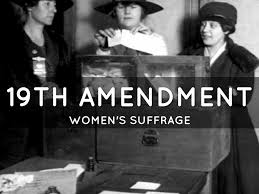
Which amendment guarantees women the right to vote?
a)
1st Amendment
b)
4th Amendment
c)
19th Amendment
d)
12th Amendment
33.

What event changed the role of the US and led to us declaring war and sending troops into battle?

a)

attack on Pearl Harbor

b)

Lend-Lease Act

c)

Operation Torch

34.

Which WWII leader became President after FDR passed, wanted to save American lives in the Pacific, and decided to drop the atomic bombs?

a)

Franklin D. Roosevelt

b)

Winston Churchill

c)

Harry S. Truman

d)

Joseph Stalin

35.
Why were posters like this produced during World War II? 
a)
A. to encourage women to join community defense organizations in case of invasion 
b)
B. to encourage women to work in defense industries in order to support the war effort 
c)
C. to encourage women to serve in government and replace men drafted into the military 
d)
D. to encourage women to join the military and support their country by fighting overseas
36.
To make sure troops had everything they need, Americans were forced to ______________
a)
ration
b)
give everything they had to troops
c)
have less children
37.

Who were the Tuskegee Airmen

a)

African-American military pilots

b)

Navy seals

c)

Brave foot soldiers

d)

Silent and Sneaky snipers

38.

The Great Migration refers to

a)

The movement of African Americans from the south to the north

b)

The movement of African Americans from the north to the south

c)

The spread of African culture after slavery ended

d)

The advocacy of political union of all the indigenous inhabitants of Africa

39.

How did the Harlem Renaissance influence the world? Click all that apply

a)

it only had an impact on the immediate area of New York

b)

it spread from the area of Harlem to other parts of the nation

c)

it not only influenced African Americans, but other cultures as well

40.
In the 1920s, movies, radios, and phonographs:
a)
were all out of reach of most consumers.
b)
helped create and spread a new celebrity culture.
c)
were not yet available.
d)
appealed only to women.
41.
The flapper:
a)
epitomized the change in standards of sexual behavior.
b)
represented a new political movement.
c)
disapproved of smoking.
d)
demanded a return to earlier standards of behavior.
42.
The New Deal concentrated power in the hands of:
a)
the executive branch.
b)
the legislative branch.
c)
the judicial branch.
d)
state government.
43.
In 1940, the “cash and carry” plan:
a)
allowed Great Britain to purchase U.S. arms on a restricted basis.
b)
allowed Germany to purchase U.S. arms on a restricted basis.
c)
allowed Japan to purchase U.S. arms on a restricted basis.
d)
none of the above.
44.
During WWII, Americans:
a)
experienced the rationing of scarce consumer goods such as gasoline.
b)
experienced extreme deprivation
c)
still suffered from high unemployment.
d)
were told that the end of war might bring a return of the Great Depression.
45.
What caused the stock market to crash in 1929 which ended the The Roaring Twenties and kicked off the Great Depression?
a)
Buying stocks on margin
b)
The farm crisis
c)
too much credit and easy money in the 1920's
d)
all of these
46.
______ revolutionized the auto industry by lowering prices and raising wages so that almost all families could afford a car by the 1920's
a)
Henry Ford
b)
Louis Chevrolet
c)
Ransom Olds
d)
John Francis Dodge
47.
What did the Eighteenth Amendment state?
a)
This amendment outlawed the manufacture, sale, and transportation of alcohol.
b)
This amendment outlawed the advertisement of alcohol.
c)
This amendment changed the age a person had to be to buy alcohol.
d)
This reversed prohibition.
48.
What name was given to the great achievements in art and learning by African Americans during the 1920s?
a)
The Roaring 20s
b)
Sacco-Vanzetti Case
c)
Harlem Renaissance
d)
Scopes Trial
49.
He was the US President when the stock market crashed in 1929:
a)
Hoover
b)
Harding
c)
Coolidge
d)
Wilson
50.
The _______ was a massive movement of African Americans north after World War I opened job opportunities and southern African Americans realized some relief from racism (still segragation and discrimination, but less violence) could be found in northern cities.
a)
Great Migration
b)
Great Exodus
c)
Harlem Renaissance
d)
Great Shift
51.
TVA
a)
Used borrowed money to build dams, power plants, moved farmers, reforested land, and provided cheap electric power in the Tennessee area.
b)
Used borrowed money to build dams, power plants, moved farmers, reforested land, and provided cheap electric power in the Virginia area.
c)
One of the many programs of the New Deal that put people to work.
d)
Make shift community for homeless during the Depression.
52.
During the 1930s, the conditions shown in this photograph occurred mainly
a)
on the Atlantic Coast
b)
 on the Great Plains
c)
in the Rocky Mountains
d)
in the Pacific Northwest
53.
What were the villages full of shacks located in cities filled with unemployed Americans called?
a)
Hoovervilles
b)
Okies
c)
Bonus Army Bases
d)
Rooseveltowns
54.
What were the major goals of the New Deal?
a)
no gold standard and free coinage of silver
b)
abolition and suffrage
c)
relief, recovery, and reform
d)
expanding the size and economic influence of the United States
55.
After the Stock Market Crash, many people lost their life savings because _______________.
a)
banks closed
b)
banks gave away their money
c)
they couldn't remember where they put it
d)
someone stole it
56.
Recovery from the Great Depression was accomplished by
a)
public works programs.
b)
the Social Security Act.
c)
The National Recovery Administration.
d)
the outbreak of World War II.
57.
Based on the cartoon, how did President Roosevelt want to ease the Great Depression?
a)
by expanding the role of government in citizens’ lives
b)
by expanding the authority of legislative representatives
c)
by regulating the stock purchases by individual investors
d)
by restricting the spending by government on domestic projects
58.
What was the name given to President Roosevelt's plan to alter the Supreme Court to increase his power in having his New Deal legislation passed instead of having it struck down on constitutional grounds? 
a)
The New Deal
b)
The Great Depression
c)
Court Packing 
d)
Second New Deal 
59.
For what reason did the US imperialize?
a)
to gain raw materials for industry
b)
to create military bases around the globe
c)
to develop markets to sell goods
d)
all of these
60.
Why was the Panama Canal so essential to the growing strength of the United States?
a)
It made the slave trade move more easily from It made the slave trade move more easily from the Atlantic to the Pacific Ocean.
b)
It helped the United States take over Japan.
c)
It allowed the United States to transport navy and merchant ships between the Atlantic and Pacific Oceans.
d)
It made Panama a U.S. territory and eventually a state.
61.
What amendment provided for the direct election (by the voters) of senators (1913 - political Progressives)?
a)
16th
b)
17th
c)
18th
d)
19th
62.
FDR felt that giving aid to the Allied powers was necessary to keep the U.S. out of World War 2. What did he do to help?
a)
Passed the Lend-Sell Acts to sell goods to the Allies
b)
Passed the Lend-Lease Act to "lend" goods to the Allies
c)
He authorized the use of American troops in Europe
d)
He gave Great Britain use of the Philippines 
63.
Congress passed the _____________ to keep America out of the war.
a)
Lend-Sell Acts
b)
Isolationist Pact
c)
Neutrality Acts
d)
New Deal Programs
64.
Which of the following is a cause of World War 2?
a)
Germany had to pay reparations (war debt) after World War 1
b)
German banks failed
c)
France declared war on Germany
d)
The Axis powers were wealthy
65.
What happened to Japanese Americans who lived on the west coast after the attack on Pearl Harbor?
a)
They worked for the U.S. government
b)
They were relocated to internment camps
c)
They were allowed to stay in their homes
d)
They were spies and committed crimes against the government
66.
What was one way that American citizens at home helped the war effort?
a)
Consumers rationed goods to ensure that soldiers could be fed
b)
American citizens spent all of their money on canned goods
c)
American citizens did not help the war effort
d)
American women stayed at home and did not get jobs
67.
This was a German offer of an alliance with Mexico.
a)
Sedition Act
b)
Zimmerman Note
c)
Sussex Pledge
d)
Fourteen Point
68.
President Wilson's attempt to promote world peace
a)
Self-Determination
b)
League of Nations
c)
Fourteen Points
d)
Treaty of Versailles
69.
A policy of non participation in world affairs
a)
Self-Determination
b)
League of Nations
c)
Fourteen Points
d)
Isolationism
70.
What effect did World War 1 have on women?
a)
More women worked jobs to replace the men leaving for the war. 
b)
Women were made into slaves
c)
Women were not allowed to marry
d)
Women were not affected by WWI
71.
"Unrestricted submarine warfare" and "Zimmermann note" may be categorized as which of the following?
a)
Wilson's Domestic Strategies
b)
1914 Causes of World War I
c)
Causes of America's entry in the Great War
d)
Part of Wilson's 14 Points
72.

Which policy had the goal of supporting the allies and maintaining neutrality?

a)

Atlantic Charter

b)

Appeasement

c)

Cash and Carry

73.

What stated that the US would not sell war materials or give loans to nations at war?

a)

Neutrality Acts

b)

Lend-Lease Act

c)

Atlantic Charter

74.

This was a major reason for dropping the atomic bomb on Japan

a)

promote US Isolationism

b)

destroy Japan's industrial centers and save American lives

c)

Scare Hitler

75.
Which countries made up the Axis powers in WWII?
a)
Italy, Germany, Austria
b)
Italy, Germany, Japan
c)
Italy, Japan, Soviet Union
76.
Which countries listed made up the Allied side?
a)
USA, Japan, Germany, Great Britain
b)
USA, Soviet Union, Great Britain
c)
Soviet Union, Japan, France
77.
Who were forced to leave their homes and move to internment camps? 
a)
African Americans 
b)
Native Americans 
c)
Japanese Americans  
d)
Jews 
78.
Why was D-Day important? 
a)
Germany surrendered 
b)
The Allied powers were unsuccessful
c)
Adolf Hitler passed away 
d)
Nearly 200,000 Allied soldiers invaded northern France 
79.

Rosie the Riveter, in this picture, represents

a)

women working in war industries.

b)

a plea for citizens to buy war bonds to support the war effort.

c)

the ability of the US Armed Forces to defeat Germany.

d)

the first lady, Eleanor Roosevelt, as FDR's eyes and ears.

80.
Working in factories gave women more confidence outside of the home, changing the way women were viewed in the U.S. 
a)
True
b)
False
81.

What did America and Allies gain after Midway?

a)

Nothing

b)

Control of the Atlantic

c)

Control of the Pacific

82.
What was a major result of FDR’s New Deal programs?
a)
The national deficit declined for most U.S. citizens
b)
The suffrage rights for women changed
c)
The power of the federal government was expanded
d)
The federal government lowered taxes for most Americans
83.
The largest New Deal program which worked on public projects such as roads, bridges, public buildings, etc.
a)
Works Progress Administration
b)
World Peace Association
c)
Working Period Administration
d)
Tennessee Valley Authority
84.

What problem were both the Civilian Conservation Corps (CCC) and the Works Progress Administration (WPA) developed to address?

a)

Excessive stock market speculation

b)

High unemploment

c)

Increased use of credit

d)

Overproduction of goods

85.

This was a military tactic used by the US in the Pacific Theatre

a)

Blitzkreig

b)

Island-hopping

c)

Trench warfare
