
 Worksheets
Moon
Total questions: 30
Worksheet time: 21mins
Name
Class
Date
1.

What moon phase is this picture?
a)
This is the full moon phase.
b)
This is the waxing gibbous moon phase.
c)
This is the waning gibbous moon phase.
d)
This is the first quarter moon phase.
2.

What moon phase is this picture?
a)
This is the waning crescent phase.
b)
This is the waxing gibbous phase.
c)
This is the waning gibbous phase.
d)
This is the new moon phase.
3.

What is this moon phase?
a)
This is the waxing crescent phase.
b)
This is the full moon phase.
c)
This is the waxing gibbous phase.
d)
This is the last quarter moon.
4.

What is this moon phase?
a)
This is the waxing gibbous moon phase.
b)
This is the last quarter moon phase.
c)
This is the first quarter moon phase.
d)
This is the new moon phase.
5.

What moon phase is this picture?
a)
This is the full moon phase.
b)
This is the waxing crescent moon phase.
c)
This is the waning gibbous moon phase.
d)
This is the waning crescent moon phase.
6.

What moon phase is this picture?
a)
This is the new moon phase.
b)
This is the waxing crescent moon phase.
c)
This is the waxing gibbous moon phase.
d)
This is the waning crescent moon phase.
7.

What moon phase is this image?
a)
This is the full moon phase.
b)
This is the last quarter moon phase.
c)
This is the waxing gibbous moon.
d)
This is the new moon phase.
8.

What phase of the moon is this image?
a)
This is the last quarter moon phase.
b)
This is the full moon phase.
c)
This is the first quarter moon phase.
d)
This is the waxing gibbous moon phase.
9.
What is the difference between a gibbous moon and a crescent moon?
a)
The gibbous shows more than half of the bright side of the moon.
b)
The crescent shows more than half of the bright side of the moon.
c)
The gibbous shows less than half of the bright side of the moon.
10.
The moon seems to change shape from day to day in a cycle that lasts about a month as it goes through _.
a)
revolutions
b)
phases
c)
rotations
d)
eclipses
11.
As the moon's shape appears to get smaller, we say that the moon is _.
a)
swelling
b)
waxing
c)
waning
d)
disappearing
12.
Phases of the moon in which the moon appears to be getting larger are referred to as _.
a)
waxing
b)
waning
c)
new
d)
eclipse
13.
The cycle of the moon lasts about a _.
a)
day
b)
year
c)
week
d)
month
14.
How long is a lunar month?
a)
30
b)
29.5
c)
27
d)
27.3
15.
Which term describes the path the Moon travels around Earth?
a)
rotation
b)
orbit
c)
phase
d)
day
16.
Which of these cycles takes 24 hours?
a)
Earth rotating on its axis
b)
Earth revolving around the Sun
c)
the Moon rotating on its axis
d)
the Moon revolving around Earth
17.
What causes nighttime and daytime on Earth?
a)
the Sun rotating on its axis
b)
Earth rotating on its axis
c)
Earth revolving around the Sun
d)
the Moon revolving around Earth
18.
The phases of the Moon are caused by the
a)
tilt
of the Earth
b)
tilt
of the Moon
c)
revolution
of the Earth around the Sun
d)
revolution
of the Moon around the Earth
19.
The Moon revolves around Earth about once every
a)
day
b)
week
c)
month
d)
year
20.

What type of eclipse is this?
a)
Total lunar eclipse
b)
Total solar eclipse
c)
Partial lunar eclipse
d)
Partial solar eclipse
21.

This is a diagram of the moon phases Which moon phase would a lunar eclipse occur in?
a)
New Moon
b)
1st quarter
c)
Full moon
d)
3rd quarter
22.
What is the correct order of the Earth, Moon, and Sun in order for a lunar eclipse to occur?
a)
Earth, Moon, Sun
b)
Moon, Sun Earth
Moon, Sun, Earth
Moon, Sun, Earth
c)
Sun, Earth, Moon
23.

What type of eclipse is down in the diagram?
a)
Total lunar eclipse
b)
Partial lunar eclipse
c)
total solar eclipse
d)
partial solar eclipse
24.

This is a diagram of the moon phases. In which phase would a solar eclipse occur?
a)
New Moon
b)
1st quarter
c)
Full Moon
d)
3rd Quarter
25.

What type of eclipse is occuring inthe diagram?
a)
solar
b)
lunar
26.
What is the correct order of the Earth, Moon, and Sun in order for a solar eclipse to occur?
a)
Earth, Moon, Sun
b)
Moon, Sun Earth
Moon, Sun, Earth
Moon, Sun, Earth
c)
Sun, Earth, Moon
27.

What type of eclipse is being shown in the diagram?
a)
Total solar eclipse
b)
Total lunar eclipse
c)
partial solar eclipse
d)
partial lunar eclipse
28.
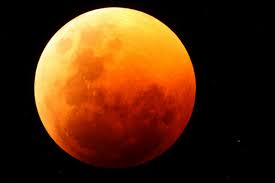
This image is an example of
a)
Lunar Eclipse
b)
New Moon
c)
Solar Eclipse
d)
Full Moon
29.
What is the larger outer lighter part of the shadow cone called, where a partial eclipse can be viewed?
a)
Partial
b)
Umbra
c)
Penumbra
30.
What is the darkest inner part of the shadow cone called, where a total eclipse can be viewed.
a)
Total
b)
Umbra
c)
Penumbra
100 %

