wayground logo

Free Printable Worksheets

Font size

S
M
L
XL
Worksheets

World History Final Thru 1500 REVIEW

Total questions: 133

Worksheet time: 1hrs 12mins

Name
Class
Date
1.
a belief in one God
a)
Gilgamesh
b)
monotheism
c)
polytheism
d)
scribe
2.
Land between two rivers
a)
Fertile Crescent
b)
city-state
c)
empire
d)
Mesopotamia
3.

a pyramid-shaped structure, in Mesopotamia, with a temple at the top, has many terraces; usually in the middle of the city.

a)

pyramid

b)

ziggurat

c)

Ishtar

d)

battering ram

4.

writing developed by the Sumerians that used wedge-shaped marks made in soft clay

a)

writing

b)

monotheism

c)

cuneiform

d)

fertile crescent

5.
a city that governs itself and its surrounding territory
a)
city-state
b)
province
c)
empire
d)
Mesopotamia
6.
Curved strip of land that runs from the Mediterranean Sea to the Persian Gulf
a)
Mesopotamia
b)
Fertile Crescent
c)
silt
d)
Babylon
7.
a system that supplies dry land with water through ditches, pipes, or streams
a)
Fertile Crescent
b)
polytheism
c)
cuneiform
d)
irrigation
8.
What are the two main rivers in Mesopotamia?
a)
Tigris and Nile
b)
Tigris and Amazon
c)
Tigris and Euphrates
d)
Euphrates and Mississippi
9.
A wealthy, upperclass person in the Ancient Roman Republic
a)
patrician
b)
plebian
c)
counsul
d)
dictator
10.
An ordinary citizen in the ancient Roman Republic
a)
patrician
b)
plebian
c)
counsul
d)
mercenary
11.
What is the name of the amphitheater/arena which still stands today in Rome?
a)
Colosseum
b)
Parthenon
c)
aqueduct
d)
city-state
12.
Who changed their name to Augustus ?
a)
Antony 
b)
Octavian
c)
Ceasar 
d)
Draco 
13.
what was the first codified law
a)
Justinian's law
b)
Hammurabi's code
c)
The bill of rights
d)
Greek Orthodox
14.
What was the first form of writing called
a)
Cueniform
b)
Hyroglyphics
c)
Greek
d)
Demotic writng
15.
Feudalism
a)
political system of land agreements with lords and vassals
b)
increase in strong central government
c)
depended on support of emperors
d)
was instituted by the church
16.
The taming of animals such as cattle, goats, sheep, and pigs
a)
civilization
b)
domestication
c)
cultural diffusion
d)
bartering
17.
The first collection of laws based on "eye for an eye"
a)
Judaism
b)
Caste System
c)
Magna Carta
d)
The Code of Hammurabi
18.
Which term describes the blending of Greek culture with Persian, Indian, & Egyptian influences?
a)
classical
b)
arabesque
c)
Hellenism
d)
Gothic
19.
Monarchy is ruled by
a)
Citizens
b)
Tribe
c)
President
d)
Kings
20.
What Roman leader was named dictator for life in 44 B.C. and assassinated in the same year? 
a)
Brutus
b)
Caesar
c)
Octavian
d)
Sulla
21.
What does the term Islam mean?
a)
Submission to Muhammad
b)
Follower of the Ka'aba
c)
Submission to the will of Allah
d)
Follower of Moses
22.
What does the term Muslim mean?
a)
One who has found the truth
b)
One who has submitted
c)
One who walks with God
d)
There is no meaning to the word
23.
A lasting result of the Crusades was
a)
more powerful church
b)
increased Muslim vs. Christian conflict
c)
decrease in trade and learning
d)
strong Byzantine Empire
24.
What is the Egyptian writing system called?
a)
glyphs
b)
hieroglyphics
c)
scribes
d)
cuneiform
25.
How did the ancient Chinese communicate with their ancestors? 
a)
talked to their gravesite
b)
used a psychic
c)
oracle bones
d)
none of the above
26.
Alexander the Great was the king of which country?
a)
Greece
b)
Rome
c)
Macedonia
d)
Minoa
27.
Which country did Rome fight in the Punic Wars?
a)
Carthage
b)
Greece
c)
Egypt
d)
Libya
28.
Which dynasty did Shi Huangdi rule under?
a)
Shang
b)
Zhou
c)
Ming
d)
Qin
29.
How did Shi Huangdi unify China?
a)
Created one writing system
b)
Created one currency
c)
Fought wars and conquered lands
d)
All of the above
30.
Before Alexander began his conquests, which empire was the biggest in the world?
a)
Ottoman
b)
Persian
c)
Greek
d)
Roman
31.
What happened when Alexander the Great wanted to conquer India?
a)
Alexander lost his first and only battle
b)
His soldiers were tired and wanted to stop
c)
Alexander became sick and died
d)
None of the above
32.
Which battle in the Second Punic War caused 70,000 Romans to die in one day?
a)
Battle of Cannae
b)
Battle of Zama
c)
Battle of Trebia
d)
Battle of Carthage
33.

How did rivers first facilitate the development of ancient civilizations?

a)

Waterways increased trade among distant peoples.

b)

Water sources enabled the migration of hunter-gatherers.

c)

Fertile soil allowed humans to develop agriculture.

d)

Governments were created to control fertile land.

34.
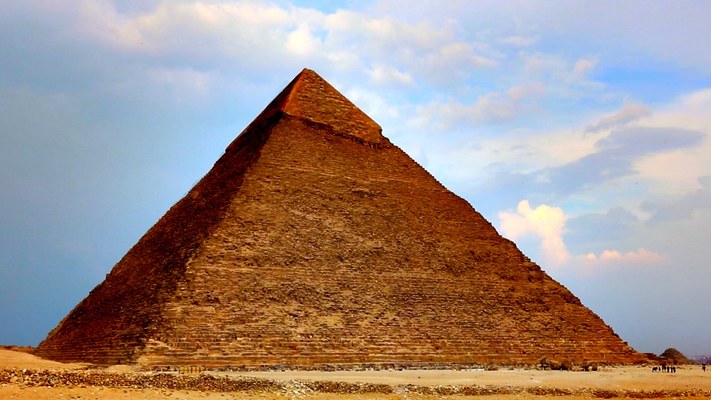
Pharaohs used pyramids as their tombs?
a)
True
b)
false
35.
accounts of events created at a later date and by someone who was not present at the event
a)
corroboration
b)
primary source
c)
contextualizing
d)
secondary source
36.

Historians can learn about ancient civilizations by studying items such as weapons, tools, and pottery, which are called

a)

fossils

b)

species

c)

treasure

d)

artifacts

37.
The laws given to Moses by God were the...?
a)
Hammurabi's Code
b)
Mosaic Laws
c)
Ten Commandments 
d)
Ten Plagues 
38.
What is the name for the large estate of land a knight lived on?
a)
castle
b)
manor
c)
chivalry
d)
land
39.

What does the term “civilization” mean?

a)

Larger groups of people living together in one place in more complex societies with social hierarchies and specialization of labor.

b)

The process by which people change plants and animals over time at a genetic level to increase their productivity or other desired traits.

c)

A group of people considered to be the best in a particular society or category because of their power, talent, wealth, or other characteristic.

d)

A way of life where a group of people survives from the secondary products of herds. People follow patterns of grazing to keep their herds alive.

40.

How did geography play a key role in the early development of civilizations?

a)

Societies developed near oceans.

b)

Societies developed in river valleys.

c)

Societies developed in the desert.

d)

Societies developed in the tundra.

41.

River valleys offer societies access to water and fertile soil for highly productive agriculture as well as large mammal and plants suitable for domestication.

a)

True

b)

False

42.

Because of intense farming, civilizations required more people to live in an area, which of the following developed:

a)

Culture

b)

Law

c)

Written Language

d)

All of these

43.

What is social hierarchy?

a)

A rule of conduct or action that is binding and enforced by a controlling authority.

b)

A type of civilization that developed near or around a major river and considered the earliest known large human civilizations.

c)

An order of social classes with producers at the bottom and leaders or kings at the top.

d)

A group of people considered to be the best in a particular society or category because of their power, talent, wealth, or other characteristic.

44.

What does polytheistic mean?

a)

Worshipping or believing in more than one god.

b)

A person who was able to read and write, allowing for the creation of written records and messages.

c)

Large groups of domesticated animals like sheep or goats.

d)

A series of rulers in a particular place considered members of the same family.

45.

How did nomadic people survive once civilizations started to emerge?

a)

They didn’t survive and died out.

b)

They raised and herded animals, which provided food, transportation, and trade.

c)

They created small farms along trade routes.

d)

They eventually gave up being nomads and moved into the news towns and cities.

46.

What is cultural diffusion?

a)

The process of different cultures adopted ideas and technology from other cultures over time.

b)

A way of life where a group of people survives from the secondary products of herds. People follow patterns of grazing to keep their herds alive.

c)

Livestock, migrate in an established territory to find pasture for their animals.

d)

Worshipping or believing in more than one god.

47.
Papyrus
a)
plants that grew along the Nile used for making paper
b)
dramatic turns and rocky rapids
c)
the belief in many gods/goddesses
d)
a group of people and camels moving across the desert
48.
pharaoh
a)
a leader of Egypt which means "great house"
b)
people who moved from place to place in search of food and water
c)
used for everyday writing, this is a simpler form of cursive that the Egyptians used
d)
group of rulers over several generations descending from the same family
49.
dynasty
a)
a leader of Egypt which means "great house"
b)
people who moved from place to place in search of food and water
c)
used for everyday writing, this is a simpler form of cursive that the Egyptians used
d)
group of rulers over several generations descending from the same family
50.
The large stone coffin that holds the other wooden coffins is called a
a)
Shaduf
b)
Shenti
c)
Masoleum
d)
Sarcophagus
51.
Hatshepsut and Ramses II ruled during this kingdom.
a)
Old
b)
Middle
c)
New
d)
Ancient
52.
The great pyramids were built during what kingdom?
a)
Old Kingdom
b)
Middle Kingdom
c)
New Kingdom
53.
The Nile shaped ancient Egypt in several ways.  These include...
a)
settlements, their economy, and religious beliefs
b)
mummification, hieroglyphics, and pyramid building
c)
pharaohs that ruled, Rosetta Stone, mummification
d)
Valley of the Kings, Hatshepsut's temple, location of the burial tombs
54.

The image shows a symbol of Christianity. What is it?

a)

ankh

b)

dagger

c)

plus sign

d)

cross

55.

The city in Israel where Jesus spent part of his life & was crucified is...

a)

Jerusalem

b)

Cairo

c)

Rome

d)

Bethlehem

56.

The book which tells about the life & teachings of Jesus & that Christians hold most sacred...

a)

New Testament

b)

Torah

c)

Qu'ran

d)

Old Testament

57.

What do Christians call the first 4 books of the Hebrew Bible?

a)

the Bible

b)

the teachings

c)

the Gospels

d)

the epistles

58.

What is the holy book of Christianity?

a)

the Qu'ran

b)

the Bible

c)

the Book of the Dead

d)

the Torah

59.
The definition of Monotheistic means believing in ?
a)
Many Gods
b)
Sea Gods and Sun Gods
c)
Two Gods
d)
One God
60.
The Israelites are known for what religion? 
a)
Christianity 
b)
Judaism
c)
Islamic
d)
Buddhism
61.
What word best describes the land of the Greek peninsula?
a)
rocky and mountainous
b)
flat
c)
desert
d)
rolling plains
62.
The ancient Greeks were  
a)
Monotheistic  
b)
Polytheistic
c)
Atheist
d)
Scientologist
63.
The ruler of all the Greek gods was... 
a)
Poseidon.
b)
Ares.  
c)
Zeus.
d)
Athena.  
64.
A city-state which favored democracy and a well-rounded education. 
(Also, the largest city-state by a wide margin)
a)
Sparta
b)
Athens
c)
Delphi
d)
Corinth
65.
A militaristic city-state where boys were trained from an early age to fight.
a)
Athens
b)
Delphi
c)
Corinth
d)
Sparta
66.
what is a hilltop in a Greek city state called? 

(It housed a fort and a temple to the city-state's local god or goddess)
a)
Agriculture
b)
Thermopylae
c)
Acropolis
d)
Ephor
67.
What ancient civilization eventually replaced the Minoans as the major power in the Aegean sea, after the Minoan civilization disappeared?
a)
Romans
b)
Spartans
c)
Persians
d)
Mycenaeans
68.
Who were the ancient people who lived on the island of Crete and built a grand palace in the city of Knossos?
a)
Minoans
b)
Romans
c)
Persians
d)
Spartans
69.
What is another name for a Greek city-state?
a)
Polling Place
b)
Acropolis
c)
Polis
d)
Oligarchy
70.
300 Spartan soldiers held the Persian army to a stalemate for three days before the Persians eventually defeated them in what famous battle?
a)
Battle of the Greeks
b)
Battle of Thermopylae
c)
Battle of Little Big Horn
d)
Battle of Pericles
71.
What is the name for thinkers who reflect on the meaning of life?
a)
Soldiers
b)
Philosophers
c)
Ephors
d)
Helots
72.
The Roman government _________ Christians, or treated them unfairly and punished them.
a)
praised
b)
worshipped
c)
persecuted
d)
taxed
73.
The teachings of Jesus of Nazareth led to what religion's development?
a)
Nazarene
b)
Christianity
c)
Judaism
d)
Protestantism
74.
Rome was located near what body of water?
a)
Pacific Ocean
b)
Atlantic Ocean
c)
Red Sea
d)
Mediterranean Sea
75.
Which society was the first to practice democracy?
a)
Greece
b)
Rome
c)
Carthage
d)
America
76.
In addition to their own developments, the Romans borrowed many ideas from the 
a)
Chinese
b)
Greeks
c)
Egyptians
d)
Mesopotamians
77.
Rome's most important legislative or law-making body of 300 Patrician men was called the
a)
 Forum
b)
House of Representatives
c)
Congress
d)
Senate
78.
Which emperor made Christianity the official religion of Rome?
a)
Caesar
b)
Augustus
c)
Diocletian
d)
Constantine
79.
What was the name for the large, open, market in the center of town?
a)
Agora
b)
Forum
c)
Market
d)
Mercado
80.

The two brothers that supposedly founded Rome were

a)

Romulus

b)

Remus

c)

Lupa

d)

Mr. Holaway

81.

This brings water into a city. Some still work in Rome today!

a)

copper pipes

b)

aqueducts

c)

an irrigation system

d)

wells

82.
A foreign soldier who serves only for pay and has no loyalty to Rome
a)
dictator
b)
patrician
c)
mercenary
d)
plebian
83.
Rome's first code of laws was called
a)
Empire's Bronze Laws
b)
Law of Nations
c)
Law of Twelve Tables
d)
Tribune's Law
84.

In what year was the Roman Republic founded?

a)

753 BCE

b)

800 BCE

c)

509 BCE

d)

227 BCE

85.
Roman citizens willingly participated in the government because it was their ________________.
a)
Civic duty
b)
Favorite pasttime 
c)
Source of income
86.

How did Julius Caesar die?

a)

Stabbed 23 times by Senate members

b)

Poisonous snake bite

c)

Committed suicide after losing a battle

d)

Killed in battle

87.
How did taking prisoners as slaves lead to unemployment in the Roman Empire?
a)
Roman citizens were not allowed to keep slaves.
b)
People who supported slave revolts lost their jobs.
c)
Owners put slaves to work instead of paying free workers.
d)
Those who captured slaves were released from the army.
88.
This man was assassinated on the Ides of March 44 BCE by a group of Senators.
a)
Augustus Caesar
b)
Julius Caesar
c)
Octavian
d)
Marc Antony
89.
What is the triangular green location on the map?
a)
Nile river
b)
Nile delta
c)
Mediterranean Sea 
d)
Nile valley
90.
The Nile River flows through two important regions in Egypt called
a)
Mesopotamia
b)
Upper and Lower Egypt
c)
Eastern and Western Egypt
d)
Nubia and Cairo
91.

This woman was the first female Pharaoh

a)

Cleopatra

b)

Nefertiti

c)

Hatshepsut

92.

The Nile flooded during:

a)

Akhet

b)

Peret

c)

Shemu

93.

Which social class would have most likely been able to read and write?

a)

Priests

b)

Scribes

c)

Artisans

d)

Peasants

94.

This image represents what social class?

a)

Pharaoh

b)

Scribes

c)

Peasants

d)

Artisans

95.

Which of the following was the main focus of the Egyptian religion

a)

living a pure life in this world

b)

getting to the afterlife

c)

meditating frequently in order to obtain nirvana

d)

a persons soul was reincarnated multiple times in order to achieve a higher form of purity

96.
  an object made or used by humans long ago
a)
document
b)
journal
c)
artifact
d)
diary
97.
original records of a past event, usually created by someone who saw or participated in the event
a)
secondary source
b)
journal
c)
diary
d)
primary source
98.
something that is known or proven to be true
a)
opinion
b)
diary
c)
fact
d)
biography
99.
when events or a series of past events are told as a story
a)
memoir
b)
autobiography
c)
historical narrative
d)
biography
100.
a piece of written, printed or electronic matter that provides information or evidence for the official record
a)
encyclopedia
b)
document
c)
biography
d)
journal
101.
What does BC stand for?
a)
Before Common Era
b)
Before Christians
c)
Before Christ
d)
Before Civilization
102.
What does BCE stand for?
a)
Before Common Era
b)
Before Christians Evoloved
c)
Before Christ Era
d)
Before Civilization Era
103.
What does AD stand for?
a)
After Death
b)
After Disease
c)
Ante Diem
d)
Anno Domini
104.
What does the term Anno Domini mean?
a)
After death
b)
In the Year of Our Lord
c)
After Civilization
d)
After Christ died
105.
What doe CE stand for?
a)
Common End
b)
Common Era
c)
Christian Era
d)
Christian End
106.
Which is an example of a primary source?
a)
Textbook
b)
Encyclopedia
c)
Artifact
d)
Biography
107.
Which is an example of a secondary source?
a)
Textbook
b)
Artifact
c)
Diary
d)
Legal Document
108.
Put the following dates in chronological order (first to last):
1000 AD/CE, 500 BC/BCE, 1000 BC/BCE, 1 AD/CE
a)
1000 BC/BCE, 500 BC/BCE, 1 AD/CE, 1000 AD/CE
b)
1000 AD/CE, 500 BC/BCE, 1000 BC/BCE, 1 AD/CE
c)
1 AD/CE, 500 BC/BCE, 1000 AD/CE, 1000 BC/BCE
d)
1000 BC/BCE, 1 AD/CE, 500 BC/BCE, 1000 AD/CE
109.
Which does not describe hunter-gatherers?
a)
Lived in clans to survive
b)
Hunted animals and gathered plants
c)
Problem solvers
d)
Grew their own food
110.
Define:  Agriculture
a)
Farming
b)
Training plants and animals
c)
Having an extra supply
d)
Not having enough
111.
Hunter-Gatherers are people who
a)
Buy food at the 7-11 
b)
Make food from crops they  grow
c)
fish for food
d)
Hunt food and gather berries
112.
What is another word for farming?
a)
Specialization
b)
Agriculture
c)
Domesticate
d)
Surplus
113.
Which of these is a Primary Source?
a)
A textbook
b)
A Biography of Julius Caesar
c)
A cartoon of the pyramids
d)
King Tut’s Tomb
114.
Which of these would you find in an agricultural society?
a)
Group of hunters and gatherers
b)
Cave Art
c)
People that domesticate animals
d)
People migrating
115.
Which of these events happened the earliest?
a)
Death of Julius Caesar in 44 b.c.
b)
The building of the Pyramids in 2500 b.c.
c)
King Sargon ruled in 714 b.c.
d)
American Civil War 1861 a.d.
116.
Which of the following would be a secondary source:
a)
Biography
b)
An autobiography
c)
A Prehistoric tool
d)
Photograph of the eclipse
117.
If you have more food than you need, then your society will have
a)
A lot of food
b)
A surplus
c)
Specialization
d)
All of the above
118.
People who specialize, get food by:
a)
Stealing
b)
Farming
c)
Trading
d)
Hunting
119.
People moved in search of food. This is known as:
a)
Domestication
b)
Migration
c)
Farming
d)
Traveling
120.
Scientists believe the first humans may have come from:
a)
Asia
b)
Australia
c)
Africa
d)
Europe
121.
What does Anno Domini mean?
a)
The Common Era
b)
The Christian Era
c)
In the year of our lord
d)
After death
122.
Define:  Surplus
a)
Not having enough
b)
Farming
c)
Grow plants
d)
Having more than needed
123.
Define: specialization
a)
People farming
b)
People trained to do special types of work
c)
Hunting and Gathering
d)
Having more than needed
124.
Which would NOT be an artifact from pre-historic people?
a)
Stone tipped spear
b)
Cave Art
c)
Hand axe
d)
Wheeled cart
125.
What was the greatest benefit when people began farming?
a)
More time to relax
b)
Better tasting food
c)
More stable food supply
d)
Increased water supply
126.
Why did people live in larger communities once farming developed?
a)
Needed more people to hunt and gather
b)
they made more food to support a larger population
c)
People got along better
d)
They could trade their crops with others
127.

What changes occurred when people went from hunting and gathering to developing agriculture?

Click ALL options that are correct.

a)

People settled in permanent communities

b)

People migrated to follow their food source

c)

People grew their own food

d)

People domesticated plants and animals

128.

According to the chart, what has happened to world population since agriculture started?

a)

The population went down

b)

The population went up

c)

The population has stayed the same

129.

Which are examples of specialized jobs?

Click ALL that are correct.

a)

Farming

b)

Hunting and Gathering

c)

Blacksmith

d)

Potter

130.

What is a push factor?

a)

A positive reason to migrate to a new place

b)

A negative reason to migrate out of a place

131.

What is a pull factor?

a)

A positive reason to migrate to a new place

b)

A negative reason to migrate out of a place

132.

Push or Pull factor?

A neighboring tribe invades your territory.

a)

Push

b)

Pull

133.

Push or pull factor?

You find an area with abundant berries to pick and deer to hunt.

a)

Push

b)

Pull