Wayground logo

Free Printable Worksheets

Font size

S
M
L
XL
Worksheets

Ancient Civilizations World History

Total questions: 75

Worksheet time: 1hrs 14mins

Name
Class
Date
1.
Scarcity means
a)
To not have enough
b)
To be scared
c)
To have more than you need
d)
To travel from place to place with no set home
2.
Modern humans originated in
a)
Africa
b)
Asia
c)
North America
d)
Europe
3.
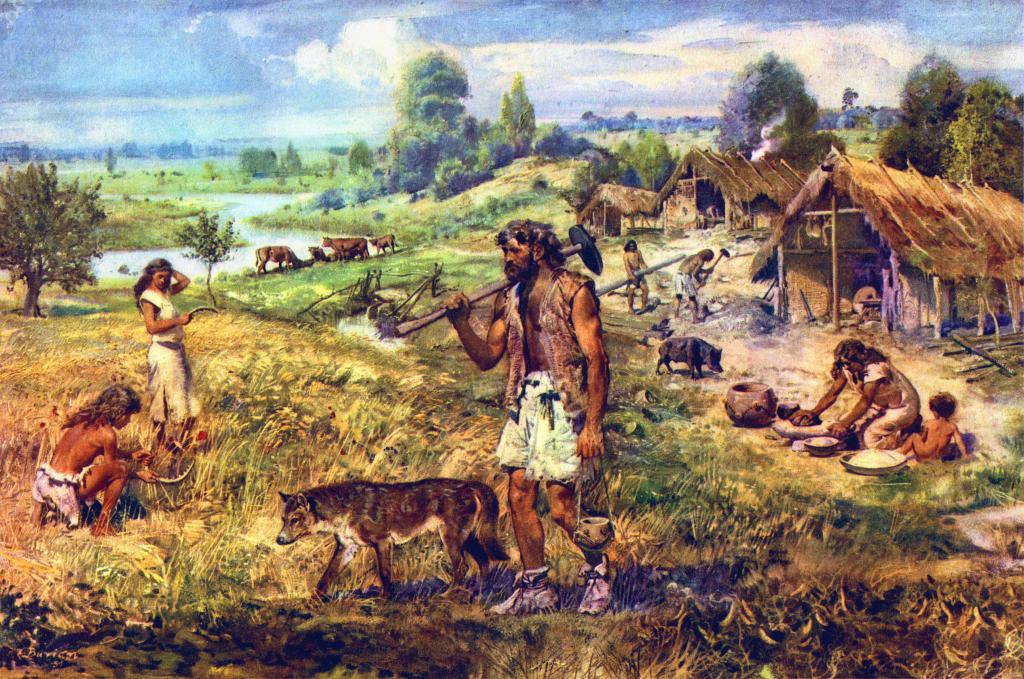
How did farming change life for early people?
a)
Hunting gave people a reason to settle.
b)
Agriculture, gave people a reason to migrate.
c)
Agriculture, gave people a reason to settle.
d)
Farming gave people a reason to seek new land.
4.
1.  What did the Neolithic Revolution bring about?
a)
a.  Storms
b)
a.  Drought
c)
a.  Agriculture
5.
During the Neolithic Revolution
a)
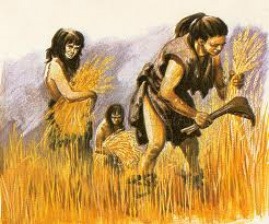
People learned to grow food
b)
People migrated to find food
c)
People were nomadic
6.
Which of the following happened when man began to farm?
a)
There were communities where people could do jobs other than farming jobs 
b)
They had more meat in their diet
c)
They were constantly attacked by wild animals
d)
They had to move from place to place following crops
7.
What is another word for farming?
a)
industry
b)
Paleolithic
c)
agriculture
d)
migration
8.
Which development was a direct result of the Neolithic Revolution?
a)
Machines were used to mass- produce goods for markets
b)
a surplus of food led to more complex societies
A surplus of food led to more complex societies 
c)
Feudal manors provided the necessities of life.
d)
the centers of trade moved from the Mediterranean Sea to the Atlantic Ocean
9.

Hammurabi was best known for his _______. A set of laws that governed life in the Babylonian empire.

a)

Beard

b)

Code

c)

Consequences

d)

Sword

10.
Sumer is important because it was...
a)
the world's first civilization
b)
the world's largest empire
c)
where humans evolved
d)
where fishing villages first developed
11.
Polytheism is the belief that...
a)
spirits that control your life.
b)
the universe controls your life.
c)
there are many gods.
d)
there is a heaven.
12.
Mesopotamia had a surplus of food because...
a)
everyone had some kind of agricultural job during the year.
b)
they used metal tools and irrigation systems to increase crop yields.
c)
scientists developed hybrid crops that resisted diseases.
d)
trade networks brought grain and animal products.
13.
What river runs through Egypt? 
a)
Red River
b)
Mediterranean River 
c)
Mississippi River 
d)
Nile River
14.

What geographic features helped protect Egypt from invasion?

a)

deserts

b)

mountains

c)

rivers

d)

seas

15.
What was a MAJOR purpose for building the pyramids?
a)
temples for religious worship
b)
storehouses for reserves of grain
c)
homes for the pharaohs' servants
d)
tombs for pharaohs when they died
16.
Hatshepsut was the FIRST pharaoh that was
a)
a god.
b)
a child.
c)
a priest.
d)
a woman.
17.
Why was the Rosetta Stone so important?
a)
It helped archaeologists decipher Egyptian writing?
b)
It gave clues about building.
c)
It was a book of the dead.
d)
It told how pharaoh's rules.
18.
Egyptians used _____ to prepare bodies for the after life like the one picture.
a)
Reincarnation
b)
Theocracy
c)
Embalming
d)
Frontalism
19.
Egypt suffered under my rule, I Changed the religion/ Worship to only one god and lost land to invaders
a)
Ramses II
b)
Tutankhamen
c)
Narmer / Menes
d)
Amenhotep IV / Akhenaton 
20.

What river did people in ancient India settle along?

a)

Tigris

b)

Nile

c)

Indus

d)

Euphrates

21.

Like other ancient civilizations, ancient India was divided into four__________ ___________, also called __________, based on occupation.

a)

ultimate religions, leaders

b)

social classes, castes

c)

government classes, dictators

22.

What caste system are priests and religious leaders?

a)

Brahmin

b)

Sudras

c)

Untouchables

d)

Kshatriyas

23.

What caste system are kings, cheiftans, warriors?

a)

Brahmin

b)

Vaisyas

c)

Kshatriyas

d)

Untouchables

24.

What caste system were landowners, farm owners, merchants, skilled traders?

a)

Vaisyas

b)

Sudras

c)

Brahmins

d)

Kshatriyas

25.

What caste system were farm workers, servants, and other unskilled workers?

a)

Kshatriyas

b)

Untouchables

c)

Sudras

d)

Brahmin

26.

What prevented ancient India from having much contact with other civilizations?

a)

religion

b)

the Himalayas

c)

no language

d)

it was illegal

27.

What religion forms the basis of the caste system?

a)

Buddhism

b)

Hinduism

c)

Christianity

d)

Judaism

28.

One of the oldest cities in the Indus Valley was..

a)

Mohenjo-Daro

b)

Saraswathi

c)

Delhi

d)

Babylon

29.

One surprising technology the Indus Civilization had was...

a)

Arches

b)

Sewers

c)

Domes

d)

Iron weapons

30.
The Indus River Valley Civilizations' cities were structured:
a)
in ovals, with small square buildings
b)
in grids, with separate areas for residential and governmental buildings
c)
in triangles, centered around the pyramids
d)
in squares, separated by social classes
31.
What were two things that these ancient people developed in the Indus River Valley?
a)
sewer system, grid - like streets
b)
written language, temples
c)
roads, irrigation
32.
Rulers of the Gupta dynasty were supportive of the Hindu __________________  system of social order
a)
missionary
b)
social
c)
caste
d)
political
33.
The number system we use today; it was created by Indian scholars during the Gupta dynasty
a)
Sanskrit
b)
Hieroglyphics
c)
Cuneiform
d)
Hindu-Arabic
34.

Ashoka was a leader during which Empire?

a)

Gupta Empire

b)

Alexandrian Empire

c)

Mauryan Empire

d)

Shang Empire

e)

none of the above

35.
19. How did people respond to Asoka’s emphasis of Buddhist teachings?
a)
A. Asoka's support of Buddhism led to the people rebelling against his rule.
b)
B. Asoka's support of Buddhism led to people respecting it, and in his empire Buddhism spread.
c)
C. Asoka's support of Buddhism led to neighboring leaders believing that he was weak, and they invaded.
d)
D. Asoka's support of Buddhism led to no real changes in India.
36.

Which of the following best describes the Silk Road?

a)

a single road that extended across Asia

b)

a route that connected western Europe to eastern Europe

c)

a route that was used to bring silk from Rome to China

d)

a network of trade routes that extended across Asia

37.

Which of these is an example of an idea spread by the Silk Road?

a)

silkworms

b)

glassware

c)

Buddhism

d)

spices

38.

In ancient times, silk was a valuable good for China to trade because

a)

the journey eastward to obtain it was dangerous

b)

it wore out quickly and had to be replaced

c)

only the Chinese knew how to make it.

d)

it could be made into colorful silk banners.

39.

Which of the following is an accurate statement about cultural diffusion?

a)

Cultural diffusion spreads ideas, knowledge, and goods.

b)

Cultural diffusion occurs only within one culture.

c)

Cultural diffusion no longer takes place today.

d)

Cultural diffusion happened only along the Silk Road.

40.

Which of the following is an accurate example of cultural diffusion?

a)

Buddhism originated in China and spread to India

b)

Knowledge of glass making spread from China to Rome.

c)

Knowledge of silk making spread from China to the West.

d)

People used camel caravans to travel across Asia.

41.
What kind of farming technique did the Mayans use in the hills/mountains?
a)
slash and burn
b)
terraces farming (steps)
c)
raised-earth platforms
d)
chinampas
42.
The right of a Chinese emperor to rule with the permission of the heavens is called...?
a)
the Oracle of Clouds
b)
the Mandate of Heaven
c)
the Dynasty
d)
the Heavenly Commandments
43.
What is an invention of Ancient China?
a)
paper
b)
cars
c)
planes
d)
hierogylphics
44.
Along what river did China's earliest civilizations develop?
a)
Indus
b)
Nile
c)
Huang He (Yellow)
d)
Yangtze
45.
For what emperor was the Terra Cotta Warriors made for?
a)
Confucius
b)
Lao-Tzu
c)
Hammurabi
d)
Qin Shi Huangdi
46.

Monotheism means...

a)

Belief in one god

b)

Belief in many gods

c)

Belief in no gods

47.

Judaism was founded by the people of

a)

Israel

b)

Iraq

c)

Iran

d)

Egypt

48.
The Phoenicians were the first people to create what?
a)
writing
b)
goverment
c)
alphabet
d)
cedar wood
49.
What did the Phoenicians share with other groups they met, which is important to us today?
a)
Stories and legends
b)
Maps and compasses
c)
Shipbuilding and sailing strategies
d)
the alphabet they had invented
50.
The Phoenicians helped spread civilization throughout the Mediterranean area by
a)
using ships to trade goods with other peoples.
b)
Traveling by caravan across the lands westward .
c)
conquering all the lands west of the Persian Gulf.
d)
controlling the supply of a valuable purple dye.
51.
What type of government is run by the richest and most powerful citizens?  
a)
Democracy
b)
Monarchy
c)
Oligarchy
d)
Theocracy
52.
A militaristic city-state where boys were trained from an early age to fight.
a)
Athens
b)
Delphi
c)
Corinth
d)
Sparta
53.
A city-state which favored democracy and a well-rounded education. 
(Also, the largest city-state by a wide margin)
a)
Sparta
b)
Athens
c)
Delphi
d)
Corinth
54.
What can you infer about the ancient Greeks based upon their achievements?
a)
The ancient Greeks most valued warfare and battle.
b)
The ancient Greeks valued philosophy and art.
c)
the ancient Greeks were most interested in farming.
d)
The ancient Greeks felt that  literature was pointless.
55.
A government in which all citizens could vote on all lawmaking decisions, is best described as a/an ________?
a)
Democracy
b)
Monarchy
c)
Oligarchy
d)
Tyranny
56.
Democracy where citizens elect others to serve in government.
a)
Direct Democracy
b)
Representative Democracy
c)
Autocratic Democracy
d)
Theocratic Democracy
57.
Every citizen votes on all important decisions.
a)
Direct Democracy
b)
Indirect Democracy
c)
Monarchy
d)
Aristocracy
58.
Democracy where citizens participate and vote on laws themselves.
a)
Direct Democracy
b)
Representative Democracy
c)
Anarchy
d)
Autocratic Democracy
59.
What does "direct democracy" mean?
a)
That people vote on laws themselves, without representatives 
b)
That only certain people can serve on juries and hold office
c)
That people who've committed crimes can't vote
d)
That state legislatures elect representatives, not the people themselves
60.
How did heavy taxes impact the people of Rome?
a)
drove people into poverty, unemployment became an issue
b)
they could not transfer power peacefully 
c)
the army became smaller 
d)
they could not afford to have slaves
61.
High taxes and unemployment are considered what kind of reasons for the fall of the empire? 
a)
political
b)
economic
c)
foreign invasion 
d)
military 
62.
Why was the size of the Roman Empire a problem that contributed to the empire's fall?
a)
The size of the empire made it hard to defend.
b)
Many emperors were needed to rule the empire.
c)
Much of the empire was empty land with no population.
d)
Most of the empire was dry land that could not support farming.
63.
In what year did the Western Roman Empire collapse? 
a)
776 BC
b)
776 AD
c)
476 BC
d)
476 AD
64.
What type of democracy does the united states have?
a)
Direct
b)
Unfair
c)
Judicial
d)
Representative
65.
What was the "ASSEMBLY"?
a)
Where all citizens could debate issues and vote
b)
Where 500 people supervised the running of the government
c)
Where elected representatives voted on issues
d)
Where they would put people on trial for crimes
66.
Another name for a Representative Democracy.
a)
Republic
b)
Representative
c)
Oligarchy
d)
Monarchy
67.
Which branch makes laws
a)
Legislative
b)
Executive
c)
Judicial
68.
Which branch of the government creates bills?
a)
Executive Branch
b)
Judicial Branch
c)
Tree Branch
d)
Legislative Branch
69.

Which statement below best describes how Ancient Greece influenced the United States?

a)

Like Ancient Greece, the United States has a form of government known as a republic.

b)

Like Ancient Greece, the United States practices representative democracy.

c)

Like Ancient Greece, the United States the citizens have political power

d)

Like Ancient Greece, the United States lets its citizens decide when to go to war.

70.
In order to have representation of various people in Rome, which three groups were created in the government?
a)
Christians, Jews, Muslims
b)
Senate, House of Representatives, Executive
c)
Brahmins, Vaisyas, Sudras.
d)
Senate, tribunes, magistrates
71.
Which best describes the purpose of a system of “checks and balances”?
a)
All merchants will have an equal opportunity to trade.
b)
Laws will be written fairly for everyone.
c)
The military will be paid for their service.
d)
No one branch of the government will become stronger than another.
72.
Which of the following is a similarity between the United States government and the Roman Republic?
a)
The U.S. government is divided into three branches with checks and balances.
b)
Both governments use of a dictator in times of crisis.
c)
Members of the senate rule for life.
d)
The two most powerful people of the government are called consuls.
73.
Which statement best describes the Pax Romana?
a)
It was a 200 year period of war between Rome and Carthage.
b)
It was a time of civil war and unrest in Italy.
c)
It was a 200 year period of peace and prosperity for the Roman Empire.
d)
It is the time period between the Roman monarchs and the Roman Republic.
74.

What kind of government did Rome have first?

a)

Monarchy

b)

Republic

c)

Empire

d)

Oligarchy

75.

What kind of government did Rome have before it fell?

a)

Monarchy

b)

Republic

c)

Empire

d)

Oligarchy