
 Worksheets
Ancient Civilizations Review
Total questions: 75
Worksheet time: 1hrs 9mins

Which of the following was a significant function of the Great Wall of China?
serve as a boundary marker for the Chinese empire
protect the Chinese empire from the Mongolians and other invaders
act as a ceremonial site for ancient rituals
facilitate trade with neighboring countries
What was the Silk Road?
trade routes from the East to the Western Mediterranean
a single path a Chinese trader followed to reach India and Arabia
a combination of sea and land routes that led from Beijing to the Himalayas
a road made of silk from central China to the Middle East

Which product was NOT exchanged on the Silk Road?
silk
plastic
exotic animals
spices
Many items from different cultures, such as pottery or tools, have been found in other places around the world throughout history because of the existence and exchange of goods along international trade routes connecting Asia and Europe. This is called Cultural Diffusion.
True
False
Trade on the Silk Road was stopped in Asia because of the fear of attacks from outsiders. What was the effect?
Merchants had to find alternative routes to Asia (Early Exploration)
people went fishing instead
government became more stable
According to the Mandate of Heaven, what happened if a ruler became corrupt and governed poorly?
If a ruler governed poorly, heaven withdrew its support and the ruler lost power by being overthrown by another dynasty.
Children had to respect their parents and other elders, and place the needs/desires of the head of the family before their own
Filial piety
Mandate
Huang He
Daoism
Surgery in ancient India was an important contribution because it gave doctors a way to repair damaged body parts.
True
False
Which of these are mathematical contributions created by the Gupta Empire? (Choose 2 Correct Answers)
Gupta mathematicians created calculus and trigonometry.
Gupta mathematicians created the Concept of Zero
Gupta mathematicians created number symbols 0-9
Gupta mathematicians discovered the last number of pi
According to Buddha's teaching of the Four Noble Truths, what is the first and most basic idea of his teachings?
All people suffer.
People suffer because they want to.
According to Buddha's teaching of the Four Noble Truths, why do all people suffer?
All people suffer because they desire things and self-satisfaction.
The Eightfold Path is...
A path with 8 turnings which Siddhartha Gautama has to choose from
The name of a famous Buddhist pop group
The way Buddhists can achieve enlightenment and freedom from human suffering
Something that Buddhists must do every day
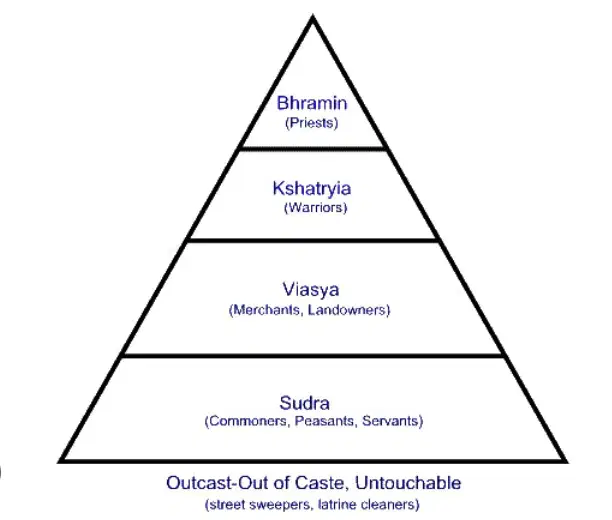
In the Hindu religion, people could be reincarnated into a different caste depending upon their actions in the previous life.
True
False
The Punic Wars were between
Rome and Greece
Rome and Carthage
Greece and Egypt
Rome and Persia
The 1st Punic War was
Rome won the 2nd Punic War against Carthage.
True
False

Rome’s 200 years of peace was called the...
Age of Augustus.
Resurrection.
Pax Romana.
Crucifixion.

What innovation allowed fresh water into Roman cities?
rivers
aqueducts
catapults
arches
Which achievement allowed Rome to maintain contact with its large empire and to transport goods?
stadiums
roads
sewer systems
aqueducts
This person changed Rome from the Republic to the Empire after the Senate gave him power:
Octavion (Augustus)
Diocletian
Julius Caesar
Nero
Along with the growth of cities, agricultural tools became more advanced. What types of tools would be found in agricultural society (during the Neolithic Era)?
wheel
plows
fire
hoses

Which of the following is NECESSARY to be considered "civilized"?
Religion
Writing
Education
Government
How did the Mandate of Heaven affect government in China?
It led to long periods of war among families.
Religious leaders read oracle bones to select new rulers.
The ruler received a direct mandate from heaven that he should resign.
It allowed new rulers to justify the overthrow of a previous declining dynasty.
Which of the following refers to the religious beliefs of most of the early civilizations (Mesopotamia, India, China, Egypt, Rome, Greece)?
polytheistic
monotheistic
monochromatic
polydactic
Democracy started here:
Rome
Greece
Egypt
China
Book that was buried with each person that gave instructions for the afterlife.
Book of the Anointed
Book of the Dead
Book of the Gods
Book of Heaven
Founder of Judaism, a monotheistic religion different from all others. He led his family from Ur to Canaan in obedience to God's command.
Ramses
Paul
Moses
Abraham
Who is known for his missionary journeys in the early Christian church?
Peter
Paul
James
Andrew
Rome was a republic type of government at one point. The citizens ___________ leaders to represent them.
elected
worshipped
united

Built in Rome to hold many public entertainment events, including gladiator fights, fights between men and animals, public executions
Colosseum
Valley of Death
Temple of Doom
Parthenon
Were Plebeians allowed to hold public office in ancient Rome?
Yes
No
Which ancient language is the precursor to modern Romance languages such as Spanish and French?
Latin
Sanskrit
Arabic
Hebrew
* those in power were given the right to rule from a divine source
* allowed o stay in power as long as they were good leaders
* Could justify overthrowing a ruling dynasty if it became corrupt
Mandate of the Gods
Mandate of Heaven
Mandate of the Divinity
Mandate of the Lords
Filial Piety
respect for one's elders, parents, older siblings
animal worship
Worship of Gods
Major contribution of the Chinese
ink
paper
books
paint

Which group of people lived to the north of China and helped to "police" the Silk Road?
Russians
Mongolians
Arabs
During what dynasty and emperor does the silk road system begin?
Qin Dynasty under Qin Shi Huangdi
Han Dynasty under Wu Di (Wu Ti)
Zhou Dynasty under Jiang Yuan
Shang Dynasty under Di Xin

Created a mathematical theorem about right triangles.
Aristotle
Hippocrates
Homer
Pythagoras

The decline of the Roman Empire was
accelerated (happened faster) because?
Rome waged war against a single
powerful trade rival.
Rome allowed Christianity to spread.
Rome was conquered by the Islamic
Empire.
Rome faced invasions from many
"Barbarian" tribes.
What change began the Neolithic Age?
hunting
farming
trading
building
Why was the Rosetta Stone so important?
It allowed scholars to understand how the pyramids were built.
It gave directions to the Temple at Karnak
It helped scholars translate Egyptian Hieroglyphics.
It was originally written by Ramses II
Once people started farming,...
they lived farther apart.
they lived in smaller communities.
they lived closer together and community populations grew.
Polytheistic Societies (Check all that apply):
Egypt
China
Indus Valley (India)
Israel/Hebrews
Mesopotamia
Tutankhamen also known as King Tut, is known for which of these?
His tomb was found in Greeece completely empty in 1922.
A very long reign as pharaoh, dying of a broken leg in 1327
His tomb was discovered fully intact in 1922 with about 3500 artifacts
His tomb was first discovered by Woodrow Wilson in 1922 in the Valley of the Kings.
What did the process of mummification teach the Egyptians?
human body, surgery, and science
astronomy and math

Which society valued military strength over education?
Athens
Sparta
Which city-state believed in a well-rounded education that included the arts, literature, math, history, and science?
Sparta
Athens
Both
Neither
In which city-state did women have more rights?
Sparta
Athens
Both
Neither

Women could own property
Athens
Sparta

Girls did not attend school; they learned household skills at home
Athens
Sparta
Roman government during the Republic was called a Tripartite government. Which principle does this demonstrate?
rule of law
constitutionalism
popular sovereignty
separation of powers
A government in which the people make decision about laws and leaders.
What was the main reason for the decline of the Roman Empire?
Natural disasters
Invasions by barbarian tribes
Economic prosperity
Expansion of territory
Who was the first emperor of Rome?
Julius Caesar
Augustus
Nero
Caligula
What was the primary language spoken in the Roman Empire?
Greek
Latin
Hebrew
Aramaic
What was the primary purpose of the Colosseum in ancient Rome?
Religious ceremonies
Gladiatorial contests and public spectacles
Political meetings
Market trading


level

Buddhists believe you need to follow this "road map" to have a chance of becoming enlightened:
The Vedas
The Four Noble Truths
The Eightfold Path
The Caste System
Where does human suffering come from?
From nature
Desire and want
evil and fear
unmet expectations


What is monotheism?
a disease which spread by animal contact
the belief in many gods
the belief in only one god
Three Chinese inventions had a large impact on how people spread knowledge. What order were they invented in?
Paper making, woodblock printing, movable type
movable type, woodblock printing, paper making
Paper making, movable type, woodblock printing
woodblock printing, paper making, movable type
What developments emerged during the late empire of ancient India? (Choose 2.)
new medical techniques and medical education in things such as tooth removal, herbal remedies, and resetting broken bones
new mathematical advancements such as Hindu-Arabic numerals for the numbers 0-9
new military techniques that allowed the Gupta Empire to conquer China
new religions that were monotheistic and promised an afterlife for people who lived good lives
Nirvana played their first rock concert to sold-out venues across India.

