
 Worksheets
Weather & Climate GW1
Total questions: 21
Worksheet time: 14mins

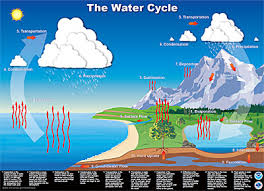
What energy source drives the water cycle?
Clouds
Oceans
Sun
Plants

Why does it rain more on the windward side of a mountain instead of the leeward side of the mountain?
Lower elevations have warmer temperatures that cannot hold as much moisture as cold air.
Lower elevations have colder temperatures that cannot hold as much moisture as warm air.
Higher elevations have warmer temperatures that cannot hold as much moisture as cold air.
Higher elevations have colder temperatures that cannot hold as much moisture as warm air.
Why do all parts of the Earth not receive the same amount of sunlight?
The Earth is tilted on its axis.
The Earth is closer to sun in the winter.
The moon revolves around the Earth.
The Earth is very far away from the Sun.
Land breeze happens:
(select all the correct options)
at night
in the morning
when wind blows from the land to the sea
when wind blows from the sea to the land
Sea breeze happens:
(select all the correct options)
at night
in the morning
when wind blows from the land to the sea
when wind blows from the sea to the land
Wind is defined as the movement of air from
an area of high pressure to an area of low pressure
an area of low pressure to an area of high pressure
Factors affecting temperature:
(select all that applies)
latitude
elevation
distance from the water bodies
longitude
cloud cover
Types of rainfall formation we've learned:
(select all that applies)
Convectional rainfall
Conventional rainfall
Frontal rainfall
Orographic rainfall
Relief rainfall
Which of the following statements are correct?
(select all that are correct)
Air pressure increases when altitude increases
Wind is the movement of air from an area of high pressure to low pressure.
Wind direction refers to the direction where the wind blows from.
When altitude increases, temperature increases.
During June to September,
northern hemisphere experiences summer.
southern hemisphere experiences summer.
Singapore experiences southwest monsoon.
Singapore experiences northeast monsoon.
Which of the following statements about Coriolis effect is incorrect?
In the northern hemisphere, it bends/deflects wind to the right.
In the southern hemisphere, it bends/deflects wind to the right.
It is strongest near the poles and negligible at the equator.
Coriolis effect is a force produced by earth's rotation.
The following are the three types of climate we've covered in class except:
Equatorial climate
Monsoon climate
Cool temperate climate
Tropical climate
Which of the following is not a characteristic of marine west-coast climate aka cool temperate climate?
four distinct seasons of spring, summer, autumn, and winter with mild winters and cool summers
total annual rainfall between 300-900 mm; still lower than monsoon and equatorial climates
even distribution of rainfall throughout the year
large temperature range of 21°C
high mean temperature of 21°C

