Wayground logo

Free Printable Worksheets

Font size

S
M
L
XL
Worksheets

darwin and natural selection 2019

Total questions: 37

Worksheet time: 19mins
Name
Class
Date
1.

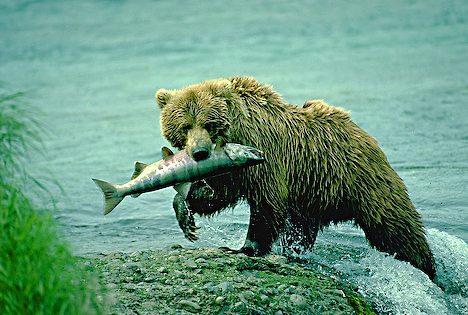
A grizzly bear survives because he is well-adapted to his environment. When he reproduces he passes on those traits to his offspring. this process is called

a)

Natural Selection

b)

Selective Breeding

c)

Random mutations

d)

Variations in a species

2.

Genetic mutations are the direct cause of which of the following?

a)

Aliens

b)

Super heroes

c)

Variations

d)

8th grade behaviors

3.

If Easter eggs were living species of organisms, their different colors would be considered:

a)

Adaptations

b)

Variations

c)

Different species

d)

Extinct species

4.

The peppered moth's color camouflaged it on the light colored tree bark. It's color was an example of a/n

a)

Variation

b)

Dominant trait

c)

Recessive trait

d)

Adaptation

5.

Why might it be helpful for a species to have a lot of variations?

a)

They can't be seen by predators

b)

If the environment changes, they might be better able to adapt

c)

It is helpful in asexual reproduction

d)

They don't recognize each other

6.

Changes in inherited characteristics can cause a species to change into a new one. This change over time is called?

a)

Graduation

b)

Selective Breeding

c)

Revolution

d)

Evolution

7.
Behavioral changes of individuals of a species that allow for better survival. (Acquired traits)
a)
Variation
b)
Adaptation
c)
Behavior
d)
Environment
8.
Where the better adapted organisms survive to pass traits along to offspring.
a)
Evolution
b)
Natural Selection
c)
Extinction
d)
Artifical Selection
9.
What is the advantage of having different shaped beaks?
a)
To look different from other species.
b)
To be able to eat the food readily available in the environment.
c)
To protect itself against predators.
d)
To protect itself against prey.
10.
The theory of evolution by natural selection means that what is changing over time?
a)
The inherited traits of a population.
b)
The acquired traits of a population.
c)
Hair color and eye color
d)
Attractive features.
11.

Two populations of the same species are separated by land barriers like rivers or mountains.

a)

geographical isolation

b)

temporal isolation

c)

adaptive ratiation

d)

behavioral isolaton

12.
"Survival of the Fittest" describes which theory
a)
a) natural selection
b)
b) gravity
c)
c) heredity
d)
d) string theory
13.
Modern whales developed their traits through natural selection.  What occurs during the process of natural selection?
a)
Organisms choose mates from other species to create new species
b)
Breeders selectively cross organisms with desired traits
c)
Only the fittest organisms can survive and reproduce
d)
Organisms remain exactly the same over time.
14.
Why are advantageous traits more likely to be passed onto offspring?
a)
Because they are more likely to survive and reproduce.
b)
Because they come from dominant alleles.
c)
Because they come from recessive alleles.
d)
Because the trait is an acquired phenotype.
15.
The difference in the physical traits of an individual from those of other individuals in a group is called a(n)
a)
change
b)
adaption
c)
species
d)
variation
16.
The ability of an organism to survive and reproduce is known as...
a)
Adaptation
b)
Trait
c)
Fitness
d)
Variation
17.
Any variation that can help a species survive in a given environment is called...
a)
an adapatation
b)
a characteristic
c)
a homologous structure
d)
a vestigial structure
18.
Which organisms are most likely to survive?
a)
the best adapted
b)
the fastest
c)
the strongest
d)
the most domesticated (tamed)
19.
Which of the following means "genetic change over time"
a)
natural selection
b)
speciation
c)
evolution
d)
fitness
20.
What is the correct explanation for what is happening in this graph?
a)
There are a lot of average-sized beaks
b)
There are no beaks
c)
There are a lot of small beaks only
d)
There are a lot of small and large beaks, but not average-sized ones
21.
What is the advantage of having different shaped beaks?
a)
To look different from other species.
b)
To be able to eat different types of food.
c)
To fly faster.
d)
To confuse scientists. 
22.
Why are advantageous traits more likely to be passed onto offspring?
a)
Because they are more likely to survive and reproduce.
b)
Because they look cooler.
c)
Because they come from recessive alleles.
d)
Because the trait is an acquired phenotype.
23.
Which of the following is a term for a group of similar organisms that can reproduce fertile offspring?
a)
individual
b)
population
c)
species
d)
fossil
24.
Evolution means...
a)
Change over time in a population.
b)
That everything is the same.
c)
That organisms never change.
d)
Negative traits are acquired in populations.
25.
What is it called when better adapted organisms survive to pass traits along to their offspring.
a)
Evolution
b)
Natural Selection
c)
Extinction
d)
Artifical Selection
26.
Enviromentals changes leads to
a)
variations
b)
pollution
c)
predation
d)
artificial selection
27.
Natural selection is when ____________ decides who survives and who doesn't
a)
nature
b)
humans
c)
animals
d)
years
28.
Where the better adapted organisms survive to pass traits along to offspring.
a)
Evolution
b)
Natural Selection
c)
Extinction
d)
Artifical Selection
29.
Why are advantageous traits more likely to be passed onto offspring?
a)
Because they are more likely to survive and reproduce.
b)
Because they come from dominant alleles.
c)
Because they come from recessive alleles.
d)
Because the trait is an acquired phenotype.
30.
The purpose of selective breeding is to 
a)
Get bigger animals
b)
get smaller animals
c)
create animals with desirable traits
d)
create animals with bad traits
31.
Problems with selective breeding include
a)
Better animals
b)
More Meat
c)
Animals can have bad health problems
d)
more diversity
32.
The gradual development of a species into a new one to survive.
a)
Evolution
b)
Natural Selection
c)
Extinction
d)
Artificial Selection
33.
Genetic differences between organisms of the same species
a)
Variation
b)
Adaptation
c)
Behavior
d)
Environment
34.
What is the definition of natural selection?
a)
Genes that are chosen by humans such as farmers and ranchers
b)
Organisms that are chosen by environmental pressures such as climate, available food, predators and habitat.
c)
Dogs and Wolves
d)
Genes that are chosen by scientist and academics. 
35.
How are new traits introduced into a population?
a)
Photosynthesis
b)
Cell Membrane
c)
Turtles 
d)
Mutations 
36.
What organisms only survive in the wild (Nature)?
a)
Handicap Organisms 
b)
White Mouse
c)
Only Fit organisms 
d)
Organisms that cannot adapt
37.
Artificial selection means ...
a)
made by nature
b)
made by the water
c)
made by humans 
d)
Hecho en Mexico