
 Worksheets
Science Quiz
Total questions: 25
Worksheet time: 23mins
Name
Class
Date
1.

A habitat is home to a tangle of food chains called ___
a)
a nutrient hub
b)
an energy chain
c)
a food web
d)
the carbon cycle
2.
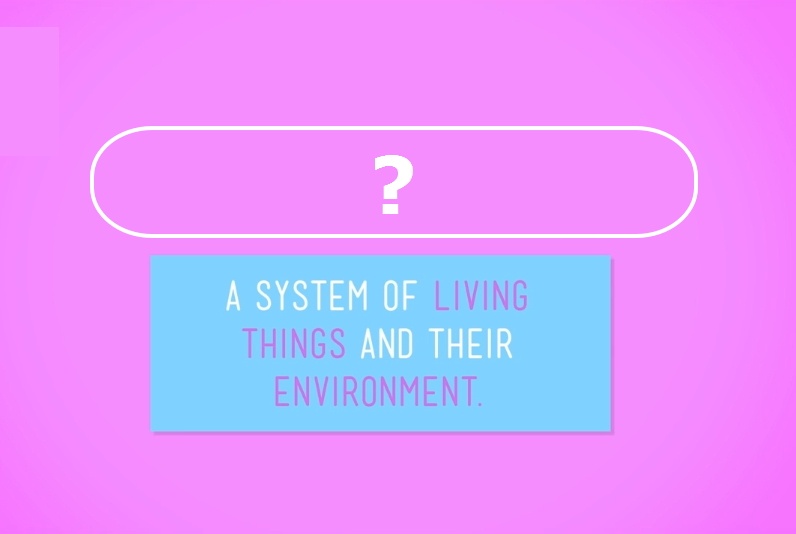
The interaction of living and non-living things in a habitat is called ___
a)
an environment
b)
an ecosystem
c)
a food web
d)
a food chain
3.

The things in an ecosystem are all ___
a)
separate
b)
connected
c)
scattered
d)
unrelated
4.

Spider monkeys eat mostly ___
a)
leaves
b)
toucans
c)
nuts
d)
fruit
5.

What is distributed by spider monkeys as they travel throughout the forest?
a)
whole fruit
b)
fruit seeds
c)
dried leaves
d)
insects
6.
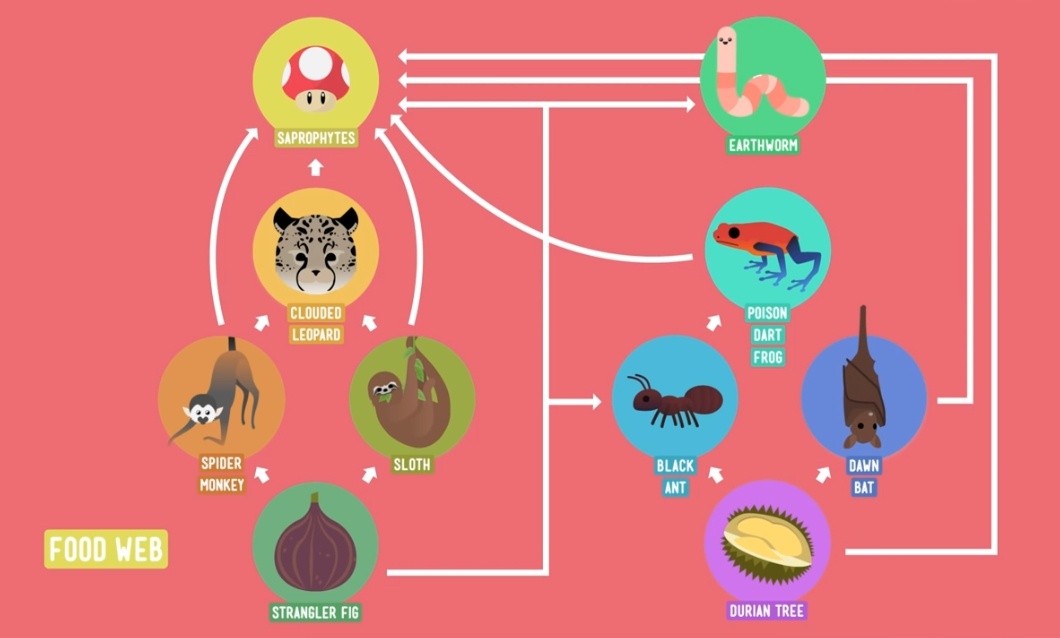
Leopards dine on ___
a)
figs and spider monkeys
b)
sloths and strangler figs
c)
sloths and spider monkeys
d)
ants and bats
7.
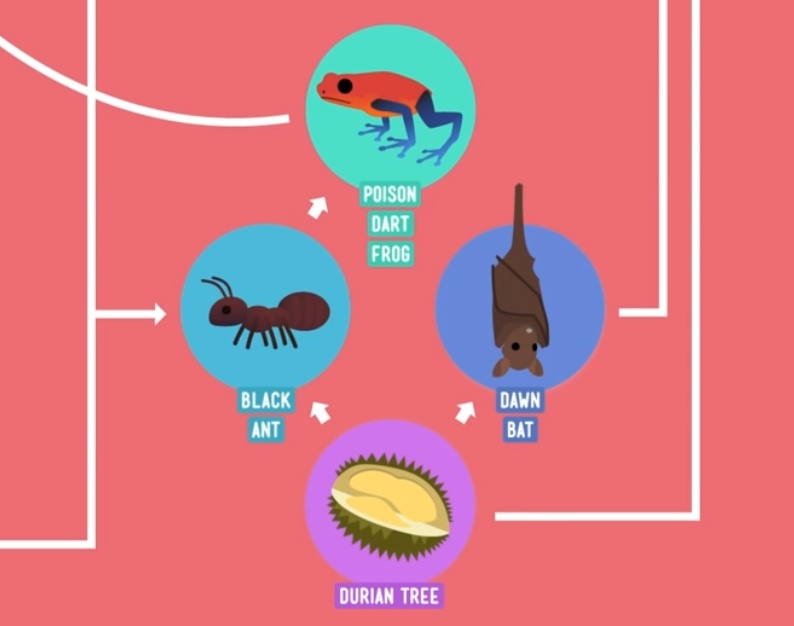
Frogs eat ___
a)
bats
b)
insects
c)
spider monkeys
d)
strangler figs
8.
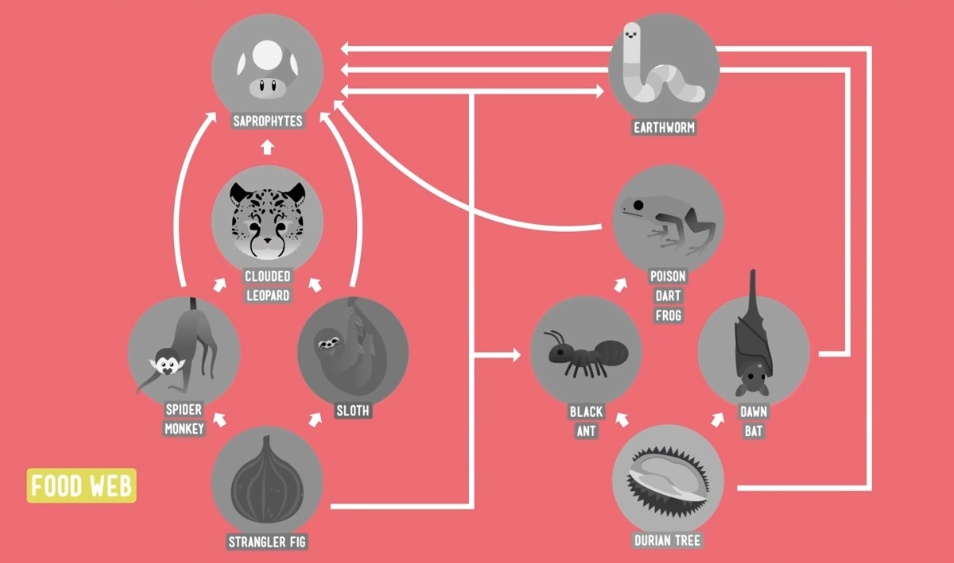
In the example, none of the animals had enough to eat, all because of the loss of ___
a)
one species
b)
two species
c)
three species
d)
several species
9.
Example of a consumer
a)
worm
b)
bacteria
c)
mushroom
d)
hawk
10.
Example of a decomposer
a)
fungus
b)
mouse
c)
plants
d)
frogs
11.
Humans are considered...
a)
consumers
b)
decomposers
c)
producers
12.

What is a producer?
a)
an organism that gets energy from eating other organisms
b)
an organisms that uses sunlight to make its own food
c)
an organism that gets energy from eating dead organisms, non-living material or waste
d)
an organism that uses chemical energy to make its own food
13.

A connection of food chains with many food energy paths in an ecosystem is a ____________
a)
ecosystem
b)
food web
c)
environment
d)
population
14.
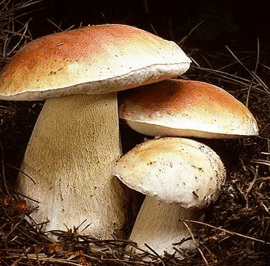
An organism that gets energy from breaking down dead organisms, non-living material or waste
a)
producer
b)
consumer
c)
decomposer
d)
autotroph
15.

Which of the following is NOT a consumer
a)
grass
b)
dog
c)
shark
d)
fish
16.

Where do all life forms get their energy?
a)
Earth's Core
b)
Water
c)
Plants
d)
The Sun
17.
The arrows in a food chain or web represents what?
a)
They point to the organism that is being eaten.
b)
It shows how sunlight flows within an ecosystem.
c)
They show what direction the energy is flowing between organisms.
d)
They represent how water is transferred within a habitat.
18.
If a frog is the prey, what could be the predator?
a)
Grass
b)
Insect
c)
Snake
d)
Snail
19.

What does a food chain represent?
a)
How all living organisms within a habitat are connected.
b)
All of the things that a particular animal eats.
c)
How plants create their own food.
d)
A single path of energy transfer within a habitat.
20.

An energy pyramid represents what?
a)
How much sunlight is available for the ecosystem to use.
b)
How much energy a particular organism needs.
c)
How much energy is needed to build a pyramid.
d)
The amount of energy available to the next 'feeder' in a food web.
21.
The CO2/O cycle is important to animals because it provides
a)
a gas they take in when breathing
b)
chemicals that build bones
c)
energy they need to move
d)
fresh water for their survival
22.

In this food chain, what will happen if the frogs become extinct?
a)
The snakes will increase.
b)
The grasshoppers will decrease.
c)
The eagles will remain the same.
d)
The grasshoppers will increase.
23.
Which of the following would have a negative impact on an ecosystem
a)
constructing highways
b)
planting trees
c)
recycling paper
24.

Which of the following organisms is a herbivore.
a)
butterfly
b)
snake
c)
fox
d)
ladybird
25.

Which of the following organisms is a carnivore.
a)
greenfly
b)
titmouse
c)
mouse
d)
buzzard
100 %

