wayground logo

Free Printable Worksheets

NEW

Font size

S
M
L
XL
Worksheets

NC EOG Review Energy, Healthy Living, Matter

Total questions: 46

Worksheet time: 40mins

Name
Class
Date
1.

Geothermal energy uses heat from ____ to produce electricity.

a)

the earth

b)

coal

c)

oil

d)

natural gas

2.

Resources that are not able to be reproduced as quickly as they are used are called _____.

a)

renewable resources

b)

replaceable resources

c)

non renewable resources

d)

non replaceable resources

3.

What type of power plant uses the potential energy of water trapped behind a dam?

a)

nuclear power plant

b)

hydroelectric power plant

c)

solar station

d)

coal burning power plant

4.

What are fossil fuels?

a)

coal, oil, uranium

b)

oil, natural gas, uranium

c)

coal, oil, natural gas

d)

geothemals, coal, natural gas

5.
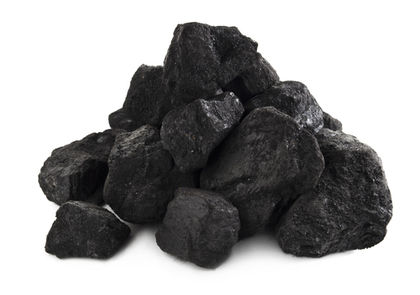
Coal is a __________ energy resource.
a)
Renewable
b)
Nonrenewable
6.
Re-processing material to make another product
a)
Reduce
b)
Reuse
c)
Recycle
7.
What does the three R's of recycling mean?
a)
risk corridors reinsurance and risk adjustment
b)
reading writing and arithmetic
c)
nothing
d)
Reduce Reuse Recycle
8.
The following is an example of reusing:  
a)
using fewer napkins when you eat.  
b)
using less water when you brush your teeth.  
c)
bringing cans back to a recycling center.  
d)
washing zip top bags after use so they can be used again.  
9.
The following is an example of reducing: 
a)
bringing newspapers to a recycling center. 
b)
using plastic bags as small garbage bags.  
c)
using less water when you shower.  
d)
all of the above.  
10.
Where does cellular respiration occur?
a)
Nucleus
b)
Mitochondria
c)
Vacuole
d)
Chloroplast
11.
This is referred to as the energy currency of the cell
a)
ADP
b)
ATP
c)
Mitochondria
d)
Nucleus
12.
What is the correct equation for cellular respiration?
a)
6O2 + C6H12O6 -> 6CO2 + 6H2O + Energy
b)
6O2 + C6H12O6 + Energy -> 6CO2 + 6H2O
c)
6CO2 + 6H2O -> 6O2 + C6H12O6 + Energy
d)
6CO2 + 6H2O + Energy -> 6O2 + C6H12O6
13.

C6H12O6 is the chemical formula for

a)

Carbon Dioxide

b)

Water

c)

Oxygen

d)

Glucose

14.
What do plants give off after photosynthesis?
a)
Oxygen
b)
carbon
c)
nitrogen
d)
hydrogen
15.
Which gas is removed from the atmosphere during photosynthesis?
a)
hydrogen
b)
oxygen
c)
nitrogen
d)
carbon dioxide
16.
Why do we need a balanced diet?
a)
The body needs nutrients for speed and height 
b)
The body needs nutrients for energy, growth and repair 
c)
to provide energy
d)
To have better outlook
17.
Which of these is the primary energy source for the body?
a)
Carbohydrates
b)
Protein
c)
Fat
d)
Water
18.
Which of these is used primarily for growth and muscle repair?
a)
Carbohydrates
b)
Protein
c)
Fats
d)
Water
19.
What two types of fats are there?
a)
Healthy and unhealthy
b)
Saturated and Unsaturated
c)
Small and Large
d)
Cooked and Uncooked
20.
Where do you find complex carbohydrates?
a)
Cereal, pasta, potatoes, bread and fruit
b)
Sugar , jam, confectionery, fruit juices
c)
Meat, Fish and poultry
d)
Water, Lucozade and Haribo
21.
What are the three states of matter?
a)
solid, volume, mass
b)
density, volume, mass
c)
solid, liquid, gas
d)
density, gas, volume
22.
Something that takes up space and has mass.
a)
volume
b)
matter
c)
mass
d)
density
23.
A state of matter that has a definite volume and shape.
a)
solid
b)
liquid
c)
gas
d)
matter
24.
A measure of how much mass is contained in a given unit of volume.
a)
mass
b)
density
c)
volume
d)
matter
25.
An example of a physical property is 
a)
flammability
b)
acidic
c)
color
d)
ability to rust
26.
Which of the following could be a characteristic that changes in matter during a PHYSICAL CHANGE?
a)
Size
b)
State
c)
Texture
d)
All of the above
27.
Water freezing to ice is an example of a:
a)
Physical change
b)
Chemical change
28.
Burning wood to ash is an example of a:
a)
Physical change
b)
Chemical change
29.
Smashing a piece of candy into smaller pieces is an example of a:
a)
Physical change
b)
Chemical change
30.
What type of substance is shown in the picture below? 
a)
compound 
b)
mixture 
c)
element 
31.
What type of substance is shown in the picture? 
a)
element
b)
compound
c)
mixture 
32.
Which process occurs when a solid changes to a liquid?
a)
condensation
b)
evaporation
c)
freezing
d)
melting 
33.
A change in the appearance of matter without changing the type of matter is called a __________. 
a)
chemical change 
b)
physical change 
34.
Water, Salt, and Rust are examples of 
a)
elements
b)
metals
c)
compounds 
35.
Does air have mass?
a)
Yes
b)
No
36.

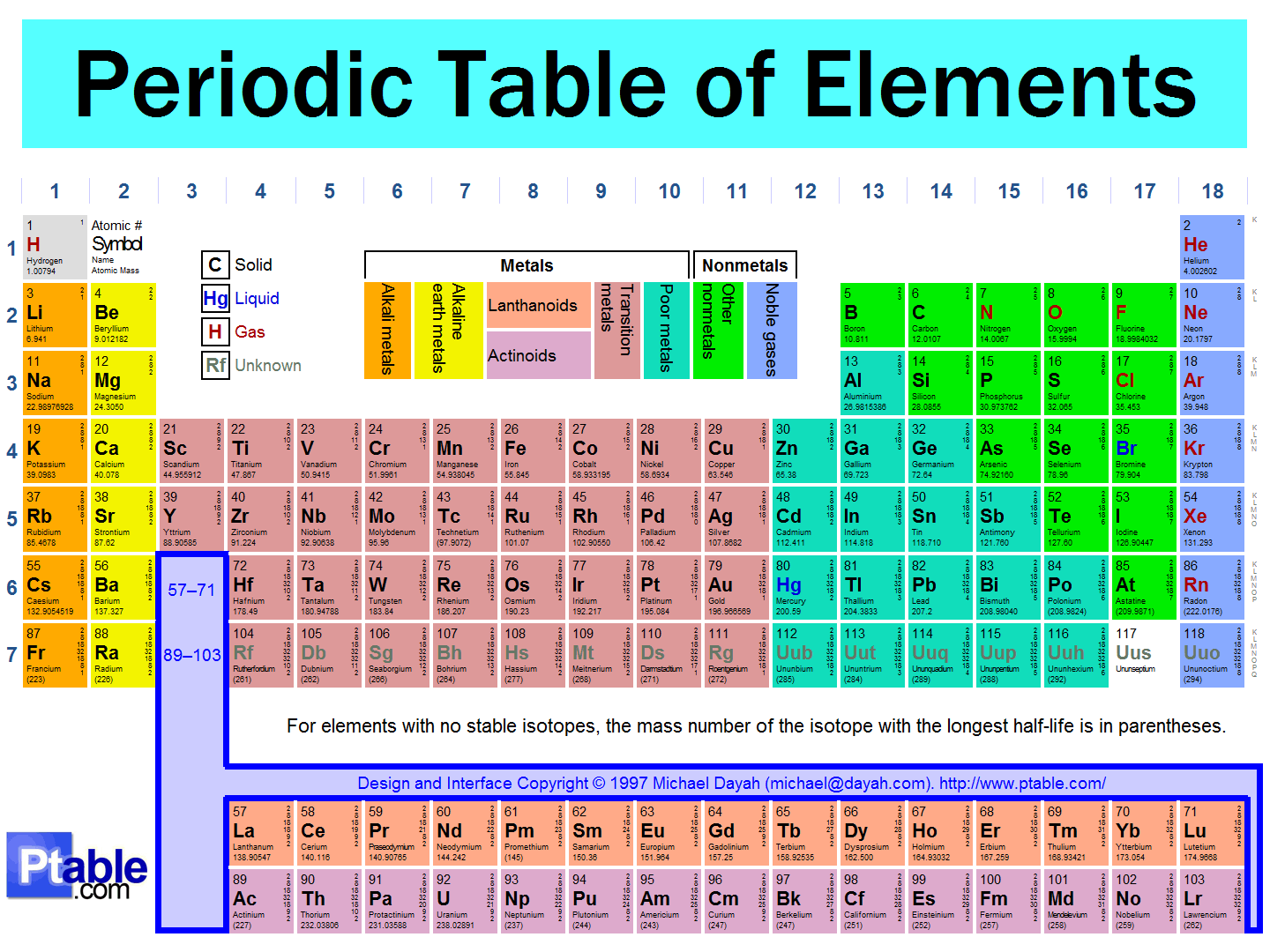
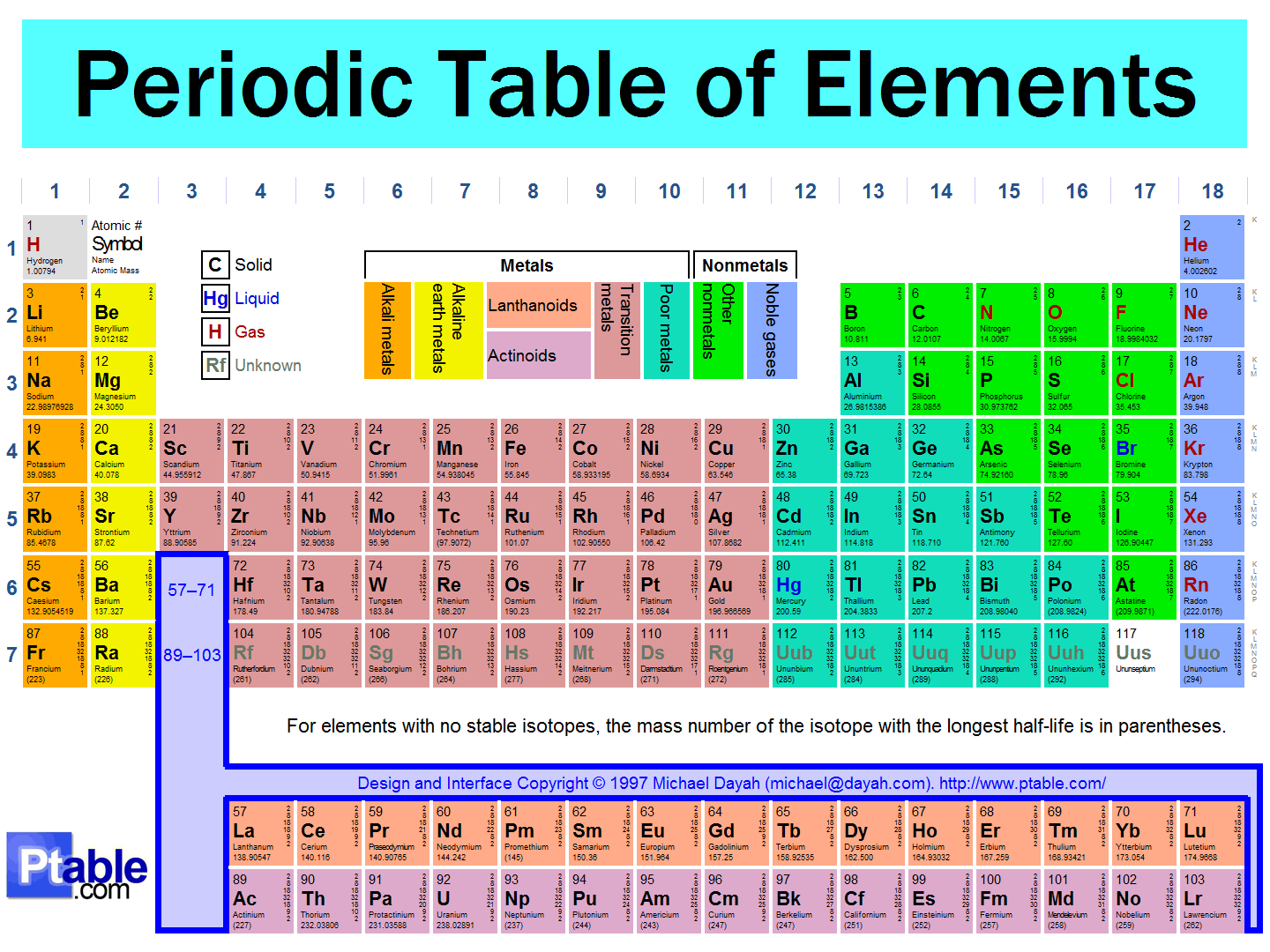
The vertical (up and down) columns in the Periodic Table are called

a)

groups

b)

towers

c)

periods

d)

atomic numbers

37.
The Modern Periodic Table of Elements is arranged by
a)
atomic mass
b)
atomic number
c)
valence electrons
d)
number of isotopes
38.
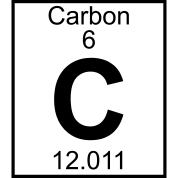
What does the 6 represent?
a)
atomic mass
b)
atomic number
c)
element name
d)
chemical symbol 
39.

The horizontal (side to side) rows in the Periodic Table are called

a)

groups

b)

families

c)

periods

d)

atomic numbers

40.
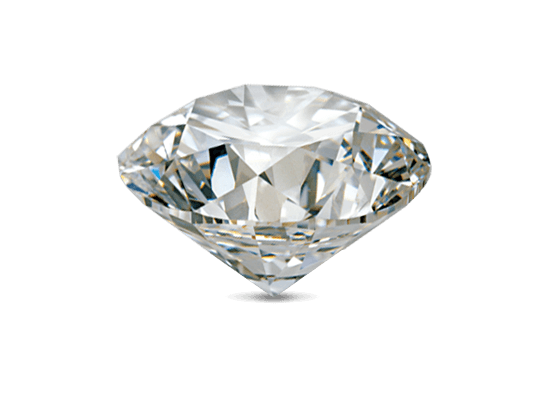
What element primarily makes a diamond?
a)
Hydrogen
b)
Silver
c)
Carbon
d)
Calcium
41.
What is the symbol for Potassium?
a)
P
b)
K
c)
Pb
d)
Pd
42.
An element's identity is determined by the number of
a)
electrons.
b)
protons.
c)
neutrons.
d)
valence.
43.
Which is an electron?
a)
A
b)
B
c)
C
44.
Which is a proton?
a)
A
b)
B
c)
C
45.
Which is a neutron?
a)
A
b)
B
c)
C
46.
What is the atomic mass of "F"
a)
9
b)
18
c)
17
d)
19