wayground logo

Free Printable Worksheets

Font size

S
M
L
XL
Worksheets

World History Honors Cumilative

Total questions: 179

Worksheet time: 2hrs 49mins

Name
Class
Date
1.
Who moved the capital of Rome to Byzantium and renamed it "New Rome" (later Constantinople)?
a)
Justinian
b)
Constantine 
c)
Charlemagne
d)
Leo III
2.
In 1054, the Eastern Orthodox Church and the Roman Catholic Church formally split. This is a:
a)
Liturgy
b)
Patriarch
c)
Icon
d)
Schism
3.
The Byzantine Empire was the eastern half of what remained of what ancient empire? 
a)
The Ottoman Empire
b)
The Roman Empire
c)
The Holy Roman Empire
d)
The Mongolian Empire
4.
Why was Constantinople a great site for a capital?
a)
The site was easy to defend as a peninsula. 
b)
It was a crossroads of east and west trade routes. 
c)
It was a walled city. 
d)
All of the above. 
5.
What emperor had the law code re-written and organized?
a)
Charlemagne
b)
Justinian
c)
Theodora
d)
Constantine
6.
What was one of the greatest public works projects during the Byzantine Empire?
a)
The Scriptorium 
b)
The Colosseum 
c)
The Pantheon
d)
The Hagia Sophia 
7.
Who was the famous lady that influenced her husband to increase some legal rights of women?
a)
Irene
b)
Theodora
c)
Joan of Arc 
d)
Eleanor of Aquitaine 
8.
Why is Justinian's Code of laws so important today?
a)
It established all rules regarding. taxation.
b)
It established codes regarding the Eastern Orthodox Church.
c)
It established the basis for legal codes in Western World.
d)
It established what entertainment acts were at Hippodrome.
9.
Why were icons, murals, and mosaics painted?
a)
They felt that sacred pictures brought them closer to God.
b)
So artists could sell them and make a good living.
c)
They were part of the sacraments.
d)
None of the above
10.
Who conquered the Byzantines in 1453?
a)
The Franks
b)
The Ottoman Turks
c)
The Holy Roman Empire
d)
The Mongols
11.

The Benedictine Rules

a)

applied to all members of Christian society

b)

established the procedure for entering the clergy

c)

defined the “code of conduct” for the clergy

d)

established the guidelines for the behavior of the Crusaders

12.

Monks contributed to the preservation of knowledge by

a)

opening schools for the poor

b)

studying astronomy and biology

c)

transcribing books and documents

d)

all of the above

13.

Chivalry refers to the required behavior of

a)

the knights

b)

the clergy

c)

the commoners

d)

everyone

14.

The Magna Carta was significant because it

a)

was the 1st time the power of a monarch was limited

b)

established what would eventually become Parliament

c)

grant nobles the right of trial by Jury

d)

all of the above

15.

Which country introduced the idea of common law?

a)

England

b)

France

c)

Italy

d)

the Holy Roman Emperor

16.

The Battle of Hastings was significant because it

a)

meant England would be united under the Normans

b)

kept the Muslims out of Europe

c)

returned Jerusalem to Christian rule

d)

all of the above

17.

The main purpose of the inquisition was to

a)

recruit for the Crusades

b)

find and punish heretics

c)

convert people to Christianity

d)

all of the above

18.

Country most associatrd with the Inquistion

a)

France

b)

Spain

c)

Papal States

d)

Holy Roman Emperor

19.
What is a system of government that is ruled by a king or queen?
a)
monarchy
b)
chivalry
c)
monastery
d)
feudalism
20.
What is the system in Europe where lords gave land to vassals for service and loyalty?
a)
monarchy
b)
chivalry
c)
monastery
d)
feudalism
21.
What is a series of military tours from Christian Europe to Palestine (Holy Lands)?
a)
serf
b)
knight
c)
Crusades
d)
Clergy
22.
What is a peasant farmer in feudal society?
a)
serf
b)
knight
c)
Crusades
d)
Clergy
23.
What is the people with priestly authority in a religion?
a)
serf
b)
knight
c)
Crusades
d)
Clergy
24.
Which of the following is the correct hierarchy (ranking) of Feudal society in Medieval Europe? TOP to BOTTOM
a)
knights, peasants, church officials & nobles, king
b)
king, knights, church officials and nobles, peasants
c)
king, church officials and nobles, knights, peasants
d)
peasants, knights, church officials and nobles, king
25.
Which of the following is the correct hierarchy (ranking) of the clergy in the Roman Catholic church? TOP to BOTTOM
a)
Pope, Cardinals, Priests, Bishops, Monks & Nuns
b)
Pope, Cardinals, Bishops, Priests, Monks & Nuns
c)
Pope, Priests, Cardinals, Bishops, Monks & Nuns
d)
Pope, Bishops, Cardinals, Priests, Monks & Nuns
26.

The ___________________ caused economic and social instability by drastically reducing the workforce

a)

Black Death

b)

church

c)

Asia

d)

population

27.

Lords provided land use and ______________________ to peasants

a)

communities

b)

protection

c)

military service

d)

population

28.

Who set up Christian kingdoms in Palestine and Syria in early 1100s?

a)

Seljuks with a policy of tolerance

b)

Rulers of the Byzantine Empire

c)

English Allies of the Turks

d)

Winners of the first Crusades

29.

Which is the best example of cultural diffusion?

a)

Muslim architects built mosques with minarets.

b)

Muslims spread the Chinese craft of paper making to Europe.

c)

Muslims face toward Mecca when they pray

d)

Muslim cities along major trade routes grow wealthy

30.

What was the overall purpose of the Christians in the Crusades?

a)

to gain control of Palestine (Holy Land)

b)

to open a trade route to China

c)

to learn about Muslim innovation

d)

to capture Jerusalem from the Jews

31.

What is the purpose of the five pillars?

a)

The pathway to richness

b)

To make friends

c)

Famous landmarks in Islam to remember influential people

d)

The five basic rules in Islam that all Muslims must follow

32.
How did Ghana grow powerful?
a)
They killed people
b)
They had slaves
c)
They ate people
d)
They conquered trade
33.
Sunni Ali was the leader of?
a)
The African Empire
b)
The Mali Empire
c)
The songhai
34.
What religion did King Ezana of Axum bring to Africa?
a)
Muslim
b)
Islam
c)
Christianity
35.
What skills did the Bantu spread through Africa?
a)
Mining and Pottery
b)
Knitting and sowing
c)
Basket Weaving
36.
Which one of these West African kingdoms developed first?
a)
Ghana
b)
Mali
c)
Songhai
d)
Egypt
37.
Mansa Musa is most famous for..?
a)
converting to Christianity
b)
making a pilgrimage to Mecca
c)
ruling Songhai
d)
not being an efficient leader
38.
Mecca and Medina are important cities to which religion?
a)
Islam
b)
Christianity
c)
Buddhism
d)
Judaism
39.
People in North Africa were able to control the trade of which important mineral?
a)
salt
b)
gold
c)
slaves
d)
silver
40.
Which kingdom came into power after Ghana?
a)
Mali
b)
Songhai
c)
Egypt
d)
Ghana Dos 
41.
What do Christianity, Judaism, and Islam all have in common?
a)
they have the same holy book
b)
monotheistic
c)
polytheistic
d)
nothing
42.
Aztec capital city built on a swampy island
a)
Tenochtitlan
b)
Cuzco
c)
Machu Picchu
d)
Pacal
43.
In the mid 1400s this ruler began to expand the Inca territory
a)
Pachacuti
b)
Moctezuma
c)
Paca
d)
Pizarro 
44.
Floating gardens built by the Aztecs
a)
chinampas
b)
mita
c)
masonry
d)
terraced farming
45.
A method of growing crops on the sides of mountains.
a)
ziggurat
b)
terrace farming
c)
codex
d)
conquistador
46.
The Mayans were located at what letter on the map?
 (Click to hide text)
a)
A
b)
B
c)
C
47.
The Aztec were located at what letter on the map?
 (Click to hide text)
a)
A
b)
B
c)
C
48.
The Inca were located at what letter on the map?
 (Click to hide text)
a)
A
b)
B
c)
C
49.

Which of these statements describes a change brought about by the Renaissance?

a)

Society was dominated by the church.

b)

Society began to value individualism.

c)

Society was focused on warfare.

d)

Society was dominated by lords.

50.

Which of these famous structures did Michelangelo paint?

a)

the Louvre

b)

the Coliseum

c)

the Sistine Chapel

d)

the Eiffel Tower

51.

Developments in cartography made it easier for explorers in their travels to new lands. Which of the following best describes cartography?

a)

the study of the Earth's natural processes

b)

the study of the Earth's weather patterns

c)

the study and practice of making maps

d)

the study of past human societies

52.

• Botticelli • Michelangelo

• Raphael • Titian


All of the above were famous Renaissance

a)

scientists.

b)

philosophers.

c)

priests.

d)

artists.

53.

During the Renaissance, a new intellectual movement known as humanism evolved. What was the significance of the humanist movement?

a)

Humanists felt formal education was impractical and unnecessary; therefore, many schools were closed.

b)

Humanists spread the teachings of Eastern philosophers such as Confucius throughout Europe.

c)

Humanists were very interested in religious studies and sought to increase the influence of the Church.

d)

Humanists were inspired by classical texts and emphasized the dignity and worth of the individual.

54.

Which of these men of the Renaissance was known equally for his art as well as inventions?

a)

Rueben

b)

Leonardo da Vinci

c)

Michelangelo

d)

Aristotle

55.

Which of these changes occurred during the Renaissance?

a)

The Church was all-powerful.

b)

The Church’s power declined.

c)

Factories began using electricity.

d)

Women gained equal rights with men.

56.

? --->Literature printed for quickly --> literature printed for less money----> Greater spread of ideas

Which of these would complete the diagram?

a)

the Book of Common Prayer

b)

the Italian university system

c)

the Gutenberg printing press

d)

the Petrarchan style sonnet

57.

• Nicolaus Copernicus

• Galileo Galilei

• Tycho Brahe

• Johannes Kepler

All of the above were famous Renaissance

a)

philosophers.

b)

priests.

c)

artists.

d)

scientists.

58.

What was Niccolò Machiavelli's main argument in his work The Prince?

a)

A ruler should do whatever is necessary to maintain power.

b)

A ruler should follow all of the teachings of the Catholic Church.

c)

A ruler should make his subjects as happy as possible.

d)

A ruler should strive to maintain equality and fairness.

59.

How did the Spanish conquer the most powerful empires in the Americas during the 1500s?

a)

By creating peaceful treaties

b)

By using their bigger army

c)

By stealing all of their food supply

d)

By using guns, horses, diseases

60.

Which of the following descries the Columbian Exchange?

a)

The exchange of people, plants, animals, diseases and ideas from Old World to New World and from New World to Old World

b)

The sending of people, plants, animals, diseases and ideas from the Old World to New World only

c)

The sending of people, plants, animals, diseases and ideas from the New World to Old World only

d)

The sending of people, plants, animals, diseases and ideas from South America to North America only

61.

What happened to the population of many indigenous Americans due to Europe's invasion and colonization of Latin America?

a)

The population decreased significantly due to diseases and warfare

b)

The population increased significantly due to diseases and warfare

c)

The population didn't change much

d)

The population increased significantly due to the new crops and animals

62.

Which group of people suffered the most due to the Columbian Exchange?

a)

Asians

b)

Explorers

c)

Indigenous Americans

d)

Europeans

63.

What does indigenous mean?

a)

the native people of a given place

b)

the people who colonize a new place

64.

Which crop was brought to the New World, led to the rise of the slave trade & remains one of the biggest natural resources today?

a)

wheat

b)

sugar cane

c)

corn

d)

citrus fruit

65.

The Spanish & Portuguese colonizers forcibly spread which religion to Latin America?

a)

Roman Catholicism

b)

Islam

c)

Judaism

d)

Protestantism

66.

Although new crops were introduced to both Europe and South America due to the Columbian Exchange, why did the enslavement of Africans occur mostly in South America and not in Europe?

a)

South America, unlike Europe, could grow cash crops - such as coffee and sugar cane - due to its' tropical climate

b)

Africa is closer to South America so it was easier to travel to South America than Europe

c)

Many Africans were already in South America before the Europeans colonized it

d)

This is false. Enslavement of Africans occurred in equally in both South America and Europe

67.
The impact of the Atlantic Slave Trade not just affected the slaves but also...
a)
the economies and history of the world
b)
the amount sugar sold 
c)
the amount of slaves sold
d)
the amount of slaves killed
68.
When did the Atlantic Slave Trade begin?
a)
1400s
b)
1500s
c)
1600s
d)
1700s
69.
To meet the massive demand for slaves, where did the Europeans look for slaves?
a)
Europe
b)
Spain
c)
Africa
d)
Asia
70.
How did the Atlantic Slave Trade effect Africa's future?
a)
Africa's economy collapsed
b)
Africa's villages ceased to exist
c)
Africa's population increased
d)
Africans would be seen as equals to Europeans
71.
How did Europeans justify enslaving Africans?
a)
They claimed that Africans were biologically inferior
b)
They claimed that Africans were biologically superior
c)
They claimed that Africans were cannibals
d)
They claimed Africans were vegetarians
72.
What is the term applied to the section of trade where the "cargo" consisted of humans?
a)
European Passage
b)
Middle Passage
c)
Atlantic Passage
d)
Silk Road
73.
Which Enlightenment thinker produced plays and poems, as well as historical and philosophical essays?
a)
A) Immanuel Kant 
b)
B) John Locke 
c)
C) Montesquieu 
d)
D) Voltaire
74.
The Encyclopedie was published to
a)
A) propose a new plan of government for France 
b)
B) inspire peasants to rise up against the ruling class 
c)
C) spread Enlightenment ideas as widely as possible 
d)
D) improve the study of literature by the middle class
75.
 In what way did Enlightenment philosophers reflect the central ideas of both Greek democracy and Roman republicanism?
a)
A) They taught that rule by an elite class of nobles is necessary for running a government. 
b)
B) They thought government should represent the will of its citizens. 
c)
C) They argued that a merit-based system is the best method for selecting government officials. 
d)
D) They felt that rule by a strong central leader is the only way to govern effectively.
76.
The concept of individualism was most central to the political ideas of
a)
A) Thomas Hobbes 
b)
B) Immanuel Kant 
c)
C) John Locke 
d)
D) Montesquieu 
77.
John Locke's central political value was
a)
A) the protection of individual rights
b)
B) designing governments around biblical teachings
c)
C) ensuring an equal distribution of wealth
d)
D) the empowerment of the majority of people
78.
Immanuel Kant's main writings centered on which question?
a)
A) How can religious ideas be proven rationally?
b)
B) How should a democratic society be organized?
c)
C) How do humans learn about the way the world works?
d)
D) How do humans react to new technological innovations?
79.
___________________ believed that without government, people would fight each other all the time.
a)
A. Locke
b)
B. Hobbes
c)
C. Montesquieu
d)
D. Smith
80.
Locke believed that a government's power came from its ___________________.
a)
A. army
b)
B. power
c)
C. people
d)
D. science
81.
American's used _________________'s idea of separation of powers to write the US Constitution. 
a)
A. Montesquieu
b)
B. Hobbes
c)
C. Rousseau
d)
D. Voltaire
82.
Enlightenment thinkers and theories inspired
a)
A. the French Revolution
b)
B. the American Revolution
c)
C. other revolutions of the 1800s
d)
D. all of the above
83.
You are born with _________________ that can't be taken away; life, liberty, property
a)
A. philosophe
b)
B. natural rights
c)
C. separation of power
d)
D. checks and balances
84.
The belief that government should be split into three branches to prevent one person or group from becoming corrupt.
a)
A. philosophe
b)
B. natural rights
c)
C. separation of power
d)
D. checks and balances
85.
Related to the idea of separation of powers; each branch of government must have approval from other branches in order to do certain functions.
a)
A. philosophe
b)
B. natural rights
c)
C. separation of power
d)
D. checks and balances
86.
In which country did the Industrial Revolution begin?
a)
The United States
b)
England
c)
France
d)
Germany
87.
What product was first made using machines in factories?
a)
Steel
b)
textiles
c)
locomotives
d)
flying shuttles
88.
What are identical components that can be used in place of each other?
a)
Interchangeable parts
b)
Factories
c)
Dynamos
d)
Assembly Lines
89.
Which of the following was NOT associated with early factory working conditions?
a)
Low wages
b)
Safe working conditions
c)
Dangerous working conditions
d)
Widespread pollution
90.
A place where people and machines join together to mass produce goods.
a)
Cartel
b)
Corporation
c)
Factory
d)
Urbanization
91.
Mass production led to:
a)
Products being more superior in quality
b)
goods became less expensive
c)
laborers received higher wages
d)
industries moved to rural areas
92.
Before the Industrial Revolution all products were created by
a)
Factories
b)
Hand
c)
Slaves
d)
Royalty
93.
What is the movement from rural to urban areas called?
a)
Moving
b)
colonization
c)
inflation
d)
urbanization
94.
This machine allowed factories to be built anywhere, powered by coal.
a)
flying shuttle
b)
steam engine
c)
spinning jenny
d)
cotton gin
95.
Which statement is true?
a)
Children were not allowed to work in the mines during the Industrial Revolution
b)
Work conditions were closely regulated
c)
There were no labor laws that prevented children from working
d)
Children were allowed to work but they were treated fairly. 
96.
How did the cotton gin change cotton production in the South?
a)
Cotton was made faster.
b)
Cotton became the most important cash crop in the United States.
c)
It could clean more cotton in minutes than a whole group of workers could clean in a day.
d)
all of the above
97.
Who invented the cotton gin?
a)
Thomas Jefferson
b)
James Madison
c)
George Washington
d)
Eli Whitney
98.
Until the 1800s, how did most families get the items they needed for daily life?
a)
They made tools, clothing, materials, and food by hand.
b)
They bought them from factories.
c)
They bought them on the Internet.
d)
They bought them from stores.
99.
_______________ are people who live in a country in which they were not born.
a)
Pioneers
b)
Immigrants
c)
Merchants
d)
Native Americans
100.

Why was trade with China particularly important to Great Britain?

a)

The British sourced opium from China

b)

The British sourced silver from China

c)

The British sourced rice from China

d)

The British sourced tea from China

101.

Why were the Opium Wars significant?

a)

It forced China to change to a democratic government

b)

It forced Great Britain to recognise the importance of Confucian values

c)

It forced China to open its doors to trade with the western world

d)

It forced Great Britain to open its doors to trade with the Qing dynasty.

102.

What product did the government of China try to prevent the British from trading in their country?

a)

opium

b)

silver

c)

tea

d)

silk

103.

What was the Boxer Rebellion?

a)

An uprising in Great Britain over the price of tea, because of the American Revolution

b)

A militant uprising within India that lasted from 1898 to 1900.

c)

A militant uprising within China that lasted from 1898 to 1900.

d)

Dog only, uprising at local dog parks.

104.

Who did the Boxers kill?

a)

Members of the Fists of Harmony and Justice

b)

Chinese Muslim

c)

All Qing nobels

d)

Christian missionaries and Western diplomats

105.
After which event did China open itself to trade with Europeans?
a)
Opium War
b)
Meiji Restoration
c)
Sepoy Rebellion
d)
Russo-Japanese War
106.
What were "spheres of influence"?
a)
European nations controlled special trading and economic rights in specific areas of China.
b)
Europeans had specific areas of China in which they were free to convert the Chinese toChristianity.
c)
Europeans were only allowed to trade certain goods in China.
d)
Europeans could only live and work in certain parts of China.
107.
What country forced Japan to end their isolationist policy?
a)
United States
b)
Great Britain
c)
China
d)
Russia
108.

What was the main economic reason industrialized nations wanted to imperialize non-industrialized nations?

a)

to gain raw materials and new markets

b)

to spread Christianity and other religions

c)

to show their national pride and cultural superiority

d)

to build factories and canals

109.
Which rebellion was a direct result of British insensitivity to Hindu and Muslim beliefs?
a)
Boer War
b)
Sepoy Rebellion
c)
Boxer Rebellion
d)
Crimean War
110.
What was the goal of both the Sepoy Rebellion and Boxer Rebellion?
a)
to remove foreign influences
b)
to restore democracy
c)
to modernize the economy
d)
to end religious conflict
111.
Which of the following was a response to Japan's growing nationalism and desire to protect itself from imperial aggression?
a)
Open Door Policy
b)
Isolatioism
c)
Meiji Restoration
d)
Opium War
112.
What was the goal of the of the Taiping Rebellion in China?
a)
to eliminate poverty
b)
to eliminate religious differences
c)
to eliminate racism
d)
to eliminate absolute monarchies
113.

Which new innovation lead to trench warfare?

a)

improvements in machine guns

b)

chemical warfare

c)

tanks

d)

unrestricted submarine warfare

114.

President Wilson's created the 14 Points to

a)

Promote peace.

b)

Punish Germany.

c)

End the War.

115.

The main causes of World War 1:

a)

Militarism, Alliances, Imperialism, Nationalism

b)

Money, Alliances, Imperialism, Nativism

c)

Militarism, Alliances, Imperialism, Nativism

116.

What events lead America to join the War?

a)

Trench Warfare and Chemical Warfare

b)

The DeLome Letter and Assassination of Franz Ferdiand

c)

Sinking of the Lusitania and Zimmerman Note

117.

There were several events that occurred that would have justified America's involvement in the War, but Wilson chose to maintain a policy of __________ instead.

a)

aggression

b)

passiveness

c)

neutrality

118.

When African Americans joined the war, they

a)

were seen as equals to the other soldiers.

b)

were segregated from the other soldiers.

c)

were treated good, but still segregated.

119.
The land in between trenches is known as
a)
No Man's Land
b)
Dead Space
c)
The Danger Zone
d)
Barbed Wire Zone
120.
The Zimmerman Telegram can best be described by which of the following?
a)
Great Britain promised the U.S. that they would help them gain territories in Europe
b)
Mexico vowed to help the U.S.  and the Allies in World War I
c)
Germany asked Mexico to declare war on the U.S. to regain lost territories
d)
Russia withdrew from the war due to the revolution that was occurring in the country
121.
What style of fighting came to dominate the Western Front?
a)
Blitzkrieg
b)
Trench warfare
c)
Fast attacks with tanks
d)
Guerrilla warfare
122.
The 1919 treaty that ended WW1
a)
Reparations
b)
Woodrow Wilson
c)
Reparations
d)
Treaty of Versailles 
123.
What was the purpose of the League of Nations? 
a)
to govern Germany after the war 
b)
to help secure capitalism in Europe
c)
to prevent future conflicts through negotiations and settlements 
d)
to insure US trading rights 
124.
The policy of building up a country's military to prepare for war is known as 
a)
imperialism
b)
nationalism
c)
militarism
d)
isolationism
125.

World War 1 began with

a)

The assassination of archduke Franz Ferdinand

b)

The bombing of Pearl Harbor

c)

When Germany invaded Poland

d)

When the Germans sank the Lusitania

126.
What effect did the Treaty of Versailles have on the start of World War II?
a)
it rewarded the Italians with additional land and resources
b)

it allowed the Russians to receive financial aid and build their army.
c)
it led to an aggressive military dictatorship in France
d)

it punished Germany by making them pay reparations and led the Germans to seek revenge
127.
What political term does the political cartoon above describe?
a)
Assimilation 
b)
Appeasement 
c)
Blitzkrieg
d)
Blitzkrieg
128.
“We shall fight on the beaches. We shall fight on the landing grounds. We shall fight in the fields, and in the street, we shall fight in the hills. We shall never surrender!”—Winston Churchill, June 4, 1940  
Read the quote from Winston Churchill. Winston Churchill’s words inspired people during the…..
a)
Attack on Pearl Harbor
b)
Battle of the Atlantic 
c)
Battle of Guadalcanal 
d)
Battle of Britain
129.
What event led the United States to become invovled in World War 2 ?
a)
The Discovery of Auschwitz
b)
The Battle of Britain
c)
The Sinking of the Lusitania
d)
The Attack on Pearl Harbor
130.
This was a new type of warfare that the Germans used to run through France and Poland in the early parts of WWII. It is also known as Lightning War.
a)
Hitler bombing
b)
Blitzkrieg
c)
Ran-sacking
d)
Nuclear Warfare
131.
Britain and France declared war in response to what event?
a)
German invasion of Poland
b)
Soviet invasion of Finland
c)
German invasion of Czechoslovakia
d)
Italian Invasion of Ethiopia
132.
This is what the atomic bomb program came to be called:
a)
Office of Scientific Research and Development
b)
War Production Board
c)
War Production Board
d)
Manhattan Project
133.
Where were atomic bombs dropped?
a)
Leyte Island and Midway
b)
Okinawa and Iwo Jima
c)
Hiroshima and Nagasaki
d)
Okinawa and Iwo Jima
134.
In 1941, the ______________________passed, allowing the president to lend or lease arms and other supplies to "any country whose defense was vital to the US."
a)
Lend-Lease Act
b)
Trade Embargo
c)
Atlantic Charter
d)
Neutrality Act
135.
What was the importance of the Munich conference?
a)
all of the above.  
b)
Britain and France stood up to Hitler and declared war
c)
location of the war crimes trial after World War II
d)
Britain and France gave into Hitler’s demands and let him take over more land
136.
Which of the following formed the axis powers?
a)
France, Germany and Japan
b)
Great Britain, Germany and Italy
c)
Japan, Russia, and China
d)
Italy, Germany, and Japan
137.
Which of the following formed the Allied powers?
a)
Italy and Great Britain
b)
France and Germanyv
c)

France, Soviet Union, The United States and Great Britain
d)
Japan and Germany
138.
Which of the following strategies involved suicide bombing by Japanese airplanes?
a)
Manhattan Project 
b)
Island Hopping
c)
Battah Death March 
d)
Kamikaze
139.
What finally brought an end to World War II in the Pacific?
a)
a massive Soviet invasion of the Japanese islands
b)
the unconditional surrender of Germany
c)
U.S. naval blockade of Japan
d)
the dropping of atomic bombs on Hiroshima and Nagasaki
140.
Which of the following best describes the results of World War II?
a)
The Allies defeated the Axis powers and occupied Germany
b)
The League of Nations was created to prevent future wars
c)

The Axis Powers defeat the Allies but tensions still remained
d)

Italy and Japan emerged as world powers immediately after the war
141.
Which of the following describes the "Final Solution"?
a)
dropping atomic bombs on Japan
b)
killing of the Jews
c)
secret plan to invade Poland
d)
the official end of World War 2
142.
The Non-Aggression Pact was the agreement between what two figures? (They promised not to attack each other)
a)
Hitler and Mussolini
b)
Hitler and Stalin
c)
Churchill and Stalin
d)
FDR and Hitler
143.
What was Hitler's form of government during WW2?
a)
Nazism
b)
Communism
c)
Democracy
d)
Socialism
144.
What document ended WWI and caused WW2 to happen?
a)
Treaty of Versailles
b)
14 Points
c)
Northwest Passage
d)
Middle Passage
145.
Who built the Berlin Wall?
a)
Soviet Union
b)
NATO
c)
The UN
d)
China
146.
What does the ‘Iron Curtain’ symbolize? 
a)
The division between East Germany and West Germany
b)
The division between East Berlin and West Berlin
c)
The division between communist Europe and noncommunist Europe 
d)
The division between North Korea and South Korea
147.
This type of government is ran by the people.
a)
Socialism
b)
Communism
c)
Democracy
d)
Government
148.
This is a type of government where the government has complete control of the country. 
a)
Communism
b)
Socialism
c)
Democracy
d)
Government
149.
The Cold War was mostly a competition between
the United States and
a)
Great Britian
b)
Korea
c)
Soviet Union
d)
Germany
150.
The United States sent troops to Vietnam
_________.
a)
to stop the spread of communism
b)
as a result of the Cuban Missile Crisis
c)
to set up a capitalist goverment
d)
because they bombed us
151.
A competition between nations to build powerful weapons is called ___________.
a)
Arms Race
b)
Blockade
c)
Space Race
d)
Atomic Bomb
152.
A competition between the Soviet Union and The United States to send people to space was called the __________________.
a)
Arms Race
b)
Space Race
c)
Snail Race
d)
Atomic Race
153.
Ordinary people & businesses control the production of goods and services is called _________________________.
a)
capitalism
b)
free trade
c)
marketing
d)
communism
154.
_______________________________ is a war of ideas between communists and non-communists.
a)
Vietnam War
b)
The Cold War
c)
Korean War
d)
World War II
155.

During the Cold War, what bill did the U.S. Congress pass to provide financial assistance to western European countries?

a)

Truman Doctrine

b)

Open Door Policy

c)

Marshall Plan

d)

Domino Theory

156.
Why were the US and Soviet Union on opposite side of the Cold War?
a)
The US dropped bombs on the Soviet Union
b)
The Soviet Union dropped bombs on the US
c)
The two countries have different viewpoints of government and economy.
157.
What were the results of the Korean War?
a)
The two sections of Korea reunited
b)
North Korea & South Korea remained divided
c)
The Soviet Union took control of both sections of Korea
d)
China set up a communist government
158.
What were the opposing forms of government during the Cold War?
a)
communism & dictatorship
b)
democracy & capitalism
c)

communism & socialism

d)
capitalism & communism
159.
What event in the 1960's brought the world close to a nuclear war?
a)
The space race
b)
Berlin War
c)
The Cuban Missile Crisis
d)
The arms race
160.
Why was the North Atlantic Treaty Organization (NATO) formed in 1949?
a)
To end the Cold War
b)
To fly supplies to West Berlin
c)
To stop the spread of communism
d)
To set up capitalist economic systems
161.
How were the Korean War and Vietnam War similar?
a)
both were fought in Eastern Europe
b)
Both were fought to stop the Soviet Union from taking over
c)
Both were fought to stop the spread of communism
d)
Both were fought between the east and the west
162.
During the Berlin Blockade, the U.S. flew supplies to west Berlin. This was called the __________________________.
a)
Berlin Rescue Mission
b)
NATO
c)
Berlin Airlift
d)
United Nations
163.
Even with the end of apartheid, what was a major problem that remained?
a)
laws that treated whites better than blacks
b)
income inequality between blacks and whites
c)
an unfair tax system
d)
blacks being forced to live in homelands
164.
Which of these would a black South African had to have done during apatheid?
a)
carry a passbook
b)
see a doctor
c)
vote for government officials
d)
attend a white school
165.
Who was the first black president of South Africa?
a)
F.W. de Klerk
b)
Nelson Mandela
c)
Jomo Kenyatta
d)
Kwame Nkrumah
166.
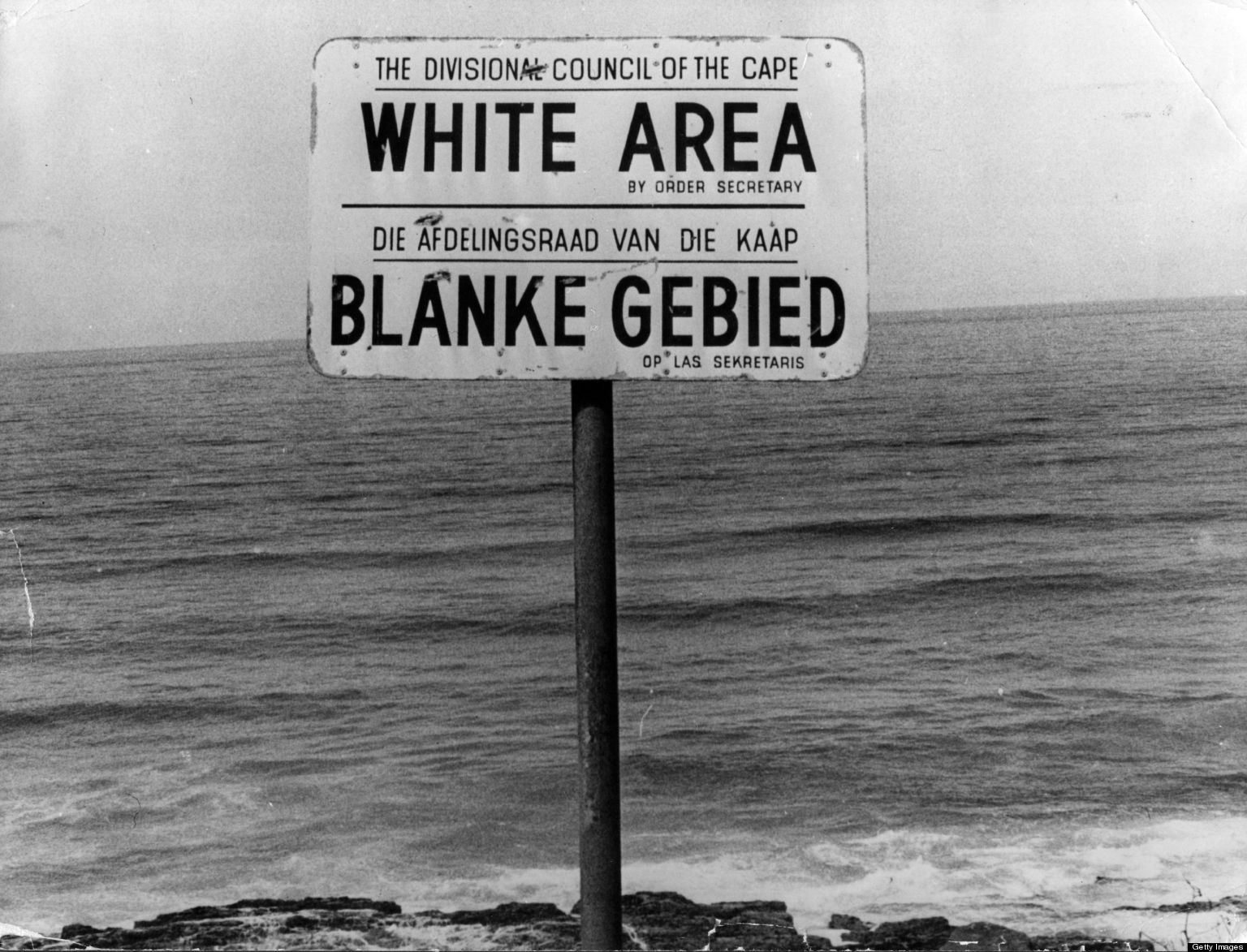
In what African country would you likely have seen this sign during 1975? (Click text to reveal the picture)
a)
Nambia
b)
Egypt
c)
United States
d)
South Africa
167.
Which of the following was not one of the four race based groups under the system of Apartheid?
a)
Coloreds
b)
White
c)
Indians
d)
Europeans
168.
Apartheid is an Afrikaans word meaning? 
a)
A state of being apart
b)
Separate but equal
c)
Equality for all
d)
Racism
169.
What is the theme that ties The Great Leap Forward, the Cultural Revolution, and Tienanmen Square Massacre together? 
a)
They all led to fewer freedoms for people of China.
b)
Mao Zedong led each of them.
c)
Improvements to China’s economy were a result. 
d)
They all led to more opportunities for people of China.
170.

Who made up the majority of protestors at Tiananmen Squar?

a)

doctors

b)

teachers

c)

students

d)

children

171.

Why were protestors gathered at Tiananmen Square in 1989?

a)

They were mad at the military

b)

For freedom to open their own business

c)

To ask for freedom of religion

d)

To protest the corrupt Communist government

172.

How did the Chinese government deal with the protestors at Tiananmen Square?

a)

They asked them to leave

b)

They let them protest as long as they wanted

c)

They sent in soldiers and tanks and killed people

173.

This image represents :

a)

Great Leap forward

b)

Long Marh

c)

Tiananmen Square massacre

d)

Cultural Revolution

174.

When Deng Xiaoping became China's leader, he made these changes

a)

Kept many of Mao's rules and regulations

b)

was much harsher to the people of China than Mao

c)

free healthcare

d)

made many reforms to Mao’s rules

175.

What was the name of the leader who led the Great Leap Forward and Cultural Revolution?

a)

Deng

b)

Mao

c)

Meow

d)

Qing

176.

What was a commune?

a)

A state in China that was full of factories

b)

A community of people who had freedom within China

c)

A community of people that worked and lived together under government rule

d)

A large group of people with jobs in the government

177.

What form of government did Mao have in China?

a)

Democracy

b)

Communism

c)

Monarchy

d)

Anarchy

178.

Who was a main target of the Red Guard?

a)

Students

b)

Teachers

c)

Store owners

d)

Old people

179.

What was Mao's "Little Red Book?"

a)

Instructions for how to be a Communist

b)

News stories and current events

c)

Speeches and quotes from Mao for the Chinese people to memorize