
 Worksheets
STRUCTURE OF THE EARTH
Total questions: 50
Worksheet time: 45mins

The outermost layer is the ________.
mantle
crust
inner core
outer core

The layer below the crust is the ____________.
oceanic crust
mantle
inner core
continental crust

The core is made up mostly of _______________.
oxygen
magnesium
iron
carbon

All known life exist on this layer.
inner core
mantle
core
crust

The inner core is ____________.
unknown at this time
molten rock due to immense heat and pressure
solid iron core due to immense heat and pressure
liquid lava due to convection currents

The outer core is ___________.
oxygen
brittle rock
solid rock
molten rock

The inner core is as hot as _________.
100 ovens
the surface of the sun
the big bang
Utah in the summer

The rock type that makes up Oceanic Crust is __________.
granite
conglomerate
basalt
gold

The rock type that makes up continental crust is ____________________.
copper
silver
basalt
granite

Ocean water this part of the upper layer.
oceanic crust
continental crust
mantle
Inner core

This layer has rocks that move in circular motion.
crust
continental crust
mantle
oceanic crust

This layer has the hottest temperatures of all the layers.
continental crust
mantle
outer core
inner core

The mantle in the Earth continually heats up and cools down using convection currents.
True
False

Mantle material rises in convection currents because heated materials become more dense.
True
False

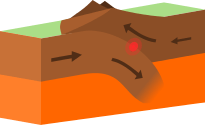


A divergent boundary occurs when plates ....
Pull apart
Come together
Slide past each other
subducting
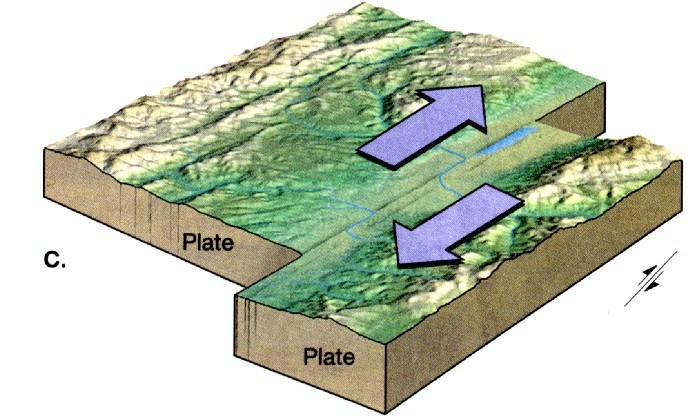

Oceanic Trenches are formed by _______ plate boundaries
Convergent
Transform
Plate
Divergent

Islands can form from magma which is pushed up at a __________ plate boundary
Divergent
Reformers
Convergent
Transformers

Mountains are created when....
Two continental plates collide
Two oceanic plates pull apart
An Oceanic plate subducts under a Continental Plate
Two continental plates pull apart

The Great Rift Valley in Africa and the Mid-Ocean Ridge were all created by this boundary
Divergent
Convergent
Reform
Transform

What are the two types of crust
continental and oceanic
ocean and upper
lower and upper
pizza and subway

Transform boundaries are most likely to produce what phenomenon?
volcanoes
deep sea trenches
underwater mountain ranges
earthquakes

When an oceanic plate and a continental plate collide, which one will subduct?
oceanic
continental
neither

A subduction zone is formed...
when one tectonic plate sinks below another
at every type of convergent plate boundary
at every type of divergent plate boundary
at transform boundaries


What does the theory of continental drift state?
The continents were once joined in a super-continent and have moved over time
Continents are stationary and do not move
The Earth is broken into lithospheric plates that move due to convection currents
none of the above

What evidence did Wegener use to develop his theory of continental drift?
Continents and fossils fitting together/matching-up like puzzle pieces
glacier scars and other climate evidence from temperature
mountain ranges and rocks line up across continents
all of the above

Why did other scientists have a hard time believing Wegeners theory of continental drift?
He could not explain HOW the continents moved
He didn't have enough evidence
His evidence was wrong
He didn't use the right technology to gather data

What two specific continents fit together most noticeably?
Africa and North America
South America and Europe
South America and Africa
Antartica and Africa

How does fossil evidence support Wegener's hypothesis of continental drift?
Similar fossils are found along continental margins that appear to join together.
Fossils are found in areas where the present-day climate could not have supported the organisms that made the fossils.
Similar fossils of giant, land-dwelling dinosaurs are found on continents separated by oceans.
all of the above


Originally the Continental drift theory was not well received by other scientist. Why?
There was a competing theory at the time that was more believable.
There was no data showing the continents ever moved.
The scientists did not know the force responsible for moving the continents.
The scientist presenting the data was unreliable.
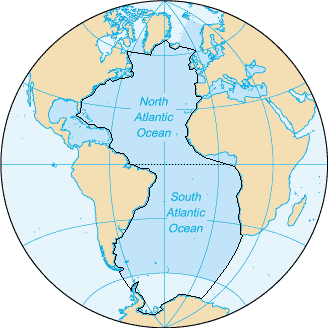


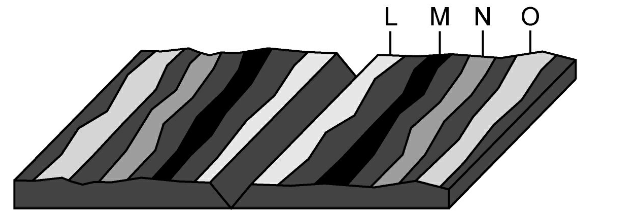

How is it possible for new crust to be formed without increasing the surface area of the Earth?
New crust breaks more easily than old crust
New crust is underwater where it sinks
Crust is destroyed at the same time it is created
Crust is eaten by evil demons

The Himalayas in Asia are an example of what type of plate boundary?
divergent
continent-to-continent convergent
ocean-to-continent convergent
transform

The Great Rift Valley in Africa and the Mid-Ocean Ridge were all created by this boundary
Divergent
Convergent
Reform
Transform

Which of the following objects best represents the movement that occurs during sea-floor spreading?
Elevator
Conveyor belt
Rollercoaster
Hot air balloon


