Worksheets
Unit 2 Astronomy Study Guide
Total questions: 45
Worksheet time: 23mins
What is a star made of?
Lava
Dust
Hydrogen
Super Hot Stuff

What process is happening in a star?
Fission
Combustion
Plasma
Fusion
What is the core of a star made of?
Plasma
Iron
Electrons only
solid material
What are the most abundant elements in the universe?
Carbon and Hydrogen
Helium and oxygen
oxygen and carbon
hydrogen and helium

What is the color of a star dependent on
Size
Type of star
Luminosity
Temperature

What is the outer layer of a star?
Crust
Corona
Photosphere
Mesosphere

What does the spectral type tell you about a star?
Size
Distance
Elements presents
Density
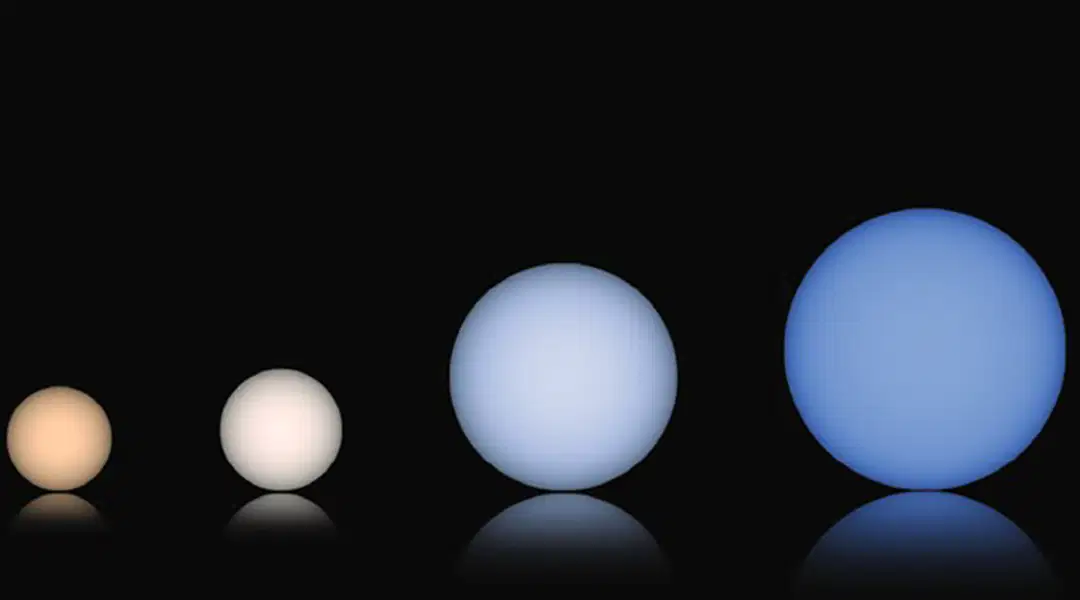
What is the correct order of stars from
Hottest to Coldest
Red, blue, yellow, white, orange
Blue, White, yellow, orange, red
red, yellow, orange, white, blue
blue, white, green, red, orange

How are black holes formed?
When planets explode
Death of white dwarfs
When super massive stars explode and gravity is extreme
Death of any star
What must happen in a nebula for stars to start forming?
Aliens have to makes stars in the nebula factory
The luminosity in a region increases exponentially
An a extremely hot region melts space dust together
A dense region forms where it has enough gravity to start fusion
What does the HR stand for in the HR-diagram
Hertzsprung Russell
Heavy
Reactants
Huge Radiation
Happy Rasins
When stars have more mass, which force also increases?
Luminosity
Gravity
Size
Color
What does luminosity mean?
How bright something exactly is
How big a star is
Light emitted by a star, compared to the sun
How hot a star is, relating to the color
What factor affects the color of a star?
Amount of Plasma in the core
Mass
Size
Temperature
What are the hottest stars on the HR diagram?
Yellow
Blue
Red
White
Where are the most stars classified as on the HR diagram?
Main Sequence
Instability strip
Super giants
White dwarfs
What is the first stage of a star?
Protostars forming out of a nebula
Neutron star
Black hole
Stars forming in galaxies
What small, hot, faint object is located at point B?
Sorry I can't get the image to load :(
White dwarfs
Supernovas
Red dwarfs
Super giants
What is important about the protostar stage?
Combustion starts to happen in the star
Heavy elements like gold form
They are cool and pretty
Stars and planetary disks form
What is the longest period of a star's life called?
When its the biggest, there is not a name
Main Sequence
Giant period
Adolescence
What fuel do stars use?
Helium
Gasoline
Hydrogen
Both hydrogen and helium
At which stage of life is a red giant in?
Near the end of it’s life before a planetary nebula and white dwarf
The brightest stage
The coolest stage
Near the beginning of its life before a black hole forms
At what stage in a star's life cycle are elements heavier than iron form?
Main sequence
Nebula
Supernova
Hypergiant
A star is considered variable if....
its mass changes in a predictable periods of times
its luminosity changes in predictable periods of time
it unexpectedly goes supernova
the color changes
Where can you find variable stars on the H R diagram?
Variable stars can not be plotted on the HR diagram due to change in luminosity
The instability strip
The insane strip
The stability sequence
What is so important about a variable star?
They are distance markers
There is nothing important about them, they are just cool
They allow us to predict the future
They allow us to gain insight on our own solar system
Why do variable stars change in luminosity?
There are undergoing changes in surface area due to internal or external changes
They are constantly exploding but since they are in a nebula they just gain more material
Aliens are using them as a way to power their ships
Trick question, they do not change
What is happening after a super red giant star?
They turn into white dwarfs
It will turn into a gas giant planet
They turn into nebula where new planets form
Supernova and either neutron star or black hole will form depending on the mass
What is keeping a star in balance with the fusion and energy leaving a star?
Gravity
Plasma
Temperature
Mass
What happens when a White Dwarfs dies?
It goes supernova
It grows into red giants
It grows in luminosity before turning into a black hole
It fizzles out and fades in luminosity
What is the temperature of the Hot Blue Star?
Blue things are cold not hot
400,000 K-800,000 K
30,000 - 50,000 k
18,000 k - 20,000 K
What is the biggest star out of all the stars?
Stephenson 2-18
The Sun
Sirius
Black holes
When in a stars life are the heavier elements made like Gold?
Never, gold comes from the ground not stars
Nebula
Main Sequence
Supernova
What is happening in a neutron Star?
Hydrogen is fuses into helium like in other stars
Protons and electrons are under so much temperature and pressure that they turn into neutrons
Plasma gets so hot that it turns into tungsten which glows bright green
The star turns into 5 neutrons
What is a supernova?
A star stars fusing the Hydrogen in the shell instead of the core and it is the most massive explosion known
An area in space where stars are born
A super cool star
A star starts to lose luminosity rapidly and the star fluctuates so bright it can be seen during the day on Earth
What happens to a star to make it leave the main sequence?
Runs out of helium
Nothing, stars only stay in one stage of life
Runs out of Hydrogen
The star gains more hydrogen that is floating in space so it grows to a giant
Why does a white dwarf run out of the ability to go through Fusion?
The star gets so dim hydrogen doesn't get bright enough
It's too small to do fusion
Runs out of space
Runs out of fuel
Which planet is known as the Morning Star?
Venus
The moon
Trick question, planets are not stars
Jupiter
What is the largest type of star?
Hypergiant
Megastars
Sun
All stars are the same, the only difference is their brightness
What is a brown dwarf?
A variable star
A wanna be star
A super hot star
The only star that can not be plotted on the HR diagram
Where is strange matter made?
Earths core
strange matter factories
black holes
Neutron stars
What category do most stars fall into?
White dwarfs
Hot and big
Main sequence
None, they are all evenly distributed
What is the last stage of a nebula when it has low mass?
Planet
White dwarf
Neutron star
black hole
What color are most Supergiants?
Red
Yellow
Orange
All of the above
None of the Above
Not a question, just 30 seconds to draw! I hope you enjoyed this Quizzizz!! :)